




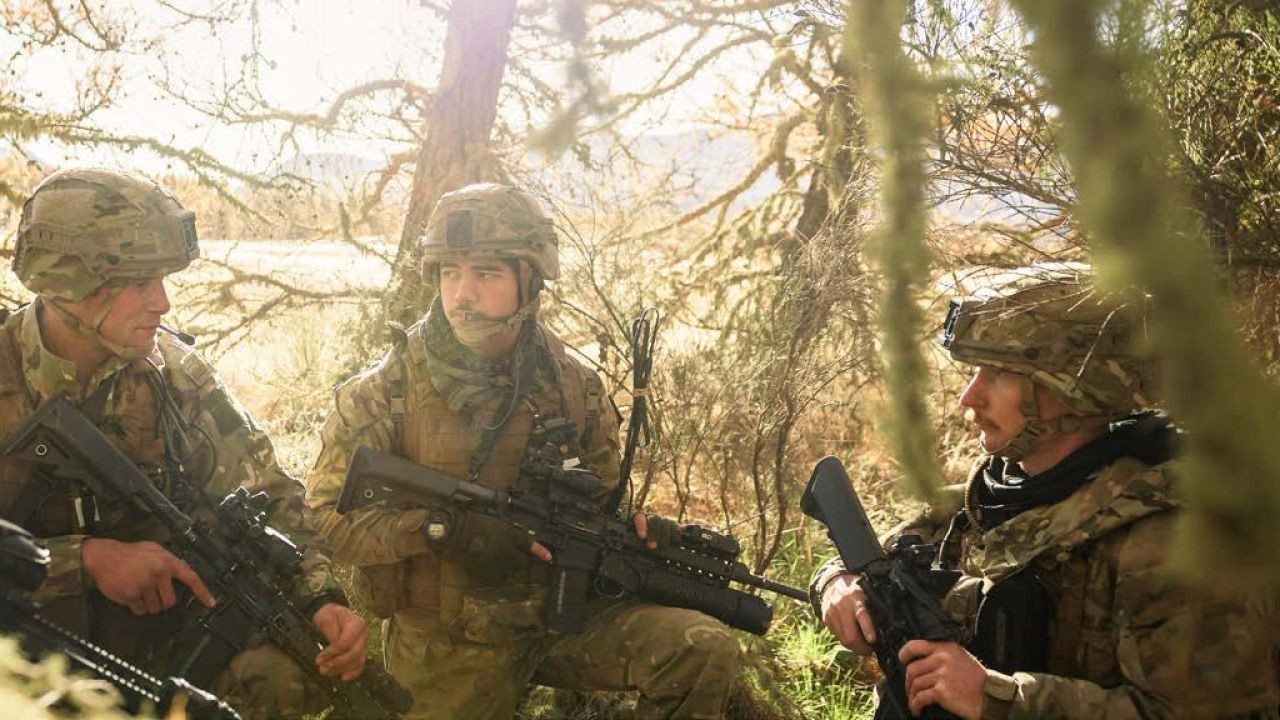
In the heart of Australia’s military strategy lies a question that often stirs debate: Are Special Forces more crucial than the Regular Army? As the nation navigates complex global dynamics, the roles of these military arms are under scrutinous evaluation. With Australia investing approximately $44.6 billion in defense as of 2023, understanding the strategic importance of each force is paramount not only to national security but also to economic stability and global standing. This exploration reveals how their distinct roles contribute to Australia’s defense strategy and, more importantly, how they shape our future in an increasingly unpredictable world.
Australia’s defence landscape is often viewed through the lens of traditional military might: tanks, infantry, and large-scale operations. Yet, in recent decades, Special Forces units have increasingly captured attention for their strategic impact. The question arises: which is more important—the elite Special Forces or the traditional regular army? Beyond military strategy, this debate has tangible implications for Australian businesses, particularly in innovation, leadership, and resilience.
This article provides a deep dive into the roles of both forces and why their interplay matters far beyond the battlefield.
1. Understanding the Roles: Regular Army vs. Special Forces
The Regular Army
Forms the backbone of Australia’s defence.
Maintains conventional combat readiness for large-scale operations, border protection, and peacekeeping missions.
Includes infantry, artillery, armour, and logistical support units.
Essential for sustained military campaigns, national defence, and disaster response.
Special Forces
Comprise elite units such as the Special Air Service Regiment (SASR) and Commando Regiments.
Focus on high-risk, precision missions including counter-terrorism, reconnaissance, and unconventional warfare.
Operate with smaller teams but deliver disproportionate strategic impact.
Require advanced training, adaptability, and cutting-edge technology.
In short, the regular army ensures security at scale, while Special Forces act as force multipliers in specialized operations.
2. Why Both Are Crucial
Special Forces often get media attention due to high-profile missions, but their effectiveness depends on support from the regular army. Likewise, large-scale army operations are enhanced by intelligence, reconnaissance, and precision interventions provided by elite units.
Key considerations:
Strategic Balance: Regular army maintains territorial security; Special Forces address high-stakes threats.
Interoperability: Joint operations between both forces maximize effectiveness.
Adaptability: Special Forces often develop tactics that later inform regular army training and doctrine.
Neither force can operate in isolation. The question is not which is “more important,” but how their capabilities complement each other.
3. Lessons for Australian Businesses
The military model offers actionable insights for business strategy:
A. Leadership and Decision-Making
Special Forces emphasize rapid, autonomous decision-making under uncertainty.
Regular army teaches disciplined coordination and resource management at scale.
Businesses benefit from blending these leadership styles: agility in innovation and reliability in operations.
B. Risk Management
Special Forces thrive in high-stakes, high-reward scenarios.
Regular army focuses on calculated, sustainable risk management.
Companies can adopt tiered risk strategies, balancing bold initiatives with steady growth projects.
C. Team Dynamics
Small, elite teams often outperform larger groups in specialized tasks.
Large, structured teams are essential for executing broad organizational goals.
For businesses, this translates to strategically combining focused teams with scalable operations.
4. Technology and Innovation Implications
Special Forces are often early adopters of advanced technologies—from surveillance drones to secure communications. Regular army units adapt these technologies for widespread operational use.
Business takeaway:
Early adoption and experimentation can create competitive advantages.
Scaling innovations across the organization ensures long-term impact.
Australian businesses can mirror this approach: pilot projects (Special Forces) followed by full-scale implementation (regular army).
5. Workforce Training and Skills Development
Military units invest heavily in continuous training:
Special Forces training focuses on problem-solving, adaptability, and resilience.
Regular army training emphasizes discipline, process adherence, and operational efficiency.
Businesses that emulate this dual approach—developing both specialist skillsets and broad operational competencies—build teams capable of handling complexity while maintaining reliability.
6. Strategic and Economic Implications for Australia
A strong, balanced defence capability supports national security, which in turn:
Protects trade routes and supply chains
Encourages foreign investment by ensuring geopolitical stability
Strengthens workforce confidence in both public and private sectors
Companies can thrive in a nation where security, agility, and scale coexist, drawing lessons from the military structure to enhance resilience and adaptability.
Background: The Evolution of Military Roles
Australia has a rich history of military involvement, evolving from traditional land warfare to complex, multi-domain operations. The Regular Army forms the backbone, providing fundamental defense capabilities and mass, crucial during times of prolonged conflict. In contrast, Special Forces are specialized units trained for rapid, targeted operations, often in unpredictable environments. Their agility and precision are invaluable in counter-terrorism and unconventional warfare scenarios.
According to the Australian Bureau of Statistics, defense and security contribute significantly to the nation’s economy, accounting for thousands of jobs and substantial technological advancements. Moreover, the Reserve Bank of Australia highlights defense spending as a steady driver of economic growth, emphasizing the importance of both military branches in safeguarding the nation’s interests.
Voices from the Field: Insights from Experts
“The synergy between Special Forces and the Regular Army is crucial,” notes Dr. Emily Carter, a defense analyst at the University of Sydney. “While Special Forces provide rapid response capabilities, the Regular Army ensures stability and sustained operations. Both are essential for comprehensive national defense.”
Lieutenant Colonel Michael Hayes, a veteran with over 20 years of experience, emphasizes the complementary nature of these forces. “In missions like those in Afghanistan, Special Forces often led the way, but it was the Regular Army that maintained the ground. It’s a partnership built on mutual support and respect.”
Case Study: Joint Operations in the Asia-Pacific
In 2022, Australia’s military undertook a joint operation with the United States in the South China Sea, showcasing the strategic integration of Special Forces and the Regular Army. The operation aimed to assert freedom of navigation in contested waters.
- Problem: Escalating tensions required a swift, decisive military presence.
- Action: Special Forces were deployed to conduct reconnaissance and surveillance, gathering critical intelligence.
- Result: The Regular Army followed with a substantial naval presence, ensuring sustained peace and stability in the region.
This operation underscores the necessity of both forces working in tandem, a strategy that not only secured Australia’s strategic interests but also reinforced alliances in the region.
Implications for Australia’s Defense Strategy
The balance between Special Forces and the Regular Army is vital for adapting to future challenges. As global threats evolve, Australia’s defense strategy must remain agile and forward-thinking. The Australian Defence Force’s investment in advanced technologies and training programs reflects this commitment.
Financially, the dual focus on both forces ensures a diversified defense portfolio, mitigating risks associated with geopolitical uncertainties. With defense contracts bolstering local industries, from manufacturing to technology, the economic ripple effect is substantial, enhancing job creation and innovation.
Pros and Cons Analysis
- Pros of Special Forces: Highly specialized, rapid deployment, versatile in unconventional warfare.
- Cons of Special Forces: Limited in scale, high training costs, reliance on precision intelligence.
- Pros of Regular Army: Large-scale operations, sustained presence, robust logistics.
- Cons of Regular Army: Slower mobilization, higher maintenance costs, less flexibility.
Future Trends & Predictions
Looking forward, Australia’s defense landscape is poised for transformation. By 2030, artificial intelligence and cyber capabilities are expected to integrate deeply into military operations, enhancing both Special Forces and the Regular Army’s efficiency and effectiveness. The Australian Strategic Policy Institute predicts that these innovations will redefine combat strategies, ensuring Australia remains a formidable force in global defense dynamics.
Moreover, as regional tensions in the Indo-Pacific persist, Australia’s military will likely expand its collaborative defense efforts, strengthening ties with allies and enhancing regional security frameworks.
Conclusion
The debate between the importance of Special Forces versus the Regular Army is not about choosing one over the other; it’s about recognizing their unique strengths and strategic value. Both forces are indispensable, forming the pillars of Australia’s national defense strategy.
As Australia continues to navigate an ever-changing global landscape, maintaining a balanced, integrated military approach is crucial. This ensures not only national security but also contributes significantly to the country’s economic and technological advancement. What’s your perspective on this strategic balance? Share your thoughts and insights below!
Related Search Queries
- Australia defense budget 2023
- Special Forces vs Regular Army roles
- Military technology advancements in Australia
- Impact of defense spending on economy
- Australia’s military strategy in Indo-Pacific
For the full context and strategies on Special Forces vs. Regular Army: Which One Is More Important? – (And What It Means for Aussie Businesses), see our main guide: Insurance Risk Videos Australia.