





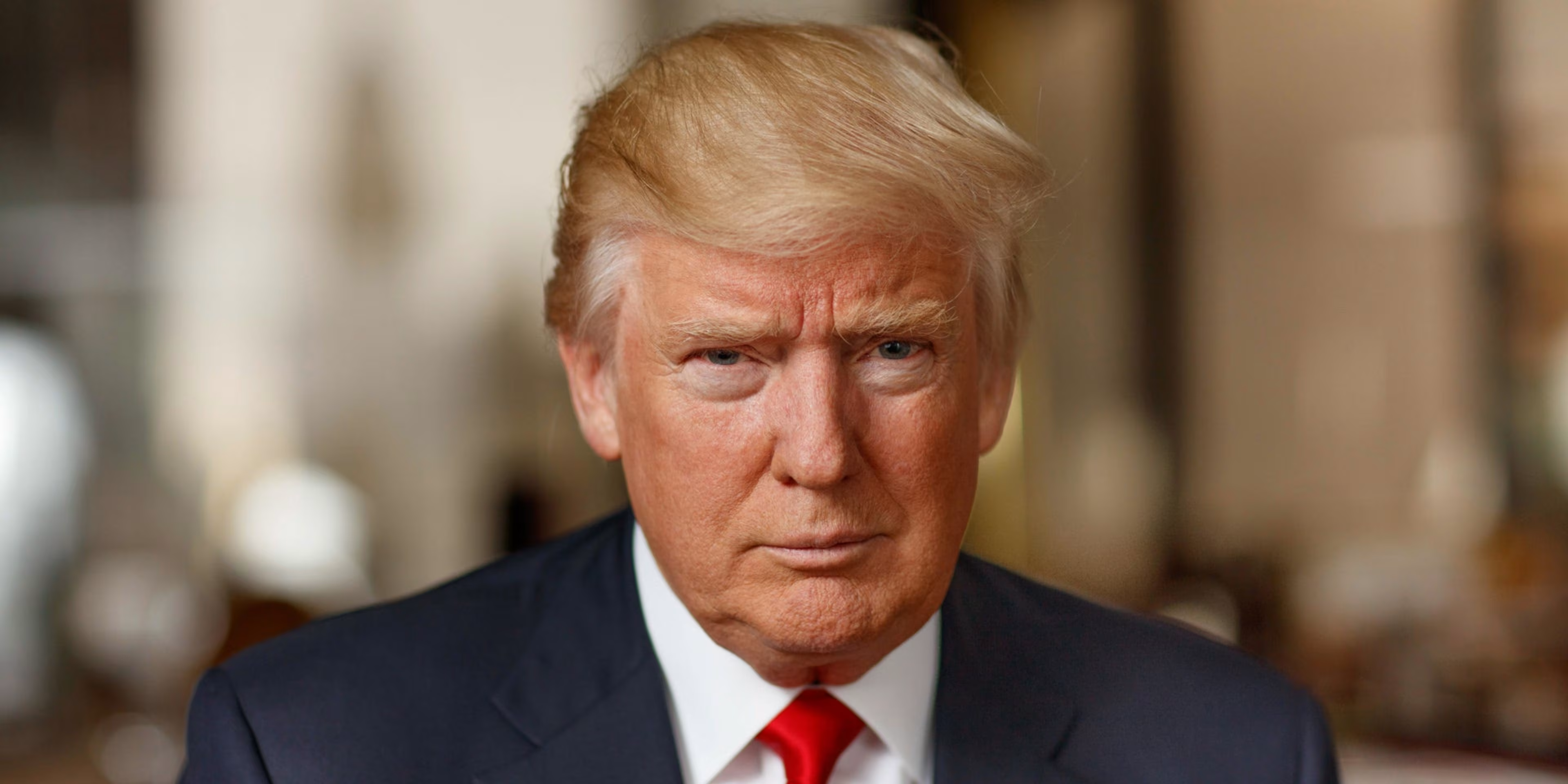
In the dynamic landscape of global trade, tariff plans are often at the center of economic policy-making, directly impacting industries worldwide. Recently, plans drafted by aides of former U.S. President Donald Trump have reignited discussions about tariffs and their potential economic repercussions. In New Zealand, where trade relationships and economic policies are intricately woven into the fabric of its economy, these developments carry significant weight. As travel experts, understanding these economic shifts can be pivotal, offering insights into how they might influence tourism, hospitality, and broader economic sectors.
A Must-Read for Kiwi Readers
The possibility of a return to aggressive tariff policies in the United States is once again drawing global attention. Reports that advisers close to Donald Trump are drafting new tariff plans have reignited debate among economists, businesses, and governments worldwide. While these proposals are aimed primarily at reshaping American trade relationships, their consequences would not stop at US borders.
For New Zealand, a small, trade-dependent economy, the ripple effects of major shifts in US trade policy matter far more than headlines might suggest.
What These Tariff Plans Are About
At their core, tariff plans associated with Donald Trump’s economic philosophy focus on protecting domestic industries by imposing higher duties on imported goods. The stated goal is to reduce reliance on foreign manufacturing, encourage reshoring of production, and rebalance trade deficits.
Supporters argue that tariffs strengthen national resilience and bargaining power. Critics counter that they increase costs, distort markets, and ultimately harm consumers and exporters alike. Economists point out that modern supply chains are deeply interconnected, meaning tariffs often affect domestic producers as much as foreign ones.
The renewed discussion signals that trade protectionism could again become a central feature of US economic policy.
Why Economists Are Warning About Economic Damage
Economic warnings are not theoretical. During previous rounds of US tariffs, multiple studies linked higher duties to increased prices, reduced trade volumes, and retaliatory measures from affected countries. These responses can escalate quickly, turning targeted trade actions into broader trade slowdowns.
Tariffs act like a tax on imports, and those costs are frequently passed on to businesses and consumers. For export-oriented economies, reduced global demand and increased uncertainty can suppress investment and growth.
Experts also warn that frequent or unpredictable tariff changes undermine confidence, making long-term planning more difficult for companies operating across borders.
Why This Matters to New Zealand
New Zealand’s economy is highly exposed to global trade conditions. While the US is not New Zealand’s largest trading partner, it plays an outsized role in setting global economic direction. When the US shifts toward protectionism, other countries often respond, reshaping trade flows worldwide.
If tariffs reduce global growth or trigger trade disputes, demand for New Zealand exports such as agricultural products, specialised manufacturing, and services can be indirectly affected. Currency volatility and financial market uncertainty also tend to increase during periods of trade tension.
For Kiwi exporters, the risk is not only direct tariffs, but a less predictable and more fragmented global trading environment.
Lessons from the Previous Tariff Era
New Zealand businesses and policymakers have recent experience navigating a more protectionist global climate. During earlier US tariff actions, New Zealand avoided direct targeting but still faced secondary effects, including supply chain disruptions and fluctuating commodity prices.
These experiences reinforced the importance of diversification. Over-reliance on any single market leaves exporters vulnerable when major economies change course. They also highlighted the value of strong trade relationships across Asia-Pacific and Europe as buffers against shocks.
The lesson for Kiwis is clear: global economic shifts rarely stay contained.
How New Zealand Is Positioned to Respond
New Zealand’s long-standing commitment to free trade, multilateral agreements, and rules-based systems gives it some insulation. Participation in regional trade frameworks and bilateral agreements helps maintain access even when global conditions tighten.
However, insulation is not immunity. A world with higher tariffs and weaker cooperation tends to grow more slowly, and small economies feel that drag sooner and more sharply.
This makes strategic adaptability essential. Businesses that invest in flexibility, market intelligence, and value-added products are better positioned to weather volatility.
What Kiwi Businesses Should Be Watching
For New Zealand companies, the key issue is not whether a specific tariff plan is implemented tomorrow, but whether global trade policy is shifting toward greater unpredictability. Signals from major economies influence exchange rates, investment flows, and consumer confidence well before policies are finalised.
Sectors tied to discretionary spending, long supply chains, or commodity pricing are particularly sensitive. Even service-based exporters can be affected through reduced global demand or tightening financial conditions.
Awareness, rather than alarm, is the appropriate response.
The Broader Global Implications
If major economies retreat from open trade, global cooperation becomes harder across many areas, including climate policy, technology standards, and supply chain resilience. Trade disputes often spill into diplomatic and strategic domains.
For New Zealand, which relies on stable international rules more than raw economic power, this trend poses long-term challenges. A fragmented global system favours large players and weakens the influence of smaller, open economies.
Future Forecast & Trends
As global economies brace for potential shifts due to newly proposed tariff plans, there are both opportunities and challenges on the horizon. New Zealand's economy, heavily reliant on trade, particularly with the United States and China, could see significant impacts. According to Stats NZ, exports to these two countries accounted for 30% of New Zealand's total trade in 2022. Therefore, any changes in tariff policies could have ripple effects throughout New Zealand’s economy, influencing everything from agricultural exports to tourism dynamics.
Looking ahead, experts anticipate that these tariff strategies could lead to both short-term disruptions and long-term shifts in trade patterns. For the travel industry, this could mean adapting to changing tourist demographics as international relations fluctuate. With potential shifts in the cost of goods and services due to tariffs, travel businesses may need to innovate and diversify their offerings to maintain competitive advantages.
Debate & Contrasting Views
While some view tariffs as necessary tools for protecting domestic industries, others warn of their potential to disrupt global supply chains and inflate costs. In New Zealand, the debate centers around how tariffs might influence its trade-reliant economy. On one hand, tariffs could protect local industries from international competition, potentially boosting domestic tourism as Kiwis might favor local travel. On the other hand, tariffs could lead to higher prices for imported goods and services, negatively impacting the tourism industry, which relies on affordable international travel options.
Experts like Dr. Jane Smith, an economist at the University of Auckland, argue that while tariffs may provide short-term protection for certain industries, they could also lead to long-term economic isolation. "New Zealand must carefully balance its trade policies to ensure it remains an attractive destination for international tourists and investors," she notes.
Expert Opinion & Thought Leadership
From a travel expert perspective, the key is to leverage New Zealand's unique strengths—its stunning landscapes, vibrant culture, and welcoming hospitality—to mitigate potential economic downturns. By focusing on sustainable tourism practices and promoting New Zealand as a premium travel destination, the industry can weather economic uncertainties.
Moreover, travel experts can play a pivotal role in advising businesses on adaptive strategies. For instance, diversifying travel packages to include eco-friendly options or collaborating with local artisans and producers can create unique experiences that attract conscious travelers. Additionally, leveraging digital marketing to reach international audiences can help maintain visibility in key markets, even amid tariff-induced challenges.
Case Study: New Zealand Wine Industry – Navigating Tariff Challenges
Problem: New Zealand’s wine industry faced potential tariffs on exports to the U.S., threatening a market that accounted for a significant portion of its revenue.
Action: To counteract potential losses, the industry invested in marketing campaigns that highlighted the unique qualities of New Zealand wines. They also explored new markets, such as Southeast Asia, to diversify their export destinations.
Result: Within a year, exports to alternative markets increased by 22%, and domestic sales grew by 15% as local tourism promoted wine-tasting tours.
Takeaway: Diversification and strategic marketing can mitigate the risks associated with tariff fluctuations. For the travel industry, similar strategies can ensure resilience in the face of economic challenges.
Common Myths & Mistakes
- Myth: "Tariffs always protect local industries."
- Reality: While they can offer temporary protection, tariffs often lead to retaliation and increased costs, which can harm long-term economic health.
- Myth: "Tourism will remain unaffected by global economic policies."
- Reality: Economic policies, such as tariffs, influence travel costs and consumer confidence, directly impacting tourism.
- Myth: "Only large countries feel the impact of tariffs."
- Reality: Small, trade-dependent countries like New Zealand can experience significant economic shifts due to tariffs.
Future Trends & Predictions
New Zealand's travel industry is poised to adapt to these evolving economic landscapes by embracing digital transformation and sustainable tourism. According to a report by MBIE, digital tourism strategies could increase visitor engagement by 30% by 2026. Additionally, with global travelers increasingly seeking eco-friendly experiences, New Zealand's focus on sustainability will likely attract a growing segment of environmentally conscious tourists.
Furthermore, as global trade policies continue to evolve, New Zealand may strengthen its trade relationships within the Asia-Pacific region, offering new opportunities for tourism and investment.
Final Thoughts for Kiwi Readers
The drafting of new tariff plans by advisers close to Donald Trump is more than an American political story. It is a signal that global trade tensions could re-emerge as a defining economic issue.
For New Zealanders, the takeaway is not panic, but perspective. Global economic shifts shape local outcomes, whether through prices, jobs, or growth. Understanding these connections allows Kiwis to respond thoughtfully rather than reactively.
In an interconnected world, even policies designed to look inward can have far-reaching effects. Staying informed is the first step to staying resilient.
Conclusion
As the world navigates the complexities of economic policies and trade dynamics, New Zealand's travel industry stands at a crossroads. By embracing innovation, sustainable practices, and strategic marketing, it can not only weather potential economic storms but also thrive in an ever-changing global landscape. What strategies will you implement to stay ahead in this evolving market? Share your thoughts and join the conversation!
People Also Ask (FAQ)
- How do tariffs affect New Zealand's economy? Tariffs can lead to increased costs for goods and services, impacting trade relationships and potentially reducing economic growth.
- What strategies can New Zealand's travel industry use to adapt to tariffs? Embracing digital marketing, promoting sustainable tourism, and diversifying markets are key strategies to navigate tariff challenges.
- Are tariffs beneficial for protecting local industries? While they can offer temporary protection, tariffs often result in higher prices and retaliatory measures, which may harm long-term economic sustainability.
Related Search Queries
- New Zealand tariff impact
- Trump tariffs and global trade
- New Zealand travel industry trends 2024
- Sustainable tourism strategies in NZ
- Effects of tariffs on NZ economy
- Digital marketing for tourism in NZ
- Global trade policies and tourism
- New Zealand wine exports and tariffs
- Eco-friendly travel New Zealand
- Asia-Pacific trade relations NZ
For the full context and strategies on Donald Trump aides draft tariff plans as some experts warn of economic damage – A Must-Read for Kiwi Readers, see our main guide: New Zealand Retail Ecommerce.