





For decades, the global conversation around productivity has been dominated by a simple, often brutal, equation: more hours equals more output. Yet, nestled in the South Pacific, New Zealand has quietly engineered a profound economic and social counter-narrative. Here, the pursuit of a meaningful life outside of work is not a fringe benefit or a sign of lax ambition; it is a cornerstone of national policy, a competitive business advantage, and a deeply ingrained cultural value. This is not an accident of a relaxed island mentality, but the result of deliberate choices, innovative policy, and a growing body of evidence that challenges the very foundations of industrial-era work dogma. New Zealand’s journey demonstrates that a nation can cultivate a robust, innovative economy while fiercely protecting the human need for balance, community, and well-being.
The Genesis of a National Ethos: From Policy to Practice
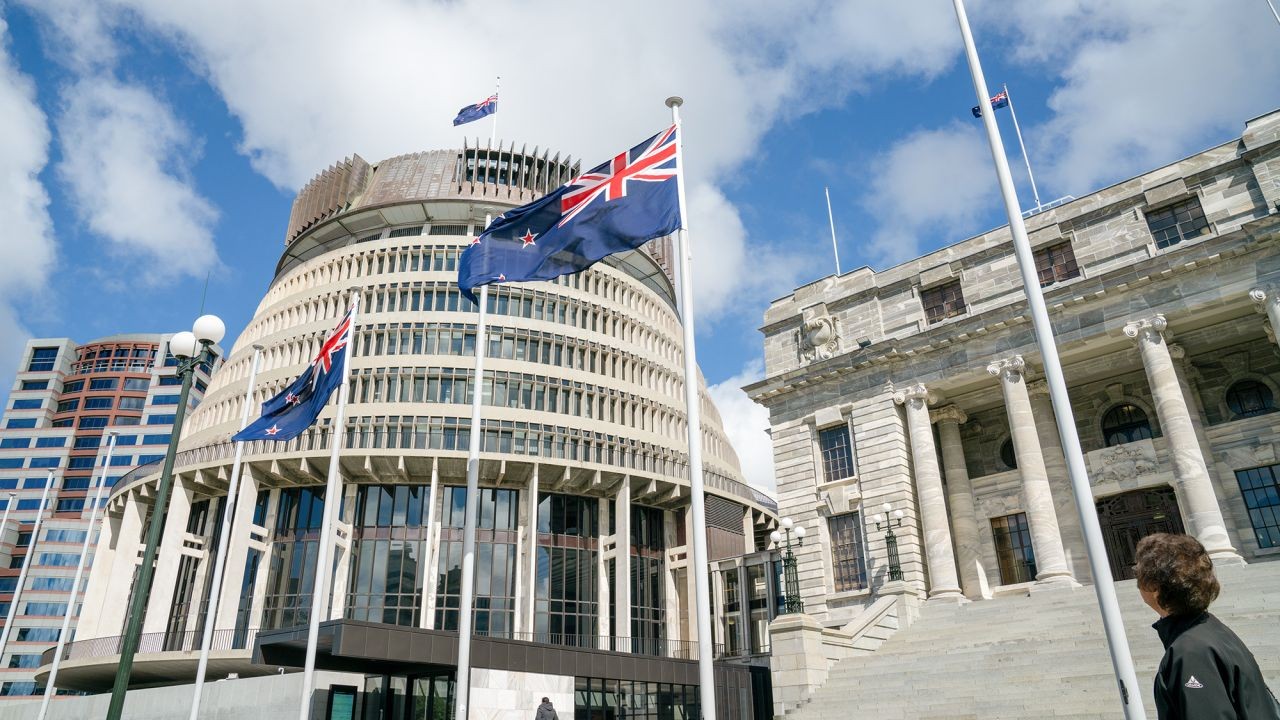
The modern inflection point for New Zealand's work-life identity can be traced to a series of purposeful legislative and cultural shifts. A pivotal moment was the introduction of the Employment Relations Act 2000, which explicitly promoted "good faith" bargaining and strengthened the concept of work-life balance as a legitimate concern in employment agreements. This legislative framework empowered a cultural shift, moving the discussion from the periphery to the centre of the employer-employee relationship.
This was not mere idealism; it was backed by a growing economic understanding. Successive governments, both centre-left and centre-right, have recognised that a healthy, engaged, and less-stressed workforce is a more productive and innovative one. The global spotlight intensified in 2018 when then-Prime Minister Jacinda Ardern famously championed a "well-being budget," directing Treasury to measure success not just by GDP, but by metrics of mental health, child poverty, and environmental sustainability. This was a formal declaration that the nation's wealth was intrinsically linked to the wellness of its people. As noted by economist and well-being budget architect Professor Arthur Grimes, this approach forces a longer-term, more holistic view of economic prosperity, where time for family and community is seen as an investment in social capital, not a drain on economic output.
A Data-Driven Reality: The Kiwi Work Week
The proof is in the statistics. According to the OECD Better Life Index, New Zealand consistently ranks above average in work-life balance. A key data point from Stats NZ's Labour Market Statistics reveals that the average full-time employee in New Zealand works 36.4 hours per week, notably lower than the OECD average and significantly below countries like the United States. Furthermore, New Zealand law mandates a minimum of four weeks' annual paid leave, a provision that encourages genuine disconnection and recuperation. This structural framework creates the space for the famous "Kiwi lifestyle" – the after-work surf, the weekend tramp, the family *barbie* – to flourish not as a rare luxury, but as a regular expectation.
The Economic Engine of Balance: Productivity and Innovation
A common myth, often held by traditional productivity hawks, is that fewer hours inevitably lead to lower output. New Zealand's experience powerfully debunks this. The national focus on balance has become a unexpected but potent tool for talent attraction and retention, particularly in the globally competitive tech and knowledge sectors. For a small, remote nation, offering a unparalleled quality of life is a strategic advantage in the war for top talent.
Companies like Xero, the cloud-based accounting software giant founded in New Zealand, have embedded flexibility into their DNA. By offering remote work options and outcome-based performance metrics rather than hours-logged, they have built a world-leading company while advocating for a sustainable work culture. This model demonstrates that innovation is not born from burnout, but often from a rested, engaged, and creatively stimulated mind. The rise of the "lifestyle business" and a vibrant entrepreneurial scene, from craft breweries to agri-tech startups, is further testament to an economy where people feel empowered to build enterprises that support, rather than consume, their lives.
Case Study: Perpetual Guardian – The Four-Day Week Pioneer
Problem: In 2018, New Zealand trust management company Perpetual Guardian, led by founder Andrew Barnes, confronted a classic industry challenge: how to boost productivity and employee well-being in a sector known for its traditional, desk-bound culture. The company faced potential issues with staff stress, engagement, and retention, common pain points that can silently erode efficiency and innovation.
Action: Barnes initiated a landmark trial, shifting his entire 240-person staff to a four-day work week for two months, with no reduction in pay. The goal was explicit: maintain 100% of productivity. To achieve this, the company, in consultation with employees and researchers from the Auckland University of Technology, implemented rigorous process changes. These included cutting unproductive meeting times, streamlining communication protocols, and redesigning workflows to eliminate low-value tasks. The focus shifted decisively from hours present to outputs delivered.
Result: The independently analysed results were staggering. The trial showed:
✅ Staff stress levels decreased by 7% across the board.
✅ Team engagement scores soared by 20%.
✅ Work-life balance scores improved from 54% to 78%.
Crucially, company productivity and output remained unchanged or improved. Customer service levels and key performance indicators were maintained. The trial was so successful that Perpetual Guardian made the four-day week permanent for all staff who wanted it.
Takeaway: This case study, born in New Zealand, sent shockwaves through global management circles. It provided hard, quantitative evidence that a radical rethinking of the work week, when managed strategically, can yield superior human and business outcomes. For New Zealand businesses, it underscored a powerful truth: leading with employee well-being is not a cost centre, but a catalyst for efficiency, loyalty, and competitive differentiation. The experiment has since inspired similar trials worldwide, establishing New Zealand as a laboratory for the future of work.
Balanced Contrast: The Advocate vs. The Critic
This national embrace of work-life balance is not without its thoughtful critics and inherent tensions, creating a healthy and necessary debate.
✅ The Advocate Perspective: A Foundation for Modern Prosperity
Proponents argue that New Zealand's model is not soft, but smart. In a knowledge-based global economy, cognitive performance, creativity, and emotional intelligence are the new currencies. Chronic overwork diminishes these very assets. The balance ethos attracts mobile global talent, reduces public health costs associated with stress, and fosters stronger families and communities, which are the bedrock of social stability. It is a long-term investment in national human capital, making the economy more resilient and adaptable.
❌ The Critic Perspective: Complacency and the Productivity Paradox
Skeptics, including some in the business community, warn of potential downsides. They point to New Zealand's persistent productivity gap with other advanced OECD nations. The concern is that a culture of balance could subtly morph into a culture of complacency, where the hard graft required for breakthrough innovation or scaling businesses is undervalued. There is a fear that for small-to-medium enterprises (SMEs), which form the backbone of the NZ economy, offering extreme flexibility may be operationally challenging. Furthermore, the "brain drain" of highly ambitious professionals to higher-pressure, higher-reward markets like London or New York remains a reality, suggesting the model doesn't suit all appetites.
⚖️ The Middle Ground: Sustainable Intensity
The most insightful analysis finds a middle path. The goal is not to enshrine leisure over effort, but to champion sustainable intensity. New Zealand's approach asks: how can we achieve world-class results *while* preserving our people? The answer lies in the Perpetual Guardian model: smarter work, not just less work. It requires exceptional management, clear metrics, and a shift from time-based to output-based performance. The future lies in embracing technology and process innovation to strip away inefficiency, freeing up human capital for high-value, creative tasks—and for life itself.
Common Myths and Costly Mistakes to Avoid
As this model gains global interest, several misconceptions need debunking, and pitfalls must be avoided by other nations or businesses seeking to emulate it.
- Myth: "New Zealand's work-life balance is just about being laid-back and loving the outdoors." Reality: It is a sophisticated, policy-driven economic strategy. The "lifestyle" is the output, not the cause. It is supported by law (ample leave, parental support), institutional frameworks (well-being budgets), and progressive corporate leadership.
- Myth: "A focus on balance means lower ambition and economic stagnation." Reality: As the data shows, productivity can be maintained or improved. Ambition is refocused from "hours spent" to "value created." New Zealand's thriving tech export sector, from gaming (Grinding Gear Games) to agri-tech (Robotics Plus), proves high-growth innovation is entirely compatible with this ethos.
Mistake to Avoid #1:
- Implementing flexible work policies without clear output metrics. The Perpetual Guardian trial succeeded because it was a disciplined operational overhaul, not just a calendar change. Without clear goals and accountability, flexibility can lead to confusion and declining performance.
Mistake to Avoid #2:
- Assuming it's a one-size-fits-all model. The four-day week may not suit manufacturers or emergency services. The principle is about designing roles and workflows that maximise output *and* well-being within the constraints of each industry.
Mistake to Avoid #3:
- Forgetting the "life" side of the equation. Policies are useless if a culture of after-hours emails and presenteeism persists. Leadership must model the behaviour, truly disconnecting and respecting boundaries, for the policy to become culture.
The Future of Work: New Zealand as a Global Prototype
New Zealand is positioned as a leading prototype for the post-industrial future of work. The trends accelerated by the COVID-19 pandemic—remote work, digital nomadism, a global reckoning with burnout—have all played into New Zealand's strengths. The nation is likely to see:
- Deepening of the "Well-being Economy": Metrics like time use, community engagement, and mental health will become even more integrated into policy and corporate decision-making, as forecast by think tanks like The Helen Clark Foundation.
- Rise of the Output-Based Contract: Employment law and contracts will increasingly decouple remuneration and evaluation from time spent, focusing instead on project delivery and achieved outcomes.
- Technology as an Enabler, Not a Chain: AI and automation will be leveraged explicitly to eliminate mundane tasks, not to surveil employees, further freeing up human potential for creative and strategic work—and for life.
By 2030, we predict that New Zealand's greatest export may not be dairy or tourism, but a proven, data-backed blueprint for building a humane and highly functional 21st-century economy.
Final Takeaways & Call to Action
New Zealand's national identity is now inextricably linked to a revolutionary idea: that economic success and human flourishing are not a zero-sum game. This has been achieved through deliberate policy, courageous corporate experiments, and a cultural willingness to measure progress differently.
- 🔥 Fact: The average Kiwi works a 36.4-hour week (Stats NZ), yet the economy supports world-leading innovation.
- 💡 Strategy: Productivity stems from focused intensity and employee well-being, not from prolonged hours.
- ❌ Myth Busted: Work-life balance is a serious economic strategy, not a sign of low ambition.
- 🚀 Prediction: Nations that fail to prioritise human sustainability in their economic models will face talent drain and innovation stagnation.
The question for global economists and business leaders is no longer *if* to consider this balance, but *how* to intelligently implement it. New Zealand has provided the playbook and the proof of concept. The challenge now is to adapt its lessons to different contexts, to build economies that are not only wealthy, but also wise.
What’s your take? Can the "Kiwi model" be successfully scaled, or are its benefits unique to an island nation? Join the discussion and share your insights below.
People Also Ask (PAA)
How does New Zealand's work-life balance impact its business competitiveness? It serves as a powerful talent magnet in global markets, particularly for knowledge workers. Companies compete on quality of life, leading to higher retention, lower recruitment costs, and more innovative, engaged teams, offsetting the nation's geographical distance.
What is the biggest misconception about the four-day work week in NZ? The biggest myth is that it simply means a 3-day weekend. The successful NZ model, as pioneered by Perpetual Guardian, involves a fundamental re-engineering of work processes to eliminate waste and maintain 100% productivity in 80% of the time.
What upcoming changes could affect work-life balance in New Zealand? The continued integration of AI into workplaces presents both a challenge and opportunity. The key will be leveraging automation to further reduce low-value tasks, protecting time for high-value human work and personal life, rather than allowing it to intensify surveillance and expectations.
Related Search Queries
- New Zealand four day week trial results
- Productivity statistics New Zealand vs OECD
- Wellbeing budget New Zealand impact
- Work from home policies NZ companies
- Kiwi lifestyle business advantages
- Employment Relations Act 2000 work life balance
- New Zealand talent attraction strategy
- Future of work trends New Zealand
For the full context and strategies on How New Zealand’s Work-Life Balance Became a National Identity – The Surprising Opportunity for New Zealanders, see our main guide: Next Generation Video Hosting New Zealand Businesses.