





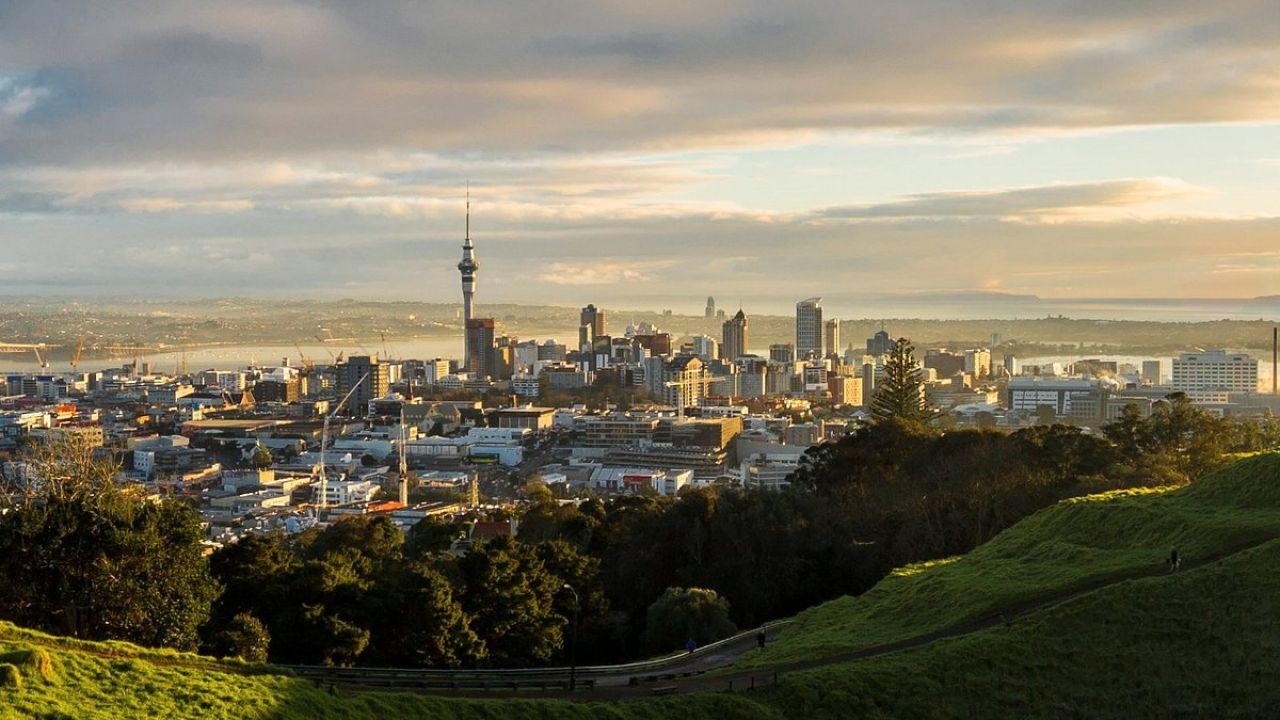
Forget the postcard. The decision to live, work, and invest in Auckland in 2026 is not about scenic harbours or volcanic cones; it’s a complex calculus of economic velocity, infrastructural capacity, and market arbitrage. As a commercial real estate broker, my lens is not one of lifestyle aspiration but of tangible asset performance and occupier demand. By 2026, Auckland will be a city of profound contrasts—a global gateway straining under its own success, where immense opportunity coexists with systemic friction. This analysis cuts through the sentiment to evaluate Auckland’s livability through the cold, hard metrics that drive capital allocation and corporate strategy.
The 2026 Auckland Thesis: A City at an Inflection Point
Auckland’s trajectory is being shaped by two powerful, and at times opposing, national forces. First, New Zealand’s immigration reset has created a demand shock of historic proportions. Stats NZ data shows net migration gain for the year ended August 2024 was 126,000, with a significant portion destined for Auckland. This isn't just population growth; it's an injection of labour, consumers, and tenants. Second, the government’s infrastructure-led recovery strategy, channeling billions into transport, water, and housing, is a direct, albeit delayed, response to decades of underinvestment. The success of these projects, like the City Rail Link and the second Waitematā Harbour crossing, will directly dictate Auckland’s 2026 productivity and livability. The city’s fate hinges on whether supply-side solutions can outpace the relentless growth in demand.
The Commercial Broker’s Lens: Decoding Livability as an Asset Metric
In our world, "livability" translates to "occupier attractiveness," which drives rental growth, asset valuation, and investment yields. We assess a city’s ecosystem: the talent pool available for office tenants, the disposable income supporting retail assets, the transport links affecting industrial logistics, and the housing supply that determines employee stability. A liveable city for residents is, fundamentally, a functional city for businesses. Auckland’s scorecard is mixed, presenting a series of high-stakes bets for investors and corporates planning their 2026 footprint.
The Compelling Advantages: Auckland’s 2026 Upside
The bullish case for Auckland rests on its entrenched economic dominance and the green shoots of urban transformation.
Unmatched Economic Gravity and Talent Concentration
Auckland remains New Zealand’s undeniable economic engine. According to MBIE’s 2024 Regional Economic Activity Report, the Auckland region contributes over 38% of the nation’s GDP. This concentration is magnetic. For skilled professionals in finance, tech, advanced manufacturing, and logistics, Auckland is where the career-defining roles are. The scale of the talent pool, while tight, is orders of magnitude larger than any other NZ centre. For a corporate occupier, this concentration reduces recruitment friction and fosters innovation through proximity. The ongoing development of innovation precincts like Wynyard Quarter and the Newmarket tech corridor are physical manifestations of this clustering effect, creating premium nodes for commercial assets.
Infrastructure Catalysts Beginning to Bear Fruit
By 2026, several decade-long infrastructure projects will transition from disruptive construction zones to operational assets. The City Rail Link (CRL), due for completion, will effectively double the capacity of Auckland’s rail network, reshaping commuter patterns and accessibility. This isn’t just a transport project; it’s a commercial real estate play. It will enhance the value of assets within walking distance of new stations (like Aotea) and open up development corridors previously considered peripheral. Similarly, progress on the Eastern Busway and the commencement of the second harbour crossing will begin to alleviate the city’s most critical choke point. These projects represent a multi-billion-dollar public investment directly aimed at improving functional livability and, by extension, commercial connectivity.
The Pacific Gateway: Trade and Tourism Rebound
Auckland’s role as the primary gateway to New Zealand is irreplaceable. The full rebound of international tourism and education sectors, coupled with New Zealand’s pursuit of diversified trade agreements, flows directly through Auckland’s ports and airport. This sustains a vast ecosystem of logistics, hospitality, and service industries. The ongoing expansion of Auckland Airport and the automation of the Ports of Auckland are critical infrastructure that bolster the city’s external revenue. For investors, this gateway function provides a defensive, cash-flow underpinning to assets in the freight, logistics, and tourism accommodation sectors.
The Formidable Headwinds: Systemic Challenges for 2026
The bear case is equally robust, rooted in structural issues that cannot be resolved within a two-year horizon.
The Housing Affordability and Supply Crisis
This is Auckland’s most severe brake on livability and economic potential. The median house price remains profoundly disconnected from median incomes, despite market corrections. The core issue is a chronic supply deficit, exacerbated by complex planning rules, construction sector capacity constraints, and high building costs. The Reserve Bank of New Zealand’s November 2024 Financial Stability Report highlighted that housing affordability indicators, while improved from peaks, are still stretched by historical standards. For businesses, this translates into a severe talent acquisition challenge. Recruiting skilled offshore workers or internal migrants is increasingly difficult when the cost of housing consumes a disproportionate share of compensation. It stifles disposable income, impacts retail spending, and creates social inequity that can erode long-term stability.
Transport Congestion: The Persistent Tax on Productivity
Even with the CRL, Auckland’s transport network in 2026 will remain under severe pressure. Private vehicle reliance will continue due to the city’s sprawling geography and the lag in building high-frequency public transport in many suburbs. Congestion acts as a direct tax on productivity, increasing business costs for logistics and eroding work-life balance for employees. The AA’s 2024 Motoring Affordability Report found Aucklanders spend significantly more on transport costs than other New Zealanders. This daily friction is a tangible detractor from livability and a key consideration for industrial tenants assessing supply chain reliability and for office tenants choosing locations accessible to their workforce.
The Cost of Living Squeeze
Auckland consistently ranks among the world’s more expensive cities. High costs for housing, transport, and even basic utilities compress disposable income. This has a direct commercial real estate impact: it pressures retail tenant sales, influences workplace expectations (demand for higher wages), and can make the city less competitive for mobile talent compared to Australian capitals or emerging remote-work hubs. While vibrant, Auckland’s amenity comes at a premium that not all demographics can afford.
Industry Insight: The Suburban Hub Model and the "15-Minute City" Adaptation
Here’s a critical, under-discussed trend shaping Auckland’s 2026 spatial economy: the rapid maturation of the suburban hub model. We are moving beyond the simple CBD vs. suburbs dichotomy. The future is polycentric. Locations like Newmarket, Takapuna, Sylvia Park, and the emerging Drury South are evolving into genuine mixed-use employment hubs. This is a market-led adaptation to the city’s congestion and housing challenges.
For commercial real estate, this is paramount. Tenants are actively seeking quality space in these hubs to tap into local labour pools and reduce employee commute friction. The value proposition is a "15-minute city" concept on a suburban scale: employees can live, work, and access amenities within a condensed geography. This trend is driving premium rental growth for well-located, modern office and retail assets in these hubs, often outperforming the broader market. It also opens strategic land-banking opportunities in transit-oriented development corridors identified in the Auckland Unitary Plan. Ignoring this decentralisation trend is a critical mistake for any portfolio strategy.
Case Study: Commercial Bay & Wynyard Quarter – Urban Regeneration as a Value Catalyst
Problem: For decades, downtown Auckland’s waterfront precincts were underutilised, dominated by surface car parks and low-density uses that failed to capitalise on the city’s prime location. This represented a significant opportunity cost, limiting the CBD’s amenity, commercial density, and appeal as a live-work-play destination. The challenge was to execute a large-scale, phased regeneration that could attract premium tenants, redefine the city core, and create sustainable value.
Action: The response was two-fold, led by public-private partnerships. First, the Precinct Properties-led Commercial Bay development replaced the dated Downtown Shopping Centre with a world-class, mixed-use complex integrating premium office space (PwC Tower), a high-end retail podium, and food and beverage offerings. Concurrently, the Wynyard Quarter transformation, led by Eke Panuku Development Auckland, systematically converted former port-industrial land into a vibrant mixed-use neighbourhood featuring the ASB Centre (home to Xero and ASB), innovative marine industries, public parks, and residential apartments.
Result: The outcomes have been transformative and quantifiable:
- Commercial Bay achieved office pre-commitment rates exceeding 90% prior to completion, securing anchor tenants like PwC at reported rents setting new benchmarks for the city. Its retail component revitalised downtown shopping.
- Wynyard Quarter attracted major tech and corporate tenants, with the ASB Centre becoming one of NZ’s most sustainable and sought-after office addresses. The precinct has spurred billions in further private investment and created a new residential community.
- Collectively, these projects increased the CBD’s critical mass of Grade-A office space, elevated Auckland’s global city profile, and created a waterfront destination that enhances livability. They demonstrated that large-scale, quality urban regeneration can achieve premium financial returns while delivering public good.
Takeaway: This case study proves that strategic, place-based investment can fundamentally upgrade a city’s commercial core and livability simultaneously. For New Zealand, it provides a blueprint for regenerating other urban areas—the lesson is that value follows vision and density. The success of these precincts underscores the investment potential in well-executed, mixed-use developments that cater to the modern demand for integrated work-life environments.
The Great Debate: Density vs. Sprawl – Auckland’s Defining Conflict
Auckland’s future form is a battlefield of competing philosophies, with direct implications for every property asset class.
Side 1: The Urban Intensification Advocate
Proponents argue that the only sustainable solution is aggressive intensification within the existing urban boundary, aligned with mass transit corridors. The model is Vancouver or Copenhagen: taller, mixed-use buildings around transport nodes, creating walkable, efficient communities that reduce car dependency. This view is embedded in the Auckland Unitary Plan. For commercial real estate, this means higher valuations around transit hubs, a boom in inner-city apartment development, and the rise of the suburban hubs mentioned earlier. It promises a more efficient, environmentally sustainable, and ultimately more vibrant city.
Side 2: The Greenfield Expansion Advocate
Critics of intensification point to community resistance ("NIMBYism"), infrastructure strain on existing suburbs, and the loss of character. They argue that controlled greenfield expansion (like the massive Drury project) is necessary to deliver affordable family homes at scale. This approach supports the traditional detached housing model many Kiwis desire and can be planned with modern infrastructure from the outset. For investors, this drives value in land banking on the urban fringe, industrial logistics serving new communities, and retail development in new growth corridors.
The Middle Ground: Strategic Corridors and Tiered Density
The pragmatic path forward, and where the market is quietly heading, is a hybrid model. This involves unapologetic high-density along designated transit corridors (e.g., around train stations), coupled with gentle density (townhouses, terraces) in the "missing middle" suburbs, and planned, infrastructure-led greenfield communities on the fringe. This tiered approach acknowledges diverse housing needs while prioritising efficiency. For the commercial broker, this creates a multi-speed market: ultra-prime assets in intensification cores, stable assets in established middle suburbs, and speculative growth plays on the frontier.
Common Myths and Costly Mistakes in Assessing Auckland’s Market
Myth 1: "Auckland’s population growth is guaranteed to slow, easing pressure." Reality: While net migration may fluctuate, Auckland’s underlying demographic momentum, driven by both international migration and natural increase (a younger population), points to sustained growth. MBIE’s mid-range projections suggest the Auckland region will need approximately 150,000 more dwellings by 2048 to keep pace. Assuming a slowdown is a dangerous premise for long-term investment or occupancy planning.
Myth 2: "Working from home has permanently devalued all office space." Reality: This is a surface-level take. The market is undergoing a flight to quality, not a flight from office. Obsolete, low-grade office stock is struggling. However, premium, sustainable, and well-located office space in amenity-rich hubs (CBD or suburban) is experiencing robust demand. Tenants are using these assets as cultural anchors for collaboration, training, and brand identity. The office is not dead; its function and required specification have evolved.
Myth 3: "Infrastructure projects will solve congestion by 2026." Reality: Infrastructure delivery provides capacity relief but rarely "solves" congestion in a growing city. The CRL will improve radial access to the CBD, but cross-town and orbital journeys will remain challenging. The correct lens is to view infrastructure as changing the pattern of accessibility, creating new value nodes, but not eliminating travel time altogether for all.
Biggest Mistakes to Avoid:
- Underestimating Location Granularity: Treating "Auckland" as a single market is a critical error. The performance gap between a well-located asset in a thriving hub and a poorly located one will widen dramatically by 2026. Due diligence must be hyper-local.
- Ignoring Tenant ESG Requirements: Modern corporates have strict Environmental, Social, and Governance (ESG) mandates. Buildings with poor NABERSNZ or Green Star ratings will face obsolescence, leasing risk, and value impairment. Sustainability is no longer a "nice-to-have"; it’s a financial imperative.
- Overlooking Operational Costs: In a high-inflation environment, a building’s operational efficiency (energy, water, maintenance) directly impacts net operating income and tenant retention. Assessing the capex required to maintain competitiveness is essential.
The Future of Auckland: Predictions for 2026 and Beyond
Based on current trajectories and pipeline data, we can forecast several key shifts:
- The Polycentric City Solidifies: By 2026, at least 3-4 suburban hubs (beyond the CBD) will establish themselves as dominant commercial nodes with their own Grade-A office markets, reducing the CBD's office dominance from ~55% to below 50%.
- Industrial Land Scarcity Intensifies: The demand for last-logistics hubs and high-spec industrial space will push yields to record compressions. Drury and the North-West will see explosive growth, but land supply will remain the sector's primary constraint.
- Build-to-Rent (BTR) Emerges as a Major Asset Class: With housing affordability unresolved, institutional-grade BTR developments will gain significant traction, offering a new, stable income product for investors and a quality rental option for professionals.
- Climate Resilience Becomes a Pricing Factor: Insurability and adaptation costs related to flooding and coastal erosion will begin to be explicitly priced into asset values, creating a clear divide between resilient and vulnerable locations.
Final Takeaway & Call to Action
Auckland in 2026 will be a city of sharper edges and greater opportunity. It will not be an easy city for everyone. It will reward those with capital, skills, and strategic positioning, while presenting significant challenges for those on lower incomes or locked into inefficient locations. From a commercial real estate perspective, the city offers a dynamic, if complex, landscape. Success will hinge on sectoral and sub-market selection, a deep understanding of infrastructure-led value shifts, and an unwavering focus on asset quality and sustainability.
The question is not simply "Is Auckland a good place to live?" but rather "For whom, and at what cost?" For the corporate occupier, it remains the indispensable hub for talent and market access, albeit with higher operational costs. For the investor, it offers deep liquidity and growth narratives, but requires expert navigation to avoid value traps.
Your Next Move: Audit your portfolio or occupancy strategy against the polycentric hub model. Is your asset aligned with a winning location? For investors, conduct a stress test on climate resilience and tenant ESG requirements. For businesses, model the total cost of occupancy—including employee recruitment and retention costs linked to housing and transport. The Auckland of 2026 is being shaped by decisions made today.
I invite my fellow professionals to debate this thesis. Have I overestimated the hub model? Are we underestimating the demand for CBD revival? Share your insights and frontline data in the comments below.
People Also Ask (PAA)
How will Auckland's population growth impact commercial real estate in 2026? Sustained growth will drive demand across all asset classes, but unevenly. It will intensify competition for well-located industrial land, support retail spending in catchment-rich hubs, and underpin the need for both centralised and suburban office space that attracts talent. The key impact is sub-market divergence.
What is the biggest risk to investing in Auckland property by 2026? Beyond broader economic cycles, the largest specific risk is investing in assets vulnerable to climate change (flood zones, coastal erosion) or in locations that fail to benefit from infrastructure upgrades. Regulatory changes around building standards and tenant protections also present a nuanced risk requiring close monitoring.
Is the Auckland CBD still a viable office market for the future? Yes, but in a reconfigured form. The CBD will remain the premier location for law, finance, and headquarter functions requiring prestige and agglomeration. However, its role will be complemented, not threatened, by strong suburban hubs. Viability will depend on asset quality, sustainability credentials, and proximity to transit like the CRL.
Related Search Queries
- Auckland commercial property market forecast 2026
- Best suburbs to invest in Auckland 2026
- Auckland infrastructure projects impact on property
- Office space demand Auckland CBD vs suburbs
- Auckland industrial land shortage
- Cost of living Auckland vs other NZ cities 2026
- Auckland housing affordability trends
- Build-to-Rent investment Auckland
- Effect of City Rail Link on property values
- Auckland climate change property risk
For the full context and strategies on Is Auckland a Good Place to Live in 2026? Pros, Cons, and Local Insights, see our main guide: How Kiwi Creators Make Money Vidude.