




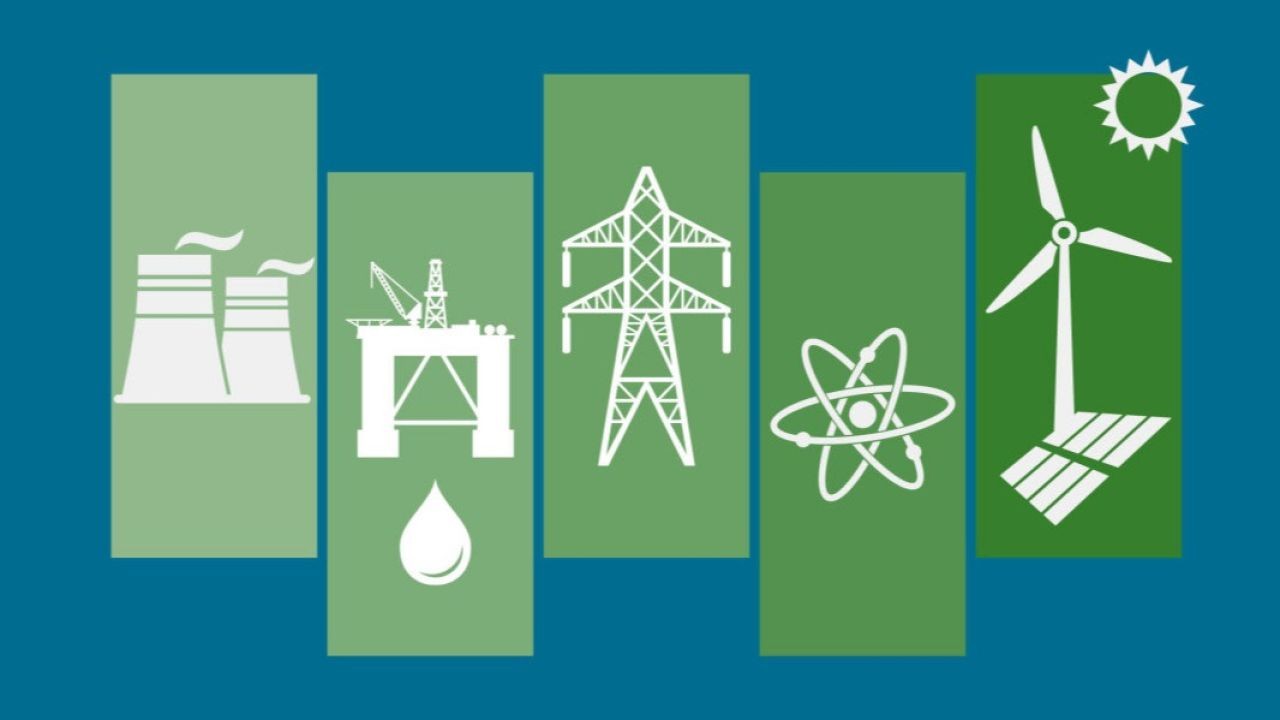
The discourse surrounding energy generation is often framed as a binary, almost ideological, battle: the entrenched, reliable legacy of fossil fuels versus the dynamic, clean promise of renewables. This oversimplification is not just intellectually lazy; it is a dangerous impediment to pragmatic energy policy, particularly in a nation as resource-rich and geographically diverse as Australia. As a specialist who has navigated the complex interplay of engineering, economics, and regulation on this continent for over a decade, I can state unequivocally: the question is not which system is inherently "best," but rather what constitutes the optimal, resilient, and cost-effective portfolio for Australia's specific and urgent needs. The data, the market signals, and the physical realities of our grid demand a critical, unsentimental evaluation beyond tribal allegiances.
The Australian Energy Landscape: A Data-Driven Reality Check
To understand the present, we must first confront the legacy. Australia's energy system was built on the backbone of centralized, dispatchable fossil fuel generation—primarily coal. This "traditional" model offered predictable baseload power, driving industrialisation. However, its externalised costs are now catastrophically internalised. The Australian Energy Market Operator (AEMO) and the CSIRO consistently highlight the dual pressures of an ageing, unreliable coal fleet and the urgent decarbonisation imperative. The 2022 Electricity Statement of Opportunities report underscored the accelerating retirement of coal plants, with up to 60% of the National Electricity Market's (NEM) coal capacity projected to exit by 2030. This isn't ideology; it's engineering and economics. These plants are becoming financially unviable and mechanically frail.
Concurrently, "modern" renewable energy—wind and solar—has achieved a stunning, data-backed victory on cost. The Levelised Cost of Energy (LCOE) for new-build wind and solar photovoltaic (PV) in Australia is now significantly lower than that of new coal or gas. According to the CSIRO's GenCost 2023-24 report, utility-scale solar PV and onshore wind remain the lowest-cost new-build generation technologies, even when integration costs (like storage and transmission) are included. This economic truth is reshaping the market irreversibly. However, drawing on my experience supporting Australian enterprises through this transition, the critical challenge is no longer the cost of generation, but the cost and complexity of integration. The grid, designed for one-way, centralized power flows, is struggling to manage the variable, distributed nature of modern renewables.
A Critical Pros & Cons Analysis: Beyond the Hype
A mature energy debate requires a clear-eyed assessment of strengths and limitations. Let's dissect the core attributes of both paradigms.
The "Traditional" Fossil Fuel Paradigm: Stability at a Mounting Cost
Pros:
- Dispatchability & Grid Stability: Coal and gas plants provide on-demand, synchronous generation. They offer crucial system inertia, which maintains grid frequency stability—a service historically taken for granted.
- High Energy Density: Fossil fuels provide immense power from a relatively small geographic footprint, simplifying logistics and transmission from mine-mouth to generator.
- Established Supply Chains: A century of industrial development has created robust, though geopolitically sensitive, global markets for coal and gas.
Cons:
- Carbon Emissions & Climate Liability: This is the existential flaw. The sector is Australia's largest source of greenhouse gas emissions, creating massive climate and transition risks for the entire economy.
- Fuel Price Volatility & Geopolitical Risk: As the 2022 energy crisis brutally demonstrated, Australia's gas market is exposed to international price shocks, directly inflating power bills for consumers and industry.
- Water Intensity & Environmental Damage: Coal mining and coal-fired generation are profoundly water-intensive and cause significant local environmental degradation.
- Declining Reliability: Ageing coal plants are suffering from increasing forced outages, as seen with numerous units in the NEM, making them a less dependable foundation than assumed.
The "Modern" Renewable Paradigm: Abundance with Integration Challenges
Pros:
- Zero-Fuel-Cost & Price Deflation: Sun and wind are free. Once built, renewable generators push down wholesale electricity prices during their operating periods, a phenomenon starkly visible in AEMO's data.
- Rapid Deployment & Scalability: Utility-scale solar farms and wind projects can be deployed in 12-24 months, far faster than any fossil fuel project. Distributed energy resources (DER) like rooftop solar scale exponentially.
- Energy Independence & Security: Harnessing domestic sun and wind reduces exposure to global commodity markets. From my work with Australian SMEs, I've seen how volatile gas prices can cripple manufacturing budgets, making renewable Power Purchase Agreements (PPAs) a compelling risk-management tool.
- Modularity & Distributed Potential: Renewables can be built at virtually any scale, from gigawatt-scale projects to rooftop kilowatts, enhancing community resilience.
Cons:
- Intermittency & Variability: The sun sets, and the wind stops. This fundamental characteristic requires complementary technologies—storage, demand response, and transmission—to ensure reliability, adding system-wide costs.
- Grid Integration Complexity: High penetrations of inverter-based resources reduce system inertia, challenging frequency control. This necessitates new market mechanisms and technologies like grid-forming inverters and synchronous condensers.
- Land Use & Social License: While less dense, renewable projects require significant land area. Poorly managed community engagement, as seen in some contentious wind farm developments, can delay or derail projects.
- Material Intensity & Recycling: Manufacturing solar panels, wind turbines, and batteries requires critical minerals. End-of-life recycling for these technologies is an emerging, not yet mature, industry.
The Pivotal Case Study: South Australia's Grid Transformation
Case Study: South Australia – From Coal Collapse to Renewable Leader
Problem: South Australia's energy security was thrown into crisis following the state-wide blackout in 2016 and the abrupt closure of the Northern and Playford coal-fired power stations. The state was heavily reliant on intermittent renewables (wind) and expensive, imported gas generation, leading to concerns about reliability and some of the highest electricity prices in the world. Critics pointed to South Australia as a cautionary tale of moving "too fast" on renewables.
Action: Instead of retreating, South Australia doubled down on a modern, technology-agnostic strategy. It aggressively supported new wind and solar while addressing the core integration challenges. Key actions included:
- Policy support for the Hornsdale Power Reserve (the "Tesla Big Battery"), the largest lithium-ion battery in the world at the time.
- Investing in grid-scale synchronous condensers to restore system strength and inertia lost with coal closures.
- Encouraging flexible, fast-start gas peaking plants and, crucially, creating market signals for demand response and virtual power plants (VPPs).
Result: The transformation has been remarkable. South Australia now routinely achieves periods where renewables meet 100% of demand. The Hornsdale battery has been a staggering success, not just in backup power but in providing critical grid-stabilising services (Frequency Control Ancillary Services or FCAS), saving consumers over $150 million in its first few years of operation. According to AEMO, the state has gone from being a grid liability to a leader in system security innovation. Wholesale prices have become more volatile but have seen significant downward pressure from renewable output.
Takeaway: South Australia's journey proves that a high-renewable grid is not only possible but can be more secure and cost-effective than the old model—if the right enabling technologies and market reforms are implemented. It is a blueprint, not a fantasy. For businesses across Australia, the lesson is to engage with this new reality: explore behind-the-meter storage, participate in demand response programs, and lock in long-term renewable PPAs to hedge against volatility.
Common Myths & Costly Mistakes in the Australian Transition
Myth 1: "Renewables are unreliable and will cause blackouts." Reality: As the South Australian case shows, blackouts are caused by system failures, not the inherent nature of a fuel source. The 2016 blackout was triggered by storm damage to transmission lines, and the system's response has since been fortified. Modern grid management, paired with storage and demand-side resources, can deliver exceptional reliability.
Myth 2: "We need 'baseload' coal/gas to keep the lights on." Reality: The concept of inflexible "baseload" is becoming obsolete. What we need is "dispatchable" power—energy available when we need it. This can be supplied by a portfolio of pumped hydro, grid-scale batteries, demand response, and flexible gas peakers, not just by coal plants that are slow to ramp and prone to failure.
Myth 3: "The transition will be overwhelmingly expensive for consumers." Reality: The biggest driver of current high power prices is the international cost of fossil gas. The CSIRO's GenCost report confirms that a renewables-dominated grid is the lowest-cost path forward. The capital investment is significant, but it displaces ongoing, volatile fuel costs. The mistake is delaying the investment, which only prolongs exposure to fossil fuel price shocks.
Critical Mistake to Avoid: Underinvesting in Transmission & Orchestration. The single greatest pitfall for Australia is building renewable generation without commensurate investment in the "plumbing" and "conductor" of the system. The Integrated System Plan (ISP) from AEMO outlines the crucial transmission projects needed to connect Renewable Energy Zones (REZs). Delaying these, or failing to invest in the digital orchestration platforms for millions of DERs, will create bottlenecks, curtailment, and higher costs for all.
The Non-Negotiable Enablers: Storage, Grids, and Green Hydrogen
The debate is sterile without focusing on the enablers. Renewables alone are not a system; they are a source. The modern Australian grid requires three foundational pillars:
- Firming & Storage: This spans from household batteries and VPPs to grid-scale batteries (for short-duration frequency control and energy shifting) and pumped hydro (like Snowy 2.0 and the Battery of the Nation projects in Tasmania) for multi-day storage. The technology mix must match the duration of the need.
- Modernised Transmission: Building the high-voltage links from REZs in regional Queensland, NSW, and Victoria to demand centres is the nation's most critical infrastructure challenge. It is a spatial problem; the best solar and wind resources are not where the old coal plants were.
- Green Hydrogen for Hard-to-Abate Sectors: For Australia's export-oriented mining, heavy industry, and heavy transport sectors, renewable electricity alone may not be practical. Green hydrogen, produced via electrolysis using renewable power, is the most plausible pathway to decarbonise these sectors and create a new zero-carbon export industry. The Australian Government's Hydrogen Headstart program is a direct, necessary intervention to bridge the commercial gap.
The Controversial Take: The NEM is Obsolete, and "Go-It-Alone" States are Leading
Here is a contentious but supportable view: the National Electricity Market (NEM), as currently configured, is a relic inhibiting the pace of change. Its energy-only design, complex rules, and political friction are failing to deliver the coordinated investment in transmission and firming that a 21st-century grid requires. The real leadership is coming from state governments—like Queensland, NSW, Victoria, and South Australia—who are taking direct, interventionist roles through their REZ roadmaps, ownership of energy assets, and underwriting of storage projects.
While purists argue for market-only solutions, the energy transition is a classic case of market failure requiring strategic public investment to de-risk and catalyse private capital. The states, closer to the physical and political realities, are getting on with the job. The federal government's role must be to align, fund, and accelerate these efforts, particularly on inter-regional transmission, rather than clinging to outdated market orthodoxies.
The Future of Australian Energy: A Hybrid, Resilient, and Export-Oriented System
By 2035, Australia's grid will be unrecognisable from that of 2010. Coal will be marginalised, acting as a diminishing fill-in during prolonged still, dark periods. The backbone will be wind and solar, firmed by a diverse portfolio of storage. Gas will transition from baseload to a peaking and insurance role, its social license contingent on declining usage and the adoption of carbon capture and storage or hydrogen blending.
The most profound trend will be the rise of the "prosumer." Millions of homes and businesses with solar, batteries, and smart appliances will form aggregated VPPs, selling services back to the grid. This will turn the traditional centralised model on its head, creating a more resilient and participatory system. Furthermore, Australia's massive renewable advantage positions it not just for domestic decarbonisation but as a green export powerhouse—shipping green hydrogen, green metals (like iron and aluminium), and other derivatives to a decarbonising world.
People Also Ask (PAA)
How does the renewable transition impact electricity prices in Australia? Renewables push down wholesale prices when they generate, but overall bills are also affected by network and policy costs. The long-term trend is towards lower wholesale costs, but managing the peak demand and grid integration costs through smart technologies is key to minimising retail price impacts.
What is the biggest barrier to 100% renewables in Australia? The largest barrier is not technology but system integration and social coordination. Building the required transmission lines faces planning and community consent hurdles. Orchestrating millions of distributed energy resources requires sophisticated digital platforms and market reforms that are still evolving.
Is nuclear power a viable option for Australia's future? Given Australia's world-class solar and wind resources, abundant storage potential, and lack of existing nuclear industry, the economic case for nuclear is weak. The CSIRO's GenCost report consistently finds nuclear (large or small modular) to be significantly more expensive than a renewables-based system, with much longer lead times, making it irrelevant for Australia's urgent 2030 decarbonisation targets.
Final Takeaway & Call to Action
The dichotomy between "traditional" and "modern" energy is a false one. Australia's future lies in a modernised, hybrid system that learns from the stability principles of the past but is fundamentally redesigned around cheap, clean electrons. The data is unequivocal, the engineering is proven, and the economic opportunity is vast.
The call to action is for all stakeholders:
- For Policymakers: Stop the culture wars. Fully fund and fast-track the transmission projects in the ISP, reform the NEM to value flexibility and inertia, and provide clear, stable investment signals for firming capacity.
- For Businesses: Conduct a detailed energy audit. Engage with reputable providers to explore on-site solar, storage, and renewable PPAs. Participate in demand response programs—it turns your load flexibility into an asset.
- For Investors: Look beyond generation. The highest-value opportunities are now in the enabling technologies: grid-forming inverters, long-duration storage, VPP software platforms, and green hydrogen electrolysers.
The transition is the greatest industrial and economic restructuring since the post-war era. Australia can be a laggard, burdened by ideological baggage, or a leader, capitalising on its natural endowment. The choice is binary, and time is the one resource we are truly running out of.
Related Search Queries
- Australian Renewable Energy Zones map
- Cost of solar battery storage Australia 2024
- AEMO Integrated System Plan 2024
- Green hydrogen projects Australia
- Virtual Power Plant (VPP) how to join
- CSIRO GenCost report latest findings
- South Australia renewable energy percentage today
- Commercial Power Purchase Agreement (PPA) guide Australia
- Grid scale battery projects Australia
- National Electricity Market (NEM) explained
For the full context and strategies on Traditional Parenting vs. Modern Parenting: What Works Best in Australia? – What It Could Mean for Everyday Australians, see our main guide: Advertise.