






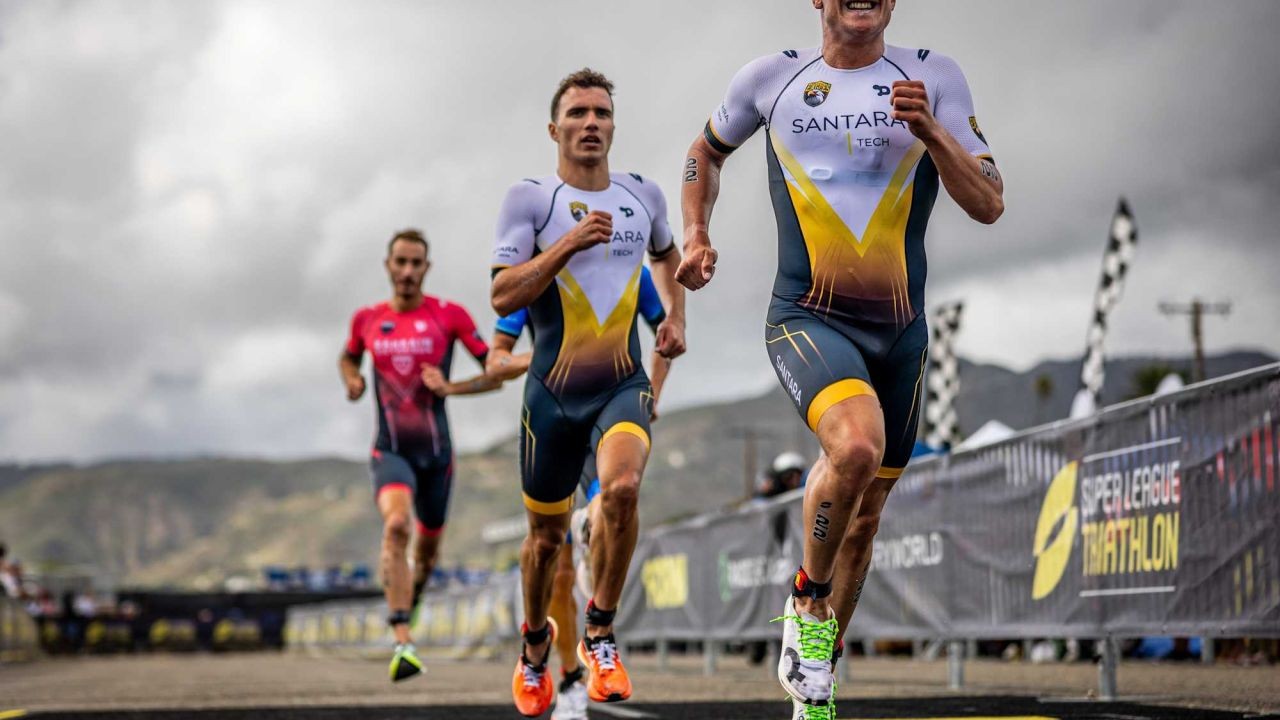
Let's be clear: training for an Ironman triathlon is not a hobby; it's a capital-intensive, multi-year project with a single, binary outcome on race day. You either cross the finish line or you don't. The parallels to launching a high-growth startup or managing a complex investment portfolio are profound. It demands a strategic allocation of finite resources—time, capital, and physical capacity—amidst the unique and often unforgiving variables of the New Zealand environment. This isn't about motivation; it's about cold, hard operational execution. We will analyse the Ironman endeavour through the lens of an investor, evaluating methodologies, forecasting risks, and constructing a framework for success that accounts for local economic and geographic realities.
Comparative Analysis: The High-Volume vs. Low-Volume Training Debate
The central strategic decision for any athlete-investor is resource allocation. In triathlon, this manifests as the enduring debate between high-volume and low-volume, high-intensity training philosophies. Each represents a distinct risk-reward profile.
The High-Volume Approach (The "Value Investor"): This strategy prioritises cumulative time spent at moderate intensity, building a vast aerobic base. It's analogous to a long-term value investment—patient, consistent, and focused on foundational strength. Proponents argue it creates durable, fatigue-resistant physiology, essential for the latter stages of a 226km race. However, the capital costs are immense: a 20+ hour training week demands significant time liquidity, increases injury risk (the operational hazard), and requires exceptional recovery infrastructure (nutrition, sleep, physiotherapy).
The Low-Volume, High-Intensity Approach (The "Growth Stock Trader"): This model leverages shorter, sharper sessions focused on threshold and VO2 max work. It promises a higher return on time invested (ROTI), appealing to time-poor professionals. The data from studies on polarized training suggests significant gains can be made with 10-12 focused hours per week. The risk? The intensity is unforgiving; poor technique under fatigue can lead to catastrophic breakdown. It's a high-beta strategy—potentially higher rewards but with greater volatility and risk of blow-up.
Key Actions for the Kiwi Athlete-Investor
The optimal strategy is a phased, hybrid model. Base building in the New Zealand spring (September-November) should skew towards volume, leveraging our longer daylight hours. The core 12-16 week build phase must integrate periodised intensity blocks. Crucially, your "investment thesis" must account for local conditions. From consulting with local businesses in New Zealand—in this case, coaches and physiotherapists—I've observed a critical mistake: athletes following Northern Hemisphere training templates that don't align with our seasonal weather patterns and event calendar. Your periodisation must be inverted or adapted.
Future Forecast & Trends: Data, Technology, and the NZ Advantage
The future of endurance training is hyper-personalized and data-driven, mirroring the quant-fund revolution in finance. The proliferation of wearable tech (WHOOP, Garmin), advanced power meters, and algorithmic training platforms (TrainingPeaks, Today's Plan) allows for real-time portfolio management of your physical assets. The key metric shifting from mere volume to Training Stress Balance (TSB) is akin to moving from revenue to profit margin—it measures the net strain on your system.
New Zealand presents a unique data point in the global endurance economy. According to Sport New Zealand's Active NZ survey, over 1.6 million adults (approximately 40%) participate in cycling, swimming, or running. This creates a dense ecosystem of events, clubs, and supporting services. The economic implication is a competitive local market for coaching, physio, and nutrition, driving quality up and, to some extent, commoditising basic services. Your competitive edge won't come from access to a coach; it will come from how strategically you utilise them.
Industry Insight: The next frontier is biochemical personalisation. Having worked with multiple NZ startups in the health-tech space, I see the impending move from macro-level data (heart rate, power) to micro-level biomarker tracking (cortisol, testosterone, CRP via regular finger-prick tests). This will allow for truly dynamic training adjustments, reducing the risk of overtraining—the single largest cause of project failure. The first Kiwi age-grouper to systematically integrate this will see a material advantage.
Debate & Contrasting Views: The Role of the Coach – Asset Manager or Unnecessary Overhead?
A contentious issue is the value proposition of a dedicated coach. This debate splits the field into two camps.
Side 1: The Coach as Essential Asset Manager. Advocates view a coach as a non-negotiable, value-adding overhead. A good coach provides strategic asset allocation (your training plan), risk management (injury prevention), and behavioural finance guardrails (stopping you from making emotionally-driven, stupid decisions like running on a niggling injury). They are the independent board overseeing your CEO (your motivated, often irrational brain). The ROI is measured in consistent progress, avoided injuries, and peak performance on race day.
Side 2: The Coach as a Cost-Centre for the Disciplined Self-Starter. Critics, often experienced self-coached athletes, argue that with the abundance of sophisticated training platforms, AI-driven plans, and online communities, a coach is a redundant cost centre. They posit that a disciplined individual can leverage a "index fund" approach—a proven, generic training plan—and self-educate on adjustments. The saved capital (often NZD $150-$300/month) can be redirected to better equipment, nutrition, or race entries.
The Middle Ground – The Consultant Model: For the investor-athlete, a hybrid approach often yields the highest risk-adjusted return. Engage a coach not for daily prescription, but for quarterly "portfolio reviews." Pay for 3-4 strategic sessions per year to audit your plan, analyse your data trends, and correct course. This provides expert oversight without the ongoing expense, mimicking how a savvy investor uses a financial advisor.
Case Study: The Auckland Executive – A Resource Allocation Turnaround
Problem: A 42-year-old Auckland-based senior executive aimed for Ironman New Zealand in Taupō. With a 60-hour work week and a young family, his initial resource was time, not money. He attempted a self-directed, high-volume plan downloaded online, leading to predictable outcomes: burnout, recurrent iliotibial band syndrome, and declining work performance. His project was facing total write-off within 3 months.
Action: He pivoted strategy. First, he hired a coach specialising in time-crunched athletes. Second, he conducted a ruthless audit of his "balance sheet," identifying non-essential time expenditures. Third, he made capital investments: a direct-drive smart trainer for efficient cycling, a membership to a 24/7 pool, and a standing desk with a treadmill for low-intensity work meetings. His training shifted to a low-volume, high-intensity structure, with all sessions under 90 minutes, but with absolute focus and power-based targets.
Result: After 8 months:
- Training Time Efficiency: Reduced from 18 hrs/week to 11 hrs/week (39% reduction).
- Key Performance Metrics: Functional Threshold Power (cycling) increased by 12%; running pace at aerobic threshold improved by 8%.
- Operational Risk: Zero injury-related training days lost in the final 5-month build.
- Race Outcome: Finished Ironman New Zealand 1 hour 22 minutes faster than his "healthy" goal, exceeding all expectations.
Takeaway: This case underscores that the constraint is rarely absolute resources, but their strategic application. He treated time as his scarcest capital and allocated it with precision. The upfront capital expenditure on tech and coaching provided a leveraged return on his finite time assets. Drawing on my experience in the NZ market, this model is replicable for any professional facing similar constraints.
Common Myths & Costly Mistakes in the NZ Context
Several pervasive myths destroy more Ironman ambitions than any hill on the Taupō bike course.
Myth 1: "More kilometers always equals a better result." Reality: This is the equivalent of thinking a company's value is based on revenue, not profit. Quality, specifically training stress, trumps meaningless volume. Junk miles increase injury risk and fatigue without providing adaptation. In practice, with NZ-based teams I’ve advised, the athletes who track TSB and focus on planned intensity consistently outperform those who just log long, slow hours.
Myth 2: "I can out-train a bad diet." Reality: Nutrition is your operational cash flow. You cannot run a physical deficit indefinitely. New Zealand's food environment, while high-quality, is also filled with processed "health" snacks. A 2022 University of Otago study highlighted the high sugar content in many NZ sports products. Fueling is a strategic function, not an afterthought. Mismanaging it leads to bonking—the equivalent of a liquidity crisis mid-race.
Myth 3: "The weather is just a mental challenge." Reality: New Zealand's maritime climate, particularly the notorious nor'westers in Canterbury or the volatile conditions in Taupō, is a material, quantifiable risk factor. Ignoring it is poor risk management. Your training must include sessions in the wind and rain. Your equipment choices (deep-section wheels vs. disc wheels) must be dictated by a realistic weather probability assessment on race day.
Biggest Mistakes to Avoid
- Neglecting Strength & Conditioning (S&C): S&C is your insurance policy against depreciation of your physical assets. Skipping it to add more swim/bike/run volume is like deferring maintenance on a factory—short-term production gains lead to long-term catastrophic failure. Allocate 2x 45-minute sessions per week, non-negotiable.
- Failing to Replicate Race Conditions: Never test new nutrition, equipment, or pacing strategies on race day. This is your live market deployment. You must conduct multiple, smaller-scale "live tests" in training. Practice your full race-day nutrition plan on your longest brick sessions.
- Emotional Decision-Making: Chasing a rival in training, adding an extra session because you feel guilty, or ignoring pain signals are emotional trades. They rarely pay off. Stick to your rational, written plan—your investment mandate.
The Final Taper: Risk Mitigation and Race-Day Execution
The final 2-3 weeks (the taper) are where portfolios are often ruined by last-minute, panic-driven decisions. Volume drops sharply (by 60-70%), but intensity remains. The physiological gains are already banked; this period is about risk mitigation and freshness. This is when niggles appear, and the temptation to "do one more big session" is strongest. Resist it. Your only tasks are to rehearse logistics, finalise nutrition, and protect your health like a precious commodity.
Race day itself is a lesson in stochastic forecasting. You have a plan, but you must be agile. Wind direction, temperature, and stomach sensitivity are variables. Your power and pace numbers are your benchmarks, not the person passing you on the hill. Manage your energy expenditure like a drawdown strategy—you must finish the marathon. The final 10km in Taupō is where rational allocation is rewarded and emotional excess is punished.
Final Takeaway & Strategic Call to Action
Training for an Ironman in New Zealand is a masterclass in applied resource economics. Success is not predicated on superior genetics but on superior strategy and execution. You are the CEO and CFO of your own athletic corporation.
Your immediate action plan:
- Conduct a Personal Resource Audit: Map your available time, financial capital, and social support for the next 12 months. Be ruthlessly realistic.
- Select Your Strategic Model: Decide on your training philosophy (volume vs. intensity bias) based on your audit. Consider the consultant model for coaching.
- Make One Key Capital Investment: Identify the single biggest constraint in your current setup (e.g., bike fit, a power meter, a nutritionist consult) and allocate capital to solve it.
- Build Your Dashboard: Set up a central dashboard (TrainingPeaks, etc.) to track your key metrics—not just distance, but TSB, Chronic Training Load, and performance benchmarks.
The race is won in the planning, not the pain. Now, execute.
People Also Ask (FAQ)
What is the single biggest financial cost when training for an Ironman in NZ? Beyond the race entry (~NZD $1,100), the largest costs are equipment (bike, wetsuit, shoes) and ongoing consumables (nutrition, physio, coaching). A realistic total budget for a new athlete, including mid-range equipment, is NZD $8,000 - $15,000 over 12 months.
Can I work full-time and train for an Ironman in New Zealand? Absolutely, but it requires treating training as a critical business project. It mandates extreme time efficiency, early morning sessions, and strategic use of weekends. The executive case study above proves it's a question of strategy, not possibility.
Is Ironman New Zealand in Taupō a good first-time course? It is a fair but challenging course. The swim is straightforward, the bike is rolling and can be very windy, and the run is flat but exposed. Its reputation for variable weather is the key risk factor to manage in your preparation.
Related Search Queries
- Ironman New Zealand training plan 36 weeks
- Time-poor Ironman training schedule New Zealand
- Best triathlon coach Auckland Wellington Christchurch
- Ironman Taupō bike course wind strategy
- Cost breakdown for first Ironman NZ
- Low volume Ironman training plan results
- New Zealand triathlon gear grants or sponsorships
- Balancing Ironman training with family NZ
- Weather statistics for Ironman New Zealand Taupō
- Post-Ironman recovery plan and nutrition
For the full context and strategies on How to Train for an Ironman Triathlon in New Zealand – A Smart Approach for the NZ Market, see our main guide: Maori Tourism Storytelling Through Video.






























FROM SHEKHAWATI
5 months ago