




For Australia's ultra-high-net-worth individuals, the perennial question of where to park significant capital is evolving beyond traditional portfolios. While global equities and private equity remain staples, two of the most visible and emotionally charged asset classes—prime real estate and superyachts—are being re-evaluated under a new lens of value, utility, and legacy. The narrative is shifting from mere ostentation to strategic asset deployment, with local economic conditions, tax structures, and lifestyle aspirations creating a fascinating divergence in investment behaviour. Drawing on my experience advising high-net-worth clients across Sydney, Melbourne, and the Gold Coast, I've observed a clear trend: the Australian luxury property market is not just holding its ground but is being leveraged as a dynamic financial engine, while superyacht ownership is undergoing a pragmatic reassessment.
The Unshakeable Foundation: Prime Australian Real Estate as a Multi-Tool Asset
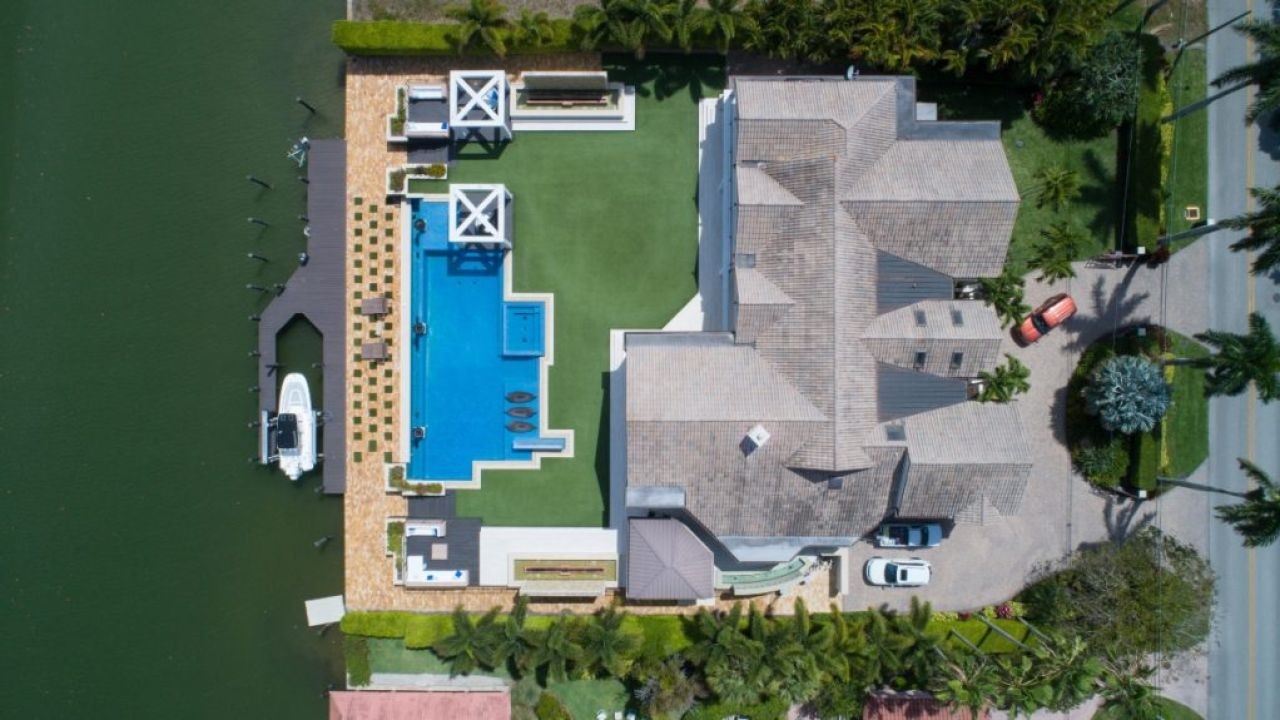
In the portfolios of Australia's wealthy, luxury property is far more than a place to reside. It's a cornerstone asset class that uniquely blends tangible security, compelling financial returns, and profound personal utility. The data underscores this resilience. According to CoreLogic's Prime Residential Review, while broader market conditions fluctuated, Australia's prime residential market (the top 25% by value) recorded a solid 8.2% growth in the year to January 2024, significantly outperforming the broader market's 2.6%. This isn't accidental; it's a function of scarcity, aspirational demand, and its role as a capital preservation haven.
From consulting with local businesses and family offices across Australia, a key insight emerges: luxury property is increasingly used as a collateralisation tool. High-net-worth individuals are leveraging their multi-million dollar homes to secure lines of credit for business ventures, further investment, or portfolio diversification without needing to liquidate other assets. This financial utility is a game-changer. Furthermore, Australia's stable political climate and strong legal framework for property rights make it a magnet for safe-haven capital, both domestically and from overseas investors where permissible.
Case Study: The Point Piper Penthouse – A Blue-Chip Investment Vehicle
Background: In 2021, a Sydney-based family office acquired a sub-penthouse in Point Piper for approximately $38 million. The purchase was analysed not just as a lifestyle acquisition but as a strategic entry into the most tightly held postcode in the country.
Action & Financial Strategy: Beyond the purchase, the owners undertook a meticulous, high-end renovation, investing a further $4 million over 18 months. Critically, they worked with their private bank to have the property professionally revalued post-renovation. They also engaged a luxury lease management specialist to secure a corporate tenancy for a portion of the year when the family was overseas.
Result:
- The post-renovation valuation surged to $48 million, creating $10 million in unrealised equity.
- This equity was collateralised to secure a $6 million credit facility used to fund a venture capital investment in a fintech startup.
- The corporate lease generated approximately $420,000 per annum in gross rental income, offsetting a portion of holding costs.
- Based on the latest comparable sales, the asset has appreciated a further ~5%, demonstrating strong capital retention.
Takeaway: This case exemplifies the modern approach: prime Australian real estate is a active, working asset. It provides a secure store of value, can be engineered to generate income, and its equity is a powerful lever for further wealth creation. This multifaceted utility is something a depreciating asset like a yacht simply cannot replicate.
The Allure and The Accounting: The Superyacht Proposition
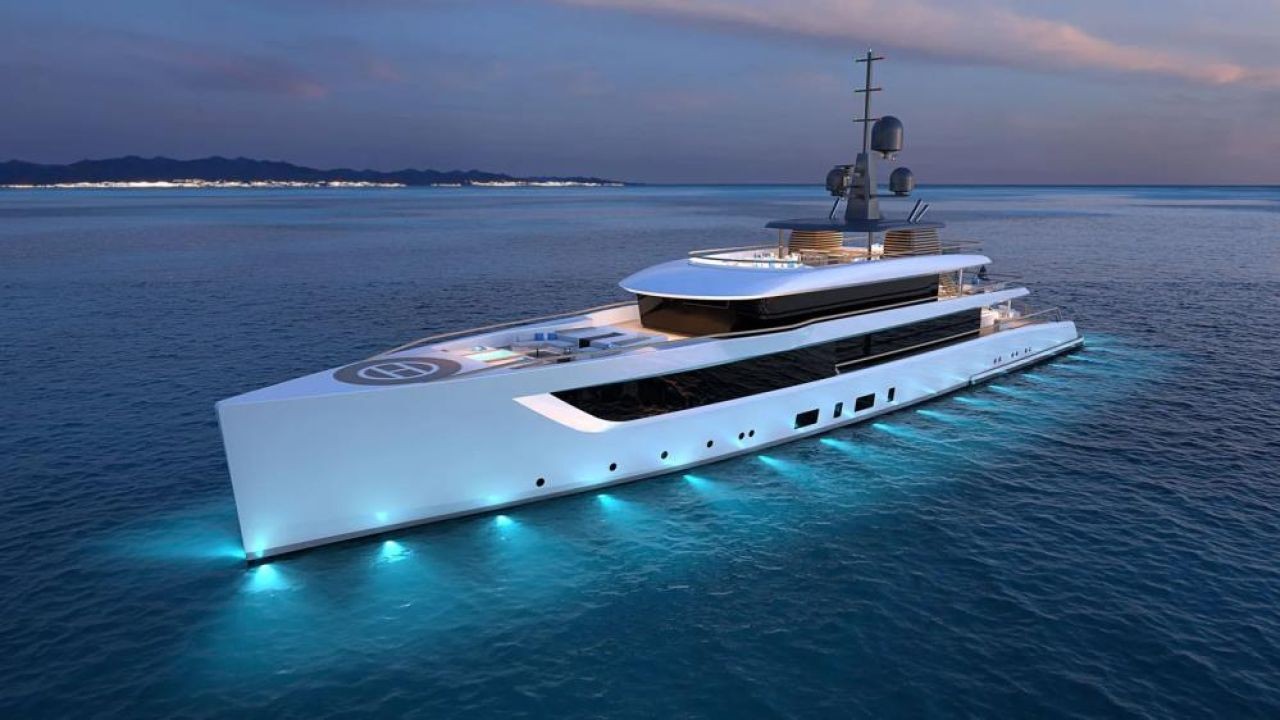
On the water, the superyacht represents the zenith of luxury and freedom. For an Australian enthusiast, it offers unparalleled access to our magnificent coastline, the Whitsundays, or the Kimberley. However, through my projects with Australian enterprises and wealthy families, the conversation around yacht ownership has become markedly more analytical. The emotional desire is now rigorously stress-tested against financial reality.
The ownership model is pivotal. The traditional path of full ownership involves staggering costs: purchase price (often with luxury car tax implications if imported), crew salaries (which must comply with Australian maritime law and fair work regulations), maintenance (10-15% of the yacht's value annually), berthing fees (marina fees in Sydney or the Gold Coast can exceed $150,000 annually for a large vessel), and insurance. The asset typically depreciates from the moment it leaves the shipyard.
This has led to the rise of alternative models. Fractional ownership schemes and bespoke charter management programs are gaining traction. In the latter, the owner places the yacht with a management company that charters it out to qualified clients. The income generated offsets a portion of the running costs. However, as one client who operates a 40-metre charter yacht out of Cairns told me, "You don't buy a yacht to make money. The best-case scenario is that a well-managed charter program reduces your net annual loss. It turns a pure expense into a subsidised lifestyle asset."
Strategic Showdown: A Comparative Analysis of Value and Utility
Let's move beyond anecdote and contrast the core financial and strategic characteristics of these two luxury investments within an Australian context.
✅ The Strategic Advantages of Luxury Real Estate
- Capital Appreciation & Stability: Historically, prime Australian real estate has shown strong long-term capital growth, driven by land scarcity and sustained demand. It acts as a hedge against inflation.
- Productive Utility & Leverage: It can generate rental income and, as demonstrated, its equity can be borrowed against for other investments, creating a powerful wealth-creation flywheel.
- Tax Efficiency: While subject to land tax and stamp duty, the main residence is generally exempt from Capital Gains Tax (CGT). Investment properties benefit from deductions for expenses, depreciation, and a 50% CGT discount if held for over 12 months.
- Lower Ongoing Costs: Holding costs (rates, maintenance, insurance) are a fraction of the asset's value compared to a yacht's running costs.
- Legacy & Tangibility: It is a foundational asset that can be passed through generations, forming part of the family's enduring legacy.
❌ The Inherent Challenges of Superyacht Ownership
- Persistent Depreciation: Unlike prime land, a yacht is a rapidly depreciating asset. The majority of its value evaporates in the first decade.
- Exponentially High Running Costs: Annual upkeep is notoriously high and relentless, often described as "burning money." It requires constant financial commitment regardless of use.
- Limited Income Potential: Charter income is volatile, seasonally dependent, and rarely covers total costs. It is not a reliable investment return.
- Regulatory & Operational Complexity: Compliance with Australian Maritime Safety Authority (AMSA) regulations, crew management, and insurance is complex and costly.
- Illiquidity: Selling a superyacht can be a slow process in a niche market, unlike real estate which has a deep and active marketplace.
Assumptions That Don’t Hold Up in the Australian Market
Several persistent myths cloud the decision-making process for potential investors in these asset classes.
Myth 1: "A superyacht is a status symbol that pays for itself through charter." Reality: This is the most seductive and dangerous misconception. Based on my work with Australian SMEs and high-net-worth individuals in the marine sector, a successful charter program in Australian waters might cover 50-70% of annual operating costs in a good year. It does not account for depreciation, major refits, or the owner's own usage time, which directly reduces charter income. The vessel remains a significant net negative cash flow.
Myth 2: "Luxury property is too illiquid and slow-moving for an active portfolio." Reality: While not as liquid as shares, the prime markets of Sydney and Melbourne have consistent depth. More importantly, as the case study showed, liquidity isn't always about sale. The ability to collateralise stable, appreciating property to access liquid funds provides "strategic liquidity" without triggering a CGT event.
Myth 3: "Both are purely lifestyle purchases, so financial analysis is irrelevant." Reality: Australia's wealthy are increasingly sophisticated. Every dollar has an opportunity cost. The question isn't just "Can I afford it?" but "What is the total cost of ownership, and what alternative wealth could this capital generate?" The luxury property often wins this analysis because its lifestyle component comes bundled with a stronger financial rationale.
The Verdict: Where Are Australia's Wealthy Placing Their Bets?
The current trend is unmistakable. While the dream of a superyacht remains potent, the practical allocation of serious capital is overwhelmingly favouring luxury real estate and its associated development opportunities. The Reserve Bank of Australia's (RBA) data on housing credit, while broad, shows investor activity picking up in sought-after markets, indicating a return of confidence in property as a wealth-building vehicle.
For the ultra-wealthy, the strategy is nuanced. Many are opting for the "best of both worlds" model: anchoring their portfolio with trophy real estate in Australia and perhaps a key global city (London, New York), while accessing the yachting lifestyle through fractional ownership or bespoke charter arrangements for specific periods. This satisfies the experiential desire without shackling them to the financial anchor of full ownership.
Actionable Insight for Australian Investors: If you are allocating capital at this level, conduct a rigorous "Cost of Dream" analysis. For a yacht, model the total 10-year cost of ownership (purchase, depreciation, all running costs) and treat it as a lifestyle expense. For property, model its potential appreciation (using conservative historical averages for its precinct), net income, and collateral value. The differential will be stark. This exercise crystallises the reality that one is primarily a consumption item and the other is a capital asset with consumption benefits.
The Future Horizon: Sustainability and Experiential Value
Looking ahead, two trends will reshape this landscape. First, sustainability is becoming a value driver. Luxury homes with a 6-star Green Star rating, solar integration, and EV charging are not just ethical choices; they are seen as future-proofing assets against rising energy costs and shifting buyer preferences. In yachting, hybrid propulsion and eco-friendly designs are moving from niche to necessity, especially for charter vessels where the clientele increasingly values environmental responsibility.
Second, the definition of "value" is expanding to include curated experiences. A luxury property isn't just a house; it's a venue for exclusive networking, family legacy-building, and wellness. Similarly, the yacht charter market is pivoting towards hyper-curated voyages—think a fully crewed exploration of the Great Barrier Reef with a marine biologist on board. The asset, in either case, is the platform for an irreplaceable experience. The key difference remains: after the experience, the property is still there, likely worth more. The yacht voyage is a memory, and the depreciation clock keeps ticking.
People Also Ask
What are the tax implications of owning a superyacht vs. luxury property in Australia? Luxury property offers potential tax advantages like the main residence CGT exemption and investment property deductions. Superyachts, if used for private purposes, offer minimal deductions and may attract Luxury Car Tax on import. If placed in a charter business, complex Division 40 depreciation and GST rules apply, but personal use creates tax complications.
Can a superyacht ever be a good investment? As a pure financial investment, rarely. Its best-case role is as a lifestyle asset whose high costs can be partially offset by a professional charter program. Its value is in experience, not financial return, making it fundamentally different from appreciating real estate.
How does Australia's coastline influence these investment decisions? Our spectacular coastline fuels the desire for yachting but also boosts the value of waterfront and water-view real estate. The latter captures the premium permanently in land value, while accessing the water itself via a yacht requires ongoing, high-cost expenditure.
Final Takeaway & Call to Action
The dichotomy between luxury homes and superyachts for Australia's wealthy is ultimately a choice between a legacy-building capital asset and a pinnacle experiential purchase. The data, the financial mechanics, and the long-term strategic utility overwhelmingly favour prime real estate as the cornerstone investment. The superyacht finds its place as a subsidised luxury for those whose wealth can comfortably absorb the significant and perpetual cost of a dream.
For those navigating these waters, the imperative is clear: quantify the dream. Model the numbers over a decade. You may find that owning a $10 million trophy apartment allows you to charter a $20 million superyacht for two magical months a year for less than the total cost of owning that same yacht. That is the power of smart capital allocation—it can finance the lifestyle without compromising the portfolio.
What's your perspective? Have you analysed these asset classes for your own portfolio? Are the emotional drivers of yacht ownership irreplaceable, or does the financial logic of property always prevail? Share your insights and experiences in the comments below—let's deepen this conversation.
Related Search Queries
Australian luxury property market forecast 2024 Superyacht charter business Australia cost Point Piper real estate price trends How to finance a superyacht purchase Australia Luxury car tax on yachts Australia Best investment: Gold Coast mansion vs. yacht Family office investment strategy Australia AMSA regulations for private superyachts Capital gains tax on Australian investment property Fractional yacht ownership schemes Australia
For the full context and strategies on Luxury Homes vs. Super Yachts – Where Do Australia’s Wealthy Invest? – The Key to Unlocking Growth in Australia, see our main guide: Farm Livestock Videos Australia.