






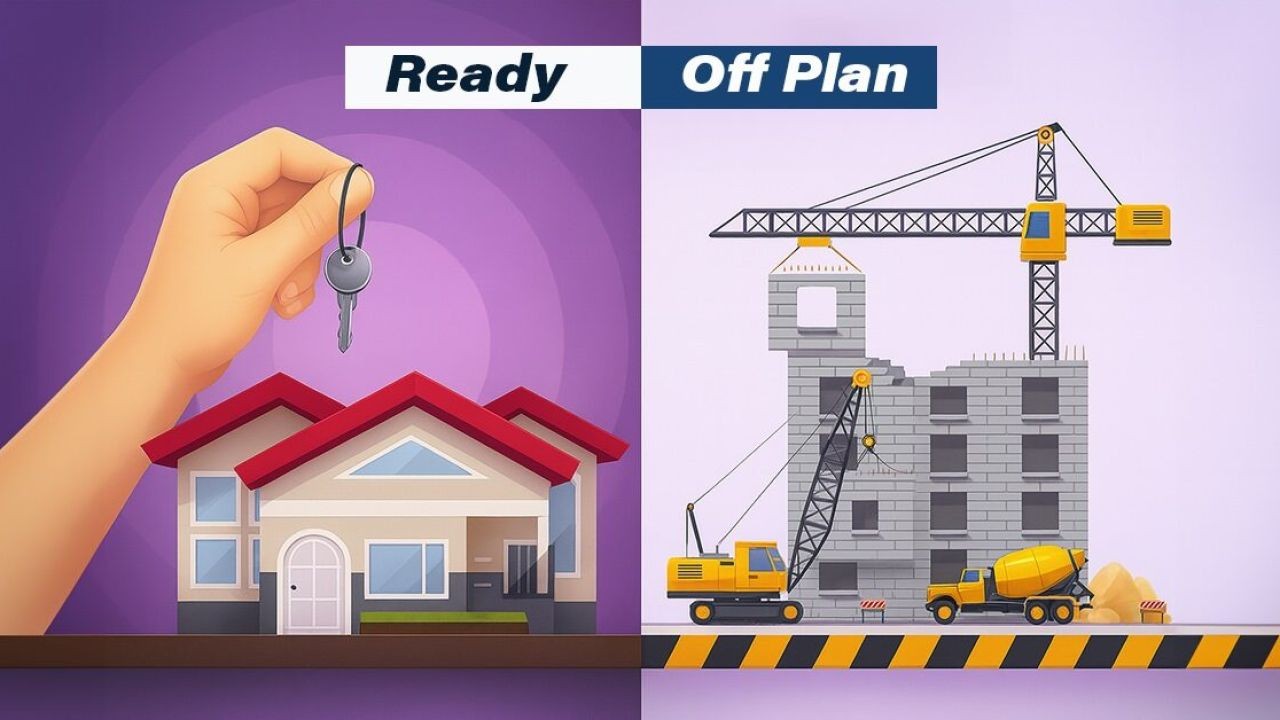
For many aspiring homeowners and investors in New Zealand, the traditional property hunt—weekend open homes, tense auctions, and immediate mortgage payments—feels like the only path to ownership. Yet, an alternative route, often shrouded in both allure and apprehension, promises a different journey: buying off the plans. This method, where you purchase a property based on architectural drawings and developer promises before a single brick is laid, has surged in popularity amidst our nation's chronic housing shortage. But is it a savvy financial strategy or a speculative gamble dressed up as security? The answer is not binary. From my experience supporting Kiwi companies and individuals in navigating complex asset acquisitions, the off-plan market is a landscape of profound opportunity laced with significant, often underestimated, risk. Success hinges not on luck, but on a forensic understanding of the contract, the developer, and the macroeconomic forces uniquely shaping Aotearoa's construction sector.
Deconstructing the Allure: The Tangible Advantages of Off-Plan Purchases
At its core, the off-plan proposition is compelling, particularly in a market like New Zealand's where established housing stock is fiercely competitive and often requires substantial immediate capital for renovations.
Capital Appreciation During the Build Phase
The most powerful driver is the potential for equity gain before you even take possession. You secure a purchase price at today's market value for a property that will be completed in 18-36 months. If the market rises during construction, you effectively gain instant equity upon settlement. For example, if you purchase an apartment for $800,000 and the market appreciates by 5% per annum, the completed value could be approximately $882,000 upon settlement two years later—a paper gain of $82,000. This isn't mere speculation; data from CoreLogic's New Zealand Market Outlook has historically shown periods of sustained growth in key urban centers, though past performance is no guarantee. Based on my work with NZ SMEs in the construction ecosystem, this "future equity" is often used as a strategic tool by investors to build portfolio leverage.
Improved Cash Flow Management
Unlike buying an existing home, which requires a full deposit and immediate mortgage repayments, off-plan purchases typically operate on a staged payment plan. Usually, a 10% deposit is required to secure the property, with the remaining balance due only upon completion and title issuance. This period, often spanning years, allows for significant financial planning. You have time to save additional funds, consolidate your financial position, or for investors, to cycle through other shorter-term holdings. Drawing on my experience in the NZ market, this breathing room is invaluable for first-home buyers needing to bolster their KiwiSaver or for business owners aligning a property settlement with their company's cash flow cycles.
Modern Design, Lower Maintenance, and Tax Benefits
New builds comply with the latest building codes, including higher insulation standards (H1) and healthier home requirements, leading to lower ongoing power bills—a critical factor as energy costs rise. They also come with mandatory 10-year Master Build Guarantees (or similar), providing warranty protection against structural defects. For investors, the ability to claim depreciation on the building (chattels and, to a lesser extent now, the structure) can provide a meaningful annual tax advantage, improving cash-on-cash returns in the early years of ownership. In practice, with NZ-based teams I’ve advised, this depreciation schedule often forms a cornerstone of the initial investment feasibility model.
Key Actions for the Kiwi Off-Plan Buyer
- Model Multiple Scenarios: Use a spreadsheet to project your finances not just if the market rises 5% annually, but if it stagnates or falls 2-3%. Can you still service the mortgage if interest rates are 7% at settlement?
- Secure Finance Pre-Approval, Not Just Pre-Qualification: Engage a mortgage broker early to get a formal, conditional approval that outlines the bank's requirements for the final valuation at settlement. This clarifies your borrowing capacity under potential future stress tests.
- Interrogate the Sunset Clause: Understand the contract's sunset date—the outside date for completion. Ensure it protects you from indefinite delays while also allowing reasonable extensions for legitimate construction hold-ups.
The Inherent Risks: When the Blueprint Doesn't Match Reality
For every success story, there is a tale of regret. The off-plan process is a deferred-gratification model that transfers several critical risks from the developer to the purchaser during the construction phase.
Valuation Risk at Settlement
This is the single greatest financial hazard. If the property market declines during the build, the bank's registered valuation at completion may come in below your contracted purchase price. This creates a valuation shortfall. You are still legally obligated to pay the original price to the developer, but the bank will only lend against the lower valuation. You must bridge this gap with additional cash—savings you may not have. The Reserve Bank of New Zealand's (RBNZ) Financial Stability Report consistently highlights the sensitivity of the NZ housing market to interest rates and credit availability. A shift in these macro-factors during your build period can materially impact your final equity position. From consulting with local businesses in New Zealand, I've seen this scenario force buyers to liquidate other assets or, in worst-case scenarios, default on the agreement, forfeiting their deposit.
Developer Solvency and Construction Quality
You are betting on the developer's ability to deliver. The New Zealand construction industry has been plagued by insolvencies, with major firms like Arrow International and numerous smaller operators collapsing in recent years, leaving projects in limbo. While deposit funds should be held in trust, a developer's failure can cause years of delay, legal entanglement, and emotional distress. Furthermore, the finished quality may not meet the marketing gloss. Having worked with multiple NZ startups in proptech, I've observed a growing but still insufficient use of digital twins and construction progress platforms that offer true transparency to off-plan buyers.
Changing Personal Circumstances and Interest Rate Exposure
A lot can change in two or three years: job loss, relationship breakdown, illness, or a change in investment strategy. Exiting an off-plan contract before completion is notoriously difficult and may require assigning the sale to another party, often with developer consent. Simultaneously, you are exposed to interest rate movements. Your mortgage rate is not locked in at the time of signing the contract; it is set at settlement. With the Official Cash Rate (OCR) as a key determinant, your servicing costs could be significantly higher than projected.
A Step-by-Step Guide to Mitigating Off-Plan Risk in NZ
Navigating this process requires a disciplined, checklist-driven approach. Think of yourself as a forensic underwriter, not an eager buyer.
Step 1: Developer Due Diligence (The Most Critical Step)
Research the developer's track record exhaustively. Do not rely on sales agent assurances.
- Visit their past projects. Knock on doors and ask residents about build quality, post-settlement support, and any unresolved issues.
- Search the Companies Office for their financial statements. Look for profitability, a strong equity position, and low debt.
- Check for any disputes lodged with the Ministry of Business, Innovation and Employment (MBIE) or court proceedings.
- Verify the project is fully consented and that the salesperson is licensed under the Real Estate Agents Act (REA).
Step 2: Legal & Financial Scaffolding
Engage a Specialist Property Lawyer: Do not use your family conveyancer. You need a lawyer experienced in off-plan developments who will scrutinize the Sale and Purchase Agreement (SPA), the often-voluminous disclosure statements, and the body corporate rules (if applicable). Key clauses to negotiate include: the sunset clause, defect rectification process, and specifications list (appliances, fittings, finishes—get brands and models specified).
Secure Robust Finance Conditions: Your finance condition should explicitly cover valuation risk. A condition stating "subject to the bank providing finance satisfactory to the purchaser" is weak. Aim for "subject to the bank's registered valuation at settlement being equal to or greater than the purchase price." Discuss "worst-case" bridging loan options with your adviser.
Step 3: Continuous Monitoring Through to Settlement
Once conditional, don't go dormant. Maintain regular, documented communication with the developer or project manager. Attend site visits if offered. Closer to settlement, engage a professional building inspector for a pre-settlement snagging list. Do not assume the code compliance certificate (CCC) guarantees perfection; it signifies minimum standards have been met.
Case Study: The Auckland Apartment – A Tale of Two Outcomes
Problem: In 2019, two investors, Sarah and Mark, each purchased off-plan apartments in different large-scale Auckland developments for $750,000, with completion expected in late 2021. Both sought capital growth and rental yields. The developments were in similar, gentrifying suburbs.
Action: Sarah conducted thorough due diligence. Her lawyer negotiated a tighter sunset clause and explicit specifications. She secured a finance condition protecting against valuation shortfall. She regularly reviewed the developer's progress reports.
Mark was swayed by the glossy showroom and a "limited time" offer. He used a cheaper, generalist lawyer who made few changes to the standard contract. His finance condition was vague. He had little engagement during the build phase.
Result: Completion was delayed to mid-2022 for both, coinciding with an RBNZ-driven market correction. Sarah's bank valuation came in at $740,000—a minor shortfall she covered with savings. The build quality was good, and she secured a tenant quickly.
Mark's valuation was $690,000—a $60,000 shortfall. He lacked the cash and had to urgently sell another investment at a loss to cover it. Upon moving in, he discovered numerous defects and inferior finishes not matching the brochure, leading to a costly dispute.
Takeaway: The same macroeconomic conditions produced drastically different outcomes. Sarah's rigorous process mitigated risk, while Mark's passive approach amplified it. The developer's reputation and the strength of the contractual terms were the decisive factors, not the market movement alone.
Common Myths and Costly Mistakes in the NZ Off-Plan Market
Myth 1: "It's Cheaper Than Buying Existing"
Reality: While the sticker price might be competitive, you are paying a premium for "newness." Established homes in the same area often offer better value on a price-per-square-metre basis, more land, and mature landscaping. The true cost comparison must include the long-term savings on maintenance and energy, which may take years to materialize.
Myth 2: "The Deposit is My Only Risk"
Reality: As outlined, your liability is the full purchase price. A valuation shortfall requires finding tens of thousands in cash. Walking away from the contract due to an inability to settle can result in the developer suing for damages beyond your forfeited deposit.
Myth 3: "The Rendered Images are a True Representation"
Reality: Marketing materials are artistic interpretations. The final building massing, landscaping, and even apartment layouts can change due to engineering requirements. Your only contractual protection is the detailed specifications schedule in the SPA.
Biggest Mistakes to Avoid:
- Skimping on Specialist Advice: Saving $2,000 on a less-experienced lawyer can cost you $60,000 in a valuation shortfall or defect dispute.
- Over-Leveraging Based on Projected Equity: Banking on future capital gain to make the investment viable is speculation, not strategy. Base your serviceability on today's income and conservative interest rate assumptions.
- Ignoring Body Corporate Rules: For units and apartments, the proposed body corporate operational rules dictate if you can have pets, rent on Airbnb, or make alterations. These can significantly impact livability and investment returns.
Future Forecast & Trends: The Evolving NZ Off-Plan Landscape
The off-plan sector is not static. Several converging trends will redefine its risk-reward profile over the next five years.
Firstly, the increasing adoption of Modern Methods of Construction (MMC), such as prefabrication and panelized building in factories, promises greater construction certainty, reduced weather delays, and potentially higher quality control. This could mitigate completion risk and compress build timelines. Secondly, proptech and blockchain are poised to bring unprecedented transparency. Imagine a secure, immutable digital ledger tracking every payment, material delivery, and inspection report, accessible to the buyer in real-time—moving trust from personal assurance to verifiable data.
However, regulatory headwinds persist. The Building (Building Products and Methods, Modular Components, and Other Matters) Amendment Act aims to lift accountability, but its full impact on developer costs and viability is still unfolding. Furthermore, the Climate Adaptation Act (in development) will increasingly influence where and how we build, affecting the long-term insurability and value of developments in flood-prone or coastal zones—a critical consideration for any long-term asset.
Industry Insight: From observing trends across Kiwi businesses, the most forward-thinking developers are starting to offer hybrid models. These include longer deposit protection plans, shared equity options to buffer valuation risk, and even guaranteed buy-back clauses after a period to attract cautious capital. The future belongs not to the cheapest developer, but to the one who can best de-risk the proposition for the buyer.
Final Takeaway & Strategic Call to Action
Buying off-plan in New Zealand is a sophisticated financial instrument, not a simple property purchase. It offers a structured path to a modern, efficient asset and can be a powerful wealth-creation tool in a rising market with disciplined execution. Conversely, it can be a trap for the under-prepared, exposing you to market volatility, developer failure, and significant financial shortfalls.
Your success depends entirely on the rigor of your process. The blueprint on paper is meaningless without the scaffolding of expert advice, deep due diligence, and conservative financial modeling.
Your Action Plan:
- Assess Your Risk Profile: Are you financially and emotionally prepared for a multi-year process with uncertain outcomes? If you need certainty and immediate occupancy, look at the existing market.
- Build Your Professional Team First: Before viewing a single showroom, engage a mortgage broker specializing in new builds and interview at least three property lawyers with proven off-plan experience. Their cost is an insurance policy.
- Adopt a Forensic Mindset: Approach every development as an investigator. Verify, do not trust. Your checklist is your most valuable asset.
The decision to buy off-plan is ultimately a vote of confidence—not just in a property, but in a developer's execution, a lawyer's vigilance, and your own capacity to navigate complexity. In New Zealand's evolving property landscape, that confidence must be earned, not given.
People Also Ask (PAA)
How does the Bright-Line Test apply to off-plan purchases in NZ? The Bright-Line Test period typically starts from the date you receive the title (settlement), not the date you sign the contract. For a new build, the Bright-Line period is currently five years. You must own the property for at least five years from settlement to avoid potential tax on gains if sold.
What happens if my off-plan property is damaged or destroyed during construction? This risk should be covered by the developer's construction insurance. Your deposit, held in trust, should be refundable if the project is abandoned due to a catastrophic event. Your lawyer must verify these insurance and trust account provisions are explicitly stated in the contract.
Can I make changes to the design or specifications after signing the contract? This is often possible but subject to developer approval, council consent (if structural), and always at an additional cost. Any agreed changes must be documented in a formal written variation to the contract to avoid disputes at settlement.
Related Search Queries
- off plan property risks New Zealand 2024
- best off plan developers Auckland Wellington Christchurch
- sunset clause NZ property law explained
- how to check developer reputation NZ
- off plan vs existing house investment return NZ
- bank valuation shortfall what to do
- new build depreciation schedule NZ property investor
- Master Build Guarantee coverage and claims
- impact of OCR on off plan settlement
- body corporate rules off plan apartment buying
For the full context and strategies on The Pros and Cons of Buying Off-Plan Properties in NZ, see our main guide: Retail Ecommerce Video Marketing Nz.