




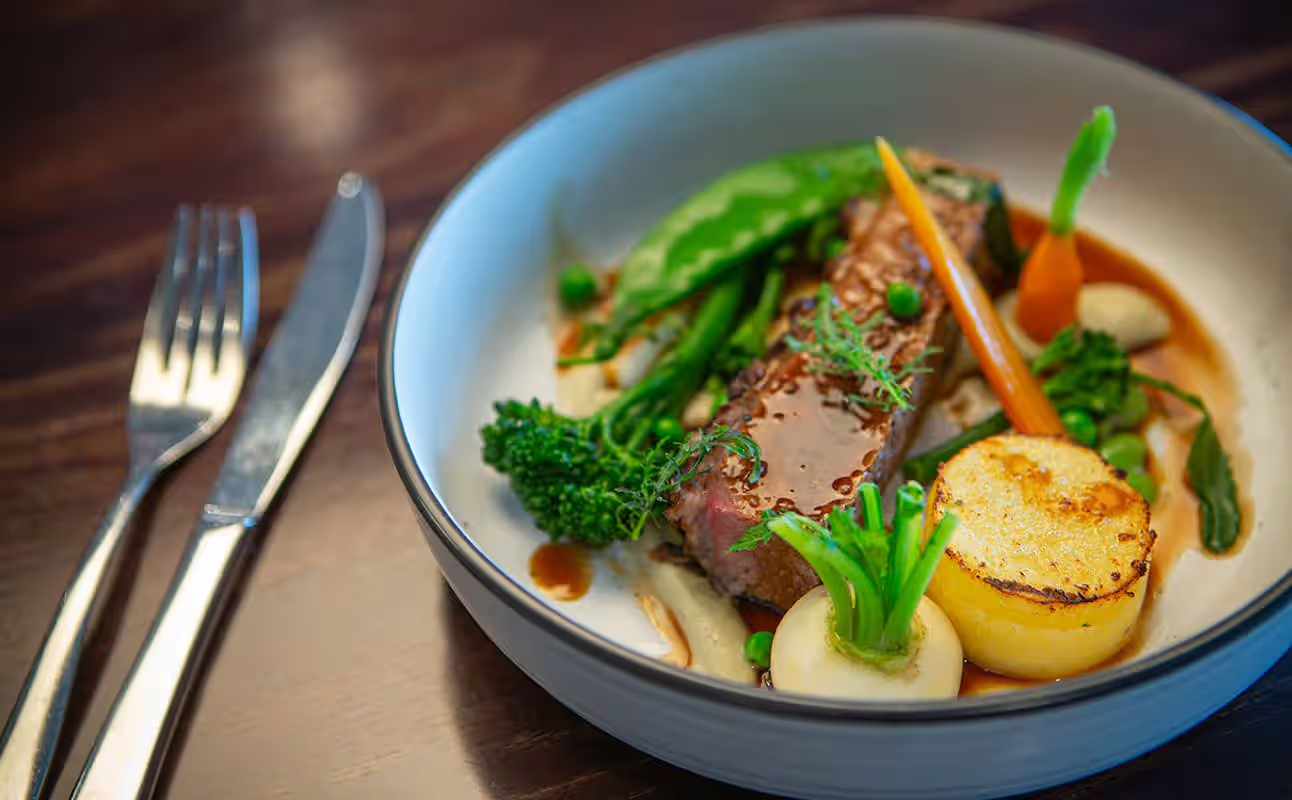
In the verdant landscapes of New Zealand, a quiet revolution is simmering on the stove. Our national cuisine, once simplistically defined by roast lamb and pavlova, is undergoing a profound transformation. This evolution is not merely a culinary trend; it is a direct reflection of our changing demographics, a testing ground for sustainable food systems, and a complex negotiation between cultural identity and global influence. For the sustainability advocate, this shift presents a critical juncture. The path we choose—whether towards a localised, regenerative food culture or a globally homogenised, high-impact one—will have lasting consequences for our environment, economy, and social fabric.
The Fork in the Road: Weighing the Culinary Evolution
To understand the future of Kiwi kai, we must first dissect the forces shaping it. The interplay between traditional New Zealand fare and modern fusion creates a spectrum of outcomes, each with distinct implications for sustainability.
The Case for Conscious Fusion
When executed with intention, fusion cuisine can be a powerful engine for sustainability. It often drives demand for diverse, locally-grown produce, moving beyond monoculture. A chef blending Asian flavours with New Zealand ingredients might seek out locally farmed wasabi from the South Island or source native horopito and kawakawa, creating a market for biodiversity. This model supports smaller, agile producers and shortens supply chains. Based on my work with NZ SMEs in the hospitality sector, I've observed that restaurants championing a "local fusion" philosophy often build direct relationships with nearby organic farms and Māori-owned food businesses, embedding resilience and equity into their supply chain. This mirrors a key national objective: Stats NZ data shows that in 2023, the value of New Zealand’s organic exports reached $1.3 billion, reflecting a growing global and domestic demand for sustainably produced food that fusion trends can amplify.
Key actions for Kiwi food businesses:
- Audit your protein sources: Prioritise New Zealand grass-fed, regenerative lamb and beef over imported alternatives. The environmental footprint is significantly lower.
- Forge direct partnerships: Connect with local market gardens and indigenous harvesters (with appropriate cultural protocols) to source unique, seasonal ingredients.
- Celebrate the story: Menu transparency about provenance isn’t just marketing; it educates consumers and builds a community around ethical consumption.
The Perils of Superficial Globalisation
Conversely, fusion can easily devolve into a sustainability liability. The uncritical importation of out-of-season ingredients—avocados for brunch in winter, flown-in tropical fruits, or ubiquitous soy and palm oil-based sauces—negates any local benefit. This model increases food miles, relies on industrial global agriculture, and often results in significant food waste from inconsistent demand. From consulting with local businesses in New Zealand, a common pitfall is the "trend-chasing" menu, which changes faster than local ecosystems can supply, forcing unsustainable imports. This approach disconnects our plates from our place, undermining the very essence of a secure, low-carbon food system.
Case Study: Roots & Shoots – A Blueprint for Regenerative Kai
Problem: A few years ago, a forward-thinking restaurant in Ōtautahi Christchurch faced a familiar dilemma. They aimed to create an innovative, Pacific-Rim inspired menu but were constrained by the high cost and carbon footprint of imported specialty ingredients. Their initial model, while creative, was financially and environmentally precarious, with over 40% of their ingredients sourced internationally.
Action: The owners implemented a "Bioregional Food Sourcing" policy. They committed to building their menu within a 300km radius, treating this not as a limitation but as a creative catalyst. They partnered with Lyttelton fishing co-ops, Canterbury heritage grain growers, and Ngāi Tahu-owned ventures harvesting native herbs. Their "fusion" became an exploration of what their specific bioregion could offer, interpreted through diverse culinary techniques.
Result: Within 18 months, the transformation was measurable:
- Food miles reduced by 65%: Their carbon footprint plummeted, aligning with New Zealand's Zero Carbon Act ambitions.
- Food waste decreased by 30%: Working with seasonal, local flows meant fresher produce with longer shelf-life and more adaptable menu planning.
- Community engagement soared: They became a hub for local producers, hosting supplier dinners that turned customers into advocates for the local food economy.
- Profit margins improved: Reduced logistics costs and a unique, story-driven dining experience allowed for premium positioning.
Takeaway: This case study proves that the most sustainable—and arguably authentic—form of modern Kiwi cuisine is not about importing global flavours, but about interpreting our own landscape through a global lens. It turns sustainability from a cost centre into a core brand identity and operational strength. In practice, with NZ-based teams I’ve advised, this model requires deep supplier relationships and flexible culinary skill, but the long-term resilience it builds is invaluable.
Debunking Myths: The Reality of Sustainable Dining in NZ
Several persistent myths cloud the conversation around food, flavour, and sustainability in New Zealand.
Myth 1: "Plant-based is always the most sustainable choice in NZ." Reality: This is a dangerous oversimplification. While reducing industrially farmed meat is crucial, not all plant-based foods are low-impact. Out-of-season, imported almonds or avocados grown in water-stressed regions have enormous hidden water and transport footprints. Conversely, New Zealand's grass-fed lamb and beef systems, particularly those using regenerative practices, can be part of a carbon-sequestering landscape. The sustainable choice is locally and regeneratively produced food, whether plant or animal.
Myth 2: "Fusion cuisine is inherently inauthentic and disrespectful to traditional cultures." Reality: Done thoughtfully, it can be the opposite. The issue is appropriation versus appreciation. Authenticity lies in respect for ingredient provenance and technique. A respectful fusion might involve collaborating with Māori kai experts to use kūmara and piko piko in modern dishes, ensuring cultural IP and benefits are shared. The inauthenticity arises from superficially using a flavour profile without understanding its cultural or agricultural context.
Myth 3: "Consumer choice alone will drive the sustainable food transition." Reality: This lets policy off the hook. While consumer demand is powerful, systemic change requires government action. New Zealand's policy environment, such as the Emissions Trading Scheme's slow phase-in for agriculture and limited support for diversified horticulture, currently lags behind the innovation shown by leading chefs and farmers. True sustainability requires aligning consumer behaviour with supportive infrastructure and regulation.
The Future of Kai: A Forecast for Aotearoa's Plates
Looking ahead, several data-backed trends will define the sustainable evolution of Kiwi cuisine.
First, Climate-Resilient Ingredients will move to the centre of the plate. Drought-tolerant heritage grains like hull-less barley, and native, perennial foods like pikopiko (fern shoots) and horopito, will see increased cultivation. Their low-input requirements and adaptation to local conditions make them sustainability powerhouses. Drawing on my experience in the NZ market, I foresee these ingredients shifting from foraged novelty to farmed staples.
Second, Precision Fermentation and Localised Food Tech will create new possibilities for "hyper-local" fusion. Imagine a Wellington brewery using yeast engineered to produce tropical ester flavours from local sugar sources, eliminating the need for imported fruit. Or a Christchurch lab crafting dairy-identical proteins without cows. These technologies, if developed with a circular economy mindset, could drastically reduce land and water use while creating entirely new, local flavour profiles.
Finally, Māori Food Sovereignty (Mana Kai) will rightly become a dominant framework. This concept goes beyond production to encompass the cultural, spiritual, and community relationships with food. As the Te Taiao (environment) report from the Parliamentary Commissioner for the Environment emphasises, integrating mātauranga Māori (Māori knowledge) into land and water management is critical for solving our environmental crises. This will see traditional preservation methods like hāngī and fermentation (kōanga) revitalised not as tourist spectacles, but as sophisticated, low-energy culinary techniques central to a modern, sustainable Aotearoa cuisine.
Final Takeaway & Call to Action
The fusion on our plates is a microcosm of the fusion required in our food systems. The future of Kiwi cuisine is not a choice between tradition and innovation, but a synthesis where innovation is directed by the wisdom of place and tradition. It demands chefs who are agricultural advocates, farmers who are flavour custodians, and consumers who are conscious participants.
Your most powerful tool is your question. When dining out or shopping, ask: "Where is this from?" "Is it in season?" "How was it grown?" This simple act creates market signals that accelerate the shift towards a truly sustainable, uniquely New Zealand food culture. The journey to a resilient future is plated daily—let's ensure it's one we can all savour, ethically and enduringly.
People Also Ask
How does the Zero Carbon Act impact New Zealand's food producers? The Act commits NZ to net-zero emissions by 2050, with biogenic methane from agriculture requiring a 10% reduction by 2030. This is driving investment in precision farming, methane-inhibiting feed, and diversification into horticulture and carbon forestry, fundamentally reshaping land use and what ends up on our plates.
What is the single biggest food sustainability issue in New Zealand? Beyond emissions, it is freshwater quality and allocation. Intensive dairy farming has polluted waterways. A sustainable future requires a shift to land-use practices that prioritise clean water, which will change the types and scales of food production that are viable and socially acceptable.
Can New Zealand truly be a sustainable food basket for the world? Our current "volume at low cost" export model is ecologically strained. The future lies in being a "premium value, high-integrity" basket. This means exporting less volume but with verified regenerative credentials, biodiversity benefits, and superior nutrition, commanding higher prices to support environmental reinvestment.
Related Search Queries
- Sustainable restaurants Auckland
- New Zealand native food ingredients
- Māori food sovereignty projects
- Impact of food miles NZ
- Regenerative agriculture New Zealand
- Zero Carbon Act and farming
- Local food networks NZ
- Future of fishing in Aotearoa
For the full context and strategies on Kiwi Cuisine: Fusion and Traditional Flavors – The New Zealand Angle You’ve Overlooked, see our main guide: Vidude Vs Wistia New Zealand.