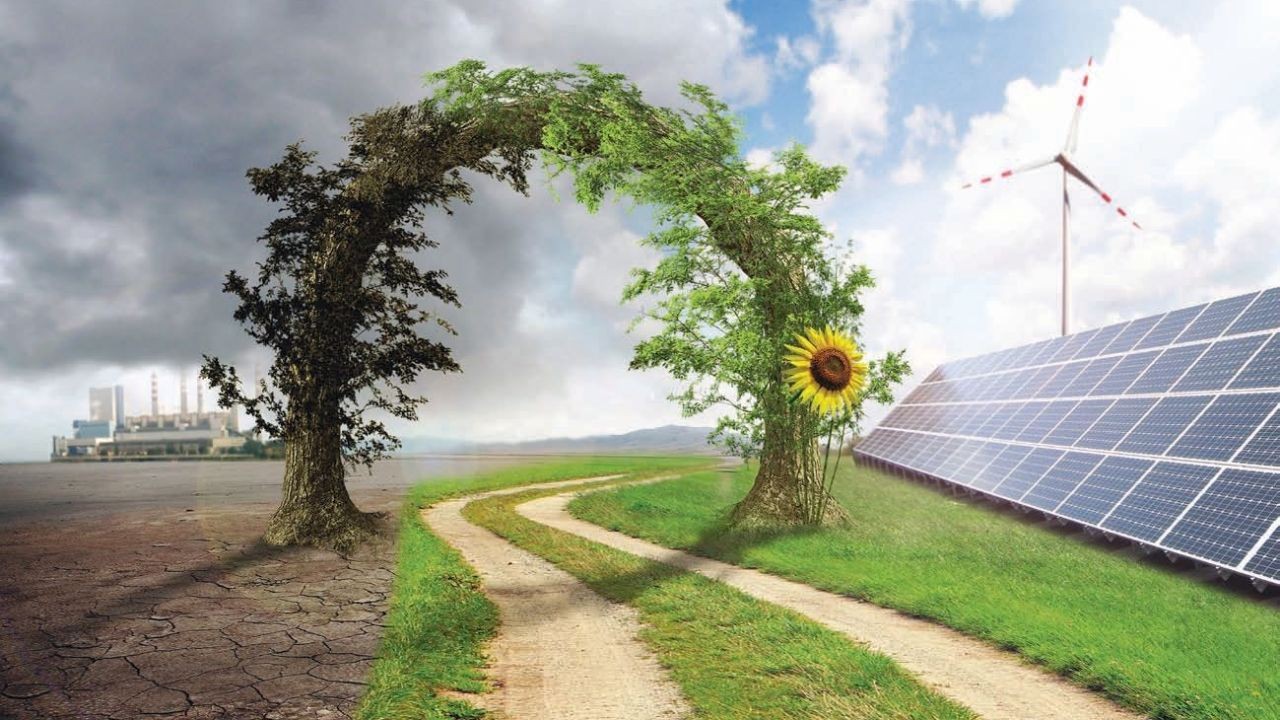





The Australian energy landscape is undergoing a transformation so profound, it's reshaping our national identity. We are moving from a continent powered by legacy fossil fuels to a global renewable energy superpower. This isn't a distant aspiration; it's a tangible, data-driven reality unfolding across our sun-drenched plains, wind-swept coastlines, and innovative urban hubs. The Australian Renewable Energy Agency (ARENA) reports that renewable energy contributed a record 39.4% of electricity generation in 2024, a figure that continues its meteoric rise. This shift is more than an environmental imperative; it's an unprecedented economic and strategic opportunity, positioning Australia to lead the world in the clean energy century.
The Great Australian Energy Transition: From Legacy to Leadership
For decades, Australia's economy was synonymous with coal and gas exports. While these resources built our nation, the global pivot to net-zero emissions has fundamentally altered the playing field. The opportunity now lies not in digging commodities up, but in harnessing our boundless natural capital: solar and wind. According to the Clean Energy Council, over 40,000 people were employed in renewable energy generation in 2023, a number set to explode as investment accelerates. The transformation is being driven by a powerful trifecta: plummeting technology costs, overwhelming consumer and corporate demand for clean power, and increasingly coherent state and federal policy frameworks, such as the Capacity Investment Scheme.
From consulting with local businesses across Australia, I've witnessed a seismic shift in mindset. It's no longer a question of if a business should transition to renewables, but how quickly and strategically they can do so. The economic case is now irrefutable. Large-scale solar and wind are the cheapest forms of new-build electricity in Australia, undercutting fossil fuels even without accounting for carbon costs. This isn't a niche trend; it's the new bedrock of our future energy security and economic competitiveness.
Case Study: Sun Cable – A Vision of Intercontinental Ambition
Problem: Australia's renewable energy potential, particularly in the Northern Territory and North Queensland, is so vast it exceeds domestic demand. The challenge was how to monetise this surplus at scale and overcome the intermittency of solar power to provide firm, dispatchable clean energy to major demand centres.
Action: The ambitious Sun Cable project proposed a world-first solution: a 20-gigawatt solar farm in the Northern Territory, coupled with the world's largest battery storage system and a 4,200km high-voltage direct current (HVDC) subsea cable to export electricity to Singapore. This audacious plan aimed to turn Australia into a renewable energy exporter, leveraging our geographic advantage to power a neighbouring nation with Australian sunshine.
Result: While the original Sun Cable entity entered administration in 2023, its legacy is profound. It catalysed global investment interest and proved the technical and financial viability of such mega-projects. The project's assets were acquired, and development continues under new ownership, with strong backing. It demonstrated that Australian renewable ambition can attract billions in capital and redefine our role in the Asia-Pacific energy ecosystem.
Takeaway: This case study highlights that Australia's renewable future is not just about domestic decarbonisation. Our competitive edge lies in becoming a green energy export powerhouse. The lesson for Australian businesses and policymakers is to think bigger—to design infrastructure and regulatory frameworks that support these nation-shaping projects, turning our renewable resources into long-term export revenue and geopolitical strength.
Reality Check for Australian Businesses: Beyond the Solar Rooftop
A common misconception is that Australia's renewable transition is complete once households install rooftop PV. While our world-leading rooftop solar penetration (over 3.4 million systems according to the Clean Energy Regulator) is a phenomenal success story, it's just the opening chapter. The real systemic change—and the greatest economic opportunity—lies in greening our industrial heartland and building the supporting infrastructure.
- Myth: "Renewables are too intermittent to power heavy industry." Reality: This is the central challenge of our generation, and the solutions are here. Through my projects with Australian enterprises in manufacturing and resources, I've seen the rapid advancement of 'firming' technologies. Large-scale battery storage (like the Victorian Big Battery), pumped hydro (Snowy 2.0), and emerging green hydrogen production are creating a reliable, 24/7 clean energy system. Industrial processes are adapting with flexible demand and on-site generation.
- Myth: "The transition will cost jobs in traditional sectors." Reality: This is a transition of jobs, not a net loss. The Australian Energy Employment Report (2023) forecasts that clean energy jobs will grow from 40,000 to over 80,000 by 2030. The skills of engineers, electricians, and project managers in fossil fuels are directly transferable and in high demand. The focus must be on proactive, region-specific workforce transition plans.
- Myth: "Consumers won't pay a premium for green energy." Reality: The market says otherwise. Corporate Power Purchase Agreements (PPAs) are booming, with Australian companies like BHP, Telstra, and Coles signing multi-gigawatt deals to lock in clean power at stable prices. This isn't charity; it's savvy risk management and brand enhancement in an ESG-focused global marketplace.
The Green Hydrogen Gambit: Australia's Trillion-Dollar Opportunity
If renewable electricity is the first wave, green hydrogen is the potential tsunami. Produced by using renewable energy to split water, green hydrogen is a versatile, zero-emissions fuel and feedstock. For Australia, it represents a chance to create entirely new export industries, decarbonise hard-to-abate sectors like heavy transport and steelmaking, and leverage our existing trade relationships.
The National Hydrogen Strategy sets a clear ambition for Australia to be a major global player by 2030. Pilots are already underway, from the Hydrogen Energy Supply Chain (HESC) project in Victoria to the Asian Renewable Energy Hub in Western Australia. The economic prize is staggering. Analysts at Goldman Sachs estimate the global clean hydrogen market could be worth over A$1.3 trillion annually by 2050. For Australia, capturing just a 10% share would create an industry larger than our current liquefied natural gas (LNG) sector.
The Great Debate: Electrolysers vs. Export Cables
This massive opportunity has sparked a strategic debate within the industry.
✅ The Electrolyser Advocate View: Proponents argue that Australia's greatest value-add is in producing and exporting green hydrogen and its derivatives (like ammonia or green iron). By installing massive electrolyser capacity near our best renewable resources, we become the "Saudi Arabia of green hydrogen," exporting high-value molecules globally. This creates permanent, high-skilled jobs in regional Australia and builds on our existing commodity export expertise.
❌ The Export Cable Critic View: Skeptics point to the significant energy losses in converting electricity to hydrogen and back. They argue it's more efficient to export electrons directly via subsea cables (like the Sun Cable model) to nearby demand centres in Asia. The technology for HVDC is proven, and it delivers clean power with minimal conversion loss, making it a more efficient use of our primary resource.
⚖️ The Pragmatic Middle Ground: In practice, with Australia-based teams I’ve advised, the winning strategy is likely "and," not "or." Green hydrogen is essential for decarbonising domestic industry and for export to markets like Japan and South Korea, which have stated hydrogen import strategies. Subsea cables are optimal for supplying bulk clean power to closer neighbours like Singapore. A diversified portfolio, matching the right energy vector to the specific end-use and geography, will maximise Australia's economic and strategic returns.
Future Trends & Predictions: The 2030 Australian Grid
By 2030, the Australian energy system will be unrecognisable from that of 2020. Drawing on my experience in the Australian market, I predict several defining characteristics:
- A Renewables-Dominant Grid: The CSIRO and AEMO's Integrated System Plan is clear: renewables will provide over 80% of NEM electricity by 2030. Coal generation will have rapidly exited, replaced by a fleet of grid-forming batteries and scheduled hydro providing essential system stability.
- The Rise of the Prosumer Industrial Complex: Large industrial users won't just consume power; they will be active prosumers. Mining sites will host gigawatt-scale solar-wind-battery complexes, exporting surplus to the grid or producing green hydrogen on-site for their haul trucks.
- AI-Optimised Virtual Power Plants (VPPs): Millions of home batteries, EVs, and smart appliances will be aggregated into continent-spanning VPPs. AI will trade this distributed flexibility in real-time markets, turning passive consumers into a critical, revenue-generating grid asset.
- Green Steel on the Drawing Board to Reality: Pilots in Whyalla and the Pilbara will have evolved into first-generation commercial green steel plants, using Australian hydrogen and iron ore to create a premium, zero-carbon export product, fundamentally reshaping a foundational industry.
Final Takeaway & Call to Action
The narrative is no longer about Australia catching up to a global energy transition. We are poised to lead it. We possess the resources, the technical expertise, and the capital appetite. The final, critical ingredient is unwavering strategic confidence and policy certainty.
For businesses, the action is immediate: conduct a detailed energy audit, model a PPA, investigate on-site generation and storage, and embed a renewable energy strategy into your core business plan. For policymakers, the task is to accelerate planning and approval for critical transmission projects—the 'poles and wires' that are the true bottleneck—and to finalise mechanisms like the Guarantee of Origin scheme to certify and monetise our green exports.
This is our generation's great national project. It's a path to energy independence, regional economic revitalisation, and lasting global relevance. Let's build it.
People Also Ask (PAA)
What is the biggest challenge for renewable energy in Australia? The primary challenge is building the new transmission infrastructure to connect renewable energy zones to the grid. Regulatory delays and community consultation are critical but must be streamlined to meet our 2030 targets.
How can Australian homeowners benefit from the energy transition? Beyond rooftop solar savings, homeowners can participate in Virtual Power Plants (VPPs), earning money by allowing their battery or EV to support the grid. This turns energy assets into revenue streams.
Is nuclear power a viable option for Australia's future? Given Australia's world-class solar and wind resources, which are faster and cheaper to deploy, nuclear faces significant economic and timing hurdles. The current national focus remains on leveraging our renewable advantage and firming technologies.
Related Search Queries
- Australian renewable energy investment opportunities 2024
- Cost of commercial solar installation Australia
- Green hydrogen projects Australia
- Virtual Power Plant (VPP) providers Australia
- Australian government renewable energy incentives
- Grid-scale battery storage Australia
- Corporate PPA examples Australia
- Renewable energy jobs growth Australia
- Net zero target by 2050 Australia policy
- Community battery benefits Australia
For the full context and strategies on 7. The Influence of Asian Cuisine on Australian Food Trends – Why It’s Hot Right Now in Australian Media, see our main guide: Performing Arts Videos Australia.