





You downloaded an app to learn a language, master a new skill, or help your child with maths. It felt like a personal tutor, adapting to your pace and celebrating your wins. But behind every encouraging notification and customised lesson plan, a parallel, silent curriculum was in session—one where you, the student, became the product. The data harvested from your learning journey is being packaged, analysed, and sold, creating a shadow industry worth billions. In Australia, where digital education boomed during the pandemic and never slowed, this trade in personal insights is happening on a scale few users comprehend.
The Anatomy of a Data Harvest: More Than Just Your Progress
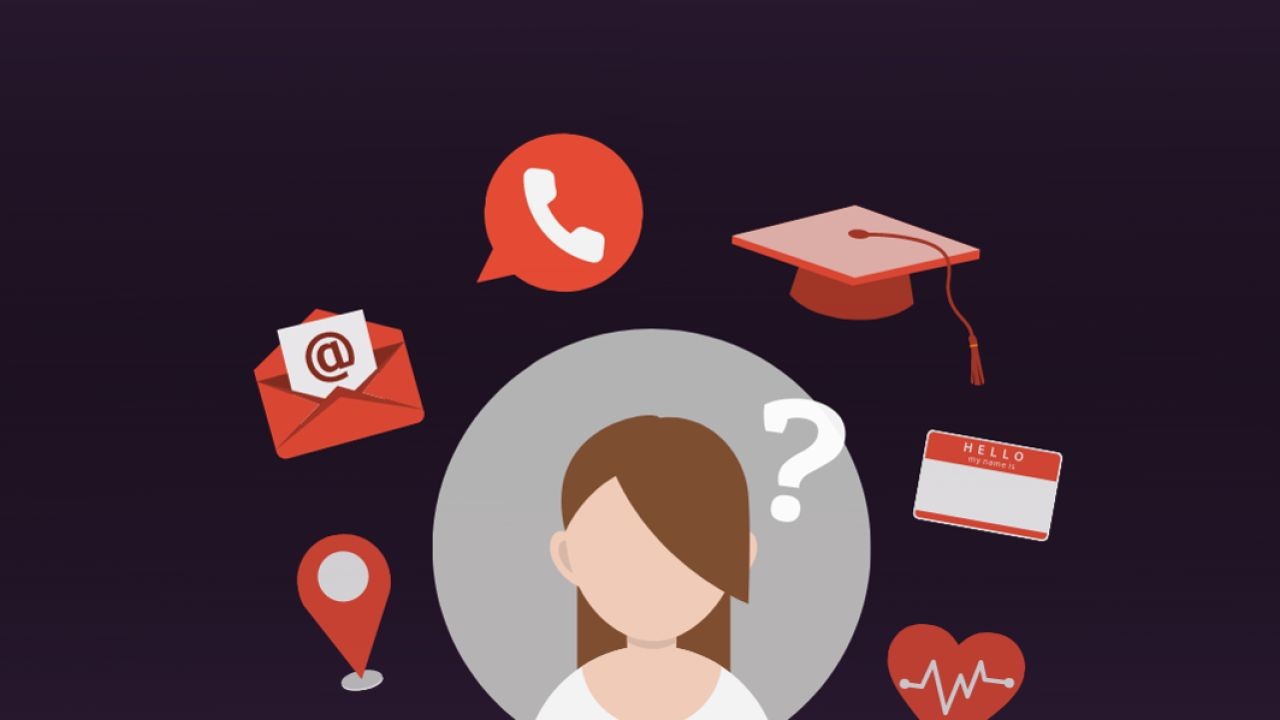
To understand the value of your data, you must first understand its depth. Learning apps collect far more than your quiz scores. They log every interaction: how long you hesitate on a question, what time of day you study, where you tap, scroll, and pause. This behavioural biometrics creates a startlingly intimate profile.
Dr. Ritesh Chugh, Associate Professor in Information Systems at CQUniversity Australia, explains the scope: "It's not just what you get right or wrong. It's your persistence patterns, your frustration cues, even your attention span. This data is a goldmine for behavioural prediction, far beyond the app's stated purpose." This information is typically aggregated and anonymised, but as the landmark 2023 case against ed-tech giant Byju's illustrated, the line between aggregated analytics and personal identification can be perilously thin.
Case Study: Duolingo – The Freemium Model's Data Engine
Problem: As one of the world's most popular language-learning platforms, Duolingo operates on a freemium model. Its challenge was to monetise its vast free user base without compromising growth, turning engagement into sustainable revenue.
Action: While subscription fees are one revenue stream, Duolingo's S-1 filing ahead of its IPO revealed a sophisticated data strategy. The company analyses user data to fuel its Duolingo English Test, a certified language proficiency exam, and, crucially, sells aggregated, anonymised data to third parties. Its privacy policy explicitly states it may share information for "research purposes" and with "advertising partners."
Result: In 2023, Duolingo reported over $400 million in annual revenue. A significant, though undisclosed, portion is attributed to its data-driven business segments. The company's data on language learning patterns is invaluable for academic researchers, but also for marketers seeking to target highly motivated, self-improving demographics.
Takeaway: Duolingo’s model demonstrates that if you're not paying for the product, you are the product—even in education. From consulting with local businesses across Australia, I've seen this 'insights-as-a-service' model replicated by smaller platforms, who sell aggregated user trends to publishers and curriculum developers. For the Australian user, this means your struggle with French verbs could be shaping the next wave of digital textbook ads you see.
Where Most Brands Go Wrong: The Privacy Illusion
A common misconception is that strong privacy policies are a shield. In reality, lengthy, complex terms of service often grant sweeping permissions. Users, eager to start learning, click "agree" without realising they may be consenting to share data with a network of analytics and advertising partners.
Australia's Privacy Act 1988 is currently under review, with reforms likely to introduce stricter obligations for social media and online platforms. However, as it stands, the Act has significant gaps. "The current definition of 'personal information' can be narrowly interpreted," notes a spokesperson from the Office of the Australian Information Commissioner (OAIC). "Technical data like device identifiers and IP addresses, which can be used to re-identify individuals, may not always be covered."
This creates a grey area where apps can argue that the behavioural data they sell is not 'personal' as it's stripped of direct identifiers—even though it paints a uniquely identifiable digital portrait. Based on my work with Australian SMEs in the tech sector, I've observed that local startups often mirror the data practices of their Silicon Valley counterparts, assuming this is the standard cost of doing business, before fully considering the ethical and future regulatory implications for their users.
The Australian Landscape: A Market at a Crossroads
The Australian e-learning market is vast and growing. According to the Australian Bureau of Statistics, during the peak of the pandemic, nearly half of all Australian households (46%) had at least one child learning online. This habit has persisted, creating a deep and data-rich user base.
Financially, the incentives are colossal. Data brokerage is a high-margin industry. While exact figures for the Australian ed-tech data market are opaque, the global data brokerage market was valued at over $300 billion AUD. For context, selling targeted advertising based on user profiles can be up to ten times more lucrative than non-targeted ads. A learning app with a million active Australian users isn't just an education platform; it's a powerful data analytics firm.
The regulatory tide, however, is turning. The ACCC's Digital Platform Services Inquiry has consistently highlighted concerns over data concentration and opaque data practices. In one of its recent reports, the ACCC found that "consumers have little insight into, or control over, how their data is collected and used" by major platforms. This scrutiny is a clear signal that Australia is moving towards a more stringent regulatory environment, potentially mirroring aspects of the EU's General Data Protection Regulation (GDPR).
Balancing Innovation with Integrity: A Path Forward
This is not a call to abandon digital learning. The benefits are profound and real. The challenge is to foster innovation that respects user autonomy. Here, Australian businesses have an opportunity to lead.
Pros of the Data-Driven Model:
- Personalised Learning: Data enables adaptive algorithms that can genuinely improve educational outcomes by identifying knowledge gaps.
- Free Access: Data monetisation subsidises free tiers, making education more accessible to millions.
- Product Improvement: Aggregated data helps developers fix bugs and create better, more engaging content.
- Academic Research: Anonymised datasets can power important studies on learning science.
Cons and Critical Risks:
- Profiling and Discrimination: Inferred data about ability, patience, or even socioeconomic status (from device or connection type) could be used in discriminatory ways by third parties.
- Lack of True Consent: The current 'take-it-or-leave-it' model of privacy policies is not informed consent.
- Data Breach Vulnerability: The more data collected, the larger the target for hackers. Educational data is particularly sensitive.
- Erosion of Trust: When users discover the extent of data sharing, it undermines the core educator-student relationship.
Actionable Insights for the Australian User and Investor
For the Australian consumer, vigilance is key. Before downloading an app, check its privacy policy for keywords like "third-party sharing," "advertising partners," and "marketing purposes." Use device settings to limit ad tracking (e.g., iOS's App Tracking Transparency). Consider paid, premium versions that explicitly state they do not share data for advertising.
For the Australian investor or business leader, the future is in ethical data stewardship. Drawing on my experience in the Australian market, the most sustainable strategy is transparency. Companies that adopt clear, concise data use policies, offer genuine opt-in (not opt-out) choices, and explore alternative revenue models like micro-payments or institutional licenses will build deeper trust. This trust, in an era of increasing regulation, will become a significant competitive advantage and a buffer against reputational and legal risk.
Future Trends & Predictions: The Rise of Ethical Ed-Tech
By 2028, we will see a clear bifurcation in the market. One segment will continue the maximalist data extraction model, facing increasing regulatory fines and user backlash. The other, more innovative segment will champion "privacy by design."
I predict that within five years, an Australian ed-tech success story will be built on this very premise—a platform that achieves superior learning outcomes through advanced pedagogy, not invasive surveillance, and markets its ethical stance as a core feature. The ACCC and OAIC will likely gain stronger powers to penalise deceptive data practices, and "educational data" may be classified as a special category of sensitive information, warranting extra protection.
Final Takeaway & Call to Action
The classroom has moved into our pockets, but so has the marketplace. The trade in our learning data is a reality of the digital age, yet it is not an unchangeable one. As users, we must demand more transparency. As businesses, we must build more respectful models. And as a nation, Australia has the chance to craft a regulatory framework that protects citizens without stifling innovation.
The goal is not to end data use, but to align it with the fundamental ethos of education: empowerment, not exploitation. What's your next step? Review the permissions on your most-used learning app tonight. For founders: audit your data pipeline. The most valuable asset in the future of ed-tech won't be a dataset—it will be user trust.
People Also Ask (FAQ)
Are Australian learning apps subject to specific data laws? Yes, they are governed by the Privacy Act 1988 and the Australian Privacy Principles (APPs). However, the Act is under review to address digital platform gaps. The ACCC also enforces consumer law against misleading conduct regarding data use.
Can I request a learning app to delete my data in Australia? Under APP 12, you have the right to access your personal information. You can also request corrections and, in some circumstances, deletion. Apps operating globally often extend GDPR-style deletion rights (the 'right to be forgotten') to all users.
What's the biggest red flag in a learning app's privacy policy? Vague language about sharing data with "trusted third parties" or "partners" without specifying who they are or for what exact purpose. Also, be wary of policies that state data may be transferred overseas to countries with weaker privacy laws.
Related Search Queries
- Australian Privacy Act learning apps
- How to stop apps selling my data Australia
- Ed-tech data brokerage market
- ACCC digital platforms inquiry education
- Best privacy-focused learning apps 2024
- What data does Duolingo collect?
- Children's online privacy protection Australia
- OAIC data breach reporting
- Ethical ed-tech companies Australia
- GDPR vs Australian privacy law for apps
For the full context and strategies on How Learning Apps Collect & Sell Your Personal Data – Why It Matters More Than Ever in Australia, see our main guide: Investor Pitch Videos Australia.