





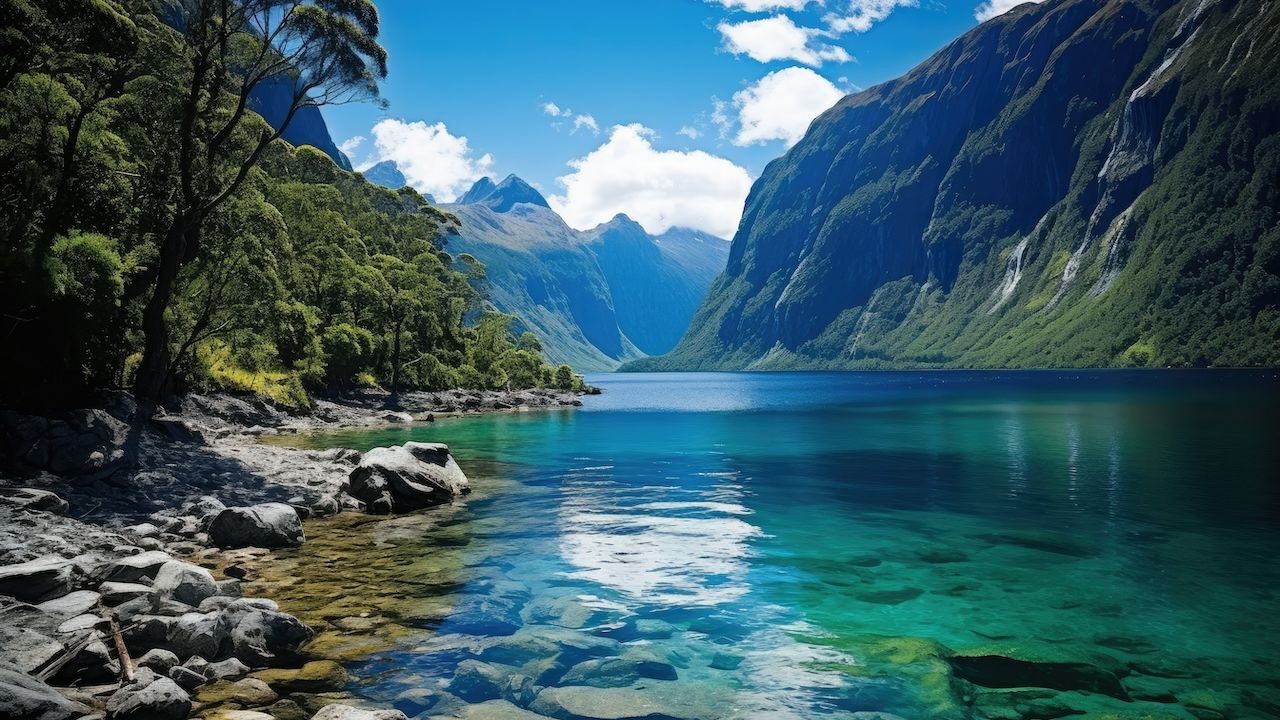
New Zealand’s pristine landscapes and "clean, green" brand are not just marketing slogans; they are the bedrock of a $16.2 billion tourism industry. Yet, this very foundation is cracking under the weight of its own success. The post-pandemic travel surge, while economically welcome, has exposed a critical vulnerability: a model built on volume is fundamentally at odds with environmental preservation and cultural integrity. The future isn't about more tourists; it's about better value, derived from deeper sustainability. From observing trends across Kiwi businesses, I see a nation at a crossroads, attempting a high-wire act—balancing urgent economic needs with long-term existential threats to its natural capital. The preparation is underway, but the strategy remains fragmented, underfunded, and, in some quarters, dangerously naive.
The Inconvenient Data: Volume vs. Value in a Finite Ecosystem
Let's begin with the hard numbers that frame the challenge. According to Stats NZ, before the pandemic, international tourist spending peaked at $17.5 billion for the year ended March 2020. The recovery target is clear. However, MBIE’s Tourism Forecasts 2023-2028 project that international visitor numbers will only recover to 2019 levels by 2026. This isn't merely a return to normal; it's a race against time to reshape the industry before the floodgates fully reopen. The critical insight here is that the economic recovery is being pursued on the old volume-based trajectory, while the infrastructure, environmental carrying capacity, and community tolerance have not magically expanded.
Drawing on my experience in the NZ market, the most progressive operators aren't waiting for a top-down mandate. They are pre-emptively shifting their metrics from headcount to yield-per-visitor and impact-per-dollar. A luxury lodge in the South Island, for instance, may halve its guest capacity while doubling its price point, investing the premium into native reforestation and hyper-local sourcing. This isn't philanthropy; it's risk mitigation and brand fortification. The future tourist, increasingly informed and conscientious, will vote with their wallet for operators who can demonstrably prove their green credentials beyond a glossy brochure.
Case Study: The Zealandia Sanctuary – Monetizing Regeneration
Problem: The Zealandia eco-sanctuary in Wellington, a pioneering urban conservation project, faced the classic dilemma of purpose-driven entities: how to achieve financial sustainability without compromising its core mission of restoring a pre-human ecosystem. Reliant on gate takings and donations, its revenue was vulnerable to weather and economic downturns, limiting its capacity for expansive conservation work.
Action: Zealandia didn't just sell tickets; it sold a transformative narrative. It implemented a tiered membership model, deeply engaged in citizen science, and developed exclusive, high-value overnight experiences (like guided night tours) that commanded a premium. Critically, it positioned itself not as a zoo, but as the heart of a "halo" effect, boosting property values and attracting eco-conscious residents and businesses to the surrounding suburb. Its data on native bird species recovery became a powerful marketing tool for the entire Wellington region.
Result: The model created a resilient, multi-stream revenue ecosystem. Membership retention rates soared, and the premium experiences consistently sell out, often booked months in advance. Most importantly, it demonstrated that conservation could be an economic driver, not a drain. The sanctuary’s success has spurred a 500% increase in native birdlife in the surrounding area, a tangible outcome that fuels further visitor interest and community investment.
Takeaway: Zealandia’s lesson is that the highest form of eco-tourism is participatory regeneration. The commercial strategy was inextricably linked to delivering measurable environmental outcomes. For other regions, this means moving beyond passive viewing platforms to creating interactive, educational, and contribution-based visitor experiences that directly fund conservation.
The Policy Puzzle: Carrots, Sticks, and Strategic Gaps
The government’s primary lever, the International Visitor Conservation and Tourism Levy (IVL), is a well-intentioned but blunt instrument. Raising approximately $80 million annually, it funds projects like the Tiaki Promise and infrastructure upgrades. However, critics argue it acts as a modest entry fee rather than a true behavioural modifier. The levy is flat-rate, meaning a backpacker on a three-month tour pays the same as a billionaire on a 72-hour luxury jaunt—a missed opportunity for progressive pricing aligned with impact.
The more significant gap is the lack of a cohesive, national framework for certifying and regulating what constitutes "eco-tourism." In practice, with NZ-based teams I’ve advised, the term is used so loosely it risks becoming greenwash. A operator running quad bikes through a sensitive dune system can claim to be "eco" by simply offering a recycling bin. Without a robust, independent accreditation system backed by the Department of Conservation and MBIE, market differentiation becomes impossible for genuine stewards, and consumer trust erodes.
Key Actions for Tourism Operators & Regional Bodies
- Decouple Revenue from Volume: Audit your pricing model. Can you introduce premium, low-impact experiences (e.g., expert-led conservation volunteering days, exclusive cultural immersions) that increase yield while reducing footfall?
- Quantify Your Impact: Move beyond carbon offsets. Measure and market your specific contributions: native seedlings planted per guest, percentage of revenue directed to local iwi-led conservation, or kilograms of waste diverted. This is your future competitive advantage.
- Advocate for Smart Regulation: Industry bodies should proactively work with government to co-design a mandatory, tiered sustainability accreditation. This levels the playing field and protects the value of the national brand.
Debunking the Myths of eco-tourism Preparation
Myth 1: "eco-tourism is a niche market for tree-huggers." Reality: It is the emerging mainstream. Global booking data from agencies like Booking.com consistently shows over 70% of travellers seek sustainable options. The niche is now the conventional, high-volume, low-consideration tourism that communities are increasingly resisting.
Myth 2: "Our 'clean, green' image is enough to sell the experience." Reality: This brand is now a liability if not actively defended and validated. International media scrutiny on water quality, biodiversity loss, and overcrowding is intense. The brand must be underpinned by transparent, verifiable action, not assumed.
Myth 3: "Sustainability is too expensive for small operators." Reality: In my experience supporting Kiwi companies, the opposite is true. Inefficient energy use, excessive waste, and reliance on imported goods are costly. Sustainable practices—installing solar, reducing waste, sourcing locally—often have a rapid ROI and build resilience against supply chain shocks.
The Contrarian Take: Is Iwi-Led Governance the Only Viable Future?
Here is the industry secret few in mainstream policy circles will state bluntly: Western models of conservation and tourism management, with their 3-5 year electoral cycles and bureaucratic silos, may be structurally incapable of the intergenerational stewardship required. The most compelling and effective preparation for the future is happening under Te Tiriti o Waitangi settlements and iwi-led initiatives.
Consider the Te Urewera and Whanganui River legal personhood settlements. These are not symbolic gestures; they are revolutionary governance frameworks that embed the Māori concept of kaitiakitanga (guardianship) into law. Tourism within these realms is a privilege, not a right, and is managed with a long-term horizon that spans centuries, not quarterly reports. Having worked with multiple NZ startups in the experience economy, I see the most authentic and resilient offerings are those developed in genuine partnership with Mana Whenua, where cultural narrative and environmental health are the core product, not an add-on.
The bold prediction? The most sought-after, high-value tourism precincts in New Zealand by 2035 will be those under direct or co-governance of iwi, because they will offer the one thing a degraded mass market cannot: authenticity, exclusivity, and a tangible connection to a living culture and landscape.
Final Takeaway & Strategic Imperative
New Zealand is preparing for the future of eco-tourism in a schizophrenic manner: with world-leading innovation at the edges, but hampered by a central strategy still clinging to volume targets. The economic strategist's view is clear. The nation’s natural capital is its most valuable, yet depreciating, asset. The preparation must be radical, not incremental.
The immediate action is a strategic pivot from marketing to tourists to managing for place. This means empowering regions with the tools to cap numbers, price access appropriately, and enforce standards. It means redirecting IVL funds from generic promotion to targeted infrastructure that disperses visitors and enhances resilience. Most critically, it means embracing Te Tiriti-based partnerships not as a compliance exercise, but as the single most powerful source of competitive advantage and sustainable governance we have.
The future tourist is coming. The question is whether New Zealand will have a premium, world-envied model to offer them, or a degraded, overcrowded product they will regret buying. The preparation happening now will determine which.
People Also Ask (PAA)
What is the New Zealand government doing for sustainable tourism? The government administers the International Visitor Levy, funding conservation projects, and promotes the Tiaki Promise. However, critics argue for stronger regulation, like a mandatory sustainability accreditation, to move beyond voluntary measures.
How does eco-tourism benefit New Zealand's economy? It shifts the focus from visitor volume to value, increasing yield per tourist while reducing environmental strain. This builds a more resilient, premium industry that protects the natural assets the tourism brand depends on, ensuring long-term economic viability.
What are examples of successful eco-tourism in NZ? The Zealandia Sanctuary in Wellington is a prime example, combining conservation, education, and premium visitor experiences to create a financially sustainable model that actively regenerates local native wildlife populations.
Related Search Queries
- New Zealand sustainable tourism strategy 2024
- Impact of tourism on NZ environment statistics
- Iwi-led tourism projects New Zealand
- High-value low-impact tourism models
- DOC conservation tourism partnerships
- New Zealand visitor levy projects funded
- Carbon zero tourism businesses NZ
- Regenerative tourism examples South Island
For the full context and strategies on How New Zealand Is Preparing for the Future of Eco-Tourism – Why It Matters for New Zealanders, see our main guide: Mental Health Nutrition Lifestyle Videos Nz.