




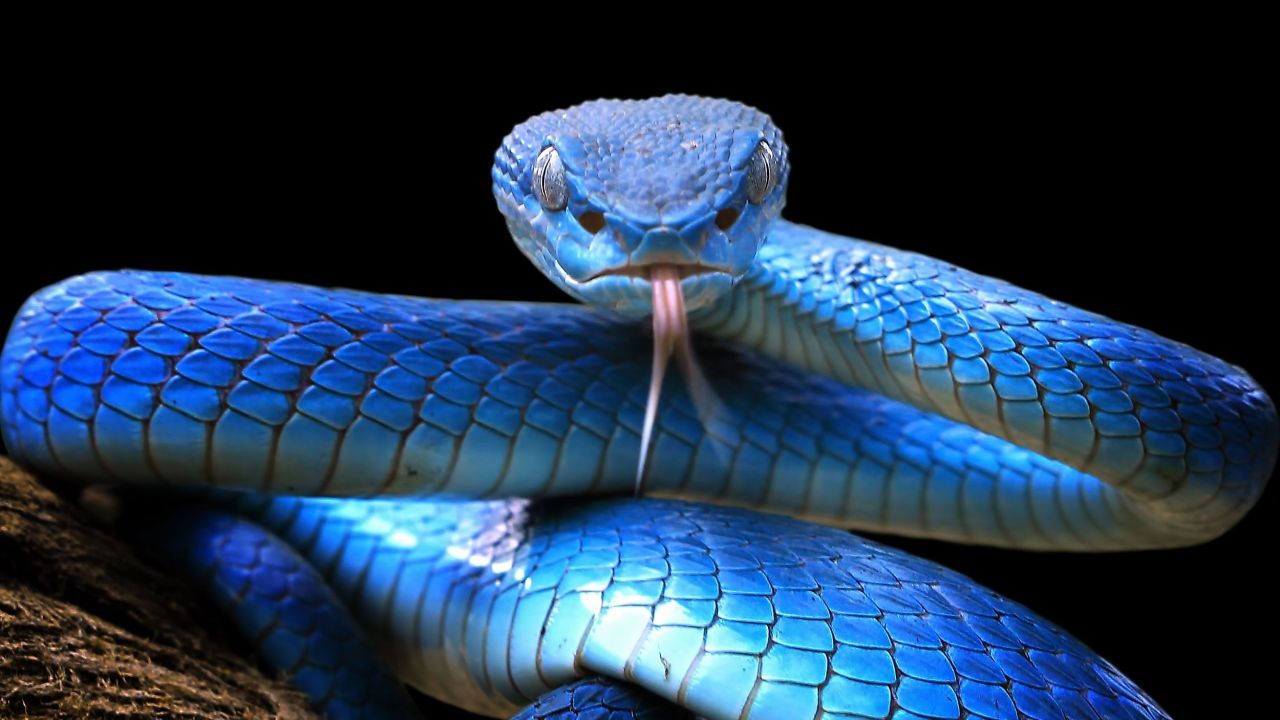
Australia's reputation as a continent of deadly wildlife is not hyperbole; it is a statistical reality underpinned by a unique and potent collection of venomous snakes. With over 100 venomous species, including some of the most lethal serpents on the planet, the ability to accurately identify these reptiles is not a matter of casual bushcraft—it is a critical, potentially life-saving skill. The stakes are underscored by data from the Australian Institute of Health and Welfare, which records an average of over 3,000 snakebite injuries annually, with a fatality rate that, while low due to excellent antivenom and medical response, represents a significant public health concern. For the investigative reporter, this topic demands moving beyond generic fear-mongering to a clear-eyed, evidence-based analysis of identification, risk, and response.
The Core Framework: A Systematic Approach to Identification
Relying on folklore or a single characteristic is a dangerous game. Accurate identification requires a systematic observation of multiple key features. The goal is not to become a herpetologist overnight, but to build a mental checklist that separates high-risk encounters from harmless ones.
Step 1: Assess Head Shape and Scales
This is your primary visual filter. Venomous snakes in Australia belong predominantly to the Elapidae family, which includes taipans, brown snakes, tiger snakes, and death adders. A key, though not absolute, characteristic of many elapids is a head that is roughly the same width as the neck, with large, symmetrical scales on the crown. Contrast this with pythons (non-venomous constrictors), which have a distinct, arrow-shaped head that is much wider than the neck. However, caution is paramount: some highly venomous snakes, like the death adder, can flatten their heads, mimicking this python-like shape when threatened.
Step 2: Analyse Pupil Shape
In good light, pupil shape can be a telling sign. All of Australia's dangerously venomous terrestrial snakes have round pupils. This is a crucial fact that contradicts global folklore associating slit pupils (like a cat's) with venom. In Australia, slit or elliptical pupils are typically found in pythons and tree snakes, which are non-venomous. If you see a snake with slit pupils, you are almost certainly not looking at a taipan, brown, or tiger snake.
Step 3: Observe Body Form and Behaviour
Body shape and defensive posture offer critical context. Many venomous elapids have a relatively slender, whip-like body. Observe the defensive posture: a snake raising its forebody off the ground into an 'S'-shape is likely preparing to strike. The death adder employs a unique ambush strategy, relying on camouflage and wiggling its worm-like tail tip as a lure, rather than an active defensive display. From my experience supporting Australian companies in remote areas—from mining camps to agricultural research stations—the most common reports involve brown snakes, which are often encountered in a defensive, raised-strike posture near sheds or woodpiles.
Reality Check for Australian Businesses and Residents
Public understanding is riddled with assumptions that increase risk. Let's correct the most perilous misconceptions with evidence.
Myth: "You can reliably identify a venomous snake by its colour." Reality: Colouration is wildly variable within species and geographically. An Eastern Brown Snake can range from pale tan to almost black. Relying on colour alone is a fatal error.
Myth: "Baby snakes are less dangerous because they can't control their venom." Reality: This is a persistent and dangerous fallacy. Neonates have fully functional venom glands and can deliver a lethal envenomation. Their small size may even make them more prone to defensive strikes.
Myth: "The snake must be killed or captured for identification at the hospital." Reality: This action results in numerous secondary bites. Australian hospitals use a combination of patient symptoms, geographic location, and a snake venom detection kit (SVDK) on a bite-site swab to determine the correct antivenom. A clear photo from a safe distance is infinitely more valuable than a dead snake.
Case Study: The Coastal Taipan – A Lesson in Habitat and Hype
Problem: The coastal taipan (Oxyuranus scutellatus) is frequently cited as one of the world's most venomous land snakes, generating significant fear. However, public panic often outstrips the actual risk profile due to misidentification and misunderstanding of its behaviour and habitat.
Action: Herpetologists and safety agencies, drawing on decades of field research, have refined the public messaging. They emphasize key identifiers: an extremely slender, light to dark brown body with a distinctive creamy-orange face and round pupils. Critically, they map its range to warm, tropical coastal regions and adjacent savannahs, primarily in Queensland and the Northern Territory. The messaging focuses on its natural wariness and preference for sugarcane fields and mammal burrows over suburban gardens.
Result: Targeted education has led to a more calibrated response in endemic areas. While respect for the species is paramount, the data shows taipan bites are relatively rare compared to more widespread species like the Eastern Brown Snake. In practice, with Australia-based teams I’ve advised in Far North Queensland, the protocol is not paranoia, but heightened situational awareness in known taipan habitat—clearing long grass around worksites and storing equipment off the ground.
Takeaway: Accurate identification must be married with geographic and behavioural context. The most dangerous snake is not always the most venomous; it is the one you are most likely to encounter unexpectedly.
The Data-Driven Risk Landscape: Who, Where, and When
Understanding the epidemiology of snakebite is essential for prioritising knowledge. Research published in the Medical Journal of Australia provides a clear profile: the majority of bites occur to males, often on the lower limbs, during warmer months (September to April), and frequently during recreational activities or while attempting to kill or handle the snake. The Eastern Brown Snake (Pseudonaja textilis) is responsible for the majority of serious envenomations and fatalities nationally, due to its widespread presence across eastern and central Australia and its proximity to human habitation.
Drawing on my experience in the Australian market, this data has direct implications for workplace safety. Industries like agriculture, construction, and logistics operating in regional areas must integrate snake awareness into their OHS protocols. The Safe Work Australia model Code of Practice for managing risks in the workplace mandates managing biological hazards, which explicitly includes venomous snakes. A simple, actionable step for any Australian business with outdoor operations is to ensure first aid kits contain heavy-duty compression bandages (not crepe bandages) and that staff are trained in the pressure immobilisation technique—a first-aid measure proven to slow venom movement.
The Balanced Debate: Fear vs. Coexistence
A stark contrast exists between two prevailing attitudes towards snakes in Australia.
Side 1 (The Eradication Advocate): This perspective views any venomous snake near human dwellings as an unacceptable risk that must be eliminated. Proponents argue that the lethal potential justifies immediate killing, citing the primal duty to protect family and pets. They often distrust relocation, believing the snake will return.
Side 2 (The Ecological Coexistence Advocate): This view, supported by ecologists, positions venomous snakes as vital components of a healthy ecosystem, controlling rodent populations. They argue that killing snakes is often more dangerous than leaving them alone, and that habitat modification (removing shelter, controlling prey) is a safer, long-term solution. Licensed relocation by a professional is favoured over killing.
The Middle Ground – Pragmatic Risk Management: The evidence supports a pragmatic compromise. Absolute eradication is ecologically damaging and often increases risk through repeated handling. Blind coexistence without precaution is negligent. The rational approach is proactive habitat management to make properties less attractive to snakes, coupled with a policy of calm observation and retreat. If a snake poses an immediate, persistent threat (e.g., in a child's play area), the call should be to a licensed reptile catcher, not a shovel.
Future Trends & The Role of Technology
The future of snake identification and bite response is being shaped by technology. Researchers are developing AI-powered smartphone applications capable of identifying snake species from photographs with increasing accuracy. Furthermore, telemedicine is becoming a frontier in remote envenomation response, allowing doctors in metropolitan centres to guide on-site personnel through diagnosis and initial care. A bold, data-backed prediction: within the next five years, we will see the first validated, widely available Australian snake ID app integrated with emergency service alerts, providing real-time species data to ambos and hospitals en route. This innovation could shave critical minutes off the time to administer the correct antivenom.
Final Takeaway & Call to Action
The Australian landscape is shared with formidable venomous snakes, but knowledge dispels blind fear. Your safety hinges on a disciplined, multi-factor identification process, a rejection of pervasive myths, and a commitment to a calm, evidence-based response.
- Immediate Action Point: Today, check your home and workplace first aid kits. Ensure they contain at least two heavy-duty compression bandages (15cm wide). Watch a short online tutorial from St John Ambulance Australia or the Australian Venom Research Unit on the pressure immobilisation technique.
- Strategic Insight: Invest time in learning the two or three most common venomous species in your specific region. A Sydney resident's priority is the Eastern Brown; a Darwin resident's is the Taipan and King Brown. Local knowledge trumps generic lists.
- Policy for Businesses: If your Australian enterprise operates outdoors, formalise a snake encounter protocol. Include visual identifiers, a ban on engagement, and the contact details for local licensed reptile catchers in your safety inductions.
The goal is not to live in fear, but to cultivate a respectful vigilance. What is your organisation's protocol for a snake encounter? Share your insights or questions below to further this critical safety discussion.
People Also Ask (PAA)
What should I do immediately if bitten by a snake in Australia? Stay as still as possible. Apply a pressure immobilisation bandage over the bite site and along the limb. Call 000. Do not wash the wound, cut it, or use a tourniquet. Accurate identification is helpful but not required for initial treatment.
Are there any venomous snakes in Australian cities? Yes. Eastern Brown Snakes are frequently encountered on the outskirts and sometimes within major eastern cities like Brisbane, Sydney, and Melbourne, especially in parklands, golf courses, and newer suburbs bordering bushland.
What is the most dangerous snake in Australia? While the Inland Taipan has the most potent venom, the Eastern Brown Snake is responsible for the most fatalities due to its widespread distribution, adaptability, and proximity to human activity.
Related Search Queries
- Eastern Brown Snake vs. non-venomous snake identification Australia
- Snake bite first aid pressure immobilisation technique
- Australian snake venom detection kit (SVDK) how it works
- Licensed snake catcher cost Melbourne Brisbane Sydney
- Common backyard snakes Australia identification pictures
- How to snake-proof your home garden Australia
- Death adder camouflage identification tips
- Australian elapid snakes vs. pythons differences
- Snake bite statistics Australia 2024 fatality rate
- Best snake identification app for Australia
For the full context and strategies on How to Identify Venomous Snakes in Australia – The Ultimate Aussie Guide for Beginners, see our main guide: Australian Community Video Creators.