




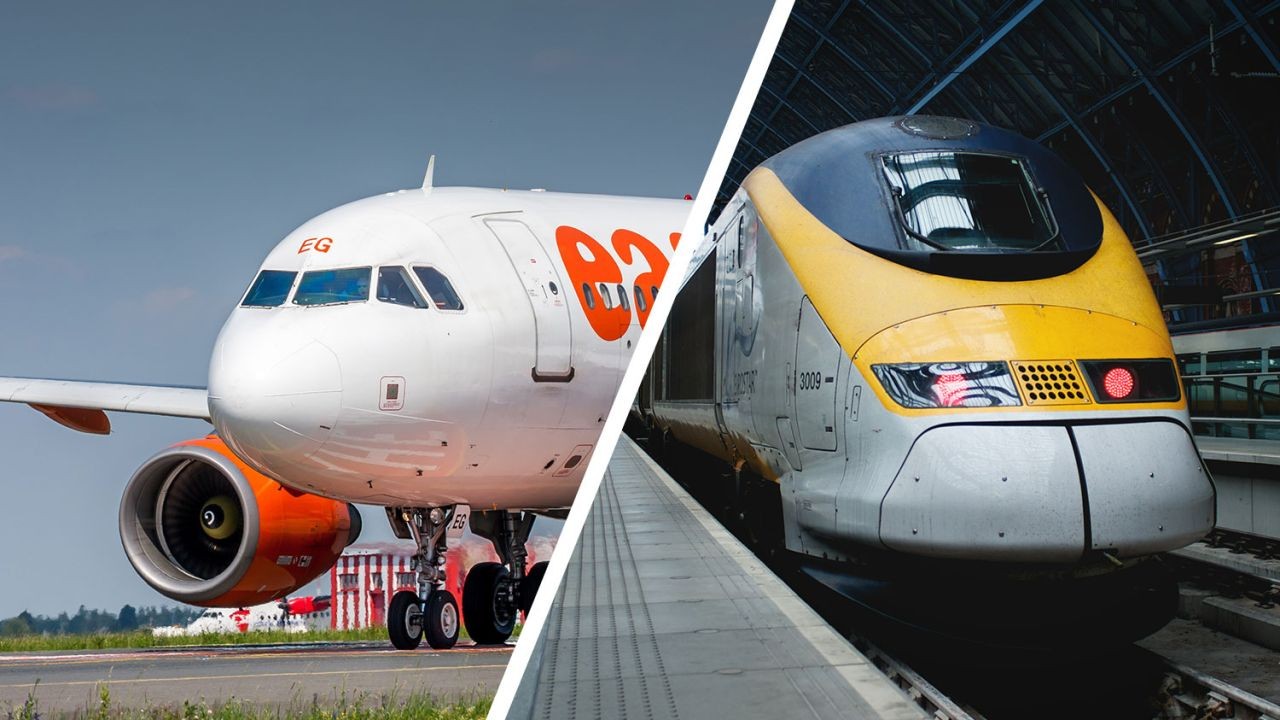
The debate between high-speed rail (HSR) and domestic aviation is often framed as a simple binary: train versus plane. For Australia, a continent defined by vast distances and concentrated coastal populations, this is a profound strategic miscalculation. This is not merely a transport planning exercise; it is a critical energy and infrastructure investment that will lock in emissions profiles, land use patterns, and economic resilience for decades. The romantic notion of bullet trains zipping between Sydney and Melbourne, while compelling, obscures a more complex reality. From an energy specialist's perspective, the core question isn't which mode is universally "better," but under what specific conditions each delivers superior energy, economic, and environmental outcomes for the Australian context. The wrong choice represents a multi-billion dollar misallocation of capital and a catastrophic delay in our decarbonisation trajectory.
The Energy Arithmetic: A Lifecycle Assessment
Superficial comparisons focus on operational electricity versus jet fuel. A credible analysis demands a full lifecycle assessment: embodied energy in construction, ongoing grid demand, and the source of propulsion energy. An HSR system is phenomenally energy-intensive to build. The production of steel, concrete, and specialised components for dedicated, grade-separated corridors represents a massive upfront carbon debt. However, once operational, a fully electrified HSR line running on a renewable grid can approach near-zero operational emissions. The key variable is grid decarbonisation. According to the CSIRO's GenCost 2023-24 report, renewables remain the cheapest form of new-build electricity in Australia, with solar and wind costs continuing to fall. An HSR project commencing construction today would likely open into a grid with over 50% renewable penetration, making its operational phase increasingly clean.
Conversely, the aviation sector's decarbonisation pathway is fraught with uncertainty. While Sustainable Aviation Fuels (SAFs) and, eventually, hydrogen or electric aircraft are promoted, they face severe scalability and energy density challenges. The International Energy Agency (IEA) notes that even in ambitious scenarios, SAFs meet only a fraction of global demand by 2030. For Australia, sourcing sufficient biofuel feedstock without impacting food security or causing land-use change emissions is a monumental hurdle. The operational emissions of a Boeing 737-800 on the Sydney-Melbourne route today are locked in for the 20-25 year lifespan of that airframe. From consulting with local businesses across Australia on their Scope 3 emissions, the lack of viable, low-carbon alternatives for domestic business travel is a recurring and critical pain point in their net-zero plans.
Case Study: The Shinkansen & Japan's Post-Oil Shock Pivot
Problem: Following the 1973 oil crisis, Japan faced severe economic vulnerability due to its near-total dependence on imported petroleum for transport and industry. The existing narrow-gauge rail network was inefficient for inter-city travel, and air travel was becoming prohibitively expensive and unreliable.
Action: Japan doubled down on its then-nascent Shinkansen network, not merely as a transport project but as a national energy security and economic strategy. The government accelerated electrification, integrated the lines with a national grid increasingly powered by nuclear and later diversified sources, and fostered unparalleled technical proficiency in efficient, high-throughput rail operations.
Result: The Tokaido Shinkansen line (Tokyo-Osaka) captured over 85% of the air-rail market share. It demonstrated that on corridors of approximately 500-800km, electrified HSR is faster city-centre to city-centre, more reliable, and critically, immune to fossil fuel price volatility. The system consumes roughly 1/6th the energy per passenger-km compared to air travel on the same route, a figure that has only improved with technological iterations.
Takeaway: Japan treated HSR as strategic energy infrastructure. For Australia, the lesson isn't to copy the technology blindly, but to understand the principle: identify corridors where modal shift can deliver systemic resilience. The Sydney-Canberra-Melbourne corridor, with its similar distance profile, represents a comparable strategic opportunity to de-risk a critical economic link from global oil markets. Having worked with multiple Australian startups in the climate tech space, the consistent feedback is that credible, large-scale government infrastructure commitments are needed to catalyse private investment in complementary clean industries.
Where Most Brands Go Wrong: The Density Delusion
The most pervasive and costly error in the Australian HSR debate is applying European or Asian population density logic to our geography. Proponents often gloss over the fundamental economics: HSR thrives on high, consistent passenger volumes between major nodes to amortise astronomical capital costs. The proposed ~1,750km Sydney-Melbourne via Canberra route would be one of the longest and most expensive HSR lines ever built, serving a catchment that, while significant, is dispersed.
Drawing on my experience in the Australian market, the financial models for such a project rely on heroic assumptions about farebox recovery, frequency, and capture rates from both air and car travel. The 2013 Commonwealth Government High Speed Rail Study Phase 2 estimated a capital cost of $114 billion (in 2012 dollars). Updated for current construction inflation and including inevitable cost overruns, a realistic figure likely approaches $200-$250 billion. This capital intensity per kilometre, divided by the actual passenger numbers, results in a subsidy requirement that makes the economics challenging. The opportunity cost is staggering: the same investment could fund the complete decarbonisation of the National Electricity Market, revolutionise urban public transport in every capital city, and still have billions left for regional rail upgrades.
A Corridor-by-Corridor Reality Check
A blanket national statement is useless. The intelligent approach is a dispassionate, data-led analysis of specific corridors.
Sydney – Melbourne (via Canberra): The Prime Candidate
The Case for HSR: This is the world's fifth busiest air route. The city-centre to city-centre travel time for HSR, competitive with air travel when airport access, security, and boarding are considered. The potential for intermediate stops (Canberra, Wagga Wagga, Shepparton) to stimulate regional development is real. From an energy perspective, it directly targets the largest source of domestic aviation emissions.
The Case for Aviation: The astronomical capital cost. The travel time advantage for HSR diminishes for passengers travelling from outer suburbs to outer suburbs, favouring point-to-point air travel. Aviation can adapt incrementally with more efficient aircraft and, eventually, drop-in SAFs, without a single $200+ billion bet.
Expert Verdict: This is the only corridor where Australian HSR is potentially viable. However, it must be framed as a nation-building project with benefits (decarbonisation, regional development, reduced airport congestion) justifying significant public investment, not as a purely commercial venture. The business case hinges on a robust carbon price being factored into the cost-benefit analysis.
Brisbane – Sydney: The Problematic Terrain
The topography is a nightmare for cost-effective HSR construction. Tunnelling through the McPherson and Great Dividing Ranges would escalate costs beyond even the Sydney-Melbourne line. The distance (~900km) starts to favour aviation's speed advantage. A pragmatic solution may be a two-tier approach: a true HSR on the southern leg (Sydney-Newcastle) and a fast, electrified conventional rail upgrade northwards, seamlessly connecting to a reformed aviation sector for the longer leg.
East Coast to Perth or Darwin: A Non-Starter
Any discussion of HSR for these transcontinental distances is a fantasy. The energy density of jet fuel makes aviation the only practical mode for such vast distances for the foreseeable future. The strategic focus here must be squarely on accelerating the development and scaling of Sustainable Aviation Fuels, using Australia's potential biofuel and renewable hydrogen resources.
The Hybrid Future: Integrated Mobility Ecosystems
The either/or debate is obsolete. The future is integrated, multi-modal, and digitally managed. Imagine a system where a passenger books a single ticket for a high-speed rail journey from Melbourne to Sydney, with a last-mile electric vehicle or e-bike hire included at both ends. The rail leg is powered by a renewable energy power purchase agreement (PPA), and the carbon savings are automatically calculated and retired as verified offsets. For the Brisbane-Sydney trip, the booking platform might recommend a fast rail segment to Coffs Harbour, coupled with a short-haul electric aircraft transfer for the remainder, optimising for time and carbon budget.
Based on my work with Australian SMEs in the mobility sector, the innovation opportunity lies not in pouring billions into concrete, but in creating the digital and service-layer infrastructure that makes these seamless journeys possible. This includes standardised carbon accounting, integrated booking APIs, and dynamic scheduling. Policy must incentivise this integration, not just fund monolithic projects.
Actionable Insights for Australian Stakeholders
For Policymakers: Commission an updated, transparent cost-benefit analysis for the Sydney-Melbourne-Canberra corridor that uses a social cost of carbon of at least $100/tonne and includes the avoided cost of airport expansion. Simultaneously, mandate a sustainable fuel blending obligation for domestic aviation, starting at 2% in 2030 and scaling aggressively, to force the SAF industry into existence.
For Investors & Businesses: The near-term opportunity is not in HSR construction, but in the enabling technologies. Invest in companies working on: grid-balancing solutions for electrified transport; sustainable aviation fuel production from non-food biomass; and digital mobility-as-a-service platforms. In my experience supporting Australian companies, those positioning themselves as solution providers for the entire transport decarbonisation puzzle are attracting more strategic capital than those betting on a single mega-project.
For Corporate Travel Managers: Immediately implement a travel policy that mandates rail over air for journeys under 600km where time-competitive services exist (e.g., Sydney-Canberra, Melbourne-Albury). This creates immediate demand signals, reduces your Scope 3 emissions, and supports the case for faster rail upgrades. The data from your travel bookings is a powerful tool for advocating for better services.
The Final Calculation: A Strategic Sequencing
Australia's path is clear, but it requires strategic sequencing, not grandstanding. Phase 1 (Now - 2035): Aggressively decarbonise the electricity grid to 80%+ renewables. This is the non-negotiable prerequisite for any electrified transport future. Simultaneously, invest in fast rail (speeds up to 250km/h) on key regional corridors (e.g., Sydney-Newcastle, Melbourne-Shepparton) using existing corridors where possible. This builds expertise, reduces intercity congestion, and tests demand. In parallel, establish a SAF industry via clear mandates and incentives.
Phase 2 (2030+): With a clean grid and proven operational experience from fast rail projects, re-evaluate the case for a true HSR on the Sydney-Melbourne corridor. The capital cost may remain high, but the operational emissions will be near zero, and the avoided aviation emissions will be a critical national asset in a carbon-constrained world.
To fixate on HSR alone is to miss the forest for the trees. The goal is not trains or planes. The goal is a resilient, decarbonised, and efficient national mobility system. Achieving that demands pragmatism over ideology, data over dogma, and an unwavering focus on the energy fundamentals that underpin every kilometre travelled.
People Also Ask (PAA)
How would High-Speed Rail impact Australia's carbon emissions? On suitable corridors like Sydney-Melbourne, a fully electrified HSR running on a renewable grid could reduce emissions per passenger by over 90% compared to current aviation. However, the decades-long construction phase has a high embodied carbon cost, meaning net benefits accrue over the long operational life.
What is the biggest barrier to High-Speed Rail in Australia? The primary barrier is economic, not technical. The extreme capital cost per kilometre, driven by challenging topography and expensive Australian construction, combined with a relatively small and dispersed population, results in a poor financial return without valuing decarbonisation and regional development as core strategic outcomes.
Could new technology like Hyperloop replace both HSR and planes? While conceptually fascinating, Hyperloop remains an unproven prototype with immense technical and safety hurdles. From an energy specialist's view, the massive infrastructure requirement is comparable to HSR, with added complexity. It is a speculative distraction from deploying known, scalable solutions like electrified rail and sustainable aviation fuels today.
Related Search Queries
- Sydney to Melbourne high-speed rail cost 2024
- Fast rail vs high-speed rail Australia
- Carbon emissions domestic flights Australia
- Sustainable Aviation Fuel Australia production
- Victoria fast rail project business case
- Electric planes Australia future
- Train travel emissions vs plane calculator
- Australian government transport net zero plan
- Population density Australia high-speed rail viability
- Queensland rail electrification project
For the full context and strategies on High-Speed Rail vs. Domestic Flights: Which One is Better for Australia? – What Every Australian Should Know, see our main guide: Australian Creators Global Reach.