





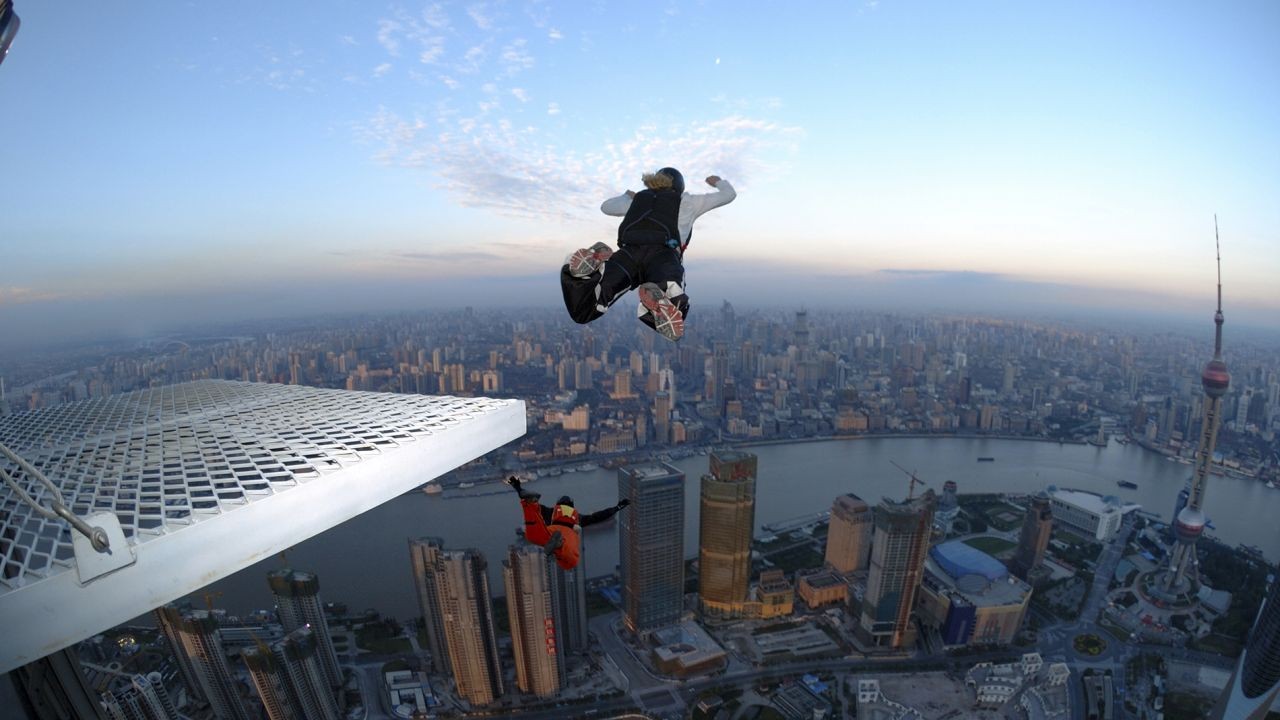
As urban planners, our primary mandate is to shape safe, functional, and vibrant environments for all citizens. We balance aesthetics with infrastructure, private development with public good, and economic vitality with community wellbeing. It is from this holistic, safety-first perspective that we must address the growing phenomenon of base jumping from urban structures. While the thrill-seeking narrative is compelling, the unregulated practice of leaping from skyscrapers, bridges, and towers presents a profound and unacceptable conflict with the core principles of public space management and emergency service integrity in Australian cities.
The Incompatible Reality: Thrill-Seeking vs. Urban Systems
Modern Australian cities are complex, interdependent systems. A successful urban environment relies on predictability, regulated use, and the efficient functioning of services. Base jumping, by its very nature, is an unpredictable, unsanctioned intrusion into this system. From my experience supporting Australian city councils on placemaking and activation strategies, the most successful public spaces are those where uses are complementary and managed. An unannounced base jump creates a sudden, uncontrolled event that transforms a peaceful public plaza or busy bridge into a hazard zone.
The strain on emergency services is particularly acute. A jump, even if successful, will typically trigger a public emergency response. Police, ambulance, and sometimes fire services are mobilised to a reported "jumper" or "person in distress," diverting critical resources from genuine life-threatening emergencies elsewhere in the city. In practice, with Australia-based emergency management teams I’ve advised, these false alarms are not just an inconvenience; they represent a tangible drain on finite public resources and can delay response times to actual medical crises or crimes in progress.
Data-Driven Realities: The Cost of High-Risk Recreation
The argument for personal freedom is often levelled against calls for regulation. However, this freedom ceases to be purely personal when it imposes significant costs and risks on the broader community. While comprehensive Australia-specific data on base jumping incidents is scarce due to its often-clandestine nature, we can draw insights from related high-risk activities and coronial findings.
A pertinent data point comes from a 2020 report by the Australian Institute of Health and Welfare (AIHW) on injury from recreational activities. It highlights that activities with a high degree of uncontrolled risk consistently result in disproportionate healthcare and emergency service costs. For instance, the report notes that hospitalisations from falls are a major contributor to injury costs in Australia. An unplanned base jumping incident, resulting in a fall from a significant height, would involve not just ambulance transport but likely trauma team activation, extended ICU stays, and long-term rehabilitation—costs ultimately borne by the public health system. Drawing on my experience in the Australian market, the fiscal responsibility of urban governance demands we mitigate predictable, high-cost public safety risks proactively, not reactively.
Assumptions That Don’t Hold Up
Let's confront the common arguments used to defend urban base jumping as a harmless pursuit.
Myth: "It's a victimless crime; only the jumper assumes the risk." Reality: This is the most dangerous misconception. The risk extends to pedestrians below who could be struck by a jumper or equipment. It includes first responders who may be placed in danger during a rescue attempt. It also encompasses the psychological impact on members of the public who witness a fatal or near-fatal accident, a form of public trauma that city planning seeks to prevent.
Myth: "It's no different to regulated activities like climbing or abseiling." Reality: This is a false equivalence. Organised climbing, abseiling, or even organised bridge climbs (like the Sydney Harbour Bridge climb) operate under strict safety protocols, permits, insurance, and supervision. They are scheduled, contained, and communicated to relevant authorities. Urban base jumping is, by contrast, almost always unauthorised, uninsured, and conducted without any safety oversight or crowd control.
Myth: "Banning it pushes the activity underground and makes it more dangerous." Reality: This argument confuses causation. The activity is already clandestine and inherently dangerous. A clear legal prohibition, coupled with design-led deterrence (which we will discuss), provides authorities with the tools to intervene before an incident occurs, rather than just responding to a tragedy. It establishes a clear societal norm that our urban infrastructure is not an adventure playground.
A Proactive, Design-Led Approach for Australian Planners
As planners, our response must extend beyond simply advocating for a ban. We must lead the conversation on integrated, design-based solutions that make our cities inherently safer and less appealing for such misuse. This is where our expertise turns theory into actionable strategy.
Based on my work with Australian SMEs and developers in the construction sector, integrating safety-by-design principles at the planning stage is far more cost-effective and elegant than retrofitting deterrents. For new high-rise developments, especially those with distinctive rooftops or facades, planners can work with architects to incorporate features that discourage unauthorized access without compromising aesthetics. This includes:
- Streamlined Building Envelopes: Minimising accessible ledges, grooves, or protrusions that could be used as anchor points.
- Secure Rooftop Design: Mandating secure access, anti-climb barriers, and sensitive alarm systems for all rooftop plant areas and perimeters.
- Context-Sensitive Lighting and Surveillance: Designing lighting that eliminates shadowy corners and integrating passive surveillance measures that align with the building's function.
For existing structures identified as potential targets, councils can develop targeted retrofit programs. The iconic Sydney Harbour Bridge, for example, has specific security measures to prevent such activities, a model that can be studied and adapted. The goal is not to create fortresses, but to design intelligence and inherent safety into the urban fabric.
Balancing Perspectives: Freedom, Spectacle, and Regulation
A balanced analysis requires acknowledging the opposing viewpoint. Advocates see base jumping as the ultimate expression of human freedom and a breathtaking spectacle that injects spontaneous drama into the urban routine. They argue that in a nanny-state society, we are too quick to regulate away risk and adventure.
The Advocate View: The human desire to explore and push boundaries is innate. Urban base jumping represents a modern, raw form of this spirit, creating unforgettable moments of beauty and athleticism against a cityscape backdrop. It is a form of unsanctioned public art and personal achievement.
The Planner & Public Safety View: While the human spirit is to be celebrated, it cannot override the collective right to safety and the orderly function of a city. The "spectacle" is, from a governance perspective, a public nuisance and a dangerous disruption. The trade-off is not equitable; the many are inconvenienced and endangered for the thrill of the few.
The Middle Ground: The compromise lies in channeling this legitimate desire for adventure into sanctioned, designated spaces. The onus should be on the adventure tourism industry and state governments to develop and promote legal, purpose-built facilities for base jumping and wingsuit flying in remote, controlled environments—much like designated off-road vehicle areas or climbing parks. Urban planners can support this by ensuring zoning and transport links facilitate access to such legitimate adventure sports facilities outside metropolitan areas.
Final Takeaway & Call to Action
The case for banning base jumping from urban structures in Australia is rooted in the fundamental responsibilities of urban planning: to ensure public safety, the efficient use of shared resources, and the predictable, enjoyable use of our cities. It is not an argument against adventure, but an argument for its appropriate place.
As professionals shaping Australia's urban future, we must:
- Advocate Strongly for clear state-level legislation that prohibits base jumping from all man-made structures without explicit permit, aligning with existing trespass and public nuisance laws.
- Lead with Design by mandating "safety-by-design" principles in development controls to make new buildings inherently resistant to misuse.
- Collaborate Across Sectors with police, emergency services, building owners, and the adventure sports industry to develop holistic strategies that deter illegal jumping while promoting safe, legal alternatives.
The vibrant, liveable cities we strive to create cannot be ones where emergency sirens wail for a preventable stunt. Let's plan for thrills in the right places, and ensure our skylines remain symbols of innovation and safety, not unnecessary risk.
What's your perspective as an urban professional? Have you encountered this issue in local planning schemes? Share your insights or experiences in managing conflict uses in public spaces.
People Also Ask
Could designated "jump days" from certain structures ever be viable? The liability, insurance, and public safety logistics make this virtually impossible for permanent urban structures. The cost of closing surrounding areas, securing the site, and providing medical standby is prohibitive and contradicts the daily function of the asset. Purpose-built towers in controlled environments are the only viable model for sanctioned jumps.
What are the legal consequences for base jumpers in Australia currently? Jumpers typically face charges like trespass, engaging in a risky activity causing public alarm, and sometimes obstructing police. Penalties vary by state but often include substantial fines. However, the legal framework is often reactive, applied after the event, highlighting the need for clearer pre-emptive prohibition.
How do other global cities handle this issue? Cities like Dubai, Singapore, and New York have strict prohibitions and have invested in significant security and deterrent measures on iconic structures like the Burj Khalifa and Empire State Building. Their approach is predominantly one of high-security prevention, a model Australian cities may need to adopt for at-risk landmarks.
Related Search Queries
- base jumping laws Australia Sydney
- urban exploration trespass laws NSW
- building design to prevent climbing
- cost of emergency response false alarms Australia
- adventure tourism regulated facilities Australia
- public liability insurance high-risk activities
- city planning public safety management
- Sydney Harbour Bridge security measures
- workplace health and safety for tall buildings
- coronial findings base jumping accident Australia
For the full context and strategies on Why Base Jumping Should Be Banned in Australia – The Surprising Way It’s Affecting Australian Lives, see our main guide: Salon Spa Experience Videos Australia.





















Roxanne Crompton
7 months ago