




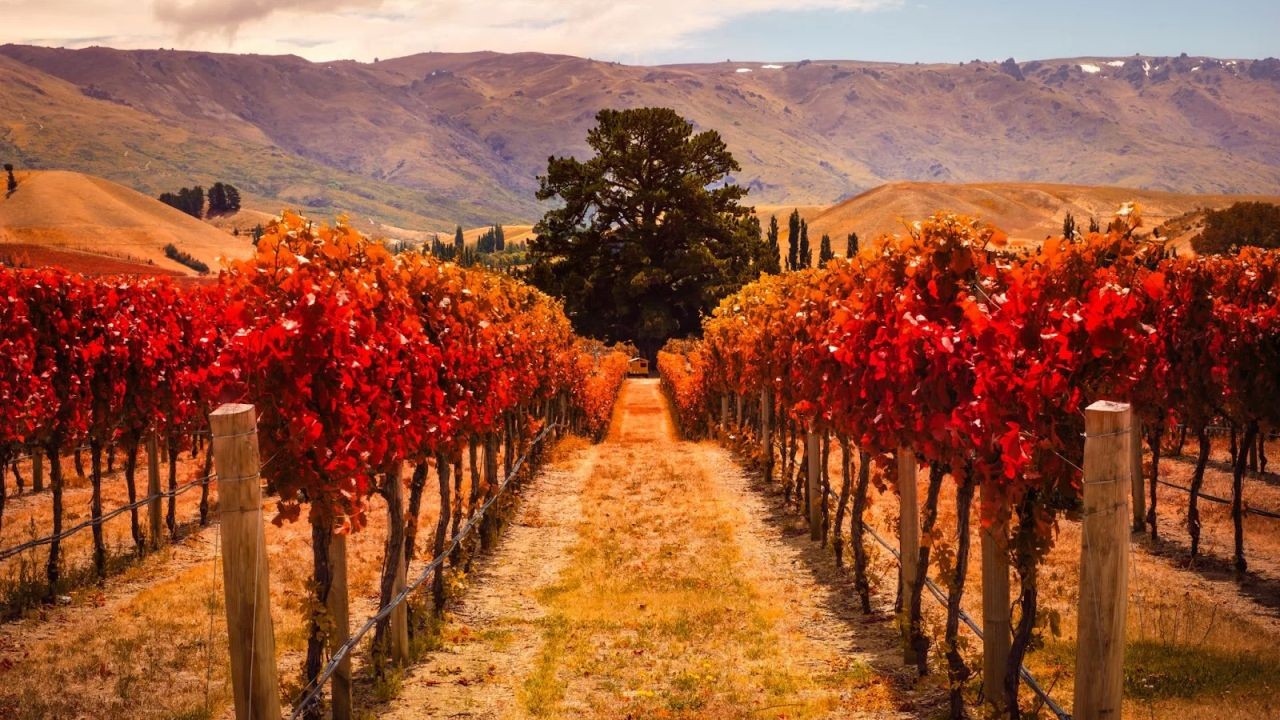
For decades, New Zealand’s wine industry has been a poster child for premium, terroir-driven production, with its crisp Sauvignon Blanc and elegant Pinot Noir commanding global respect. Yet, beneath the postcard-perfect rows of vines lies a sector facing an existential, data-driven threat. Climate change is not a distant forecast; it is a present-day operational disruptor, reshaping harvest calendars, altering flavour profiles, and forcing a fundamental technological and strategic reckoning. The romantic notion of winemaking is colliding with the hard science of viticulture, and the wineries that survive will be those that treat their land not just as an art, but as a complex, data-intensive system.
The New Climate Reality: A Comparative Analysis of Regional Vulnerabilities
The impact is not uniform. A 2020 report from the Deep South National Science Challenge, "Climate Change Impacts on Winegrowing in New Zealand," provides a stark, region-by-region prognosis. Marlborough, the engine room of NZ wine with over 70% of national production, faces a dual threat: increased drought stress and heightened frost risk. Paradoxically, while growing seasons warm, clear skies increase radiative frost events that can decimate young buds. Conversely, traditionally cooler regions like Central Otago and Waipara are experiencing a 'goldilocks' warming, potentially expanding their varietal range but also introducing new pest and disease pressures previously confined to warmer climates.
From consulting with local businesses in New Zealand, I've observed a critical strategic divide. Larger, corporate wineries are investing heavily in climate modelling and irrigation technology, treating water as a strategic asset. Smaller, family-run vineyards often lack the capital for such infrastructure, making them disproportionately vulnerable to seasonal volatility. This creates a bifurcated future: one of climate-resilient, tech-enabled production and one of heightened risk for traditional operators. The national industry's cohesion depends on bridging this gap.
Key Actions for NZ Viticulturists Today
- Conduct a Hyper-Local Climate Risk Audit: Move beyond regional data. Use IoT sensors to map microclimates and soil moisture variability within your own vineyard.
- Engage with Regional Research: Leverage work from Bragato Research Institute and Plant & Food Research, which are actively trialling drought-resistant rootstocks and canopy management techniques for NZ conditions.
- Explore Water-Sharing Consortia: Smaller players should investigate collaborative water storage and precision irrigation projects to pool risk and investment.
Technological Adaptation vs. Traditional Terroir: A Pros & Cons Evaluation
The industry's response sits at the heart of a fierce debate: technological intervention versus acceptance of a shifting terroir. This is not merely philosophical; it's a multi-million dollar strategic decision.
✅ The Case for Technological Adaptation (The "Control" Argument)
- Precision Viticulture: Drones with multispectral imaging and in-ground sensors provide real-time data on vine stress, water needs, and disease hotspots, enabling targeted responses and reducing blanket chemical/water use.
- AI-Powered Forecasting: Machine learning models can integrate weather data, soil metrics, and historical yield information to predict optimal harvest windows with unprecedented accuracy, mitigating flavour degradation from heat spikes.
- Water Security: Advanced irrigation systems like subsurface drip or variable-rate irrigation maximise efficiency. For example, having worked with multiple NZ startups in agritech, I've seen systems that can reduce water use by up to 40% while maintaining yield quality.
❌ The Case for Evolving Terroir (The "Acceptance" Argument)
- Authenticity & Market Positioning: There is a powerful consumer segment that values "natural" wine. Over-engineered vineyards risk producing homogenised wines that lose their unique, place-driven character—the very basis of NZ's premium branding.
- Cost Prohibitive: The capital expenditure for advanced tech is significant. A full IoT sensor network and analysis platform can run into hundreds of thousands of dollars, placing it out of reach for many.
- Unintended Consequences: Reliance on technology can create systemic vulnerabilities (e.g., sensor failure, software bugs) and may address symptoms (water shortage) rather than the core strategic issue of long-term crop suitability.
The Middle Ground: The most resilient strategy is a hybrid. Use technology to understand and manage micro-stresses, but let that data inform longer-term decisions about what to grow. This might mean gradually transitioning a portion of a Marlborough vineyard from Sauvignon Blanc to later-ripening, drought-tolerant varieties like Grenache or Montepulciano, as some forward-thinking wineries are already trialling.
How It Works: A Deep Dive into the Data-Driven Vineyard
Let's move from theory to applied technology. The modern climate-resilient vineyard operates as a cyber-physical system. Here’s how the integration works in practice:
- Sensing: A network of solar-powered LoRaWAN sensors collects data on soil moisture (at multiple depths), trunk diameter (a direct indicator of water stress), ambient temperature, and humidity.
- Analysis: This data stream is integrated with satellite weather forecasts and historical block performance in a cloud platform. An AI model correlates specific soil moisture depletion rates with forecasted heatwaves.
- Action: The system doesn't just alert the viticulturist; it can automate a response. It triggers a precise, variable-rate irrigation cycle only in zones where the soil moisture and vine stress metrics cross a defined threshold, conserving water and energy.
- Learning: Post-harvest, yield data and grape quality metrics (Brix, acidity, tannin profiles) are fed back into the model, refining its predictions for the following season.
Case Study: Yealands Wine Group – Precision in the Face of Drought
Problem: Yealands, a major Marlborough producer with a strong sustainability focus, faced increasing water constraints and the need to maintain consistent quality across vast vineyard holdings. Blanket irrigation was wasteful and financially unsustainable.
Action: They implemented a large-scale precision viticulture program. This involved detailed EM soil mapping to understand variability, installation of weather stations and soil moisture probes, and the use of NDVI (Normalized Difference Vegetation Index) imagery from drones to monitor vine vigour.
Result: By moving to targeted management zones, Yealands achieved a 20% reduction in water usage while improving canopy management and fruit uniformity. Their technology investment paid off not just in resource savings but in enhanced brand equity for their sustainable practices.
Takeaway: This case demonstrates that technology adoption, when aligned with core brand values (sustainability), can deliver both operational resilience and market advantage. For NZ wineries, the lesson is to integrate tech with a clear strategic objective, not as a standalone gadget.
Debunking Myths: Climate Change and the NZ Vineyard
- Myth: "Warmer weather is universally good for New Zealand wine; it just means riper grapes."Reality: While some regions benefit temporarily, excessive heat accelerates sugar accumulation while halting phenolic ripeness (flavour and tannin development), leading to unbalanced, high-alcohol wines. Heat stress also shuts down vine photosynthesis, harming overall plant health.
- Myth: "Climate change is a slow process; we have decades to adapt."Reality: The change is nonlinear. Extreme events—like the 2023 Auckland floods or the 2020 Marlborough heatwave—are the disruptive forces. A single hail storm or harvest-week deluge can wipe out an annual revenue stream. Adaptation is about managing increasing volatility, not just a gentle temperature trend.
- Myth: "Going organic or biodynamic automatically makes a vineyard more climate-resilient."Reality: While these practices improve soil health and water retention, they are not a silver bullet. In my experience supporting Kiwi companies in sustainability, the most resilient vineyards combine organic principles with smart technology. Healthy soil holds more water, but sensors tell you exactly when that water is needed.
The Future of NZ Wine: A Strategic Forecast
By 2035, we will see a fundamentally different New Zealand wine map. Expect:
- Geographic Shift: Significant new plantings in Southland and the Catlins as these cooler climates become viable, while some current marginal areas may become uneconomical.
- Varietal Revolution: Sauvignon Blanc will remain dominant but will be joined by a broader palette of Mediterranean and drought-tolerant varieties. The "New Zealand style" will evolve beyond a single signature grape.
- Carbon as Currency: With the NZ Emissions Trading Scheme impacting all sectors, vineyards will monetise carbon sequestration through sophisticated soil management, turning sustainability into a direct revenue line.
- Consolidation & Collaboration: Economic pressure from climate adaptation costs will drive further consolidation. Simultaneously, we'll see a rise in co-operative tech platforms, allowing smaller wineries to access big-data insights without owning the entire stack.
Final Takeaway & Call to Action
For New Zealand's wine industry, climate change is the ultimate stress test of business strategy. The romantic, artisanal model must integrate with the analytical, technologically proficient one. The winning vineyards will be those that view data as their most valuable crop—harvesting insights from their land to inform every decision from the rootstock up.
Your Next Move: If you operate in or advise this sector, your immediate action is to quantify your climate risk. Don't rely on anecdotal weather patterns. Access the NIWA climate scenarios for your region, initiate soil carbon baseline testing, and pilot a single IoT variable (like soil moisture) on one block. The cost of data is now far lower than the cost of ignorance.
The question is no longer if the climate will change your business, but how decisively you will respond. Will you be a passive casualty of shifting weather patterns, or will you use technology to write the next chapter of New Zealand wine?
People Also Ask (PAA)
What is the biggest climate threat to Marlborough Sauvignon Blanc?The combination of increased drought stress and water restrictions, coupled with harvest-time heatwaves that can push sugars too high too fast, degrading the delicate acid balance and vibrant aromatics the region is famous for.
Can technology really preserve the "taste" of a region?Technology cannot reverse climate change, but it can buy time and enable managed transition. It helps maintain vine health during stress, preserving typicity in the short term while data informs long-term decisions about varietal selection to achieve a desired style in a new climate.
How does NZ's climate challenge compare to other wine countries?NZ's maritime climate and reliance on irrigation make it particularly sensitive to rainfall variability. Unlike some Old World regions with strict irrigation bans, NZ has more adaptive flexibility, but this depends on sustainable water access—making water management technology absolutely critical.
Related Search Queries
- New Zealand vineyard drought technology 2024
- Marlborough wine climate change impact data
- Precision viticulture IoT sensors cost NZ
- Alternative grape varieties for New Zealand climate
- Bragato Research Institute climate resilience projects
- Carbon farming vineyards New Zealand ETS
- Water consent challenges Hawke's Bay vineyards
- AI harvest prediction software wine NZ
For the full context and strategies on 4. Impact of Climate Change on New Zealand Vineyards – Is It Worth the Hype for Kiwis?, see our main guide: Social Media Video Campaigns Nz Tourism Brands.