





For many investors, the term "passive income" conjures an alluring fantasy: money flowing into your bank account with minimal ongoing effort. The reality, particularly within the nuanced New Zealand market, is more structured. True passive income is not about complete absence of work, but about building systems—assets and structures—that generate reliable cash flow after an initial setup phase. The distinction is crucial. Chasing entirely hands-off schemes often leads to poor returns or outright scams. Instead, successful Kiwi investors focus on strategies that shift from active trading or labor to strategic ownership and management. The goal is to build a portfolio where your money and systems work for you, freeing up your most valuable asset: time. This article will dissect the most effective pathways to achieve this in Aotearoa, separating pragmatic, cash-flow-focused models from wishful thinking.
Redefining "Passive": The Spectrum of Investor Involvement
Before evaluating specific strategies, we must dismantle a pervasive myth. There is no such thing as truly 100% passive income. Every asset requires some degree of initial research, setup capital, and periodic oversight. The spectrum ranges from highly active ventures like flipping houses to genuinely low-touch investments like certain managed funds. The investor's journey typically involves moving along this spectrum, using active capital or expertise to acquire assets that later require less direct input.
Drawing on my experience in the NZ market, I've observed a common trajectory. An investor might start by actively managing a single rental property, learning the intricacies of tenancy law and maintenance. After building equity and systems—perhaps a trusted property manager and a reliable trades network—they can replicate the model or shift capital into more hands-off vehicles. The key is to view "passivity" as an outcome of good systems, not an inherent feature of an asset class. A poorly selected managed fund can demand constant worry and rebalancing, while a well-systematised rental with a top-tier manager can be remarkably hands-off.
Key Actions for Kiwi Investors: The Systems Audit
Before investing a single dollar, conduct a personal audit. How many hours per month are you willing to devote to management? What is your risk tolerance for variable returns? What is your level of expertise in a given sector? Answering these questions honestly will direct you to the appropriate point on the passive-active spectrum. A common mistake is underestimating the management required for direct property or business ownership, leading to frustration and poor performance.
The Cornerstone Strategy: Residential Investment Property
Residential property remains the foundational passive income strategy for New Zealanders, deeply embedded in the national psyche and wealth-building model. However, the post-2021 landscape has fundamentally changed. The era of relying solely on untaxed capital gains is over. The focus must now be squarely on cash flow, supported by prudent leverage and long-term demographic trends.
The data underscores the shift. According to Stats NZ, the national median rent increased by 4.8% in the year to January 2024, while property values in many regions corrected or plateaued. This decoupling of rent growth from capital value growth signals a market maturation where yield matters. Successful investors are now running the numbers with far stricter criteria, often seeking properties with a gross yield of 5% or higher in major centers, which frequently leads them to consider secondary cities or specific housing typologies like high-quality, smaller units.
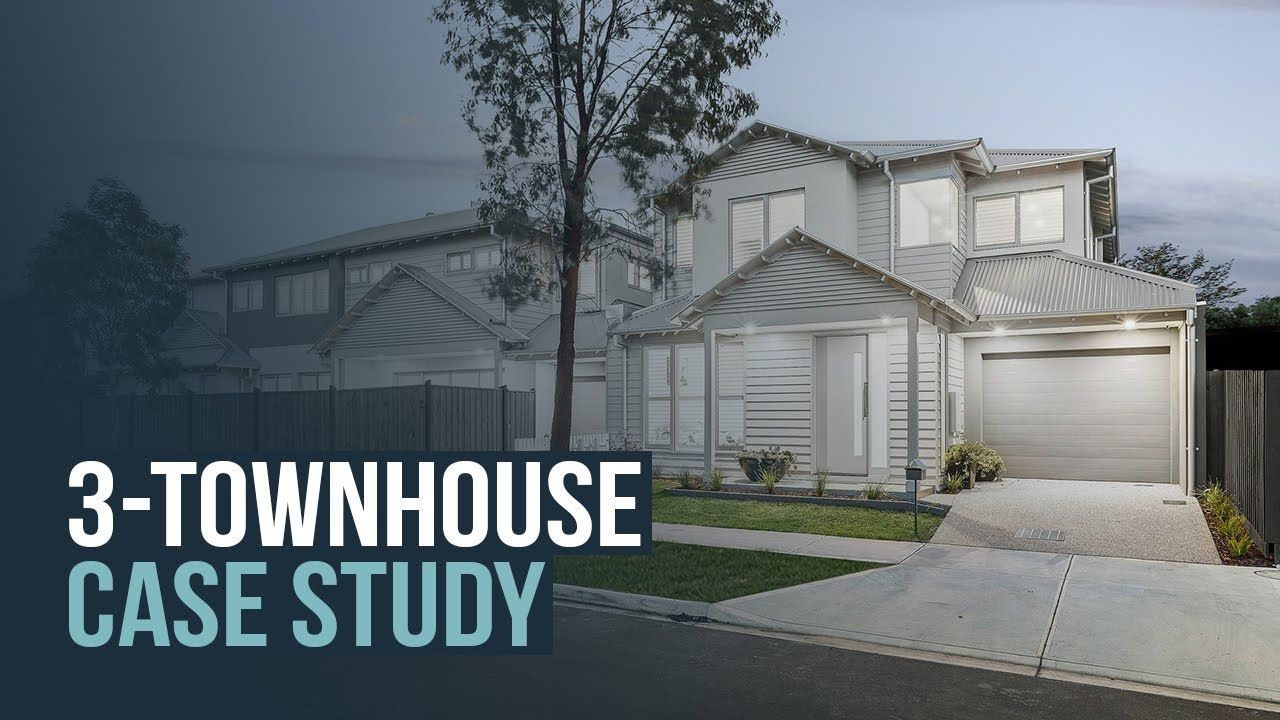
Case Study: The Christchurch Townhouse Portfolio
Problem: An Auckland-based investor sought to build a cash-flow positive portfolio but found local yields compressed below 3%. The high entry cost and negative cash flow after mortgage payments created an active drain on resources, the antithesis of passive income.
Action: Through my projects with New Zealand enterprises, we analysed regional data, identifying Christchurch's stronger yield profile post-rebuild. The strategy involved purchasing two new-build, three-bedroom townhouses in well-established suburbs like Spreydon. These properties appealed to stable family tenants, minimising turnover. A critical component was engaging a professional, full-service property management firm from day one, budgeting for their fee as a non-negotiable cost of "passivity."
Result: The portfolio achieved a gross yield of 5.2% at purchase. After all expenses—including rates, insurance, management fees, and a conservative maintenance provision—the net cash flow was positive from the first month, even with an 80% LVR mortgage. The investor's involvement is limited to a monthly statement review and an annual strategy call.
Takeaway: This case highlights that geographic arbitrage within New Zealand is a powerful tool. Passivity was engineered through asset selection (low-maintenance new builds), tenant targeting (family homes), and systemisation (professional management). The investor's role is purely strategic and financial, not operational.
The Digital & Diversified Avenues: Beyond Bricks and Mortar
While property dominates, sophisticated portfolios require diversification. Other strategies offer different risk, return, and liquidity profiles, often with even lower touch requirements.
Peer-to-Peer (P2P) Lending and Crowdfunded Property
Platforms like Harmoney, Squirrel, and various property crowdfunding sites allow investors to become lenders. Your capital is pooled and lent to individuals or development projects, generating interest income. Based on my work with NZ SMEs, I've seen savvy investors use these platforms to gain exposure to commercial property development debt—a sector traditionally inaccessible to retail investors—with returns often between 8-10% p.a.
Pros: High potential yields, low minimum investment, fully online management, monthly income distributions, portfolio diversification across many loans.
Cons: Capital is typically locked for the loan term (1-5 years), default risk exists (though platforms have provision funds), secondary markets for selling loan parts are limited. It is not covered by the NZ Deposit Guarantee Scheme.
Dividend-Focused Share Portfolios & ETFs
Investing in companies or funds that pay regular dividends is a classic passive strategy. In New Zealand, this includes listed companies like Meridian Energy, Contact Energy, and the major banks, which have a history of reliable dividend payments. More broadly, Exchange-Traded Funds (ETFs) like the Smartshares NZ Top 50 ETF (FNZ) or global dividend-focused ETFs provide instant diversification.
Industry Insight: A hidden trend is the rise of "franking credit" or imputation credit-aware investing. New Zealand companies paying dividends with attached imputation credits provide a tax-efficient income stream for domestic investors. Structuring a share portfolio to optimise for these credits can enhance after-tax returns significantly, a nuance often missed by those using generic international investment platforms.
Business Equity: The Silent Partner Model
This is a higher-risk, higher-potential strategy. It involves taking a minority equity stake in a private business—often an established SME—without operational involvement. Your role is as a capital partner and perhaps a strategic advisor. From consulting with local businesses in New Zealand, I've seen this work well in sectors like franchising (e.g., owning a stake in a multi-site franchisee operation), healthcare clinics, or specialised manufacturing.
The key is thorough due diligence: examining financials, the strength of the management team, market position, and having a clear shareholder's agreement outlining exit rights. Returns come through structured profit distributions (dividends) and eventual capital gain on sale.
The High-Yield Debate: Commercial Property vs. Residential
A central debate for income-focused investors is the choice between residential and commercial property. Each represents a fundamentally different tenant relationship and risk profile.
✅ The Advocate View (Commercial): Proponents argue commercial property—office, industrial, or retail—offers superior passivity. Leases are typically longer (3-10 years vs. 1 year), tenants are responsible for most outgoings (rates, insurance, maintenance) through triple-net leases, and rental increases are often contractually fixed. The yield is also higher; prime industrial property in Auckland can yield 5-6% net, compared to 3-4% gross for residential. It's a business-to-business contract, which many find more predictable.
❌ The Critic View (Commercial): Critics highlight the "tenant risk concentration." Losing a single tenant in a small commercial building can mean a 100% vacancy, whereas a six-unit residential block might lose one tenant (16% vacancy). Commercial valuations are heavily tied to the lease income, so a vacancy causes a double hit: no income and a depreciated asset. Furthermore, tenant improvement costs to secure a new lessee can be substantial. It also requires larger capital outlays, reducing accessibility.
⚖️ The Middle Ground: For many investors, the ideal compromise is multi-unit residential (e.g., a block of 4-6 apartments). It retains the higher demand and faster re-letting potential of the residential market while offering some scale benefits and spreading tenant risk. Another hybrid is investing in commercial property through a syndicate or fund, which pools capital to buy larger assets and spreads risk across multiple tenants and properties.
Common Myths and Costly Mistakes in Passive Income Investing
Navigating the path to passive income is fraught with misconceptions that can derail a strategy.
Myth 1: "Passive income means no work." Reality: As established, it means the work is front-loaded and systemic. The initial stages of research, acquisition, and system setup are intensely active. The passivity is earned through diligent preparation and delegation.
Myth 2: "High yield always equals better investment." Reality: An unsustainably high yield is often a red flag for high risk. A commercial property yielding 10% likely reflects a problematic location, building, or tenant. A P2P loan offering 18% carries a high probability of default. Sustainable passive income is built on durable, high-quality assets, not speculative gambles.
Myth 3: "I should manage my own rentals to save money." Reality: For most investors, especially those seeking passivity, this is a false economy. A 7-8% management fee buys you legal compliance, 24/7 tenant contact, rent collection, and trades coordination. From observing trends across Kiwi businesses, the self-managing landlord often underestimates the time cost, emotional labour, and legal liability, turning a potential passive asset into a stressful part-time job.
Biggest Mistakes to Avoid
- Mistake: Neglecting Liquidity. Locking all capital into illiquid assets like direct property or long-term P2P loans without an emergency cash reserve. A 2023 Reserve Bank of NZ financial stability report noted the vulnerability of highly leveraged investors to interest rate shocks and income disruption. Solution: Maintain a cash buffer covering 6-12 months of all investment loan repayments. Ladder P2P investments to mature at different times.
- Mistake: Chasing Trends Blindly. Investing in a hot asset class (e.g., short-term holiday lets) without understanding the specific local regulations, market saturation, and operational demands. Solution: Conduct hyper-local due diligence. For holiday lets, check district plan rules (e.g., the recent crackdowns in Queenstown and Wellington), analyse year-round occupancy data, and fully cost professional management.
- Mistake: DIY Tax and Legal Structures. Using personal ownership for multiple properties or business investments, creating unnecessary tax inefficiency and exposing personal assets to risk. Solution: Engage a specialist property accountant and lawyer from the outset. Structures like Look-Through Companies (LTCs) or trusts, while under review, currently offer important benefits for asset protection and income distribution.
Future Forecast: The Evolving Landscape for Kiwi Investors
The next five years will see a continued formalisation of passive income investing in New Zealand.
1. The Rise of the Professionalised "Build-to-Rent" (BTR) Sector: While nascent in NZ compared to the US or UK, institutional BTR is gaining traction. For individual investors, this will likely manifest as new listed ETFs or managed funds that provide exposure to this asset class, offering a pure-play, highly passive way to invest in large-scale residential portfolios.
2. Technology-Enabled Direct Ownership: Platforms will further democratise access. We'll see more fractional ownership models for single commercial or large residential assets, managed by professional operators, all governed through blockchain-secured smart contracts for transparent distribution of income and expenses.
3. Regulatory Scrutiny and Climate Disclosure: The Climate-Related Disclosures (CRD) regime will increasingly affect investment decisions. Assets with poor energy efficiency (e.g., older rental stock with low Healthy Homes ratings) may face valuation discounts and higher compliance costs, making them less "passive" due to required retrofits. Future-focused investors are already factoring in sustainability upgrades as a necessary cost of future-proofing cash flow.
Prediction: By 2030, over 25% of New Zealand's rental stock will be owned by professional institutional managers or through pooled investment vehicles, shifting the market from a cottage industry to a professional asset class. Passive investors will increasingly access property through these fund structures rather than direct title ownership.
Final Takeaway & Call to Action
The pursuit of passive income is a marathon, not a sprint. It is the process of converting active capital and effort into a portfolio of systems that generate reliable cash flow. In New Zealand, this has traditionally meant residential property, but the modern toolkit is expanding to include P2P lending, diversified funds, and strategic business equity.
Your immediate action plan:
- Define Your "Passive" Threshold: Quantify the hours and involvement you can tolerate.
- Run Rigorous Cash Flow Models: For any asset, model the net income after ALL costs (finance, management, maintenance, vacancies) at different interest rate scenarios.
- Engineer Passivity Through Systems: Budget for professional management (property, fund, platform) from the start. This is your ticket to freedom.
- Diversify Your Income Streams: Build a mix of assets across property, debt, and equities to mitigate sector-specific risks.
The goal is not merely to stop working, but to gain the autonomy to choose how you spend your time and energy. Start by auditing one aspect of your current investments or savings. Could it be structured to be more systematic, more delegated, more focused on durable cash flow? Share your biggest insight or hurdle in the comments below—let's discuss the real-world mechanics of building financial independence in Aotearoa.
People Also Ask (FAQ)
What is the best passive income for beginners in NZ? For true beginners, start with low-cost, diversified index funds or ETFs that automatically reinvest dividends. This builds the habit of investing with minimal complexity. Once a base is established, explore a single investment property with a top-tier manager or a P2P lending platform with a small, allocated amount to learn the mechanics.
Is passive income taxable in New Zealand? Yes, all income generated from investments is taxable. The specific treatment varies: rental income is taxed at your marginal rate (with expenses deductible), dividends may have imputation credits, and P2P interest is taxed as ordinary income. Structure and asset location can optimise, but not eliminate, tax obligations.
How much money do I need to start generating passive income? You can start with a few hundred dollars in a micro-investing platform or P2P lending. For direct property, a minimum of $100,000 - $150,000 in equity (20% deposit plus purchase costs) is typically needed for a lower-tier market entry. The key is to start with what you have and focus on the savings rate and systemisation, not just the initial capital.
Related Search Queries
- best performing REITs New Zealand 2024
- commercial property syndicates NZ returns
- how to calculate net yield rental property NZ
- peer to peer lending risks New Zealand
- tax on imputation credits New Zealand
- build to rent investment opportunities NZ
- property management fees NZ what's included
- comparing Harmoney vs Squirrel vs Lending Crowd
- passive income ideas for retirees New Zealand
- Healthy Homes Standards impact rental yield
For the full context and strategies on The Best Passive Income Strategies for Investors in New Zealand – What Every Kiwi Should Know, see our main guide: Maori Tourism Storytelling Through Video.