




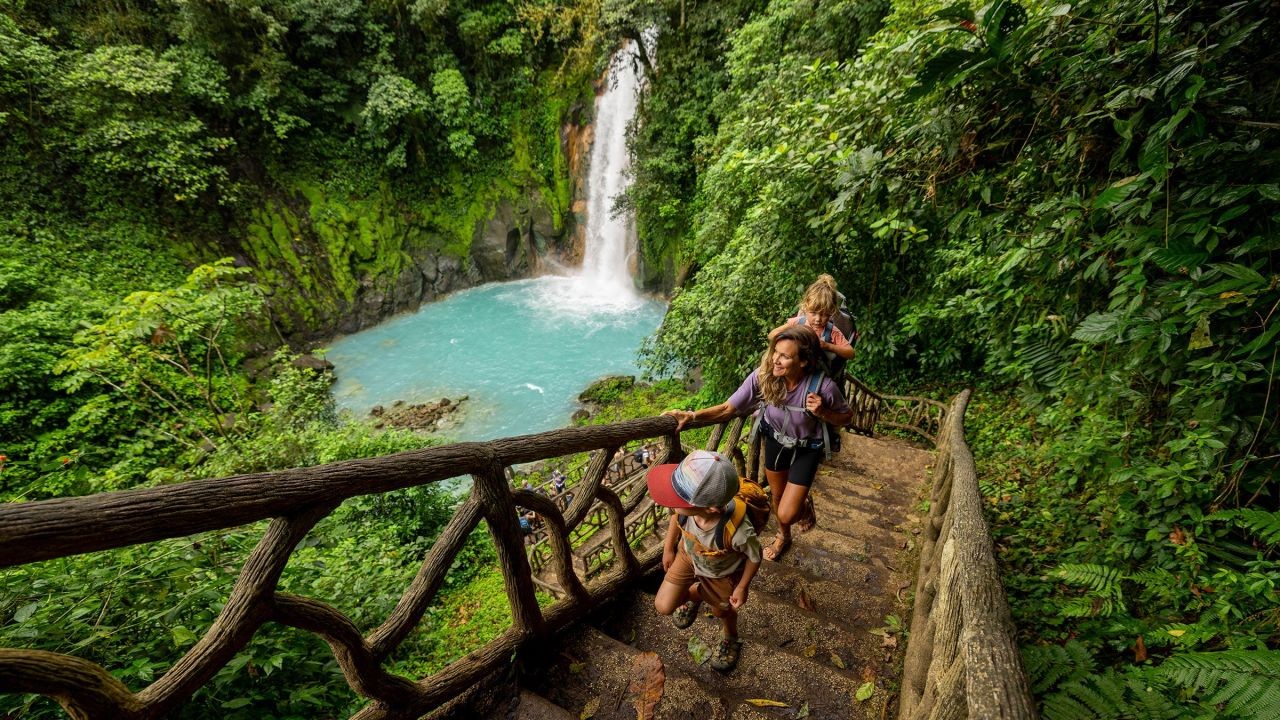
For the discerning eco-tourist, the choice often narrows to two iconic destinations: New Zealand, with its dramatic alpine landscapes and pioneering conservation ethos, and Costa Rica, a tropical biodiversity hotspot celebrated for its "Pura Vida" sustainability. The decision is rarely simple, hinging on a complex matrix of ecological value, economic impact, visitor experience, and long-term sustainability. This analysis moves beyond brochure descriptions to dissect the data, compare operational models, and evaluate which destination truly delivers a superior, future-proofed eco-tourism proposition. We will examine biodiversity metrics, carbon footprints, economic leakage, and the tangible outcomes of conservation funding to determine which nation offers a more authentic and impactful model for the conscious traveler.
Defining the Metrics: What Constitutes "Better" in eco-tourism?
Before comparing destinations, we must establish a rigorous analytical framework. Superior eco-tourism is not merely about pristine environments; it's a measurable system where tourism directly funds conservation, supports local communities, minimizes environmental impact, and provides transformative education. Our core metrics include:
- Biodiversity Density & Endemism: Species count per square kilometre and the percentage found nowhere else.
- Conservation Funding Mechanism: The direct, traceable pipeline from tourist expenditure to habitat protection and species recovery.
- Carbon Intensity of the Tourism Journey: A full lifecycle analysis from international travel to in-country transportation.
- Economic Multiplier & Leakage: How much tourist spending remains within the local economy versus being extracted by international corporations.
- Regulatory Backbone & Certification Integrity: The strength of government policy and the credibility of eco-labels.
Applying the Framework: A Data-Driven Snapshot
The following comparative table synthesizes key performance indicators for both destinations, providing a baseline for our deeper analysis.
Metric New Zealand Costa Rica Data Source / Context Land Area 268,021 km² 51,100 km² World Bank Protected Land Area ~30% ~26% DOC, SINAC Key Biodiversity Attraction Landscape & Geothermal (Fiords, Alps, Volcanoes) Megadiversity (5% of world's species) UNESCO, IUCN Flagship Eco-Policy Predator Free 2050, Tiaki Promise Payment for Ecosystem Services (PES) Govt. Policy Documents Tourism Contribution to GDP (Pre-COVID) 5.5% (Stats NZ, 2019) 8.2% (ICT, 2019) National Statistics
Deep Dive: Conservation Models and Economic Realities
The fundamental divergence lies in each nation's approach to funding and managing its natural capital. Costa Rica's model is often hailed as a global benchmark. Its pioneering Payment for Ecosystem Services (PES) program, initiated in the 1990s, directly pays landowners to conserve forests, protect watersheds, and promote biodiversity. This is funded significantly by a 3.5% levy on fossil fuels and, crucially, by tourism revenue. The model is integrated; visiting a national park directly contributes to the system that maintains it. Research indicates this program significantly reduced deforestation rates.
New Zealand's model is more fragmented yet ambitious. The Department of Conservation (DOC) is the primary steward, managing about 30% of the country's land area. However, DOC's funding has been historically constrained. Data from Stats NZ's Environmental Reporting Series highlights that while tourism generates billions, the direct funding link to conservation is less transparent than Costa Rica's PES. The ambitious Predator Free 2050 initiative relies heavily on public-private partnerships and community efforts. From consulting with local businesses in New Zealand, I've observed a surge in private conservation tourism operators who fund their own pest eradication and habitat restoration—a decentralised but effective complement to state efforts.
Case Study: The Carbon Equation and the Long-Haul Dilemma
No analysis is complete without confronting the largest environmental cost: travel emissions. For most international visitors, both destinations require long-haul flights. However, the in-country experience diverges sharply. Costa Rica's compact size and developed network of domestic flights, shuttle buses, and guided tours within a small geographic area often result in a lower internal travel footprint. New Zealand's appeal is its vast, uncrowded landscapes, which almost necessitate domestic flights (e.g., Auckland to Queenstown) and significant road travel, adding layers of carbon intensity.
Industry Insight: The emerging trend of "slow travel" and longer stays is a critical mitigation factor. Data from Tourism New Zealand suggests visitors staying longer tend to engage in more low-impact activities (e.g., multi-day hiking vs. helicopter tours) and spread economic benefits to rural communities. The calculus for the eco-tourist becomes: does the high initial flight emission get offset by a deeply immersive, low-impact, multi-week experience that funds high-cost conservation (as in NZ), or is a shorter trip to a compact, biodiverse paradise with a highly efficient conservation funding model (Costa Rica) the better net outcome? There is no universal answer, but operators in both countries will need to provide transparent carbon audits.
Pros vs. Cons: A Structured Comparative Analysis
✅ Advantages of New Zealand for eco-tourism
- Landscape-Scale Conservation: Offers unique, large-scale predator-free sanctuaries (e.g., Zealandia, Sanctuary Mountain Maungatautari) allowing visitors to experience pre-human birdlife, a phenomenon virtually impossible elsewhere.
- High-Value, Low-Volume Aspiration: Tourism NZ's strategy targets visitors who stay longer and spend more, which can translate to higher per-tourist conservation funding potential if channeled correctly.
- Strong Regulatory Safety Net: Robust environmental protections (RMA) and biosecurity measures help preserve the "clean, green" brand, though it is constantly tested.
- World-Class "Great Walks" Infrastructure: DOC's managed track system provides accessible, low-impact immersion while controlling visitor numbers and collecting fees directly reinvested in maintenance.
❌ Disadvantages of New Zealand for eco-tourism
- High Carbon In-Country Footprint: Distances between key eco-destinations necessitate carbon-intensive domestic transport, undermining the green message.
- Economic Leakage: Significant portions of package tour revenues, especially from key markets like China, are captured by offshore-owned airlines, coach companies, and hotels, diluting local economic benefit.
- Conservation Funding Gap: There remains a persistent mismatch between tourism revenue and direct, guaranteed funding for DOC and frontline conservation work, creating reliance on philanthropy and volunteerism.
- "Over-Tourism" Pressure Points: Specific iconic sites like Milford Sound/Piopiotahi and certain glaciers face crowding and environmental stress, challenging the sustainability narrative.
✅ Advantages of Costa Rica for eco-tourism
- Direct Conservation Funding Model: The PES system creates a clear, tangible link between tourism and paying for nature's services, a powerful story and reality.
- Unparalleled Biodiversity Density: The ability to see an astounding array of species (birds, mammals, insects) in a very small area maximizes wildlife viewing per travel kilometre.
- Established & Authentic Eco-Lodge Network: Decades of development have created a mature market of genuinely sustainable accommodations deeply integrated with local communities and forests.
- Compact Geography: Allows for a rich, varied experience (cloud forest, rainforest, coast) with minimal internal travel, reducing trip footprint and time.
❌ Disadvantages of Costa Rica for eco-tourism
- Greenwashing and Commodification Risk: The popularity of the "eco" label has led to dilution, with some properties making superficial claims without substantive practices.
- Development Pressures: Continued deforestation for agriculture (especially pineapple) outside protected areas and coastal development for mass tourism threaten ecological corridors.
- Dependence on International Volatility: The economy and conservation funding are heavily reliant on a steady stream of tourists, making it vulnerable to global shocks (as seen during COVID-19).
- Wildlife Habituation Stress: High visitor numbers in popular parks like Manuel Antonio can lead to stressed animal populations and altered natural behaviors.
Common Myths and Costly Misconceptions
Myth 1: "A destination marketed as '100% Pure' or 'Pura Vida' is inherently a low-impact choice." Reality: Marketing is not certification. In my experience supporting Kiwi companies, even well-intentioned operators struggle with full carbon lifecycle analysis. The true impact depends on the specific operator, the visitor's travel choices, and the regulatory enforcement on the ground. Due diligence beyond the slogan is essential.
Myth 2: "All tourist spending in an eco-destination equally benefits conservation and local people." Reality: Economic leakage is a severe issue. A 2019 study by the New Zealand Tourism Research Institute estimated that for some packaged tour segments, over 60% of expenditure leaked offshore. Choosing locally owned accommodation, tours, and services is the single most effective action to ensure your money supports the community and conservation.
Myth 3: "eco-tourism is primarily about remote, wilderness experiences away from people." Reality: The most sustainable tourism often integrates with and supports vibrant local communities. Costa Rica's community-based rural tourism (turismo rural comunitario) and New Zealand's Māori-owned cultural and nature experiences (e.g., Whakarewarewa, Waimarama) demonstrate that authentic eco-tourism strengthens cultural preservation and provides alternative livelihoods, reducing pressures on the environment.
Key Actions for the Analytical Traveler
- Audit the Operator: Look for legitimate third-party certifications (Qualmark Green in NZ, CST in Costa Rica) and ask specific questions about waste, energy, staff hiring, and direct conservation contributions.
- Calculate and Mitigate: Use reputable carbon calculators for your flights and choose operators who offer credible offset projects or, better yet, direct native planting/restoration participation.
- Spend Locally: Prioritise family-run lodges, hire local guides, and eat at local restaurants. This maximises the economic multiplier effect.
- Embrace the Shoulder Season: Visiting outside peak periods reduces pressure on infrastructure and wildlife, often providing a more authentic experience and better value.
The Future of eco-tourism: Data, Resilience, and Regeneration
The next evolution moves beyond "do no harm" towards "regenerative tourism"—where visits actively improve the environmental and social health of a destination. In New Zealand, this is embodied in the Tiaki Promise, a commitment to care for the land, sea, and culture. The future will be dictated by data transparency. We will see operators providing personalised carbon and impact statements for itineraries.
Prediction: By 2030, blockchain or similar technology will be used by leading operators in both countries to provide immutable, transparent tracking of how a portion of a tourist's fee is allocated—e.g., X dollars to predator trapping, Y dollars to riparian planting, Z dollars to local school funding. This will separate genuine actors from greenwashers. Furthermore, climate change resilience will become a core part of the offering. Having worked with multiple NZ startups in the climate tech space, I see a growing market for adaptation tourism—experiences that educate visitors on managed retreat, wetland restoration, and other climate responses, transforming a challenge into a compelling, educational narrative.
Final Takeaway: A Context-Dependent Verdict
So, which is the better destination? The data reveals it is not a binary choice but a question of prioritisation.
- Choose New Zealand if: Your definition of eco-tourism prioritises dramatic, landscape-scale conservation projects, participating in cutting-edge predator eradication, and engaging with a deep, living indigenous culture (Māori) that is inseparable from the land. You are prepared for a longer, slower journey and accept the carbon trade-off for transformative, large-wilderness experiences.
- Choose Costa Rica if: Your priority is maximising biodiversity encounters per day, supporting a highly direct and transparent conservation funding model (PES), and seeking a compact itinerary with a lower in-country travel footprint. You value a mature market of eco-lodges and a national ethos of sustainability woven into the social fabric.
The "better" destination is the one whose specific conservation model and experiential offerings most closely align with your personal environmental values and travel style. The most impactful eco-tourist is an informed one, who uses their spending as a tool to reward and reinforce the most authentic and effective sustainability practices on the ground, wherever in the world they may be.
Ready to plan with purpose? Start by researching certified operators on the official Department of Conservation or ICT websites, and commit to asking the hard questions about where your money goes. The future of these pristine places depends on the market signals sent by travelers like you.
People Also Ask (PAA)
Which destination has more stringent eco-certification for tourism operators? Costa Rica's Certification for Sustainable Tourism (CST) is a more detailed, government-backed points system covering environmental, social, and economic factors. New Zealand's Qualmark Green certification has evolved but is often seen as a baseline; true leaders often pursue additional, private eco-certifications like Toitū net carbonzero.
How does the cost of eco-tourism compare between New Zealand and Costa Rica? Generally, Costa Rica offers a wider range of budget-friendly authentic eco-options due to lower labour and living costs. New Zealand's eco-tourism is typically premium-priced, reflecting higher operational costs and a market positioning towards high-value visitors, though freedom camping and DOC huts provide lower-cost access.
What is the biggest sustainability challenge facing each country's eco-tourism sector? For New Zealand, it is decoupling tourism growth from carbon emissions and environmental degradation at iconic sites. For Costa Rica, it is preventing greenwashing and ensuring tourism growth does not outpace the capacity of its protected areas and communities.
Related Search Queries
- New Zealand eco-tourism carbon footprint statistics
- Costa Rica Payment for Ecosystem Services success rate
- Predator Free 2050 progress report 2024
- Economic leakage tourism New Zealand study
- Best regenerative tourism experiences Costa Rica
- Māori-owned eco-tourism companies New Zealand
- Compare Qualmark Green vs CST certification
- Slow travel itinerary New Zealand two weeks
- Community-based tourism Costa Rica Osa Peninsula
- Impact of cruise ships Milford Sound environment
For the full context and strategies on New Zealand vs Costa Rica: Which Is the Better Destination for Eco-Tourism? – Why Now Is the Time to Act in NZ, see our main guide: Nz Legal Law Firm Video Guides.