





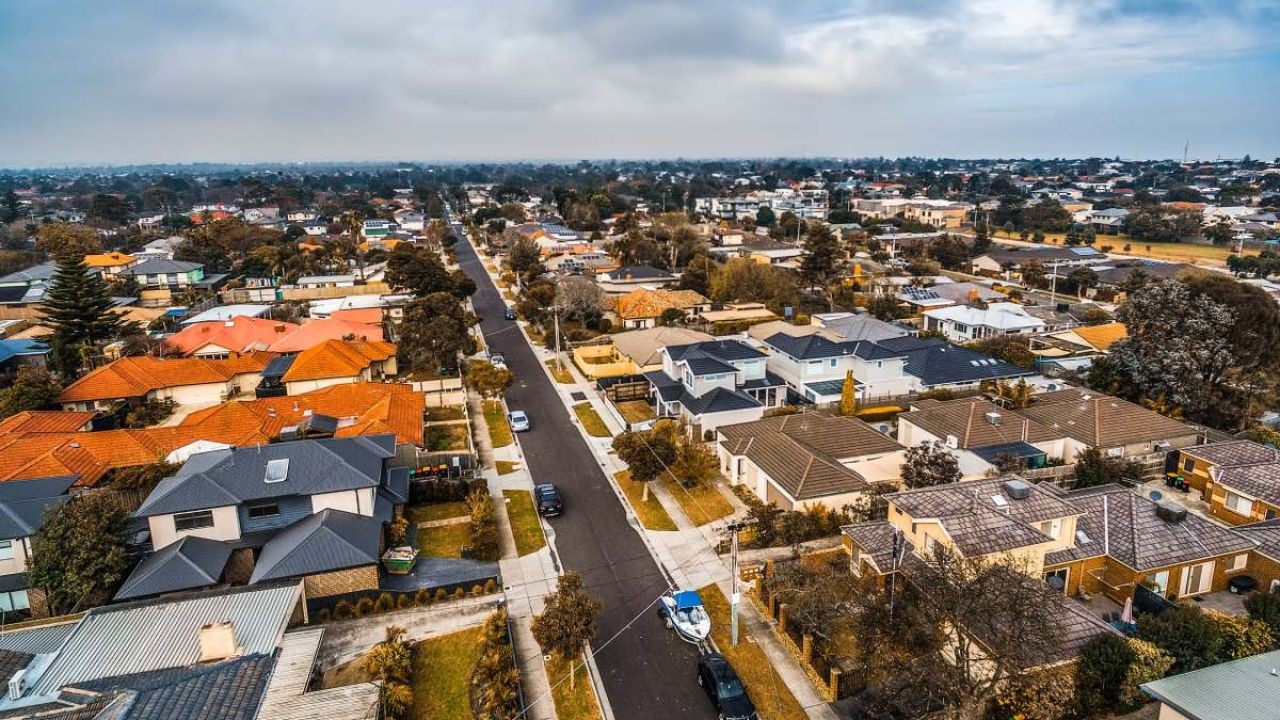
The perennial debate between inner-city and suburban property investment is often framed as a simple binary: high-growth, high-risk urban cores versus stable, yield-focused suburban sprawl. This oversimplification is a strategic error that has cost Australian investors dearly. The reality is far more nuanced, governed not by postcode dogma but by a confluence of demographic shifts, infrastructure timelines, and policy levers that differ dramatically from Sydney's eastern suburbs to Perth's northern coastal corridors. To navigate this landscape requires moving beyond generic advice and understanding the specific growth engines—and headwinds—that will define Australia's property landscape for the next decade.
Decoding the Growth Engines: It's Not Location, It's Catalysts
Growth in property is not an inherent quality of dirt within a ring road. It is manufactured through economic and social catalysts. In my experience supporting Australian companies in demographic analytics, the most significant miscalculation I see is investors chasing historical growth patterns without identifying the next catalyst.
The Inner-City Proposition: Density, Amenity, and the Knowledge Economy
Inner-city growth is propelled by intensification. The primary catalyst is the continued expansion of knowledge-economy employment in CBDs and adjacent innovation precincts. Workers in finance, tech, and professional services trade commute time for proximity, creating relentless demand for well-located apartments and townhouses. The 2021 Census data from the Australian Bureau of Statistics (ABS) underscores this: the populations of inner-city areas in Sydney and Melbourne grew by over 15% in the preceding five years, driven primarily by younger, higher-income households.
However, the inner-city game has fundamentally changed. From consulting with local businesses across Australia, I've observed the post-pandemic "hybrid work" model has created a bifurcation. Generic, low-quality investor stock in oversupplied towers is suffering from flat or negative growth, while premium, amenity-rich properties in vibrant, walkable precincts are commanding record premiums. The growth is now hyper-localised within the inner-city itself.
The Suburban Shift: The Rise of the "20-Minute Neighbourhood"
Suburban growth narratives have evolved from mere land banking. The modern catalyst is the deliberate creation of suburban hubs—the "20-minute neighbourhood" model being adopted in state planning frameworks like Victoria's. Growth here is tied to the staged delivery of transport infrastructure (metro lines, road upgrades), the establishment of major health and education precincts, and the decentralisation of corporate offices.
Drawing on my experience in the Australian market, the most potent suburban investments are in "transit-oriented developments" (TODs) within a 10-minute walk of a major railway station slated for upgrade. The value uplift from the announcement through to completion of projects like the Sydney Metro West or Melbourne's Suburban Rail Loop can be staggering, but it is a phased, speculative play requiring a long horizon.
Costly Strategic Errors in the Australian Context
Many investors, armed with anecdotal evidence or outdated rules of thumb, make predictable and expensive mistakes. Let's correct three critical assumptions that don't hold up under current market data.
Myth 1: "Inner-city always outperforms in capital growth." Reality: This is a dangerous blanket statement. CoreLogic's Best of the Best 2024 report reveals a telling story. While many top-performing units were in inner-city areas, the highest house growth rates were overwhelmingly in middle and outer-ring suburbs. For instance, in Perth, the top growth suburbs were coastal and suburban, not central. The performance gap between a premium inner-city apartment and a mediocre one is now wider than the gap between median inner-city and suburban house prices in some cities.
Myth 2: "Suburbs are just for yield; capital growth is slow." Reality: Strategic suburban investment can capture explosive growth phases, often driven by infrastructure. A Reserve Bank of Australia (RBA) research discussion paper on "The Effect of Zoning on Housing Prices" empirically demonstrates how land-use regulations and infrastructure improvements in suburban hubs create significant scarcity value and price premiums. An investor who identified the trajectory of a suburb like Box Hill in Melbourne two decades ago, anchored by its university campus and metro connection, would have seen growth that dwarfed many inner-city portfolios.
Myth 3: "Negative gearing is the optimal strategy for both." Reality: This tax-driven approach often leads to poor asset selection. The Australian Taxation Office (ATO) data consistently shows that a significant proportion of negatively geared property investors sell within five years, frequently at a loss. In practice, with Australia-based teams I've advised, the most successful investors first identify a high-conviction growth catalyst (e.g., a new hospital precinct, a tech hub relocation), then structure financing to suit. In high-growth, lower-yield inner-city areas, this may still involve negative gearing. In high-yield, growth-phase suburban markets, a positively geared or cash-flow-neutral strategy can provide the resilience to hold through the cycle and fully capture the uplift.
A Data-Driven Comparative Analysis: Risk, Reward, and Horizon
Let's move beyond myths and into a structured comparison. The optimal choice is not universal; it is a function of your investor profile.
Inner-City Investment: The High-Stakes Precision Game
Pros:
- Strong Demand Influx: Consistent demand from domestic upgraders and international migrants (students, professionals).
- Scarcity of Land: Hard geographic and planning limits on new supply protect long-term value.
- Rental Resilience: Typically lower vacancy rates in prime locations, providing income stability.
- Liquidity: Generally faster sales cycles due to higher buyer and renter volumes.
Cons:
- Higher Entry Cost & Lower Yield: Price per square metre is extreme, compressing rental yields (often sub-4% gross).
- Volatility & Oversupply Risk: Susceptible to sharp corrections if investor sentiment shifts or apartment construction booms.
- Regulatory Headwinds: Tighter lending rules from APRA for high-density properties and potential changes to strata laws.
- Body Corporate Costs: High and rising strata levies can erode net returns.
Suburban Investment: The Strategic Patience Play
Pros:
- Higher Rental Yields: More achievable positive or neutral cash flow, reducing holding cost stress.
- Land Component: The land component appreciates, offering a more traditional wealth-building model.
- Infflation-Driven Growth Spikes: Correctly anticipating infrastructure projects can deliver outsized capital growth.
- Lifestyle Appeal: Captures the "tree-change" and upsizing family demographics.
Cons:
- Longer Growth Cycles: Growth is often lumpy, tied to multi-year infrastructure projects.
- Lower Liquidity: In market downturns, suburban properties can take longer to sell.
- Management Challenges: Potentially higher maintenance costs and tenant turnover in some areas.
- Geographic Risk: Picking the *wrong* suburb—one without a genuine catalyst—can mean years of stagnation.
Case Study: The Parramatta Pivot – From Dormitory Suburb to Prime CBD
Problem: For decades, Parramatta in Western Sydney was viewed as a secondary, lower-value suburban market. Investment was yield-focused, with capital growth lagging well behind the Sydney eastern suburbs. The area suffered from a perception of poor amenity and distance, despite its central geographic location.
Action: A deliberate, multi-decade state government and council strategy transformed Parramatta's catalysts. This included relocating major government departments (e.g., NSW Department of Education), investing billions in the Parramatta Square commercial and civic precinct, fast-tracking the Sydney Metro West link, and developing a world-class arts and sports infrastructure (Powerhouse Museum, CommBank Stadium). This wasn't organic growth; it was engineered.
Result: Parramatta ceased to be a "suburb" and became Sydney's second CBD. According to CoreLogic data, between 2012 and 2022, Parramatta's unit market saw median values increase by approximately 65%, significantly outpacing the broader Sydney unit market average for that period. Premium apartments now command prices once reserved for inner-east Sydney. The growth was directly correlated with the delivery of each catalytic project.
Takeaway: This case study is a masterclass in catalytic investing. The lesson for Australian investors is not to look for "the next Parramatta" as a cliché, but to analyse which suburban hubs have locked-in, multi-billion-dollar government and private sector commitments that will reshape their economic base and amenity profile. Think in terms of precincts, not just postcodes.
The Future of Australian Property Growth: The Megaregion and Climate Resilience
Forward-looking analysis must extend beyond the next cycle. Two interconnected trends will redefine growth geography:
First, the rise of the megaregion. Planning is shifting from city-centric to corridor-centric, such as the Sydney-Newcastle-Wollongong triangle or Melbourne-Geelong. Growth will concentrate in transport-served hubs along these corridors. The 2024-25 Federal Budget's commitment to the National Rail Manufacturing Plan and infrastructure spending underscores this.
Second, climate resilience will become a primary value driver. Properties with demonstrable resilience to heat, flood, and bushfire, or located in less vulnerable areas, will command significant risk premiums. Insurability will directly impact bank valuations. This factor alone could see certain suburban and regional areas with lower physical risk outperform historically prestigious but vulnerable inner-city or coastal enclaves.
Final Takeaway & Strategic Call to Action
The question is not "inner-city or suburb?" but "which specific asset, backed by which identifiable growth catalyst, aligns with my financial capacity and risk horizon?"
Your immediate action plan:
- Identify Your Catalyst: For any potential investment, write down the single most powerful growth driver for that property (e.g., "500m from new metro station, completion 2027," "within 2km of newly announced university campus expansion"). If you can't name it, don't buy it.
- Stress-Test for Climate & Regulation: Check flood and bushfire maps via state planning portals. Model the impact of a 1% rise in interest rates and a potential shift in land tax or strata regulations.
- Run the 10-Year Scenario: Model cash flow and growth under a conservative, moderate, and optimistic scenario for the catalyst's delivery. Does the investment hold up under the conservative case?
The highest growth will accrue to the disciplined, research-driven investor who treats property not as a speculative lottery ticket, but as a strategic allocation into a tangible asset whose future value is being built today—by policymakers, infrastructure crews, and demographic tides. Your job is to map those blueprints before the concrete is poured.
People Also Ask
How does interest rate policy from the RBA differentially impact inner-city vs. suburban markets? Inner-city markets, with higher debt-to-income ratios and investor concentrations, are typically more sensitive to rate rises, which can cool demand quickly. Suburban markets, with higher owner-occupier and equity-rich buyer proportions, often show more resilience but can be impacted by reduced borrowing capacity for upsizers.
What is the impact of Australia's migration policy on property investment strategy? High net overseas migration, as currently forecast by Treasury, provides a sustained demand floor for inner-city and university-adjacent rental markets. However, the long-term trend is towards skilled migrants settling directly in suburban areas with employment hubs, making suburban properties near major hospitals, tech parks, and logistics centres a strategic play.
Are townhouses in inner-ring suburbs a "best of both worlds" compromise? Often, yes. They can offer the land component of suburban houses with the proximity of inner-city living. Their scarcity in established areas makes them a high-conviction asset for capturing demographic shifts towards medium-density living, but due diligence on strata arrangements and future development in the area is critical.
Related Search Queries
- Transit oriented development investment Australia 2024
- Positive cash flow property suburbs Sydney Melbourne
- Impact of Sydney Metro West on property prices
- Climate change risk assessment Australian property
- Best performing suburbs for capital growth next 5 years
- Australian Prudential Regulation Authority (APRA) lending rules investment property
- Inner city apartment oversupply Brisbane Perth
- 20-minute neighbourhood planning Victoria property impact
- How to research infrastructure projects for property investment
- Land tax changes NSW Victoria investment strategy
For the full context and strategies on Inner-City vs. Suburban Property Investment – Which One Has Higher Growth? – The Most Overlooked Shift in Australia Today, see our main guide: Tech Product Launch Videos Australia.