




For the discerning investor, architecture is far more than aesthetics or engineering. It is a tangible, long-term asset class that embodies the economic, social, and cultural capital of a nation. In New Zealand, our built environment offers a particularly compelling case study. It is a physical ledger of our national evolution, where every new development, heritage restoration, and urban plan represents a significant capital allocation with profound implications for future value. To understand where to invest in New Zealand's property and construction sectors, one must first learn to read the cultural and economic narratives etched into our cityscapes and landscapes. This is not a matter of sentiment; it is a critical framework for assessing risk, identifying growth corridors, and anticipating regulatory shifts that can make or break an investment thesis.
The Colonial Ledger: Extractive Foundations and Lasting Imprints
The initial chapters of New Zealand's architectural story were written in the language of extraction and colonial assertion. The Victorian and Edwardian villas that command premium prices in suburbs like Ponsonby or Fendalton were, in their time, statements of transplanted British identity and capital. Their durable timber frames and expansive sections spoke to the availability of a seemingly endless natural resource: native timber. This was architecture as a direct conversion of natural capital into built capital. Concurrently, the rapid erection of utilitarian structures—wool stores, grain mills, and banking chambers—facilitated the export-driven pastoral economy that remains a backbone of our national accounts. From an investment perspective, this era established enduring patterns: the premium placed on certain materials (timber), the value of specific suburban typologies (the standalone house on its own section), and the economic primacy of ports and agricultural processing zones. Drawing on my experience in the NZ market, I've observed that properties that successfully preserve this architectural heritage while modernizing internal systems (seismic, thermal) often achieve resilience against market downturns, appealing to a demographic that values perceived permanence and narrative.
Case Study: The Dunedin Railway Station – From Industrial Node to Cultural Anchor
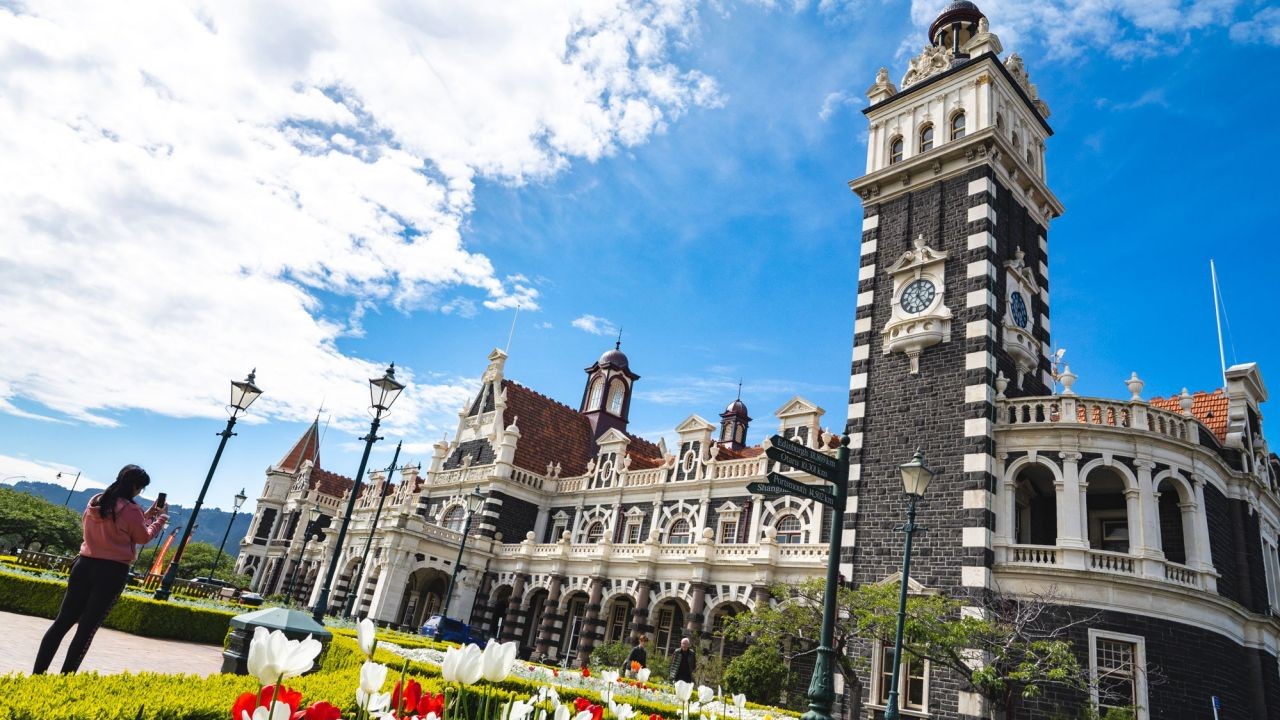
Problem: The Dunedin Railway Station, a magnificent Flemish Renaissance-style edifice completed in 1906, symbolized the peak of the Otago gold rush and rail's dominance in freight and passenger movement. By the late 20th century, its primary economic function had dramatically diminished. The asset faced a classic dilemma: become a costly, underutilized relic or find a new economic purpose that justified its substantial maintenance capex.
Action: A concerted public-private strategy repurposed the station not as a museum, but as a multi-tenant hub for high-footfall activities. It became home to the New Zealand Sports Hall of Fame, a popular Saturday farmers' market, and hospitality venues. This action transformed its economic model from a single, declining transport utility to a diversified cultural and experiential destination.
Result: The station is now a cornerstone of Dunedin's tourism and civic identity. It drives consistent visitor traffic, supports local SMEs at the market, and has preserved a capital-intensive heritage asset without it becoming a pure fiscal drain. Its valuation is now tied to its success as a placemaking anchor, not its original industrial use.
Takeaway: This case demonstrates the critical investment principle of adaptive reuse. For investors, it highlights the potential in assets where cultural significance can be leveraged to create new, sustainable revenue streams. The lesson for NZ is that the most resilient heritage properties are those successfully reprogrammed for contemporary economic and social activity.
The Māori Renaissance: Integrating Cultural Capital into the Built Environment
The most significant cultural evolution in modern New Zealand has been the Māori renaissance, and its impact on architecture is moving from symbolic gesture to fundamental design principle. This is not merely about using koru motifs. It represents a deeper integration of Mātauranga Māori (Māori knowledge) concerning sustainability, community, and connection to place (turangawaewae). For investors, this evolution presents both a compliance consideration and a substantial value-creation opportunity. The New Zealand Government's procurement policy, which requires agencies to consider broader outcomes including supporting Māori businesses, is a direct regulatory driver. A 2023 report by the Ministry of Business, Innovation and Employment (MBIE) on the construction sector highlighted the goal of increasing diversity and inclusion, explicitly noting the underrepresentation of Māori and Pasifika. This policy environment is catalyzing demand for iwi-led developments and design practices that authentically engage with kaitiakitanga (guardianship).
In practice, with NZ-based teams I’ve advised, projects that engage early and meaningfully with local iwi and hapū often navigate the resource consent process more smoothly and achieve greater social license to operate. Furthermore, developments that embody principles like communal space (marae-style gathering areas), orientation to sun and landscape, and use of natural materials are increasingly aligned with premium market expectations for wellness and sustainability. This cultural layer is becoming a measurable component of ESG (Environmental, Social, and Governance) criteria in real estate investment.
Actionable Insight for Investors: The Due Diligence Checklist
When evaluating a development or property investment in New Zealand, augment your standard financial and engineering due diligence with these cultural-context questions:
- Iwi Engagement: Is there evidence of early and ongoing engagement with relevant Māori entities? Is the partnership transactional or strategic?
- Design Narrative: Does the architectural design move beyond tokenism to integrate meaningful cultural narratives or principles? Does this enhance the user experience and community connection?
- Regulatory Alignment: How does the project align with broader government outcomes and local council plans (e.g., Te Aranga Māori Design Principles used in Auckland)?
- Long-Term Value: Could this cultural layer provide a defensible competitive advantage or rental premium, insulating the asset from being commoditized?
The Seismic Shift: Risk, Regulation, and Reinvention Post-Christchurch
No event has reshaped the investment landscape of New Zealand architecture more profoundly than the Canterbury earthquake sequence of 2010-2011. It was a brutal, market-wide stress test that redefined risk parameters. The catastrophic failure of non-ductile concrete buildings, like the CTV building, led to a complete overhaul of building codes and a national seismic assessment regime (the IAQ – Initial Assessment Procedure). Overnight, a building's "seismic grade" became a primary determinant of its insurability, occupancy, and ultimately, its valuation. Based on my work with NZ SMEs in the commercial property sector, I've seen portfolios materially revalued based on seismic reports, with lower-grade buildings facing steeply rising insurance premiums or becoming uninsurable—a direct hit to net operating income and capital value.
This regulatory shock forced a cultural evolution towards resilience. The architecture emerging from Christchurch's rebuild, such as the innovative, timber-framed Tūranga central library, prioritizes not just seismic strength but also post-disaster functionality. The investment implication is clear: in New Zealand, structural engineering integrity is non-negotiable. Due diligence must now include a thorough review of seismic assessments, strengthening costs, and the long-term trajectory of insurance markets for different building types. This has created a two-tier market, with premium valuations accruing to modern, low-risk assets.
Sustainability: From Niche Ethos to Core Economic Driver
The global shift towards sustainability has found a potent expression in New Zealand, driven by both our "clean, green" national identity and hard economic realities. The architecture of the 21st century is increasingly shaped by the New Zealand Green Building Council's (NZGBC) Green Star ratings and the push for decarbonization. This is not merely a cultural preference; it is becoming an economic imperative. Tenants, particularly large corporates and government agencies with net-zero commitments, are demanding green-certified spaces. This creates a tangible "brown discount" for unsustainable buildings.
The evolution here is from seeing sustainable features as a cost to recognizing them as a driver of operational savings (energy, water) and tenant attraction/retention. Passivehaus design principles, mass timber construction (leveraging our forestry sector), and water-sensitive urban design are moving into the mainstream. For investors, this requires a shift in capital expenditure planning. Retrofitting existing stock to meet rising standards represents a significant future liability, while new developments must factor in higher upfront costs for sustainable systems that will pay back through lower operating expenses and higher occupancy rates.
Comparative Analysis: The High-Rise Dilemma – Auckland vs. Wellington
The contrasting architectural responses of Auckland and Wellington to growth pressures reveal much about their underlying economic and risk cultures, crucial for geographic allocation decisions.
Auckland's Approach: Driven by a chronic housing shortage and population growth, Auckland has embraced vertical intensification. The skyline is defined by a proliferation of residential towers. The cultural narrative is one of growth, modernity, and density. However, from an investment standpoint, this has led to concerns about construction quality (as highlighted by the leaky building crisis legacy), oversupply in certain micro-markets, and the social challenges of high-density living without commensurate infrastructure.
Wellington's Approach: Constrained by geography and seismic risk, Wellington's intensification has been more nuanced. The focus has been on "missing middle" housing—terrace housing, low-rise apartments—and the rigorous strengthening or demolition of earthquake-prone buildings. The cultural narrative prioritizes resilience and character retention. The investment risk profile is different: higher upfront seismic compliance costs, but potentially lower long-term risk and a focus on premium, low-supply inner-city living.
The Investor Takeaway: Auckland offers scale and growth momentum but requires meticulous due diligence on build quality and market saturation. Wellington offers a premium, resilience-focused market but with higher barriers to entry and a different set of regulatory hurdles.
Common Myths and Costly Misconceptions
Myth 1: "Heritage zoning protects value by restricting supply." Reality: While heritage status can create scarcity, it is a double-edged sword. It imposes strict and often costly maintenance and renovation protocols. If the property cannot be adapted for modern use (e.g., seismic strengthening, insulation upgrades are prohibitively expensive or disallowed), it can become a stranded asset—a capital trap rather than a safe haven.
Myth 2: "All new buildings are better investments than old ones." Reality: The leaky building crisis (1990s-2000s) exposed critical systemic failures. A building's age is less important than its construction methodology, materials, and compliance history. A well-maintained, character villa with upgraded services can be a far more resilient asset than a poorly built 2000s apartment. Due diligence on the building's era and known systemic issues is paramount.
Myth 3: "Sustainable features don't provide a financial return." Reality: Data from NZGBC consistently shows that Green Star-rated buildings have higher occupancy rates, can command rental premiums, and have lower operational costs. With rising carbon prices and tenant demand, sustainability is directly translating into higher net operating income and lower obsolescence risk, directly impacting capitalization rates and valuation.
The Future Built Environment: Five Trends Shaping the Next Decade
1. Precision-Fabricated Timber: Leveraging our plantation forestry, engineered mass timber (CLT, GLT) will become a dominant structural material for mid-rise buildings, driven by its carbon sequestration potential and construction efficiency. This represents an opportunity for vertical integration in the construction sector. 2. Climate-Adaptive Design: Architecture will explicitly respond to climate change impacts—flood resilience, passive cooling for heatwaves, and fire-resistant materials in peri-urban areas. Assets ignoring these factors will face increased insurance and regulatory risk. 3. Co-Living and Hybrid-Use Precincts: Responding to housing unaffordability and changing work patterns, developments that blend residential, co-working, retail, and leisure in walkable precincts will attract premium valuations. 4. Data as a Material: Buildings will be designed as data-generating entities, with integrated sensors optimizing energy use, space utilization, and predictive maintenance, creating new operational efficiency metrics for investors. 5. Deepening Bi-Cultural Integration: Authentic partnership with Māori will evolve from a design consideration to a foundational development model, particularly for large-scale land and resource projects, affecting both social license and access to capital.
Final Takeaway & Strategic Call to Action
New Zealand's architecture is a dynamic, high-stakes market where cultural evolution is inextricably linked to material value. The investor who views a building merely as a physical shell is missing the critical narrative layers that dictate its long-term risk and return profile: seismic resilience, cultural authenticity, environmental performance, and adaptive capacity.
Your next step is to apply this cultural-economic lens to your portfolio or pipeline. Audit your holdings not just on financial metrics, but on their alignment with these evolutionary trends. For your next due diligence process, insist on the expanded checklist that includes seismic legacy, sustainability certification pathway, and depth of cultural engagement. The future value of New Zealand's built assets will be captured by those who understand that our architecture is not just a reflection of our culture—it is the physical infrastructure of our shared economic future.
Ready to pressure-test your property investments against these evolving standards? Begin by commissioning an independent review that goes beyond the valuation report to assess seismic, sustainability, and cultural positioning—the true determinants of resilience in the New Zealand market.
People Also Ask (PAA)
How is Māori culture influencing commercial property value in NZ? Authentic integration of Māori design principles (kaitiakitanga, community focus) can enhance social license, smooth consenting, and appeal to tenants seeking unique, wellness-oriented spaces, potentially supporting rental premiums and lower vacancy rates in a competitive market.
What is the biggest regulatory risk for building owners in New Zealand? Beyond seismic strengthening deadlines, the biggest emerging risk is carbon regulation and shifting sustainability standards. Buildings with poor energy efficiency face rising compliance costs, potential "brown discounts," and obsolescence as tenant demand shifts decisively towards green-certified space.
Is investing in heritage property in NZ a safe strategy? It can be, but it's highly specific. Safety depends on the building's adaptive reuse potential, the cost of meeting modern seismic and building code requirements, and the flexibility of the heritage zoning. It is a specialized asset class requiring deep expertise and capital reserves for unforeseen upgrades.
Related Search Queries
- NZ building seismic assessment cost 2024
- Green Star rating impact on property valuation New Zealand
- Iwi partnership property development benefits
- Future of mass timber construction NZ investment
- Climate change adaptation building code NZ
- Cost of retrofitting old buildings NZ vs new build
- Wellington earthquake prone building investment strategy
- Auckland high-rise apartment market risks 2024
- MBIE construction sector trends 2024 report
- ESG real estate investing New Zealand framework
For the full context and strategies on How New Zealand’s Architecture Continues to Reflect Its Cultural Evolution – The Untold Truth Kiwis Need to Hear, see our main guide: New Zealand Retail Ecommerce.