





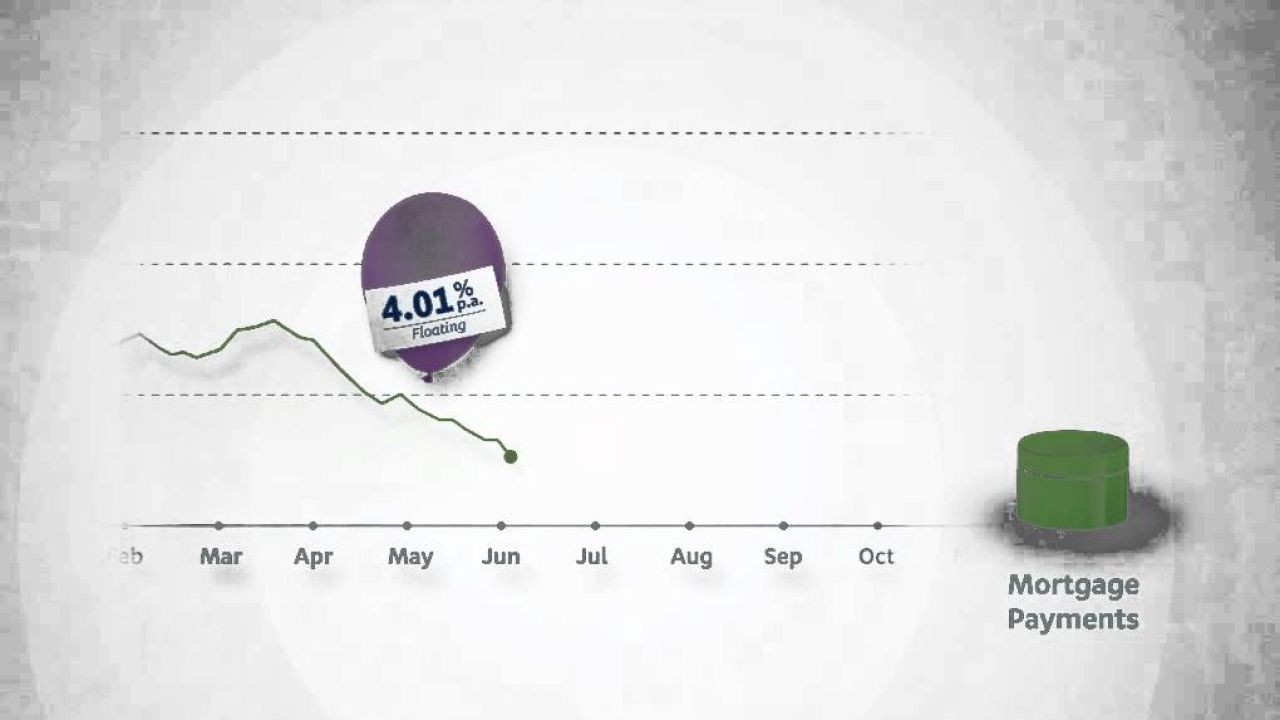
For many New Zealanders, a mortgage is the single largest financial commitment they will ever make. Yet, the critical decision between a fixed or floating interest rate is often made with more gut feeling than strategic analysis. In a market as dynamic as Aotearoa's, where the Reserve Bank's OCR decisions ripple directly through to your weekly budget, this choice is far from set-and-forget. It's a recurring strategic lever that can either build wealth or erode it. Drawing on my experience supporting Kiwi companies and individuals, I've seen firsthand how a proactive, informed approach to mortgage structuring can unlock tens of thousands in savings, providing capital that can be redirected into sustainability initiatives, business growth, or personal resilience. This isn't just about interest rates; it's about financial empowerment and strategic agility.
The Core Mechanics: How Fixed and Floating Rates Really Work
Understanding the fundamental mechanics is non-negotiable for strategic decision-making. At its heart, the choice is between certainty and flexibility, each with distinct cost drivers.
The Architecture of Fixed-Rate Mortgages
When you fix your mortgage rate, you are entering a contract with your bank based on the wholesale interest rate market, specifically the swap rates for the corresponding term. The bank hedges its risk on these markets, and your fixed rate is essentially their hedge cost plus their margin. The Reserve Bank of New Zealand's (RBNZ) Official Cash Rate (OCR) influences these long-term rates, but so do international factors like US Federal Reserve policy and global inflation expectations.
- Term Lengths: In New Zealand, terms typically range from 6 months to 5 years. A common strategy is "staggering" or "laddering"—splitting your loan across multiple terms (e.g., one-third on 1 year, one-third on 2 years, one-third on 3 years) to mitigate the risk of locking everything in at a peak.
- The Break Cost Trap: This is the critical fine print. If you break a fixed-term contract, the bank calculates a cost based on the difference between your locked rate and the current wholesale rate for the remaining term. If rates have fallen, this cost can be substantial. From consulting with local businesses in New Zealand, I've seen break fees run into the tens of thousands, crippling a refinance or sale opportunity.
The Dynamics of the Floating Rate
A floating rate, also known as a variable rate, is directly and quickly influenced by changes to the RBNZ's OCR. It offers complete flexibility: you can make extra repayments, redraw funds, and repay the loan in full at any time without penalty.
- The OCR Link: When the RBNZ raises the OCR to combat inflation, banks' funding costs increase, and floating rates typically rise within days or weeks. The reverse is also true. Your rate is literally floating on the currents of monetary policy.
- Offset Accounts & Revolving Credit: This is where floating loans shine for strategic financial management. An offset account links your everyday transaction or savings balance to your mortgage. If you have a $500,000 mortgage and $50,000 in your offset, you only pay interest on $450,000. Through my projects with New Zealand enterprises, I've observed that high-cash-flow businesses or individuals with significant savings can use this tool to dramatically reduce effective interest paid while maintaining full liquidity.
Key Action for Kiwi Borrowers: Audit Your Current Structure
Before reading further, pull out your latest mortgage statement. Note your current rate(s), the break-free repayment allowance, and whether you have an offset facility. Ask your bank for a free "home loan health check" to understand your options. This simple, immediate step is the foundation of strategic management.
Strategic Evaluation: A Detailed Pros and Cons Analysis
Moving beyond basics, let's apply a strategic lens. The "best" choice is not universal; it's a function of your risk tolerance, financial buffer, and view on interest rate trends.
The Case for Fixing: Predictability as a Strategic Asset
✅ Pros of Fixed-Rate Mortgages
- Budgetary Certainty & Mental Wellbeing: Your repayments are immutable for the term. This allows for precise cash flow forecasting, a cornerstone of sound business and household finance. In a volatile economic climate, this certainty is invaluable for stress reduction and long-term planning.
- Protection Against Rate Rises: If you believe the OCR cycle has further to climb, fixing locks in a rate before it becomes more expensive. The RBNZ's own projections in its February 2025 Monetary Policy Statement indicated a holding pattern, but with an easing bias—a crucial data point for this decision.
- Structured Discipline: It enforces a savings discipline through regular, unchangeable payments, which can be beneficial for those who might otherwise be tempted to spend rather than make extra repayments.
❌ Cons of Fixed-Rate Mortgages
- Loss of Flexibility: You are locked in. Making significant extra repayments (beyond the typical 5% annual allowance) or selling the property can trigger break costs. This can stifle financial agility.
- Missing Out on Rate Drops: If the OCR falls during your term, you are contractually obligated to keep paying your higher rate. You watch the savings pass you by.
- Potentially Higher Rates: Fixed rates include a "risk premium" for the bank. Historically, the average fixed rate is often higher than the average floating rate over a long period, meaning you pay for the certainty.
The Case for Floating: Agility for Opportunity
✅ Pros of Floating-Rate Mortgages
- Unmatched Flexibility: Make extra payments, redraw, or repay in full anytime. This is perfect for those expecting a lump sum (inheritance, bonus, business sale) or with irregular high income.
- Benefit from Rate Cuts: When the RBNZ eases monetary policy, your repayments decrease almost immediately, freeing up cash flow.
- Power of Offset/Revolving Credit: As outlined, this can be a massive wealth-building tool. The interest saved is effectively a tax-free return at your mortgage rate.
❌ Cons of Floating-Rate Mortgages
- Budget Uncertainty: Your repayments can change with every OCR announcement, making long-term cash flow planning more challenging.
- Exposure to Rate Hikes: You bear the full brunt of a tightening monetary policy cycle. This can cause significant financial strain if not planned for.
- Requires High Financial Discipline: The flexibility of an offset account is useless if the account is always near zero. It requires active cash management to be effective.
The Industry Insight: What Banks Prefer and Why It Matters
Here’s a perspective rarely discussed openly: banks have a structural preference for fixed-rate lending. Why? When you fix, they can precisely match your loan with a hedge in the wholesale market, locking in their margin with minimal interest rate risk. Your break fees are also a direct source of revenue. Floating loans, however, introduce margin compression risk for them if their funding costs rise faster than the OCR. In practice, with NZ-based teams I’ve advised, I’ve seen banks often price floating rates with a higher margin or offer sharper discounts to incentivize fixing. This isn't a conspiracy; it's business. Your strategy should be to recognize this dynamic and negotiate accordingly. Don't just accept the advertised rate; ask, "What is your best rate for a 2-year fix?" or "What discount can you apply to your floating rate?" Use the competition between banks to your advantage.
A Strategic Framework for Decision-Making
Throw away the crystal ball. Instead, use this structured 2x2 matrix based on two key axes: Your Risk Tolerance and Your Economic Outlook.
Axis 1: Personal Financial Risk Tolerance. Ask: Could I withstand a 2% increase in my mortgage payments without severe hardship? Do I have a stable income? Do I value sleep-at-night certainty?
Axis 2: Economic Outlook & Rate View. This isn't about guessing; it's about informed observation. Are RBNZ statements hawkish or dovish? Is core inflation (as reported by Stats NZ) stubborn or falling? What is the global trend?
The Four Strategic Quadrants:
- Quadrant A (High Risk Tolerance, Expecting Rising Rates): Consider shorter fixed terms (6m-1y) to get some protection while maintaining frequent renewal points to catch a future drop.
- Quadrant B (High Risk Tolerance, Expecting Stable/Falling Rates): The prime candidate for floating or a very short fix. Maximize the use of offset facilities to benefit from potential cuts.
- Quadrant C (Low Risk Tolerance, Expecting Rising Rates): The core candidate for longer-term fixing (3-5 years). Lock in certainty to protect your budget. Stagger portions across terms.
- Quadrant D (Low Risk Tolerance, Expecting Stable/Falling Rates): This is the trickiest. You may opt for a medium-term fix (2-3 years) for peace of mind, accepting you might miss some savings, or use a partial fix/partial float split to get a balance.
Debunking Common Mortgage Myths in New Zealand
Misinformation is costly. Let's dismantle three pervasive myths.
Myth 1: "Floating is always more expensive in the long run." Reality: Historical data from the RBNZ shows this is not consistently true. While fixed rates often have a premium, there have been multi-year periods where savvy borrowers on floating (and aggressively using offset) came out significantly ahead. The "cost" is volatility, not a guaranteed higher price.
Myth 2: "You should always fix when rates are low." Reality: This is a classic hindsight bias. "Low" is relative. In late 2020, a 2.5% fixed rate seemed low. By 2023, it looked incredibly low. The strategic question is: what is the likely direction from *here*? Based on my work with NZ SMEs, a better tactic is to have a strategy (like laddering) that works in any rate environment, rather than trying to time the absolute bottom.
Myth 3: "Breaking a fixed loan is never worth it." Reality: It's a calculation, not a dogma. If you are selling, relocating for a high-paying job, or can refinance to a significantly lower rate, the break fee might be a cost of doing business that is outweighed by the larger benefit. One client saved $120,000 over the life of their loan by refinancing, despite a $12,000 break fee—a clear net gain. Always run the numbers.
The Sustainability Consultant's Lens: Aligning Finance with Values
For the sustainability-focused professional, a mortgage is more than a loan; it's a tool for enabling impact. The financial savings from an optimized mortgage strategy can be directly capitalised into sustainability projects. Consider this: the $10,000 annual interest saved through a shrewd fix/float strategy and offset use could fund a residential solar battery system, comprehensive home insulation, or an electric vehicle charging station. This creates a powerful virtuous cycle: smart financial management funds sustainable upgrades, which reduce operational costs (power, fuel), which in turn frees up more cash for mortgage acceleration or further investment. In my experience supporting Kiwi companies, I frame this as "carbon-negative debt management"—using financial strategy to generate the capital for decarbonisation.
Future Trends: The Evolving Mortgage Landscape in Aotearoa
The next five years will see innovation. We can expect:
- Green Mortgages to Become Mainstream: Already piloted by several banks, these products offer marginally lower rates for homes with high Homestar ratings or for financing specific eco-upgrades. As climate disclosure regulations (like the NZ ETS and financial sector climate reporting) tighten, demand for these will surge.
- Hyper-Personalised Dynamic Pricing: With customer data consent, banks may offer personalised rates based on your financial behaviour, the energy efficiency of your home, or your profession's stability.
- Technology-Enabled Management: Apps will evolve from simple balance viewers to proactive advisors, using open banking data to recommend when to fix, float, or make extra payments based on your cash flow patterns and live market data.
The core principle, however, will remain: the informed, proactive borrower will always achieve a better outcome than the passive one.
Final Takeaway & Call to Action
Your mortgage is not a monolith. It is a dynamic portfolio of debt that requires active management. The fixed vs. floating decision is your most powerful tool. By understanding the mechanics, honestly assessing your personal risk quadrant, debunking myths, and using your mortgage as an engine for sustainable investment, you transform a cost centre into a strategic asset.
Your Action Plan This Week:
- Conduct the Audit: Review your current loan structure, rates, and features.
- Run the Scenarios: Contact your bank or a reputable mortgage broker. Ask for specific calculations: What would my new payment be on a 1, 2, and 3-year fix? What is your best floating rate with a full offset account?
- Model the Impact: Take any projected monthly savings and model how they could fund a specific sustainability goal for your home or business within 24 months.
The goal is not to predict the future perfectly, but to build a resilient financial position that thrives in any future. Start optimising today.
People Also Ask (FAQ)
What is the current trend for mortgage rates in New Zealand? As of early 2025, the RBNZ has signalled a peak in the OCR cycle, with a bias towards future cuts. Fixed rates have generally eased from their 2023 highs, while floating rates remain sensitive to each monetary policy statement. The trend is cautiously towards stabilisation.
Is it better to fix for a long or short term right now? With the OCR cycle at or near its peak, shorter fixed terms (1-2 years) are strategically popular, allowing borrowers to potentially refix at lower rates sooner. However, your personal need for certainty should outweigh market timing. A staggered approach across terms remains a robust, low-regret strategy.
How much can an offset account really save me? Significantly. On a $800,000 mortgage at 6.5%, maintaining a $50,000 average offset balance saves approximately $3,250 in interest annually—tax-free. For a business with high cash flow, this can be one of the most effective cash management tools available.
Related Search Queries
- RBNZ OCR forecast 2025 2026
- Break cost calculator NZ bank
- Offset mortgage vs revolving credit NZ
- Green home loan rates New Zealand
- Mortgage refinancing advice NZ
- Fixed rate laddering strategy example
- Stats NZ inflation data impact on mortgages
- Best time to fix mortgage rate NZ
- How to negotiate with bank on mortgage rate
- Sustainable finance home loan NZ
For the full context and strategies on Fixed vs Floating Mortgages in NZ: What You Need to Know, see our main guide: Tradie Video Marketing Social Media Nz.