





For most policy analysts, the intersection of gaming and disability support likely conjures images of niche, feel-good stories with limited systemic application. This is a critical miscalculation. The global gaming industry, valued at over NZ$300 billion, is not merely entertainment; it is a sophisticated engine for human-computer interaction, social connectivity, and cognitive training. In New Zealand, where over 1.1 million people (24% of the population) identify as disabled, according to Stats NZ's 2018 Disability Survey, the potential for leveraging this technology is not just an opportunity—it is a pressing economic and social imperative. The traditional view of disability support is being disrupted, and interactive digital experiences are at the forefront. This analysis moves beyond anecdote to dissect the data, evaluate the tangible pros and cons, and provide a framework for integrating gaming-based interventions into New Zealand's health, education, and social inclusion policies.
The Data-Driven Case: More Than Just Play
The therapeutic and assistive potential of gaming is grounded in measurable outcomes. Exergames like those on the Nintendo Wii or VR systems have demonstrated significant improvements in balance and motor function for stroke rehabilitation, with some studies showing outcomes comparable to conventional therapy. For neurodiverse individuals, structured game environments can enhance social cognition and executive functioning. Crucially, gaming provides a low-stakes, high-reward platform for skill development and social connection, often inaccessible in the physical world.
From observing trends across Kiwi businesses, I've seen a surge in local developers creating accessible gaming solutions, but they operate in a policy vacuum. The 2018 Stats NZ data reveals a sobering economic context: the median weekly income for disabled New Zealanders was NZ$100 less than for non-disabled people. This isn't just a social equity issue; it's a significant drag on national productivity and consumer market potential. Gaming interventions that improve digital literacy, cognitive stamina, or remote work capacity can directly impact this economic participation gap.
Key Actions for NZ Policymakers
- Audit Existing Initiatives: Map and evaluate current gaming-for-health pilots within the Ministry of Health and ACC to identify evidence-based successes and funding gaps.
- Fund Longitudinal Research: Commission Stats NZ or a university consortium to track the socio-economic impact of digital inclusion via gaming for disabled populations.
- Create a Sandbox Framework: Establish a regulatory "sandbox" through MBIE to fast-track testing and certification of assistive gaming technologies, reducing barriers to market for NZ innovators.
A Critical Pros & Cons Evaluation
Adopting any new intervention requires a clear-eyed assessment of its benefits and limitations. The following analysis separates evidence-based potential from hyperbolic promise.
✅ The Compelling Advantages
- Enhanced Engagement & Adherence: Gamification transforms repetitive therapeutic exercises into engaging challenges. This can lead to higher adherence rates compared to traditional methods, a critical factor in long-term rehabilitation success.
- Precise Data & Personalisation: Games generate vast amounts of performance data—reaction times, accuracy, progression paths. This allows for hyper-personalised therapy adjustments and objective progress tracking, moving beyond subjective assessment.
- Scalable Social Connection: Online multiplayer and social gaming platforms can mitigate isolation, a severe issue for many disabled Kiwis. They provide controlled environments to build community and practice social interaction.
- Cognitive & Neurological Retraining: Specially designed games can target specific cognitive domains like memory, attention, and problem-solving, offering complementary pathways for conditions like ADHD, brain injury, or age-related cognitive decline.
- Economic Efficiency Potential: While initial development costs can be high, effective digital tools can reduce long-term reliance on one-on-one support hours and can be deployed remotely, addressing New Zealand's geographical challenges.
❌ The Substantial Risks and Limitations
- The Accessibility Paradox: Many mainstream games and platforms remain inaccessible due to poor design (lack of captioning, non-customisable controls). Promoting gaming without enforcing accessibility standards can exacerbate exclusion.
- Evidence Gap & Clinical Integration: Robust, longitudinal clinical trials are still evolving. Without clear pathways to integrate data from games into official health records (via the NZ Electronic Health Record), their use remains adjunctive rather than core.
- Digital Divide & Cost Barriers: High-end assistive tech (adaptive controllers, VR rigs) is expensive. Policy must address access equity to prevent creating a two-tiered system where only those who can afford it benefit.
- Overstimulation & Wellbeing Risks: For some individuals, certain game mechanics can cause anxiety, seizures, or addictive behaviours. Interventions require careful individual assessment and co-design with users.
- Workforce Readiness: Healthcare and support workers lack training to prescribe, monitor, and interpret gaming-based interventions. Scaling requires upskilling programmes accredited by NZQA.
Case Study: SpecialEffect – A Global Blueprint for NZ Adaptation
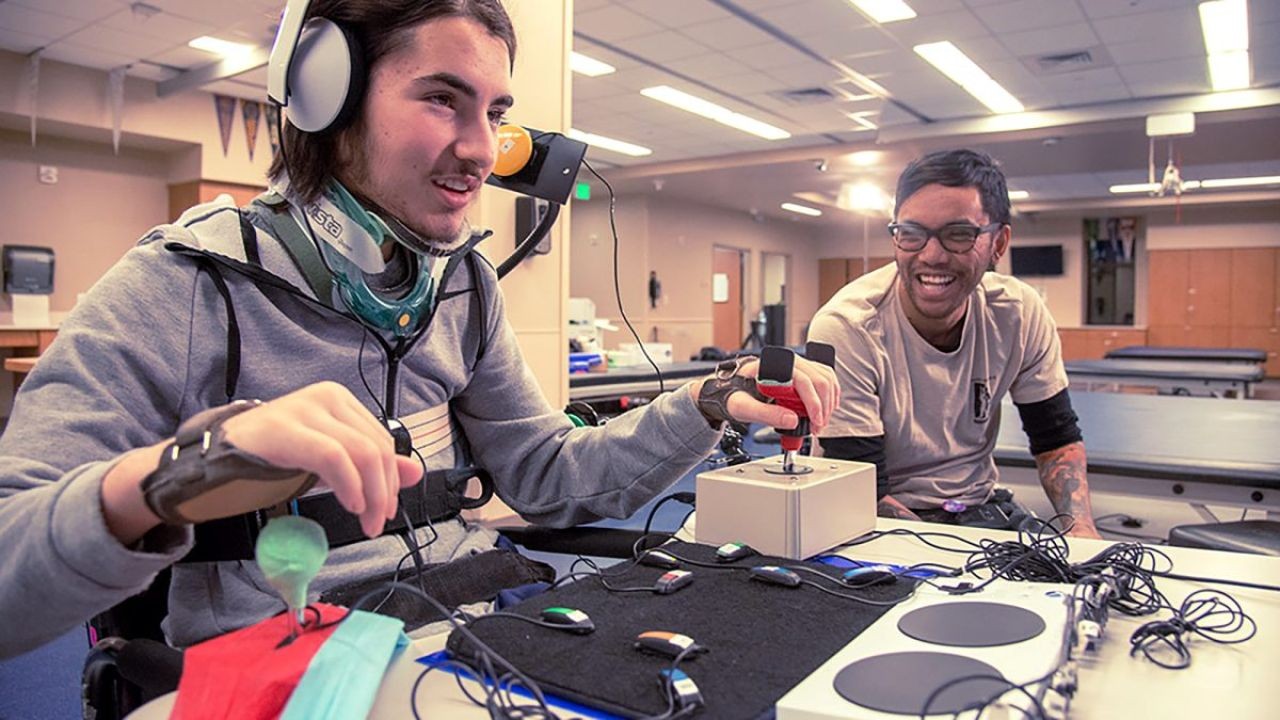
Problem: Individuals with severe physical disabilities often find standard gaming controllers impossible to use, cutting them off from a vital avenue for recreation, education, and socialisation. This leads to increased isolation and reduced quality of life.
Action: UK-based charity SpecialEffect conducts in-depth, one-to-one assessments with individuals. They then create bespoke hardware and software solutions, modifying existing controllers, integrating eye-gaze technology, and developing custom input systems tailored to each person's specific range of motion.
Result: The impact is profound and personal. Quantitatively, they have helped thousands of individuals globally. Qualitatively, case studies show participants gaining not just the ability to play, but also improved confidence, communication skills, and deepened social connections. Their work demonstrates that with the right expertise, a solution almost always exists.
Takeaway for NZ: SpecialEffect’s model is not about mass-produced hardware but personalised, expert-led adaptation. Having worked with multiple NZ startups in the health-tech space, I see a clear opportunity: establishing a regional hub, perhaps in partnership with a DHB and a tertiary institute like the University of Auckland's Bioengineering Institute, to provide this bespoke service locally. This would create high-skilled jobs, serve the community, and generate invaluable local data on effective adaptations for Māori and Pasifika whānau, whose needs may differ.
Debunking Common Myths and Mistakes
Progress is stalled by persistent misconceptions. Let's dismantle three of the most prevalent.
Myth 1: "Gaming for disability is just a distraction, not real therapy." Reality: This conflates casual gaming with prescribed, therapeutic-grade interactive interventions. The latter are designed with specific clinical goals and measurable outcomes. Research in journals like *The Lancet Digital Health* shows VR-based therapy can be as effective as conventional physiotherapy for post-stroke upper limb recovery. The mistake is dismissing the medium instead of evaluating the specific application.
Myth 2: "Accessibility features are a niche add-on for developers." Reality: This is a critical business and ethical failure. Microsoft's Xbox Adaptive Controller, launched in 2018, proved that inclusive design drives innovation and opens new markets. In practice, with NZ-based teams I’ve advised, the lesson is that building in accessibility from the start (following WCAG guidelines) is cheaper and more effective than retrofitting. It's a core design principle, not a charity project.
Myth 3: "This is a health issue, not an economic one." Reality: This is a siloed perspective. Drawing on my experience in the NZ market, improved digital participation directly influences employability. A 2020 report by the NZ Institute of Economic Research highlighted the untapped potential of disabled talent. Gaming that enhances digital dexterity, problem-solving, and remote collaboration skills is a form of vocational training. Ignoring this link between social inclusion and economic productivity is a policy failure.
The Regulatory and Funding Landscape: A NZ-Specific Critique
New Zealand's approach is fragmented. ACC funds some innovative rehab tech, including VR, on a case-by-case basis. The Ministry of Health's focus remains on traditional service delivery. The Enabling Good Lives (EGL) philosophy, which promotes choice and control, provides an ideal policy framework for personalised gaming solutions, but its implementation is inconsistent.
The core challenge is funding model rigidity. Government procurement is geared towards physical equipment and hourly support services, not software licenses, ongoing updates, or bespoke controller adaptations. There is no dedicated funding stream within MBIE's R&D grants for assistive gaming technology. Based on my work with NZ SMEs in this sector, the most common point of failure is the "valley of death" between a proven prototype and a government-funded, scalable solution. Philanthropy fills some gaps, but systemic change requires policy redesign.
Future Forecast: The Five-Year Horizon for Aotearoa
The convergence of AI, affordable VR/AR, and advanced biometrics will redefine this space. We will move from games that are *accessible* to games that are *adaptively intelligent*—software that learns a user's unique input patterns and dynamically adjusts difficulty and control schemes in real-time.
For New Zealand, two predictions are paramount:
- Data Sovereignty & Te Tiriti-led Design: By 2029, leading NZ-developed assistive games will incorporate Māori worldviews and therapeutic practices (e.g., using virtual environments for connection to whenua). Policy must ensure that sensitive biometric and performance data gathered from users is governed with Māori Data Sovereignty principles at its core.
- Mainstream Education Integration: The Ministry of Education will begin formally accrediting game-based learning tools for neurodiverse students as standard classroom resources, moving them from the "special needs" room into the mainstream toolkit, funded through the Ongoing Resourcing Scheme (ORS).
The global trend is clear. New Zealand can either be a passive consumer of offshore technology or an active co-designer, creating solutions that reflect its unique population and values. The latter path requires strategic vision today.
Final Takeaways & A Call for Co-Design
- Fact: Over 1 million New Zealanders live with a disability, facing significant income and participation gaps.
- Strategy: Gaming technology offers a unique vector for engagement, rehabilitation, and skill development that is scalable and data-rich.
- Mistake to Avoid: Treating this as a purely medical or charitable endeavour, rather than an issue of digital inclusion, economic participation, and innovation policy.
- Pro Tip for Policymakers: Start not with technology, but with user voice. Fund co-design workshops where disabled gamers, developers, clinicians, and whānau create the blueprint for what a NZ assistive gaming ecosystem should look like.
The question is no longer *if* gaming can help, but *how* we systematically harness it. The potential is validated by global data and nascent local experiments. The barriers are not technological but structural: siloed funding, outdated procurement models, and a lack of strategic prioritisation. The mandate for New Zealand's policy community is to move from acknowledging this potential to architecting the frameworks that will realise it. This is a tangible, data-backed opportunity to enhance lives, foster innovation, and build a more inclusive digital society. The next level awaits—will we press start?
People Also Ask (PAA)
How can gaming improve employment outcomes for disabled Kiwis? Gaming builds digital literacy, problem-solving, and remote collaboration skills in an engaging format. These are directly transferable to modern workplaces. Multiplayer games also offer low-pressure networking opportunities, expanding professional connections.
What is the biggest barrier to using gaming for therapy in NZ? The primary barrier is systemic: the lack of a clear funding pathway within DHBs or ACC for prescribed therapeutic gaming software and the necessary hardware. Clinical integration and workforce training are also significant hurdles.
Are there any New Zealand companies leading in this field? Yes, several startups and studios are exploring this space, often focusing on mental health (e.g., *Mihi*) or neurodiversity. However, they frequently struggle to scale due to the policy and funding environment mentioned above, highlighting the need for better public-private partnerships.
Related Search Queries
- assistive technology gaming New Zealand
- VR therapy ACC funding NZ
- disability and esports NZ
- Microsoft Adaptive Controller NZ availability
- game design for autism New Zealand
- Enabling Good Lives technology funding
- Stats NZ disability data 2024
- co-design health tech Māori
- digital inclusion strategy NZ government
- occupational therapy video games NZ
For the full context and strategies on How Gaming Can Help People with Disabilities in New Zealand – The Rise of This Trend Across New Zealand, see our main guide: Protecting Kiwi Creators Vidude Safety Moderation Standards.