



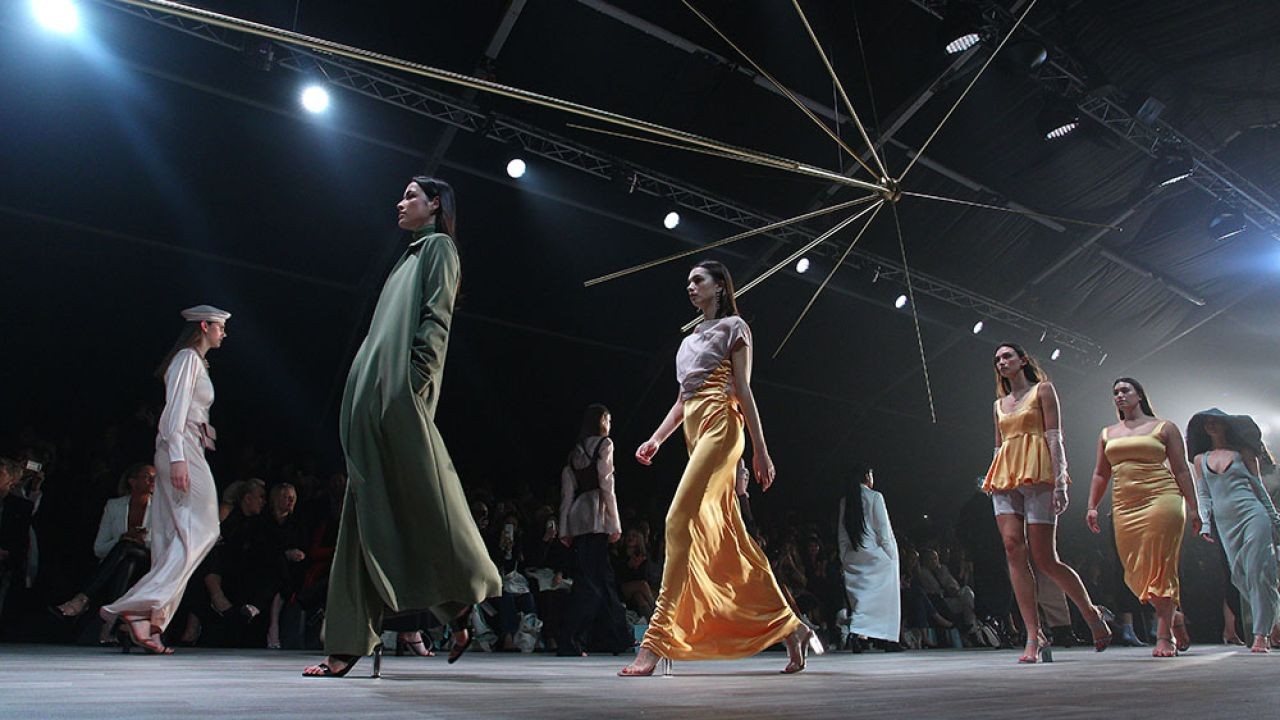
Forget Paris, Milan, and New York. If you're a venture capitalist with a pulse on emergent markets and a taste for genuine innovation, your calendar should be marked for an event in the Southern Hemisphere. New Zealand Fashion Week (NZFW) is not merely a parade of garments; it is a high-stakes, condensed showcase of a nation's creative economy in action. From my vantage point, having worked with multiple NZ startups across the tech and creative sectors, I've observed a critical truth: NZFW is a live, unfiltered due diligence session. It reveals which designers possess the operational grit to scale beyond the catwalk and which are destined to remain boutique curiosities. In a country where the creative industries contributed over $11 billion to GDP pre-pandemic (Stats NZ), this event is a bellwether for a sector poised for digital and global disruption.
The Strategic Narrative: From Local Runway to Global Marketplace
The story of NZFW is a microcosm of New Zealand's broader economic evolution. Launched in 2001, it emerged not from a place of entrenched luxury heritage, but from a desire to project a distinct, Antipodean identity onto the world stage. This origin is its greatest strength and its most telling characteristic. Unlike the established fashion capitals, New Zealand's scene is unburdened by centuries of tradition. This creates a petri dish for raw, often sustainability-focused, innovation. Drawing on my experience in the NZ market, I've seen this pattern repeat in tech: a lack of legacy systems fosters leapfrog innovation. NZFW operates on the same principle, but with fabric and form.
The narrative arc for investors to track is the transition from creative expression to commercial enterprise. A stunning collection is merely a prototype. The real question is the scalability of the supply chain, the defensibility of the brand story, and the acuity of the digital go-to-market strategy. Through my projects with New Zealand enterprises, I've learned that our best creators often undervalue the latter. NZFW, therefore, serves as a pressure test. The designers who understand they are pitching to buyers, media, and potential partners—not just an audience—are the ones worth a second meeting.
Key Actions for the Kiwi Investor at Fashion Week
- Look Beyond the Garment: Assess the business booth, not just the runway. Is there a clear DTC strategy? How is IP around unique textiles or prints protected?
- Track the International Buyers: Which overseas retailers are in attendance? Their interest is a leading indicator of export potential and validates market fit.
- Scout Adjacent Tech: NZFW is increasingly a hub for wearables, AR fitting rooms, and sustainable material science startups. The next big NZ tech play might be backstage.
A Rigorous Pros & Cons Evaluation: The Investor's Lens
Any seasoned VC knows that hype is the enemy of good judgment. Let's dissect NZFW with clear-eyed analysis, separating signal from noise.
✅ The Compelling Advantages (The "Pros")
1. Unparalleled Access to Raw Talent: This is perhaps the greatest draw. In major fashion weeks, emerging designers are often sidelined by conglomerates. In Auckland, they are the main event. This allows investors to get in at the ground floor, engaging with founders when their equity is most affordable and their vision most malleable. Based on my work with NZ SMEs, the hands-on, relationship-driven nature of the local industry facilitates these early connections in a way that is impossible in London or New York.
2. A Sustainability-Led Laboratory: New Zealand's "clean, green" brand is not just tourism propaganda; it's a core national ethos that permeates its creative industries. NZFW has become a global leader in showcasing circular fashion, indigenous (Māori and Pasifika) design principles rooted in sustainability, and innovative materials like merino wool tech fabrics. This aligns perfectly with the ESG (Environmental, Social, and Governance) mandates now dominating institutional investment. A designer's sustainable practice is no longer a nice-to-have; it's a fundamental risk mitigation and market advantage strategy.
3. A Concentrated Microcosm of Consumer Trends: The New Zealand consumer, while small in number, is a sophisticated early adopter, influenced by both Northern Hemisphere trends and unique Asia-Pacific currents. NZFW acts as a real-time focus group. The styles, materials, and brand narratives that resonate here can provide invaluable data for predicting broader APAC trends or even niche global movements.
❌ The Inherent Risks and Limitations (The "Cons")
1. Scale and Commercialization Challenges: This is the perennial issue for New Zealand businesses across all sectors: the "tyranny of distance" and a domestic market of just 5 million people. A designer may win critical acclaim at NZFW but lack the operational expertise and capital to establish efficient international logistics, navigate foreign regulatory environments, or build offshore sales teams. From consulting with local businesses in New Zealand, I've seen brilliant products fail due to anemic commercialization plans. The fashion industry is particularly brutal in this regard.
2. Over-Reliance on a Single Event: For many labels, their entire annual business strategy—and cash flow—revolves around the orders placed during NZFW. This creates immense operational risk. A poor review, a model shortage, or even bad weather can impact buyer attendance and sentiment. A viable business cannot be a one-event wonder; it needs a perennial digital engine and diversified sales channels.
3. The "Lifestyle Business" Trap: Many fashion ventures are passion projects, not scalable enterprises. The founder may have no desire to build a $100M company, preferring to maintain artistic control and a small, loyal customer base. While valid, this is a red flag for venture capital seeking exponential returns. Discerning between a true scale-up and a glorified lifestyle business is a critical skill for investors at the event.
Case Study: Maggie Marilyn – The Blueprint for Scalable NZ Fashion
Problem: Maggie Marilyn, launched in 2016 straight from NZFW, faced the classic Kiwi dilemma: how to scale a sustainable fashion brand globally from a remote base in New Zealand. The founder, Maggie Hewitt, had a vision for "circularity" and traceability from farm to garment, but the industry is fraught with opaque supply chains and greenwashing.
Action: The brand leveraged its NZFW success not just for orders, but as a proof point for a deeper brand mission. It vertically integrated its supply chain, partnering directly with NZ merino wool and cotton growers. Crucially, it invested early in a sophisticated DTC e-commerce platform and transparent customer communication, telling the story of each garment's origin. It moved beyond wholesale reliance to build its own community.
Result: Maggie Marilyn achieved rapid international stocklist placement (Net-a-Porter, Saks Fifth Avenue) and cultivated a dedicated global DTC following. While privately held, its growth metrics are industry benchmarks. More importantly, it proved that a New Zealand-based fashion house could build a premium, scalable, and ethically defensible global brand—a template others now follow.
Takeaway: This case highlights that the winning formula combines NZFW-driven brand launch with deep supply chain control and digital-first customer acquisition. For investors, the lesson is to back founders who articulate a clear plan for systems and storytelling, not just seasonal collections.
Debunking Myths: What the Industry Gets Wrong
Myth 1: "NZFW is just about women's evening wear." Reality: This is a dated perspective. The event now robustly features menswear, streetwear, athleisure, and accessible luxury segments. The rise of brands like Label and Asuwere showcases a focus on versatile, sustainable everyday wear—a segment with massive addressable market size. The expansion reflects a maturing industry understanding of diverse market opportunities.
Myth 2: "Success at NZFW guarantees export success." Reality: It guarantees attention, not success. Exporting requires navigating complex tariffs, establishing foreign entity structures, managing international inventory and returns, and culturally adapting marketing. According to NZTE, while creative services exports are growing, many SMEs cite "understanding foreign markets" and "establishing distribution" as top barriers. NZFW is the starting gun, not the finish line.
Myth 3: "Sustainable fashion can't be profitable at scale." Reality: This is the most dangerous myth to perpetuate. Data from the MBIE's (Ministry of Business, Innovation and Employment) reports on the digital and creative sectors indicates that consumer demand for transparency is accelerating. Sustainable practices, when engineered into the business model from the start (like Maggie Marilyn), reduce long-term risk from regulatory shifts (e.g., incoming carbon border taxes) and build fierce customer loyalty, commanding price premiums. It's a cost of doing future business, not a charitable overhead.
The Future Forecast: Where Tech and Threads Collide
The next five years will see NZFW transform from a purely physical trade show into a hybrid tech-enabled platform. The convergence is inevitable. Here’s my forecast:
1. The Dominance of Phygital Experiences: Front-row access will be token-gated via NFTs for superfans. AR mirrors will allow virtual try-ons of looks directly from the runway. Collections will be released as digital garments for metaverse avatars simultaneously with physical pieces. The investors to watch will be those funding the NZ-based SaaS platforms enabling this transition for designers.
2. Supply Chain Transparency as a Feature: Blockchain integration will move from buzzword to baseline. Consumers will scan a garment's QR code to see its entire lifecycle: wool from a specific NZ farm, energy used in production, carbon footprint of shipping. This level of traceability, championed by our primary industries, will become the fashion industry's most powerful marketing tool and a key due diligence point for investment.
3. The Rise of the "Storytelling" Investor: Capital will flow not just to designers, but to the ecosystem players: the material scientists developing plant-based leathers from local byproducts, the logistics firms specializing in carbon-neutral international shipping, and the content studios that can package a brand's sustainable narrative for TikTok and Instagram Reels. In my experience supporting Kiwi companies, the ones that master narrative economics will win.
Final Takeaways for the Astute Capitalist
- NZFW is a Live Deal Flow Engine: Approach it with the same rigor as a tech demo day. Your target is the business, not the beauty.
- Sustainability is a Hard Metric, Not a Buzzword: Interrogate a brand's supply chain data. Vague claims are a liability; quantifiable circularity is an asset.
- The Adjacent Opportunities Are Ripe: The most lucrative exit may not be a fashion label itself, but the B2B tech platform that serves 50 of them.
- Think Global on Day One: A designer's first collection should be launched with a global DTC website and a plan for APAC expansion. The domestic market is a testing ground, not the endgame.
People Also Ask (PAA)
How does NZFW impact New Zealand's economy beyond fashion? It creates a multiplier effect, driving revenue for hospitality, tourism, events, and media. It also elevates New Zealand's overall "innovation nation" brand, attracting talent and investment across the creative tech sector, which MBIE identifies as a high-growth export area.
What should a designer have prepared before seeking investment post-NZFW? Beyond lookbooks, they need a 3-year financial model, a clear IP strategy, a mapped supply chain with cost breakdowns, and a data-driven customer acquisition plan. The pitch is for a scalable *company*, not a collection.
Is the government supportive of fashion as an export industry? Increasingly so. NZTE (New Zealand Trade and Enterprise) now includes fashion in its creative industries export support programs, offering market entry assistance and connections to international buyers, recognizing its value beyond cultural soft power.
Related Search Queries
- New Zealand Fashion Week investment opportunities
- Sustainable fashion startups New Zealand
- NZ tech in fashion industry
- Maggie Marilyn business model analysis
- Exporting fashion from New Zealand guide
- NZFW buyer attendance statistics
- Māori design intellectual property
- Circular fashion economy New Zealand
- New Zealand merino wool tech fabric innovation
- Venture capital for creative industries NZ
For the full context and strategies on Why New Zealand’s Fashion Week Is a Must-Watch Event – Why It Matters More Than Ever in NZ, see our main guide: Nz Home Decor Interior Styling Videos.