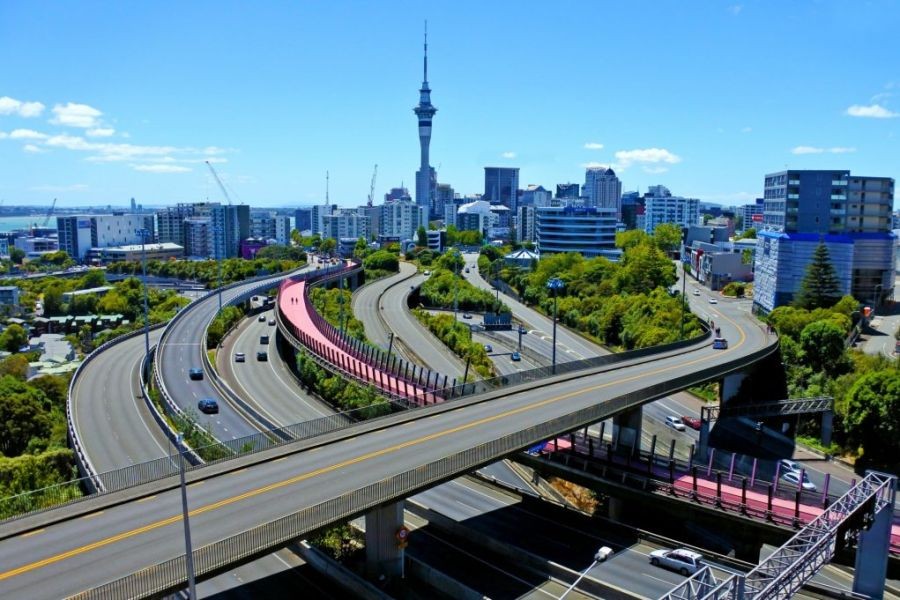






The relationship between public policy and urban development in New Zealand is less a partnership and more a contested, often fraught, negotiation. For decades, we have operated under the assumption that more rules, stricter zoning, and top-down planning would deliver the orderly, affordable cities we desire. The evidence, however, paints a starkly different picture. We are building less, paying more, and watching our urban fabric fray at the edges. The core debate is no longer about *whether* policy shapes development, but *how* it systematically distorts market signals and what we can do to reclaim a functional urban economy.
The Historical Evolution: From Laissez-Faire to Labyrinthine Regulation
To understand today’s crisis, we must first examine the historical arc. Post-war New Zealand saw a period of relatively permissive development, where local councils focused on infrastructure provision rather than aesthetic control. This era, while not without its flaws, produced housing stock at a pace we have not seen since. The shift began in the 1970s and 1980s with the rise of comprehensive planning frameworks, driven by environmental concerns and a desire to manage growth. The Resource Management Act (RMA) 1991 was the apotheosis of this trend. While noble in its intent to manage natural and physical resources sustainably, its practical application created a legal and procedural swamp.
Based on my work with NZ SMEs, particularly small-scale developers and land-use consultants, the RMA did not just add a layer of cost; it fundamentally shifted risk. The burden of proof fell on the developer to prove a proposal would not cause harm, a process that could take years and hundreds of thousands of dollars in legal fees. This effectively froze the market, favouring large, well-capitalised players who could weather the delays and legal challenges. The unintended consequence was a severe reduction in housing supply, which, when coupled with strong population growth (until recently), sent prices into a stratospheric trajectory.
The Great Debate: Density Mandates vs. Market-Led Zoning
The most contentious battleground today is the push for intensification. The government’s Medium Density Residential Standards (MDRS) mandates that most residential land in major cities must allow for three homes of up to three storeys without resource consent. This is a seismic shift from the single-house-on-a-quarter-acre paradigm.
The Case for Mandated Density (The Advocate’s View)
Proponents, including many urban economists and the current government, argue that MDRS is the only way to break the stranglehold of exclusionary zoning. The logic is simple: supply constraint drives up prices. By legalising density, we increase the potential supply of housing, which should moderate price growth. Data from Stats NZ’s building consents shows a significant uptick in multi-unit dwellings in Auckland post the initial 2016 Unitary Plan changes, suggesting that permissive zoning does stimulate construction. The advocates see this as a necessary, if blunt, instrument to correct a market failure created by decades of restrictive local council rules.
Next steps for Kiwi: If you are a homeowner in a major centre, familiarise yourself with your council’s District Plan changes under MDRS. Understanding what can now be built next door (or on your own property) is the first step to navigating the new reality.
The Case Against Top-Down Mandates (The Critic’s View)
The criticism is equally forceful and comes from both the left and the right. On the right, the argument is one of property rights and market distortion. Forcing density on established suburbs ignores local infrastructure capacity. A single sewer line designed for 30 households cannot suddenly handle 90. The cost of upgrading this infrastructure is immense and is often not factored into the policy’s cost-benefit analysis. On the left, the critique focuses on the quality of the resulting development. Without strong design standards, we risk creating slums of the future—cheap, poorly built, and lacking in amenity.
From consulting with local businesses in New Zealand, I have seen this tension play out in Auckland’s fringe suburbs. Developers are rushing to build townhouses on sections that were never designed for them, leading to complaints about overshadowing, loss of privacy, and inadequate parking. The market is responding to the signal, but the infrastructure and design standards are not keeping pace. The result is a built environment that may be more dense, but not necessarily more liveable.
Pros & Cons Evaluation of Current Policy Levers
To cut through the rhetoric, let us evaluate the primary policy tools being used today.
✅ Pros of Current Intensification Policies (MDRS & National Policy Statements)
- Increased Theoretical Supply: The most direct impact is the legalisation of more housing units on existing land. This removes a major legal barrier to development.
- Reduced Land Value Speculation: By removing the expectation of future up-zoning windfalls, these policies may dampen speculative land banking. Land is no longer a lottery ticket.
- Alignment with Global Best Practice: Most successful global cities have moved away from single-family-only zoning. NZ is finally catching up to international urban economics.
- Potential for Lower Infrastructure Costs per Unit: Greenfield development on the urban fringe is incredibly expensive for councils (new roads, water, power). Infill development uses existing, albeit strained, infrastructure.
❌ Cons of Current Intensification Policies
- Infrastructure Deficit: The most glaring failure. Policy has focused on zoning without a parallel, funded plan for upgrading three-waters and transport. This is a recipe for system failure.
- Loss of Local Democratic Control: MDRS overrides council District Plans, centralising power in Wellington. This creates a one-size-fits-all approach that ignores local character and capacity.
- Poor Design Outcomes: The rush to build has led to a proliferation of “shoe-box” townhouses with minimal outdoor space, poor insulation, and questionable long-term durability. We are building today’s leaky homes.
- Financialisation of Housing: Policies that prioritise supply over all else can exacerbate the treatment of housing as a financial asset rather than a social good, benefiting large corporate developers over community builders.
Case Study: The Auckland Unitary Plan – A Precursor to National Policy
Problem: Auckland, pre-2016, was a textbook case of urban sprawl constrained by a restrictive planning regime. The city was growing but not building up, leading to the most unaffordable housing market in the developed world relative to incomes. The old District Plans were a patchwork of rules that made any medium-density development a costly and uncertain battle.
Action: The Auckland Unitary Plan (AUP), operative in 2016, was a radical overhaul. It up-zoned vast swathes of the city, particularly around transport corridors and town centres, allowing for terraced housing and apartments of up to six storeys in many areas. It was the precursor to the national MDRS.
Result: The immediate result was a surge in building consents for multi-unit dwellings. In 2021, Auckland accounted for nearly 40% of all new dwellings consented in NZ, with the majority being townhouses and apartments. However, the long-term results are more nuanced. A 2023 study by the Motu Economic and Public Policy Research found that while the plan increased the supply of new builds, the impact on overall house prices was modest and slow to materialise, partly due to concurrent demand shocks and construction cost inflation.
Takeaway: The AUP proved that zoning reform is necessary but not sufficient. In my experience supporting Kiwi companies in the construction sector, the plan created a boom for large-scale developers but did little for the “missing middle”—small builders who could not navigate the complex residual consenting processes. The key lesson is that policy must be paired with streamlined consenting, infrastructure investment, and a focus on build quality, not just quantity.
Common Myths & Mistakes in Urban Development Policy
- Myth: “Zoning reform alone will solve the housing crisis.” Reality: As the Auckland case shows, zoning is a necessary precondition, but without addressing construction costs, labour shortages, and infrastructure funding, it is like opening the taps on an empty water tank.
- Myth: “Density automatically means affordability.” Reality: Newly built townhouses are often priced at the top of the market. Affordability comes from a *pipeline* of supply over time, not a single project. We need sustained, not one-off, building activity.
- Myth: “Council planners are the main obstacle.” Reality: While council processes can be slow, the more significant barrier is often the cost and risk of legal challenges by objectors under the RMA. Policy must address the litigation risk as much as the planning rules.
Controversial Take: The Infrastructure Funding Gap is the Real Crisis
Here is the uncomfortable truth that few politicians will state plainly: we cannot afford the infrastructure for the city we are trying to build. The cost of upgrading water, wastewater, and stormwater networks to support intensive development is in the tens of billions of dollars. Current funding models—relying on rates, development contributions, and central government grants—are broken. We are essentially asking existing ratepayers to subsidise the infrastructure for new development, which is politically toxic and financially unsustainable.
Drawing on my experience in the NZ market, the only viable solution is a form of value capture—taxing the uplift in land value that occurs when zoning changes. If a piece of land is rezoned from single-house to six-storey apartments, its value skyrockets. A portion of that windfall should be captured to fund the necessary infrastructure. This is not a radical idea; it is standard practice in many US and European cities. Without it, our intensification policies will collapse under the weight of their own infrastructure deficit.
Future Trends & Predictions for Urban Development in NZ
Looking ahead to 2030, I see three dominant trends.
- 1. The Rise of “Infrastructure First” Planning: The failures of the current approach will force a shift. Future policies will likely mandate that infrastructure capacity must be proven *before* zoning changes are approved. This will slow development initially but create more sustainable outcomes.
- 2. A Two-Tier Housing Market: We will see a bifurcation between high-quality, well-designed, and expensive inner-city apartments, and lower-quality, cheaply built townhouses on the periphery. Policy must intervene to ensure minimum quality standards are not sacrificed for quantity.
- 3. The End of the Single-Family Home as the Default: By 2030, the Kiwi dream will have fundamentally shifted. A standalone house on a quarter-acre will be a luxury good, not the norm. The majority of new housing in our major cities will be attached dwellings. This is not a prediction of preference, but a mathematical inevitability given land constraints and population density targets.
Key actions for young Kiwis: If you are planning to buy a first home, look beyond the traditional standalone house. A well-located townhouse or apartment near public transport and amenities will likely offer better long-term value and lifestyle than a cheap house on a distant fringe section.
Final Takeaways & Call to Action
Public policy is not a neutral referee in urban development; it is the most powerful player on the field. For too long, we have used it to restrict supply and inflate land values. The recent shift towards intensification is necessary, but it is being executed with a dangerous disregard for infrastructure and design quality. The debate is not over. The next five years will determine whether we build functional, affordable cities or dense, dysfunctional ones.
- ✅ Fact: The Auckland Unitary Plan increased building consents but did not solve affordability alone.
- 🔥 Strategy: Advocate for value capture mechanisms to fund infrastructure upgrades.
- ❌ Mistake to Avoid: Do not assume any new townhouse is a good investment. Scrutinise build quality, body corporate fees, and location.
- 💡 Pro Tip: Monitor your local council’s Long-Term Plan. It reveals where infrastructure investment is (or is not) happening.
What is your next move? Are you prepared for the future of New Zealand’s cities? Share your perspective on how policy is shaping your local neighbourhood in the comments below. If you found this analysis valuable, share it with your network to spark a more informed debate.
People Also Ask (FAQ)
How does the Medium Density Residential Standards (MDRS) affect my property value? It can increase your land value if development is feasible, but it may also reduce the value of an existing standalone house if the neighbourhood becomes more crowded. The outcome depends on local demand and infrastructure capacity.
What are the biggest misconceptions about urban intensification in NZ? The biggest myth is that density creates slums. In reality, well-designed density with good public transport and parks can create vibrant communities. The risk is poor implementation, not the concept itself.
Who benefits the most from current urban development policies? Large-scale developers and land bankers with capital to navigate complex consenting processes benefit most. Small-scale builders and first-home buyers often face higher barriers due to cost and risk.
Related Search Queries
- How does the Resource Management Act affect housing supply in NZ?
- What is the future of urban planning in Auckland?
- Infrastructure funding for new housing developments NZ
- Pros and cons of the Medium Density Residential Standards
- How to value a property with development potential
- Best suburbs for townhouse investment in Christchurch
- National Policy Statement on Urban Development 2024 updates
For the full context and strategies on How Public Policy Influences Urban Development in NZ – What Every Kiwi Should Know, see our main guide: Nz Food Processing Export Videos.