



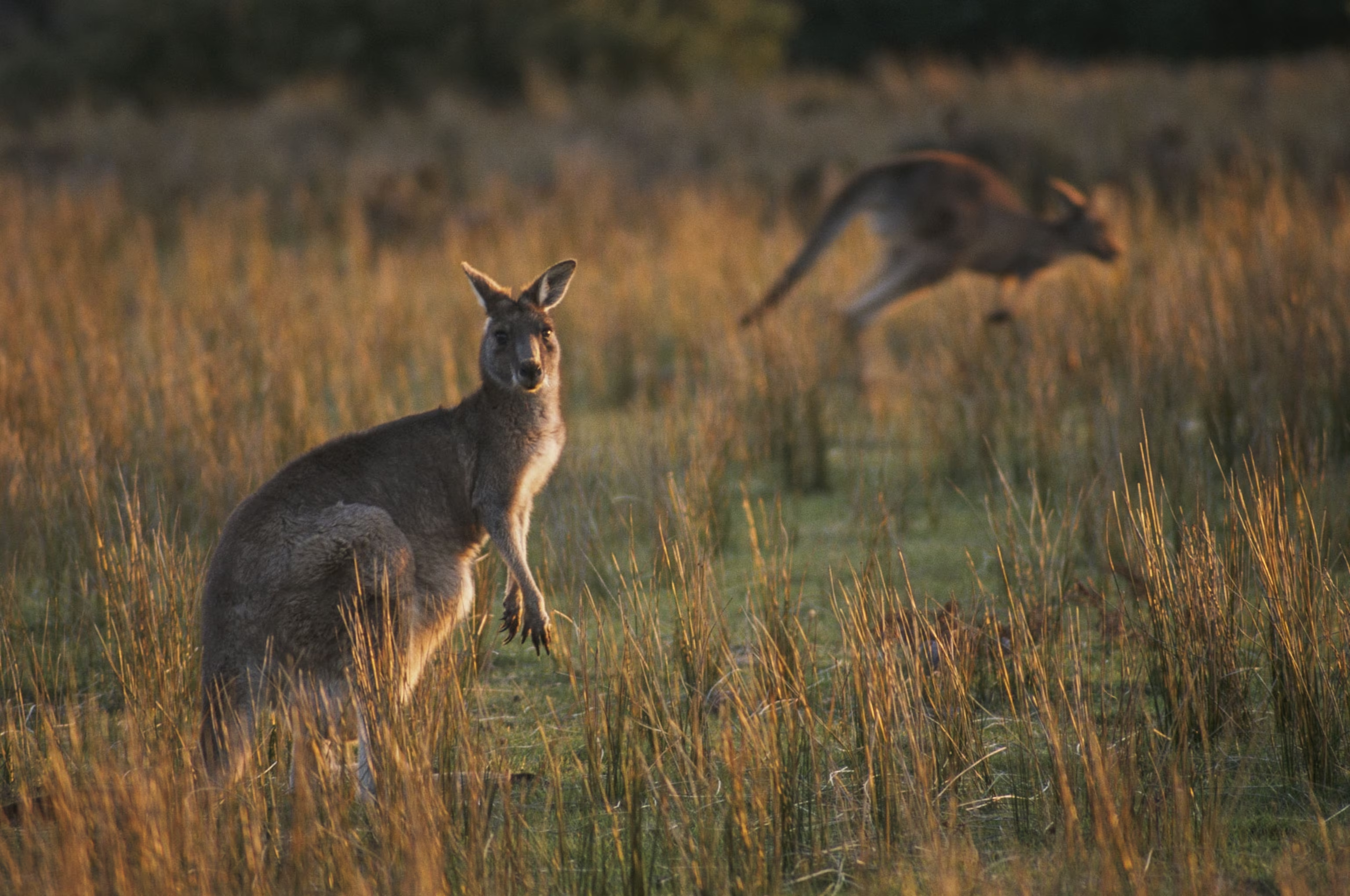
Australia's rich tapestry of wildlife, from kangaroos bounding across the Outback to vibrant coral reefs teeming with marine life, is a significant drawcard for global tourism. However, beneath the surface of what appears to be a thriving industry lies a pressing concern: the exploitation of wildlife by certain tour companies. This practice, driven by profit margins, not only undermines conservation efforts but also poses ethical and ecological challenges that demand immediate attention from policymakers and stakeholders.
How It’s Changing the Game for Aussies
Australia’s unique wildlife has long been a drawcard for tourism. Kangaroos, koalas, wombats, and a host of endemic bird species attract millions of visitors annually, supporting local economies and regional communities. However, behind the postcard images and social media snaps, some tour operators are capitalising on wildlife in ways that prioritise profit over ethical treatment, environmental sustainability, or community benefit.
This issue is particularly pressing for Australians because tourism is a major economic driver, contributing nearly 3 percent of GDP and employing hundreds of thousands across the country. The practices of a subset of operators not only affect animal welfare but also influence public perception, conservation outcomes, and the long-term viability of the sector.
The Mechanics of Wildlife Exploitation
Wildlife exploitation in tourism often occurs through direct interaction experiences. Operators may encourage visitors to touch, feed, or pose with native animals, sometimes using incentives or misleading marketing to normalise these encounters. While such activities are profitable, they can compromise animal welfare by inducing stress, disrupting natural behaviours, or conditioning animals to human presence.
Some operators rely on intensive breeding or captivity practices to maintain consistent “attractive” populations for tourists. This raises ethical concerns, particularly when the animals are removed from natural habitats or exposed to high visitor volumes. Regulatory oversight exists, but enforcement is uneven, with some smaller operators slipping through gaps in licensing or animal welfare monitoring.
Another common tactic is selective promotion of charismatic species while ignoring broader ecosystem health. For example, feeding koalas or wallabies to ensure predictable tourist interactions may alter their natural foraging behaviours or expose them to disease. In doing so, operators create short-term profits at the potential expense of long-term species resilience.
Economic and Social Implications
The commercialisation of wildlife experiences carries broader implications for Australians. First, it creates uneven economic benefits. High-volume, profit-driven operators often capture the majority of tourist spending, leaving local communities with limited gains or marginal participation in the sector. This can exacerbate regional inequality, particularly in remote areas where tourism is a primary source of employment.
Second, ethical concerns influence consumer behaviour. Domestic tourists and international visitors are increasingly aware of animal welfare standards, with many actively avoiding operators perceived as exploitative. Negative publicity—amplified through social media and investigative reporting—can damage local tourism reputations and reduce visitor numbers, affecting businesses that rely on sustainable practices.
Third, long-term conservation efforts are undermined. When wildlife is treated primarily as a commodity, initiatives aimed at habitat protection, research, and species preservation may struggle to attract funding or public support. Overexposure of animals in high-traffic tourist locations can stress populations, complicate breeding success, and alter ecological dynamics.
Misconceptions About Wildlife Tourism
Many Australians assume that all wildlife tourism is inherently beneficial for conservation or local economies. While responsible ecotourism does exist, it is not universal. Ethical operators balance visitor experience with animal welfare, habitat protection, and community benefit. By contrast, profit-driven exploitation often prioritises short-term gains over these outcomes.
Another misconception is that licensing guarantees ethical standards. Regulatory frameworks, such as state-based wildlife permits, exist to monitor interactions and breeding, but compliance varies and enforcement is inconsistent. Tourists and local communities cannot assume that the presence of permits automatically ensures animal welfare or ecosystem protection.
Policy and Regulatory Context
Australia’s wildlife protection framework is complex, with responsibilities divided across federal, state, and territory jurisdictions. The Environment Protection and Biodiversity Conservation Act 1999 governs matters of national significance, while states regulate day-to-day wildlife interactions, permits, and commercial activities.
Despite this structure, oversight gaps persist. Smaller operators, pop-up experiences, and unregulated “adventure tourism” activities can operate with limited scrutiny. Advocacy groups have called for clearer standards, mandatory accreditation, and stronger penalties for breaches, emphasising the need to align profit motives with conservation imperatives.
Community and Industry Responses
Some regions have responded by promoting certified wildlife experiences, where operators adhere to codes of practice regarding animal welfare, visitor numbers, and habitat protection. Certification provides both ethical reassurance to tourists and marketing advantage to operators committed to sustainable practices.
Community engagement is critical. Local Aboriginal and Torres Strait Islander groups, in particular, offer expertise in land management and cultural stewardship that can inform sustainable tourism practices. Integrating traditional ecological knowledge into wildlife tourism supports both conservation and local employment, creating an alternative model to exploitative approaches.
Digital platforms also influence industry behaviour. Review sites, social media, and advocacy campaigns empower Australians to make informed choices, rewarding operators who prioritise welfare and transparency. Over time, consumer preference is shaping a market where ethical practice can become a competitive advantage rather than a regulatory obligation alone.
Forward-Looking Implications
Over the next three to five years, wildlife tourism in Australia is likely to continue evolving under pressure from public awareness, policy reforms, and climate-related environmental changes. Operators that fail to adapt to higher welfare standards and sustainable practices may face reputational risks, declining visitation, or regulatory intervention.
For regional economies, ethical wildlife tourism presents an opportunity. By investing in sustainable practices, promoting biodiversity protection, and engaging local communities, operators can generate long-term economic resilience. Australians can play an active role by choosing responsible tours, advocating for stronger standards, and supporting businesses that balance profit with stewardship.
The trend also reflects broader societal shifts. Australians are increasingly attentive to environmental and ethical considerations, expecting industries—including tourism—to uphold values that extend beyond mere financial gain. Those operators that exploit wildlife for short-term profit may find themselves outcompeted by businesses that integrate ecological integrity, community benefit, and transparency into their core operations.
The exploitation of Australian wildlife by some tour companies is not just an ethical issue—it is an economic and social challenge. For Australians, the stakes involve protecting iconic species, supporting regional communities, and ensuring that tourism growth aligns with long-term sustainability. By recognising the consequences of profit-driven wildlife interactions and supporting responsible practices, Australians can help shape a sector that is both ethically sound and economically viable.
The Historical Context of Wildlife Tourism in Australia
For decades, Australia's unique wildlife has been central to its tourism appeal. The industry's roots can be traced back to the early 20th century when organized tours began showcasing the continent's natural wonders. However, as the sector expanded, so did the intensity of wildlife encounters, often without adequate regulatory oversight. By the late 20th century, tourism had grown to become a substantial component of Australia's economy, contributing significantly to GDP. According to the Australian Bureau of Statistics, tourism accounted for 3.1% of the national GDP in 2019, with wildlife tours playing a pivotal role.
Current Trends and Challenges
In recent years, there has been a growing awareness of the ethical and environmental implications of wildlife tourism. However, some tour operators continue to prioritize profits over conservation, exploiting animals for entertainment purposes. This includes practices such as handling or feeding wildlife, which disrupts natural behaviors and ecosystems.
Research from the University of Sydney highlights that up to 50% of wildlife tour operators engage in activities that negatively impact animal welfare and conservation efforts. This exploitation is not only unethical but also threatens the long-term viability of tourism itself, as damaged ecosystems lead to diminished natural attractions.
Regulatory Oversight: A Double-Edged Sword
The Australian Competition & Consumer Commission (ACCC) plays a crucial role in regulating the tourism sector, ensuring that businesses adhere to fair practices. However, the enforcement of wildlife protection laws is often inconsistent, with gaps in legislation allowing for exploitation to persist.
Case Study: The Great Barrier Reef
The Great Barrier Reef, a UNESCO World Heritage Site, serves as a pertinent example. Despite stringent regulations, there have been instances where tour operators have violated environmental guidelines, leading to coral damage and habitat disruption. The ACCC's efforts to curb such malpractices highlight the ongoing struggle between conservation efforts and economic interests.
The Reserve Bank of Australia (RBA) has noted that the tourism sector contributes significantly to job creation and economic stability, especially in regional areas. However, the exploitation of wildlife for short-term gains poses a risk to sustainable economic growth, as it can lead to long-term ecological damage that undermines the very foundation of the industry.
Expert Insights and Recommendations
To address this pressing issue, experts like Dr. Shane Oliver, Chief Economist at AMP Capital, advocate for a holistic approach that balances economic interests with environmental sustainability. "Tourism operators need to recognize that preserving wildlife is not just an ethical obligation but an economic necessity," Dr. Oliver asserts. "Sustainable practices ensure the longevity of the industry and protect Australia's natural heritage."
Recommendations for Policy Makers
- Strengthen Regulations: Enhance the enforcement of existing laws and introduce stricter penalties for non-compliance to deter unethical practices.
- Promote Sustainable Tourism: Encourage operators to adopt eco-friendly practices and obtain certifications that recognize sustainable efforts.
- Public Awareness Campaigns: Educate tourists about responsible wildlife interactions to reduce demand for exploitative tours.
The Role of Technology in Wildlife Conservation
Technological advancements present new opportunities for wildlife conservation. The use of AI and drones for monitoring ecosystems can aid in the protection and management of Australia's diverse habitats. By leveraging technology, tour operators can offer virtual experiences that minimize human impact while still providing immersive wildlife encounters.
Case Study: Phillip Island Nature Parks
Phillip Island Nature Parks provides a successful model of how technology can be integrated into wildlife tourism. By using live-streaming technology, they offer virtual penguin parades, which reduce human disturbance while maintaining visitor engagement. This innovative approach has not only enhanced visitor experiences but also increased conservation funding through digital channels.
Common Myths and Misconceptions
- Myth: "Wildlife interactions are harmless if regulated." Reality: Even regulated interactions can disrupt natural behaviors, as evidenced by research from the University of Sydney, which shows that frequent human interaction can stress animals and alter their habits.
- Myth: "All tour companies support conservation." Reality: While many do, a significant number prioritize profits over conservation, as highlighted by the Wildlife Conservation Society's findings on unethical practices in the industry.
- Myth: "Wildlife tourism is always beneficial for local economies." Reality: Unsustainable practices can lead to ecosystem degradation, ultimately reducing tourism appeal and economic benefits, according to the RBA.
Future Trends and Predictions
Looking ahead, the integration of sustainable practices in wildlife tourism is expected to become a central focus. By 2030, it is anticipated that 70% of Australian tourism operators will adopt eco-friendly certifications, driven by consumer demand for ethical and sustainable experiences. This shift will likely be supported by government incentives and increased public awareness campaigns.
Moreover, the rise of eco-tourism is predicted to reshape the industry, with a growing emphasis on conservation-led initiatives. As consumers become more environmentally conscious, tour companies that fail to adapt may face declining business prospects.
Conclusion and Call to Action
In conclusion, while Australia's wildlife tourism industry holds immense potential, it is imperative to address the exploitation of wildlife by certain tour companies. By implementing stricter regulations, promoting sustainable practices, and leveraging technology, stakeholders can ensure the long-term viability of the industry, preserving Australia's natural heritage for future generations.
As a policy advisor, your role in shaping and enforcing these changes is crucial. Join the conversation on LinkedIn AU, engage with industry experts, and advocate for policies that prioritize both economic growth and environmental conservation. Together, we can foster a tourism industry that respects and protects the incredible wildlife that defines Australia.
People Also Ask (FAQ)
How does wildlife tourism impact Australia's economy?
Wildlife tourism contributes significantly to Australia's economy, accounting for 3.1% of GDP in 2019, according to the ABS. Sustainable practices can enhance this impact by attracting eco-conscious tourists.
What are the biggest misconceptions about wildlife tourism?
A common myth is that wildlife interactions are always beneficial. However, research from the University of Sydney shows that even regulated interactions can disrupt natural behaviors.
What strategies can tour companies implement to ensure sustainability?
Tour companies should adopt eco-friendly certifications, educate tourists on responsible interactions, and leverage technology for virtual experiences to minimize human impact.
Related Search Queries
- Australian wildlife tourism
- Eco-friendly tourism in Australia
- Wildlife conservation strategies
- Sustainable tourism practices
- Impact of tourism on Australian economy
- Virtual wildlife experiences
- Regulations for wildlife tourism
- Ethical tourism in Australia
- Tourism industry trends 2026
- Phillip Island Nature Parks case study
For the full context and strategies on How Some Tour Companies Exploit Australian Wildlife for Profits – How It’s Changing the Game for Aussies, see our main guide: Australian Creators Made For Australia.