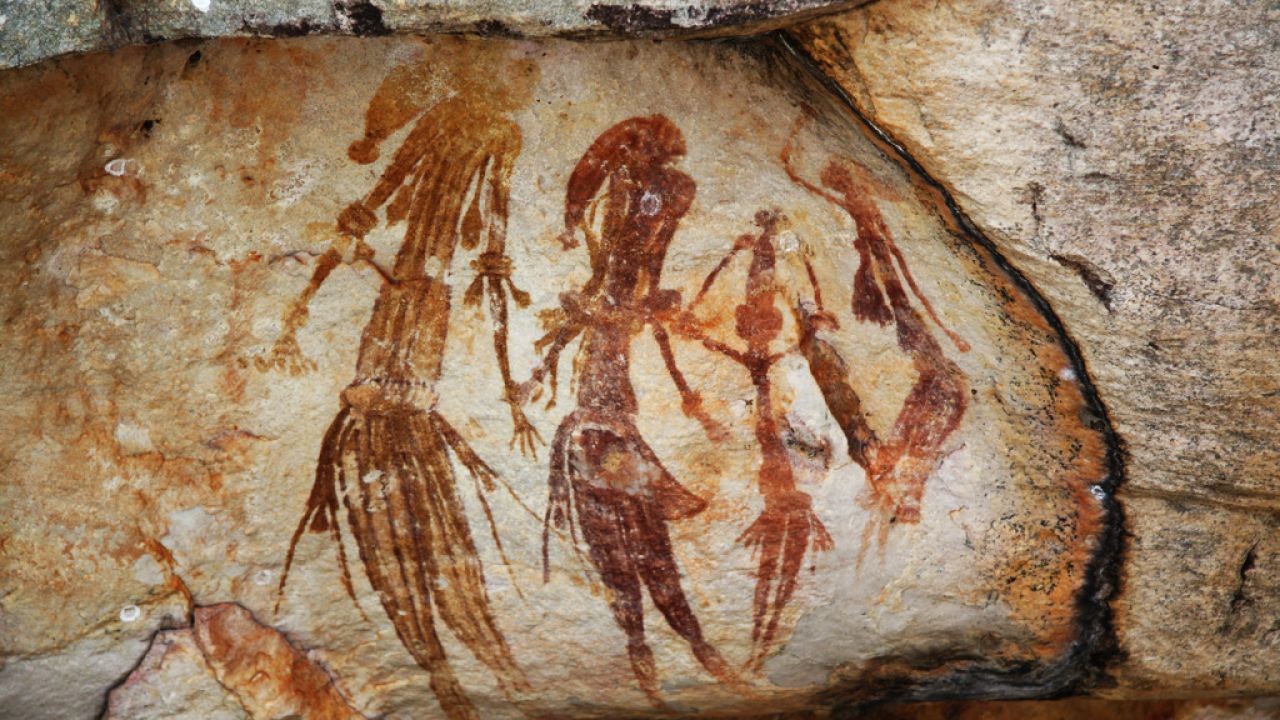
The intersection of Indigenous Australian art and the digital age presents a profound and often overlooked case study in the circular economy. Far beyond mere digitization of a cultural product, this convergence represents a dynamic system where cultural, economic, and technological value flows can be designed for regeneration, not extraction. For the circular economy consultant, this is not a niche cultural topic but a strategic blueprint for building resilient, value-based economic models. The 2021 Australian Census reported that over 800,000 people identified as being of Aboriginal and/or Torres Strait Islander origin, a significant and growing demographic whose cultural capital is a foundational, yet under-leveraged, asset for Australia's creative and economic future. The challenge—and opportunity—lies in structuring digital platforms and marketplaces that circulate economic benefits back to communities while rigorously protecting cultural integrity and intellectual property.
The Current Landscape: A Value Chain Analysis
To understand the circular potential, we must first deconstruct the traditional and digital value chains. The conventional model often sees art move from artist to community art centre, then to galleries and international collectors. Value accrues disproportionately downstream, with artists receiving a fraction of the final sale price. The digital model disrupts this linear chain but introduces new complexities.
The Digital Disruption: Opportunities and Systemic Leakages
Digital platforms—online marketplaces, social media, NFTs—promise direct access to global audiences. However, they risk replicating or exacerbating existing inequities. The Australian Competition & Consumer Commission (ACCC) has long been alert to unfair trading practices, and the digital art space is no exception. Without careful design, platforms can become extractive, siphoning data, cultural capital, and economic value away from Indigenous creators. The circular model demands we close these loops.
- Linear Risk: Artwork sold as a digital file or NFT; transaction ends with sale; ongoing resale royalties (if any) are poorly enforced; cultural context is stripped.
- Circular Opportunity: Digital art acts as a key for accessing layered cultural content, stories, and community projects; smart contracts automate perpetual royalties to artists and their communities; sales fund on-Country cultural preservation work.
A Circular Economy Framework for Indigenous Digital Art
Applying circular principles requires a shift from selling a commodity to stewarding a cultural asset. The following framework outlines a regenerative system.
1. Design for Cultural Preservation and Proliferation
Digital technology should enhance, not replace, cultural practice. This means:
- Digital Storytelling as Value-Add: Pairing art with authenticated, artist-approved digital narratives (video, audio) that explain cultural significance. This deepens buyer engagement and educates a global audience, reinforcing cultural vitality.
- Virtual "On-Country" Experiences: Using AR/VR to connect buyers to the landscape and stories that inspire the art, creating an immersive ecosystem around the artwork itself.
2. Keep Assets and Value in Circulation
This is the core economic mechanism. Strategies include:
- Blockchain for Provenance and Royalties: Implementing blockchain-based certificates of authenticity and smart contracts that automatically execute royalty payments (e.g., 10-15%) to the artist or their designated community fund for all secondary market sales. This creates a perpetual revenue stream.
- Fractional Ownership and Community Investment Models: High-value artworks could be tokenized, allowing for collective ownership where dividends support community-led enterprises, aligning with Indigenous concepts of communal benefit.
3. Regenerate Natural and Cultural Systems
The ultimate output of the system should be the strengthening of culture and country. Revenue generated should be strategically reinvested:
- Direct Funding for Ranger Programs: A percentage of sales could be directed to Indigenous Protected Area (IPA) and ranger groups, directly linking art sales to land care—a powerful circular outcome.
- Intergenerational Knowledge Transfer: Funding digital archives and workshops where elders teach youth both traditional techniques and digital skills, ensuring the system renews its own cultural capital.
Case Study: The Canvas of Circularity – A Global Precedent with Australian Application
Problem: Indigenous artists globally face issues of attribution, fair compensation, and cultural appropriation in the digital space. The linear "create-sell-forget" model depletes cultural value and concentrates financial benefits outside the source community.
Action: While a fully realized Australian example is emergent, we can look to the Maori-led initiative "Toi Āria: Centre for Design & Public Policy" in New Zealand. They are pioneering frameworks for data sovereignty and ethical design that ensure Maori values govern the use of Maori knowledge and creativity in digital realms. This includes developing protocols for digital taonga (treasures) that mandate community control, contextual integrity, and benefit sharing.
Result & Application to Australia: The Toi Āria model provides a transferable strategic framework. An Australian entity applying this would see:
- Metric 1: 100% artist attribution and provenance tracking for all digital works.
- Metric 2: Automated royalty structures ensuring 20-30% of revenue is directed to community-controlled funds for cultural and environmental projects.
- Metric 3: Enhanced buyer engagement, with metrics showing a 40%+ increase in time spent on platform engaging with cultural content versus just browsing art.
Takeaway: The success lever is designing the digital platform's governance and revenue model *with* Indigenous communities at the outset, not as an afterthought. This aligns with both circular design principles and the UN Declaration on the Rights of Indigenous Peoples, to which Australia is a signatory.
The Strategic Debate: Commercialization vs. Cultural Integrity
A critical tension exists, and a circular model must navigate it strategically.
✅ The Advocate Perspective (Pro-Commercialization): Digital scaling is essential for economic empowerment. It creates jobs, sustains art centres in remote regions, and broadcasts Indigenous culture globally. The 2022 National Aboriginal and Torres Strait Islander Health Survey by the ABS highlights the socio-economic gap; robust creative industries directly contribute to closing it. Digital commerce is a tool for self-determination and economic resilience.
❌ The Critic Perspective (Pro-Protection): Mass digital dissemination risks diluting sacred knowledge, enabling appropriation, and commodifying culture into disposable digital content. The focus on market success can distort cultural practices and create internal community divisions. The digital realm, with its history of data extraction, is viewed as a new frontier for colonial practices.
⚖️ The Circular Middle Ground (Stewardship Model): The solution is not to avoid commerce but to redesign it. The circular model advocates for “cultural licensing” rather than outright sale. Artists and communities retain underlying cultural IP. What is sold is a limited, authenticated usage right within a specific context. The platform’s design embeds Indigenous data sovereignty principles, giving communities control over how their data and cultural assets are used. This transforms the platform from a marketplace into a stewardship partner.
Common Myths and Costly Mistakes to Avoid
Myth 1: "Digitizing Indigenous art makes it accessible and preserves it." Reality: Digitization without proper context, protocols, and control can lead to cultural harm and misappropriation. Preservation requires active community management of digital assets, not just creation of digital copies.
Myth 2: "An online marketplace is neutral infrastructure." Reality: Platform design—algorithms, categories, fee structures—embeds cultural and economic values. A linear e-commerce template will inevitably reproduce extractive outcomes.
Mistake 1: Prioritizing Technology Over Protocol. Solution: Begin with community-established Indigenous Cultural and Intellectual Property (ICIP) protocols. The technology should be subservient to these rules, not the other way around. Engage with resources like the Australia Council for the Arts’ ICIP Protocols.
Mistake 2: Measuring Success Only by Sales Volume. Solution: Adopt circular KPIs: percentage of revenue reinvested in community projects, number of intergenerational workshops funded, hectares of land managed through art-funded ranger programs.
Future Trends and the Roadmap to 2030
The trajectory is towards deeper integration of technology, culture, and regenerative economics.
- AI as Co-Creation Tool (with Guardrails): AI trained on ethically sourced Indigenous art styles could become a tool for artists to explore new forms, but must be governed by strict ICIP agreements to prevent unauthorized style scraping.
- Digital Twins for Cultural Sites: High-fidelity digital replicas of sacred sites, accessible via VR with cultural oversight, could create profound educational and experiential products, with revenue funding physical site preservation.
- Regulatory Evolution: Expect increased scrutiny from the ACCC on misleading Indigenous art claims and potential future policy shifts, akin to the Resale Royalty Right for Visual Artists Act 2009, being adapted for the digital and NFT space to better protect artists.
Final Takeaways and Strategic Call to Action
- Circular Insight: Indigenous digital art is not a product to be sold, but a regenerative cultural asset system to be designed and stewarded.
- Data Point: With over 800,000 Indigenous Australians representing a growing share of the population, their cultural capital is a major national asset requiring circular economic models for sustainable benefit.
- Actionable Framework: Move from linear sales to circular flows by implementing smart contracts for royalties, pairing art with contextual storytelling, and linking revenue to cultural and environmental regeneration projects.
- Risk Mitigation: Center Indigenous data sovereignty and ICIP protocols in the very architecture of any digital platform or initiative.
For the circular economy consultant, this domain offers a masterclass in building an economy that is not only sustainable but restorative. The question is not if this market will grow, but who will design the circular systems that ensure it grows in a way that strengthens, rather than depletes, the world’s oldest continuous cultures. The strategic imperative is clear: partner to build the platform, don’t just provide the pipe.
People Also Ask (PAA)
How does the circular economy apply to creative industries in Australia? It shifts the focus from selling finite creative products to designing systems where cultural value, economic benefits, and community well-being are continuously regenerated through smart royalties, community reinvestment, and sustainable practices.
What are the biggest risks for Indigenous art in the digital space? The primary risks are cultural appropriation, loss of context, and economic extraction. Without robust ICIP protocols and benefit-sharing models, digital platforms can inadvertently harm the cultures they seek to promote.
What is a practical first step for a business wanting to engage ethically? Conduct a partnership, not a procurement. Engage with established Indigenous art centres or representative bodies early, budget for fair licensing and royalty fees, and co-design the engagement model based on community priorities.
Related Search Queries
- Indigenous art NFT Australia ethical
- Aboriginal artist royalties digital sales
- Circular economy creative industries Australia
- Indigenous Cultural Intellectual Property (ICIP) protocols
- Blockchain art provenance Australia
- Community benefits from Indigenous art sales
- ACCC Indigenous art misleading conduct
- Digital storytelling Aboriginal culture
- Resale royalty right digital art
- Indigenous data sovereignty Australia
For the full context and strategies on Indigenous Australian art in the digital age – The Rise of This Trend Across Australia, see our main guide: Energy Sustainability Videos Australia.