






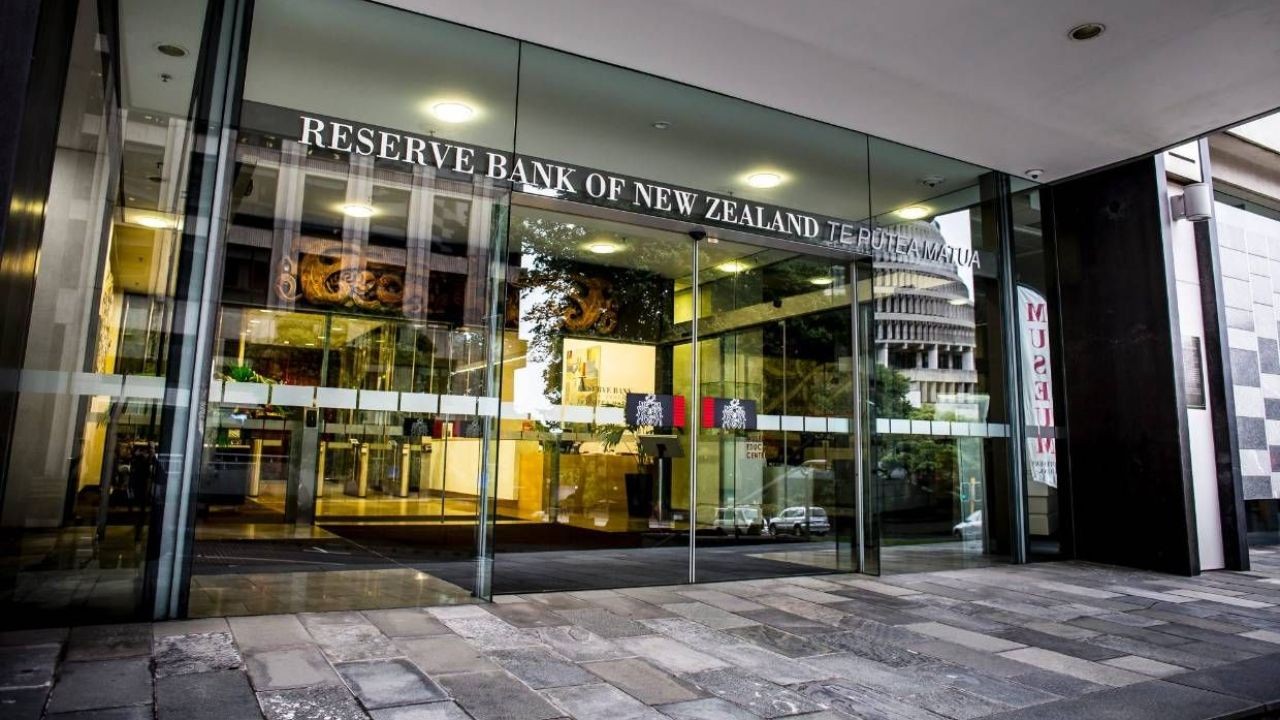
For the innovation consultant, monetary policy is often viewed as a distant, macroeconomic lever—a blunt instrument wielded by central bankers in Wellington that seems disconnected from the agile, disruptive world of startups and R&D labs. This is a critical and costly misconception. The Reserve Bank of New Zealand’s (RBNZ) policy decisions are not just signals for traders; they are the fundamental code that compiles the operating environment for every venture, from a deep-tech startup in Christchurch to a scaling SaaS company in Auckland. Misreading this code doesn't just lead to poor financial planning; it can derail product-market fit, cripple cash flow, and invalidate a five-year innovation roadmap overnight. In an economy where, according to Stats NZ, business investment in intangible assets (like R&D and software) has grown by over 60% in the past decade, understanding the cost and availability of capital is not a financial afterthought—it is a core strategic competency.
The Core Debate: Inflation Fighting vs. Growth Nurturing
The RBNZ’s mandate, as per its Remit, is clear: to maintain price stability and support maximum sustainable employment. The tension for innovators lies in the interpretation and prioritization of these goals, especially in a small, open economy like New Zealand's. The current policy framework operates under a dual mandate, but the practical execution often feels like a pendulum swing between two opposing philosophies.
The Hawkish Stance: Inflation as the Paramount Enemy
Advocate View: Proponents of this view, often dominant during high inflation cycles like the post-COVID period, argue that without price stability, long-term investment and innovation are impossible. High and volatile inflation erodes real returns, distorts price signals, and forces businesses to focus on short-term survival over long-term R&D. The RBNZ’s aggressive Official Cash Rate (OCR) hikes from 0.25% in 2021 to 5.5% in 2023 exemplify this stance. The message is unequivocal: crush inflation first, ask questions later. For consultants, this signals a period of capital scarcity where venture debt becomes expensive, investor appetite for pre-revenue ventures wanes, and burn rates must be meticulously managed.
The Dovish Counter: The Cost of Over-Tightening
Critic View: Critics argue that the RBNZ, in its zeal to tame imported inflation (driven by global supply chains and oil prices), risks over-tightening and stifling the productive, innovative capacity of the economy. They point to sectors like agri-tech and renewable energy—critical for New Zealand’s economic transformation—which require patient, long-horizon capital. Sharply higher interest rates can starve these sectors of funding, as risk capital flees to safer, yield-bearing assets. The result could be a "lost decade" of innovation, where New Zealand falls behind in the global race for technological adoption.
The Innovation Consultant's Middle Ground: The "Policy Sensitivity Analysis"
The astute consultant does not pick a side but builds a framework for navigating the tension. This involves conducting a Policy Sensitivity Analysis for client ventures:
- Capital Intensity Score: How sensitive is the venture's runway to changes in debt costs or equity valuation multiples?
- Inflation Exposure Index: Is the business model a victim of input cost inflation (e.g., hardware manufacturing) or a potential beneficiary (e.g., software with high pricing power)?
- Employment Leverage: Does the venture aim to create high-skill, productive jobs that align with the RBNZ's maximum sustainable employment goal, potentially making it more resilient in a dovish shift?
This analysis moves the conversation from reactive fear to proactive strategic adaptation.
Beyond the OCR: Decoding the RBNZ's Forward Guidance and Unconventional Tools
Focusing solely on the OCR is like reading only the headline of a complex technical report. The real insights—and risks—for innovators are embedded in the nuances of the RBNZ's communication and its toolkit.
The Critical Importance of the Monetary Policy Statement (MPS) and OCR Track
The published OCR track (the projected path of interest rates) is not a promise, but a conditional forecast based on the RBNZ's economic modeling. For an innovation consultant, the slope of this track is more important than the current rate. A projected steep decline signals future capital cost relief, potentially validating a "growth-at-all-costs" phase for a scale-up. A flat or rising track, conversely, demands immediate focus on path to profitability. The February 2024 MPS, for instance, notably removed a previously projected OCR cut, a subtle but powerful signal that extended the horizon for tight financial conditions—a detail with immediate implications for startup fundraising rounds.
The Funding for Lending Programme (FLP): A Case Study in Targeted Liquidity
Case Study: The RBNZ's Funding for Lending Programme (FLP) – A Missed Opportunity for Disruption?
Problem: Launched in 2020, the FLP was designed to provide cheap funding to banks to on-lend to businesses and households. The goal was to lower financing costs and stimulate the economy during the COVID-19 crisis. However, the programme faced a critical adoption challenge: traditional bank risk models remained inherently conservative. They channeled this cheap liquidity primarily to low-risk, established businesses and housing, not to the innovative, high-growth-potential (but riskier) ventures that drive long-term productivity.
Action: While not a direct action by the RBNZ, the programme's structure revealed a flaw in innovation policy. It relied on traditional banking intermediaries whose incentives were misaligned with funding disruptive innovation. No significant mechanism compelled or incentivized banks to develop new risk-assessment models for intangible-heavy, pre-cashflow startups.
Result: The FLP succeeded in its broad macroeconomic goal of maintaining credit flow. However, a 2022 analysis by the New Zealand Productivity Commission implicitly highlighted its limitation, noting that New Zealand's continued "productivity paradox"—strong employment but weak output per hour—is partly due to capital misallocation. Cheap funding flowed to asset speculation (reinforcing housing market imbalances) rather than to productivity-enhancing business investment. The FLP's design meant it was largely a tool for stability, not transformation.
Takeaway: For innovation consultants, this case underscores that unconventional monetary policy tools are not automatically innovation-friendly. The consultant's role is to identify when policy creates a potential arbitrage opportunity (e.g., cheap debt) and then rigorously assess the real frictions (e.g., bank risk aversion) that may prevent clients from accessing it. It argues for a more integrated policy approach where monetary tools are consciously coupled with industry policy (like R&D grants or innovation-focused venture funds) to direct capital to its most productive uses.
Pros and Cons of an Innovation-Led Interpretation of RBNZ Policy
✅ Pros:
- Anticipatory Strategic Advantage: Correctly interpreting the policy trajectory allows innovators to time market entry, fundraising rounds, and major capital expenditures, securing a 12-18 month advantage over competitors who react to headlines.
- Risk Mitigation: Building monetary policy scenarios into financial models directly de-risks the venture. It shifts the narrative for investors from "what if rates go up?" to "here is our tested resilience under these specific RBNZ forecasts."
- Identification of Asymmetric Opportunities: Tight monetary policy crushes weak business models but can create fertile ground for disruptive, capital-efficient solutions. A consultant can guide clients to develop lean, software-based alternatives to capital-intensive services that become unviable in a high-rate environment.
❌ Cons:
- Over-Interpretation Risk: The RBNZ's forecasts are famously uncertain. Basing a multi-million dollar strategy on a specific quarter's OCR projection is dangerous. The consultant must emphasize ranges of outcomes, not single points.
- Distraction from Fundamentals: An excessive focus on macro policy can lead innovators to neglect core fundamentals: product, market, and team. Monetary policy is a tide that lifts or lowers all boats, but a leaky boat will sink regardless.
- Short-Termism Pressure: In a prolonged hawkish phase, the consultant may be pressured to advise pivoting to short-term revenue generation at the expense of a visionary, long-term R&D bet that is essential for category leadership.
Common Myths and Costly Mistakes for Innovators
Myth 1: "The RBNZ only cares about big banks and inflation; it doesn't understand the startup ecosystem." Reality: While not its primary mandate, the RBNZ is acutely aware of the composition of economic growth. Its Financial Stability Reports consistently monitor business credit conditions, including for SMEs. Ignoring its signals because they seem "unrelated" is a strategic blind spot. The ecosystem is a component of the system they manage.
Myth 2: "Low interest rates are always good for innovation." Reality: Persistently low rates can lead to "zombie" companies and capital misallocation, as seen globally. They can inflate asset bubbles (e.g., tech valuations) that eventually correct violently. A moderate, stable rate environment can be healthier, forcing capital discipline and rewarding truly efficient, innovative business models.
Myth 3: "We can ignore the Trade-Weighted Index (TWI); we're a domestic-focused startup." Reality: The TWI's impact is pervasive. A high TWI (strong NZD) makes imported R&D equipment and overseas SaaS licenses cheaper, reducing operational costs. It also makes your service more expensive for overseas customers. Even a locally focused venture's cost base is often global.
Costly Mistake 1: Securing variable-rate debt during a dovish phase without a hedging strategy. Solution: Model debt servicing costs under a 300-400 basis point increase. If that breaks the model, negotiate fixed-rate terms or establish a clear trigger to hedge, treating interest rate risk with the same seriousness as product risk.
Costly Mistake 2: Pitching to investors with financials that assume perpetually low capital costs. Solution: Build three fundraising narratives: one for a "higher-for-longer" scenario (focus on quick profitability), one for a "soft landing" (balanced growth), and one for a rapid dovish pivot (aggressive market capture). This demonstrates sophisticated strategic foresight.
The Future of NZ Monetary Policy: Implications for the Innovation Landscape
The next evolution of RBNZ policy will be shaped by two forces with direct implications for innovators:
- The Digital Currency Frontier: The RBNZ's ongoing exploration of a Central Bank Digital Currency (CBDC) is not just a payments story. A well-designed, "smart contract"-enabled CBDC could revolutionize how R&D grants are disbursed, how IP royalties are tracked and paid automatically, and how venture capital is deployed with programmable conditions. This could significantly reduce transaction friction and administrative overhead for high-growth firms.
- Greening the Policy Toolkit: As climate risk becomes a financial stability issue, the RBNZ may evolve its tools. This could involve "green" collateral frameworks or differentiated capital requirements for banks based on their lending to sustainable projects. Innovators in cleantech, circular economy, and carbon measurement could find themselves in a newly favorable policy environment where their ventures directly help banks meet systemic risk mandates.
The consultant's role will be to monitor these structural policy shifts, which will have a more profound impact than cyclical OCR changes, and position clients to be first-movers in the new architectures they create.
Final Takeaways & Strategic Call to Action
- Treat RBNZ communications as a primary strategic dataset, not financial news. Integrate the MPS OCR track and risk assessments directly into your client's strategic planning cycles.
- Conduct a "Monetary Policy Stress Test" on every venture's financial model. The question is not if policy will change, but how resilient the model is when it does.
- Look beyond the OCR. Analyze the TWI for cost implications, understand bank funding costs (like the FLP legacy), and track long-term structural shifts like CBDC development.
- Advocate for policy integration. As a consultant, your insights into how monetary policy filters (or fails to filter) to the innovation sector are valuable. Engage with industry bodies to ensure the RBNZ's evolving models account for the intangible investment-driven growth model.
Your mandate is to future-proof innovation. That future is being coded, in part, at 2 The Terrace, Wellington. Decode it, or risk being deprecated.
People Also Ask (PAA)
How does the RBNZ's policy directly impact a pre-revenue tech startup in New Zealand? It primarily impacts the cost and appetite of investors. Higher OCRs make risk-free returns more attractive, squeezing venture capital and angel investment. It also increases the discount rate used in valuation models, potentially lowering valuation caps during fundraising and forcing a sharper focus on the path to profitability.
What is the biggest mistake innovators make regarding interest rates? Assuming the current rate environment is permanent. Building a long-term growth plan on the foundation of ultra-low 2021 rates was a critical error. The savvy innovator models multiple interest rate scenarios to ensure business model viability across cycles, not just at a single point in time.
What upcoming RBNZ change could most benefit New Zealand innovators? The thoughtful implementation of a "smart" Central Bank Digital Currency (CBDC). If designed with programmability, it could drastically reduce the cost and complexity of securing, deploying, and tracking early-stage investment and grant funding, unlocking capital flow and administrative efficiency for the innovation sector.
Related Search Queries
- RBNZ OCR forecast impact on startup valuation
- New Zealand venture capital interest rates 2024
- How to hedge interest rate risk for NZ startup
- RBNZ Monetary Policy Statement explained for businesses
- Funding for Lending Programme NZ innovation
- Trade Weighted Index NZD impact on tech imports
- Central Bank Digital Currency NZ innovation ecosystem
- Climate change RBNZ policy green finance NZ
- Productivity Commission NZ capital allocation innovation
- Monetary policy sensitivity analysis business model
For the full context and strategies on How to Interpret the Reserve Bank of New Zealand’s Monetary Policy – Key Mistakes Kiwis Should Avoid, see our main guide: Subdivision Land Sales Videos New Zealand.