





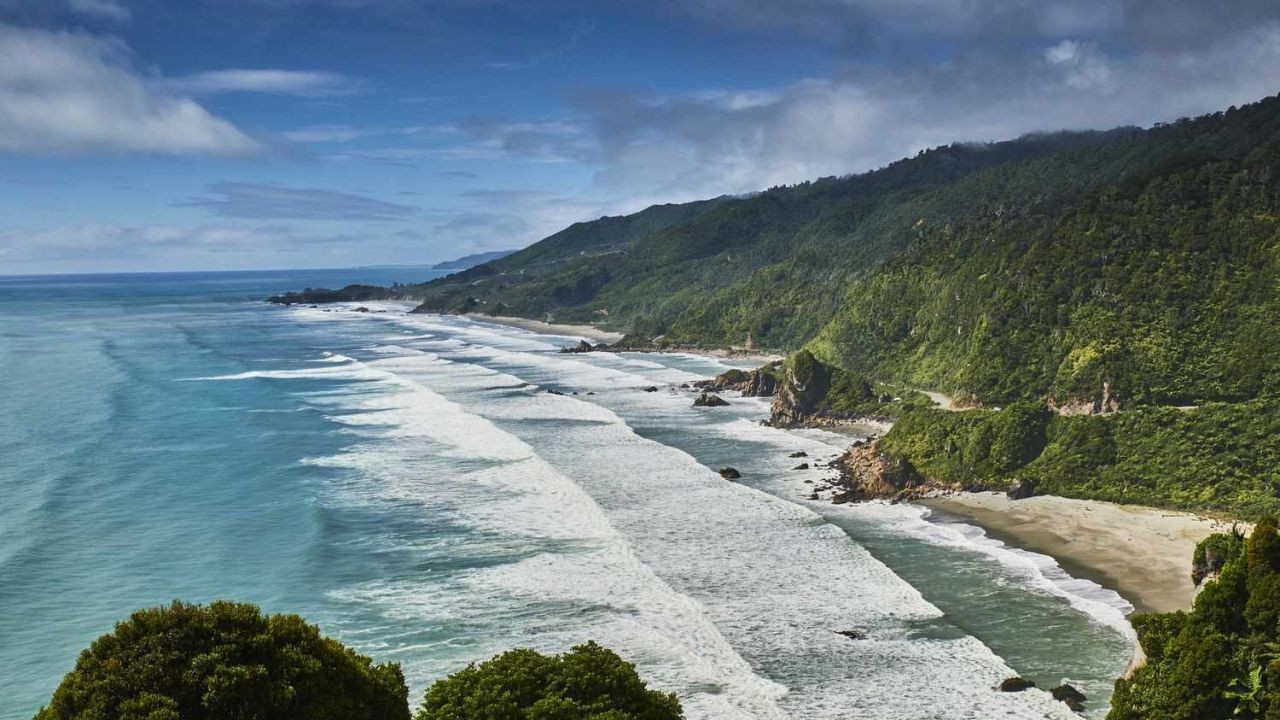
The sea is a defining feature of New Zealand's identity, shaping our culture, economy, and where we choose to live. Yet, a quiet but profound reassessment is underway in boardrooms, council chambers, and living rooms across the motu. The creeping reality of climate change—manifesting as sea-level rise, intensified storm surges, and coastal erosion—is no longer a distant forecast but a present-day factor recalibrating the fundamental value proposition of coastal real estate. For industry professionals, this represents not just an environmental challenge, but the most significant systemic risk and opportunity landscape shift in a generation.
The Erosion of Assumptions: A Comparative Analysis of Coastal vs. Inland Values
Traditionally, a coastal address commanded a substantial premium, often viewed as a blue-chip, evergreen asset. This paradigm is being stress-tested. Drawing on my experience in the NZ market, I've observed a growing bifurcation in buyer sentiment and valuation methodologies. The premium still exists, but it is now heavily qualified by a property's specific vulnerability profile. We are moving from a blanket "coastal premium" to a "resilience premium."
Data from CoreLogic and Valocity increasingly incorporates climate risk layers into their analytics, a trend driven by both insurer retreat and lender caution. A 2023 report from the Reserve Bank of New Zealand highlighted that approximately 1.5% of all residential dwellings (around 43,000 homes) are currently exposed to a 1-in-100-year coastal flood event. This exposure is not evenly distributed. Compare a cliff-top property in Eastbourne with engineered seawalls and managed retreat plans to a low-lying, sandy-front section in the Far North with no infrastructure mitigation. Their market trajectories are diverging rapidly.
The Inland Shift: Concurrently, well-serviced towns and suburbs slightly inland, but within commuting distance of major centres, are experiencing a subtle value uplift. From consulting with local businesses in New Zealand, I've seen developers quietly acquiring land in these zones, anticipating long-term demand shifts. Towns like Rolleston near Christchurch or Pukekohe near Auckland aren't just growing due to affordability; they are perceived as inherently lower-risk geographies. This isn't a crash for coastal areas en masse, but a sophisticated re-pricing based on granular risk assessment.
Key actions for real estate professionals today:
- Upskill in Climate Analytics: Familiarise yourself with tools like the NZ SeaRise programme data and local council hazard maps. These must become as fundamental as reading a LIM report.
- Reframe the Narrative: Move from fear-based messaging to informed, solution-oriented advice. Discuss existing protections, council adaptation plans, and retrofit options (e.g., raising floor levels).
- Document Everything: Ensure all known hazard disclosures are meticulously documented in sale and purchase agreements to mitigate future liability.
Case Study: South Dunedin – A Microcosm of the National Challenge
To understand the complex interplay of physical risk, community, and economic value, one need look no further than South Dunedin. This low-lying, densely populated suburb is built on reclaimed marshland, with groundwater levels already high. It is arguably New Zealand's most climate-vulnerable urban community.
Problem: South Dunedin faces a triple threat: rising sea levels, increasing groundwater levels, and more intense rainfall events. The Dunedin City Council's own modelling suggests large parts of the suburb could experience frequent flooding within decades. The community is socio-economically diverse, with a high proportion of retirees, renters, and lower-value housing stock, complicating both adaptation funding and retreat options.
Action: The response has been a multi-agency, long-term planning effort. The Dunedin City Council has embarked on the "South Dunedin Future" programme, a collaborative 50-100 year adaptive planning framework. Key actions include:
- Massive public investment in stormwater and wastewater infrastructure upgrades.
- Developing a "managed transition" strategy, which may involve progressively buying out the most at-risk properties over time.
- Implementing strict new planning rules to prevent intensification in the highest-risk zones.
Result: The market impact is already measurable. While the wider Dunedin market has seen growth, valuations in the highest-risk pockets of South Dunedin have stagnated or fallen relative to the city average. Insurance has become more expensive and difficult to secure. Crucially, the planning response has created certainty—albeit painful—which is preferable to market chaos. It provides a timeline and a process, allowing for gradual adjustment rather than a sudden value collapse.
Takeaway: South Dunedin is a national blueprint, not an outlier. In my experience supporting Kiwi companies in the development sector, the lessons are clear: proactive, transparent planning that involves the community, even when the answers are hard, preserves social licence and mitigates the worst financial shocks. For investors, it underscores the critical importance of due diligence that goes decades into the future, assessing not just the property, but the council's competency and financial capacity to deliver adaptation.
How It Works: The Mechanics of Devaluation and Adaptation
The impact on property values operates through several direct and indirect channels. Understanding these mechanics is essential for accurate risk assessment.
The Four Channels of Climate Impact on Value:
- Insurance Withdrawal or Affordability Shock: This is the most immediate lever. When insurers decline to cover a property or premiums become prohibitive (e.g., exceeding $10,000 per annum), mortgageability evaporates. Banks, bound by responsible lending codes, cannot lend on an uninsurable asset. The property effectively becomes a cash-only transaction, severely limiting its buyer pool and value.
- Increased Compliance and Retrofit Costs: New building consents in hazard zones now require stricter, more expensive foundations (e.g., pole foundations), floor level raises, and drainage. Retrofitting existing properties can be cost-prohibitive, making them functionally obsolete over time.
- Infrastructure Stranding and Service Risk: Roads, wastewater pipes, and freshwater networks are also vulnerable. Councils facing billion-dollar adaptation bills may eventually decide to decommission services to the most vulnerable areas, rendering properties uninhabitable. This is the core of "managed retreat."
- Perception and Sentiment: As media coverage of coastal flooding events increases, a broad-based stigma can attach to entire regions, affecting values even in areas with lower physical risk. This is a powerful and often irrational market force.
The Regulatory Deep Dive: RMA Reforms and Local Government Act Changes
New Zealand's policy framework is scrambling to catch up. The replacement for the Resource Management Act (RMA) is explicitly designed to better integrate climate adaptation. The proposed Natural and Built Environments Act (NBEA) and Spatial Planning Act (SPA) will mandate stronger, region-wide climate risk assessments. Furthermore, amendments to the Local Government Act 2002 now require councils to explicitly consider climate change in their long-term plans (LTPs) and provide clearer information on hazards.
In practice, with NZ-based teams I’ve advised, this means developers and investors must engage much earlier in the planning process. Submissions on regional spatial strategies will be as important as submissions on a specific resource consent. The goalposts for "developable land" are moving inward.
Debunking Common Myths in Coastal Real Estate
Misinformation breeds poor investment decisions. Let's dismantle three pervasive myths.
Myth 1: "If the sea rises, we'll just build a bigger wall." Reality: Hard engineering defences like seawalls are often a temporary, costly, and ecologically damaging solution. They can exacerbate erosion down-drift, require perpetual maintenance, and simply buy time. Councils are increasingly favouring "soft" engineering (dune restoration) or managed retreat, as seen in the South Dunedin strategy and parts of the Kapiti Coast. The cost of walling all of New Zealand's vulnerable coastline is astronomically prohibitive.
Myth 2: "This is a problem for 2100, not for today's market." Reality: Market repricing happens in anticipation of future risk, not upon the catastrophic event. As evidenced by insurance pressures and bank lending criteria, this repricing is happening now. A 2020 study published in NZ Journal of Marine and Freshwater Research indicated that some coastal areas are experiencing erosion rates that will threaten infrastructure within 15-20 years, well within the term of a standard mortgage.
Myth 3: "The government will bail out affected homeowners." Reality: The government's position, as outlined in the National Adaptation Plan (2022), is that the costs of climate change should be shared, but homeowners and local governments bear a significant portion. The proposed "Climate Adaptation Act" is likely to establish a framework for managed retreat where the Crown may contribute to some costs, but not at 100% market value. This is a critical assumption to correct; expecting a full taxpayer-funded buyout is a high-risk strategy.
The Controversial Take: Climate Risk Could Inflate a New Property Bubble
Here is an uncomfortable, contrarian perspective: the concerted focus on *retreating* from the coast may inadvertently inflate demand and prices in perceived "safe" zones, creating affordability crises and potential overvaluation in these new markets. As capital flees vulnerable coastal fringes, it floods into a relatively constrained supply of well-located, low-risk land.
We could see a scenario where a modest three-bedroom home in a resilient but unglamorous inland suburb reaches an unjustifiable price point based purely on climate safety speculation, detached from its intrinsic economic fundamentals. This creates a new kind of systemic risk—a "climate safety bubble." Drawing on my experience in the NZ market, I see early signs of this in the premium for well-elevated sections in otherwise comparable developments. The challenge for regulators and the industry will be to ensure adaptation doesn't simply transfer risk from one part of the community to another.
Future Trends & Predictions: The 10-Year Horizon
The next decade will see climate adaptation become the central driver of urban form and real estate value in New Zealand.
- Climate-Adjusted Rating Valuations (2026-2030): I predict that within the next rating revaluation cycle, major councils will begin formally adjusting capital values (CVs) downward for properties with demonstrably high, unmovable physical risk. This will be politically explosive but financially necessary.
- The Rise of "Resilience Certificates" (2025+): Much like a Building Warrant of Fitness or Homestar rating, a voluntary "Coastal Resilience Certificate" assessing a property's specific vulnerability and adaptation features will emerge as a key marketing tool for vendors and a due diligence tool for buyers.
- Insurance-Linked Securities & Pooled Funds (2028+): To keep insurance available, New Zealand will likely develop a sovereign-backed or industry-pooled reinsurance facility for the highest-risk properties, potentially funded by levies on all policyholders. This socialises the cost but maintains market function.
- Data from Stats NZ (2018) shows that over 65% of New Zealanders live within 5km of the coast. The economic and social imperative to adapt, rather than simply abandon, is overwhelming.
Final Takeaways & Strategic Call to Action
The impact of climate change on coastal communities is not a binary event; it is a gradient of risk that is already being priced into the market. For the savvy real estate professional, ignorance is the greatest liability, while expertise in navigating this new landscape is the ultimate value-add.
Your Immediate Action Plan:
- Audit Your Portfolio & Listings: Use the latest council hazard maps and the NZ SeaRise data portal to assess every coastal property you manage, own, or list. Categorise risk as low, medium, or high.
- Engage with Local Government: Actively participate in your council's Long-Term Plan and Spatial Plan consultations. Understand their adaptation strategy and timeline—it will dictate future land use and value.
- Evolve Your Advice: Shift from being a transactional agent to a long-term risk advisor. Equip your clients with the facts, the likely scenarios, and the professional network (e.g., planners, insurance brokers, engineers) they need to make informed decisions.
The coastline will always be part of our lives, but our relationship with it is changing forever. The professionals who lead with knowledge, transparency, and pragmatic solutions will not only future-proof their own businesses but will also provide an indispensable service in guiding New Zealand through this unprecedented transition.
People Also Ask (PAA)
Are coastal properties in New Zealand still a good investment? They can be, but the investment thesis must now be rigorously stress-tested against specific climate hazards, council adaptation plans, and insurance longevity. A "good investment" is increasingly defined by resilience, not just view.
What is managed retreat and how does it work? Managed retreat is a planned process of relocating assets, infrastructure, and communities away from high-risk areas. In New Zealand, it's likely to involve phased property buyouts by councils over decades, funded through a combination of local rates, central government support, and potentially levies.
How can I check if a property is at risk from sea-level rise? Start with the local council's hazard maps (available online), then use the detailed, location-specific projections on the NZ SeaRise programme website. Always commission a specific geotechnical and climate risk assessment as part of your due diligence for a high-value coastal purchase.
Related Search Queries
- NZ coastal property climate risk map
- Insurance for coastal homes New Zealand 2024
- Managed retreat policy New Zealand
- Sea level rise predictions for Auckland
- How to raise a house for flood protection NZ
- Climate change and NZ house prices
- Most at-risk coastal towns New Zealand
- RBNZ climate risk property report
For the full context and strategies on Impact of Climate Change on New Zealand's Coastal Communities – (And Why Kiwis Should Care in the future), see our main guide: Safe Video Sharing New Zealand Families Schools.