






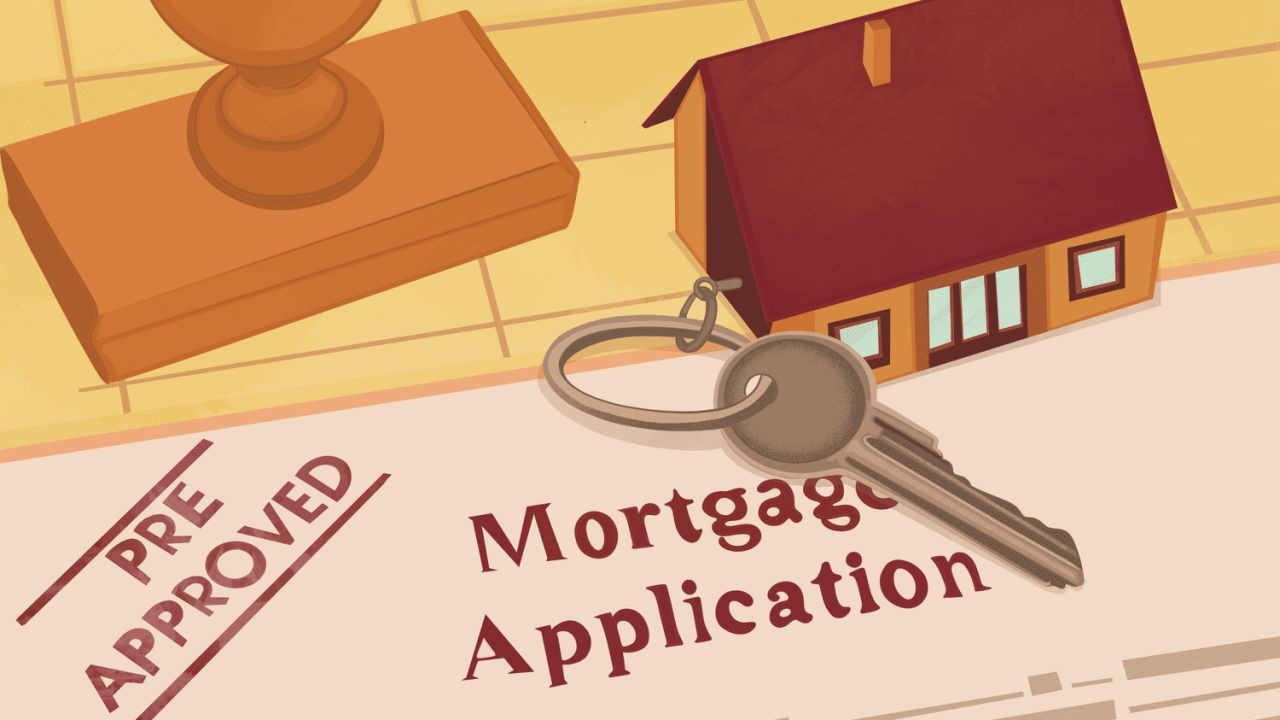
In the intricate theatre of New Zealand's housing market, securing a home loan pre-approval is not merely an administrative step; it is a strategic declaration of financial intent. It is the difference between being a spectator and a credible, empowered participant in the bidding war. Yet, a staggering number of prospective buyers, armed with optimism but lacking tactical preparation, enter this arena woefully underprepared. The Reserve Bank of New Zealand's latest Loan-to-Value Ratio (LVR) data reveals a critical insight: as of late 2024, only a fraction of new lending to owner-occupiers is at high LVRs, indicating banks' enduring caution. This isn't just policy—it's a market signal. A pre-approval is your personal stress test, a bank's verdict on your financial resilience in an economy grappling with persistent core inflation and a volatile property cycle. To treat it as a casual inquiry is to fundamentally misunderstand the modern mortgage landscape.
The Strategic Anatomy of a Pre-Approval: More Than a Number
Conceptually, a pre-approval—or conditional approval—is a lender's written assessment stating how much they are principally willing to lend you, subject to specific conditions. The common misconception is that it is a guaranteed cheque. In reality, it is a conditional covenant between you and the bank, predicated on the veracity of your provided information and the suitability of the property you eventually choose. Its primary value is threefold: it defines your budgetary battlefield, demonstrates serious intent to real estate agents and vendors, and accelerates the final settlement process. From consulting with local businesses in New Zealand, I've observed that the most successful purchasers—whether first-home buyers or investors—use the pre-approval period not just to shop, but to conduct deep due diligence, aligning their property search with unwavering lending criteria.
The Step-by-Step Campaign for Securing Your Pre-Approval
Approach this not as a form-filling exercise, but as a multi-phase campaign requiring meticulous preparation and strategic choice.
Phase 1: The Internal Audit & Financial Fortification
Before a lender scrutinises you, you must scrutinise yourself. This phase is about presenting an unassailable financial profile.
- Gather Core Documentation: This is your evidence dossier. You will need:
- Proof of identity (passport, driver’s license).
- Proof of income: Last 3-6 months of payslips, most recent two years of IRD summaries (not just MyIR screenshots), and employment agreements. For the self-employed, two years of full financial statements and tax returns are non-negotiable.
- Proof of expenses: 3-6 months of bank statements for all accounts, highlighting regular outgoings.
- Proof of assets & liabilities: Statements for any existing loans, credit cards, KiwiSaver, investments, and vehicle ownership.
- Conduct a Credit Score Reconnaissance: Obtain a free copy of your credit report from Centrix or Illion. In my experience supporting Kiwi companies, I've seen promising deals derailed by forgotten, small-default telco accounts. Rectify any errors or outstanding issues immediately.
- The 'Clean Up' Period: For at least three months prior, avoid any major changes: don't switch jobs, take on new hire purchase agreements, apply for new credit, or make large, unaccountable deposits into your accounts. Banks seek stability and clarity.
Key actions for young Kiwis: Use tools like Sorted's budgeting calculator to get a ruthless handle on your true disposable income. Immediately cease 'Buy Now, Pay Later' (BNPL) usage, as lenders now heavily scrutinise these as recurring liabilities.
Phase 2: Lender Selection & Engagement – Choosing Your Ally
Do not default to your current bank. The New Zealand lending market is a competitive landscape. Your choice should be strategic.
- Broker vs. Direct: A registered mortgage broker (look for MFAA or NZFSG affiliation) can provide access to multiple lenders' panels and negotiate on your behalf. Going direct to a bank can sometimes yield more flexibility if you have a strong existing relationship. Weigh the pros based on your complexity.
- Interrogate the Test Rate: The advertised interest rate is a mirage. The critical number is the servicing test rate (often ~8.5-9.0%), at which the bank assesses your ability to repay. A lower test rate can significantly increase your borrowing capacity.
- Understand the Conditions: Pre-approvals are laden with conditions. Common ones include a satisfactory registered valuation on the property, no material change to your financial position, and the property meeting the bank's security criteria (e.g., not being a leaky building, having a certain floor area).
Phase 3: Submission & Strategic Negotiation
Submit a complete, organised application. Incomplete paperwork is the fastest route to delays. Be prepared for a forensic interview. A lender may ask why a certain transaction occurred. Having a clear, honest explanation is paramount. Based on my work with NZ SMEs, the principle is identical: transparency builds trust. If your application is complex—due to variable income, trust structures, or existing portfolios—consider engaging a financial advisor early to help structure your presentation.
The Critical Debate: Fixed vs. Revolving Pre-Approval
This is a pivotal strategic choice most applicants overlook, yet it fundamentally dictates your tactical flexibility.
The Case for a Fixed (Standard) Pre-Approval
This is the most common type. It states a fixed loan amount, based on the financials and interest rates at the time of assessment, and typically expires in 60-90 days.
Pros: It provides a clear, firm budget. It is often quicker to obtain and is sufficient for buyers who are ready to purchase imminently.
Cons: It is fragile. If interest rates rise before you buy, your approved amount may decrease as servicing tests tighten. Its short lifespan can create pressure, leading to poor purchase decisions.
The Case for a Revolving (Fully Assessed) Pre-Approval
This is a more robust, ongoing approval. While still conditional on a specific property, it is often valid for 6 months and may have more flexibility regarding interest rate movements.
Pros: Provides longer-term certainty and reduces pressure. It can offer more stability in a rising rate environment, as the assessment may account for potential increases.
Cons: The application process can be more intensive. Not all lenders offer it, and it may require a more established financial profile.
The Middle Ground: For the serious buyer in today's market, the revolving pre-approval is the superior tool. It treats the home purchase as a strategic project, not an impulse buy. It allows you to walk away from a bad deal without your financing expiring. Drawing on my experience in the NZ market, the additional upfront effort secures a formidable negotiating advantage.
Debunking the Myths: The Pre-Approval Reality Check
Let's dismantle the dangerous folklore that clouds buyer judgment.
Myth 1: "A pre-approval guarantees my loan." Reality: It is a conditional promise, not a guarantee. The property must be deemed suitable security by the bank's valuer. A low valuation or non-compliance with building code can void the approval entirely.
Myth 2: "I should get pre-approved for the maximum amount the bank offers." Reality: This is a classic strategic error. Borrowing at your absolute limit leaves no buffer for rate rises, maintenance, or life changes. Stats NZ data shows household living costs are rising; your budget should be based on your comfort, not the bank's algorithm.
Myth 3: "My pre-approval is valid for the stated period, no matter what." Reality: Any material change—changing jobs, reducing hours, taking on new debt—can invalidate it immediately. You are obligated to inform the lender of such changes.
Myth 4: "I only need one pre-approval." Reality: In a competitive multi-offer situation, having a pre-approval from the vendor's preferred bank can be a decisive advantage. It signals a smoother, faster settlement.
Common Catastrophic Mistakes & How to Avoid Them
- Underestimating True Living Costs: Banks use benchmarked household expenditure measures (HEM). If your actual spending is higher, you'll be in distress. Solution: Live for 3 months on your proposed post-mortgage budget before you buy.
- Ignoring the OCR's Direct Impact: The Reserve Bank's Official Cash Rate (OCR) directly influences floating and short-term fixed rates. Going for pre-approval just before an anticipated OCR hike is poor timing. Solution: Follow RBNZ monetary policy statements and time your application during a stable or easing cycle.
- Overlooking KiwiSaver & First Home Grant Timelines: Withdrawing KiwiSaver funds or securing a First Home Grant involves processing delays. Solution: Initiate contact with your KiwiSaver provider and Kainga Ora before you find a property, understanding all eligibility criteria and lead times.
- Failing to Plan for the Unplanned: The purchase process has costs: building reports ($600-$1,000), LIM reports ($400), legal fees ($2,000-$3,000). Solution: Have a dedicated 'purchase costs' fund of at least $5,000 separate from your deposit.
The Insider's View: What Loan Assessors Really Look For
Beyond the numbers, assessors are trained to identify behavioural risk. A perfectly good income can be undone by financial behaviour that signals instability. Through my projects with New Zealand enterprises in the fintech adjacent space, I've gained insights into the nuanced heuristics lenders use.
- Patterns Over Snapshots: They don't just look at your balance on payday. They track the flow. Regular gambling transactions, consistent overdraft usage, or a plethora of small, frantic transfers raise red flags about financial stress and management.
- The Narrative of Savings: A deposit comprised of a recent, large lump-sum gift is treated differently from three years of consistent, disciplined savings. The latter tells a story of reliability and commitment the bank wants to see.
- Serviceability at Stress: They are not approving you for today's rates. They are asking, "Can this borrower still pay if rates hit 9% and they have a child?" Your budget must demonstrate this resilience.
The Future of Mortgage Pre-Approval: Digital Underwriting & Open Banking
The process is on the cusp of a data-driven revolution. Open Banking, enabled by the Consumer Data Right (CDR) legislation slowly taking shape in New Zealand, will transform pre-approvals from a documentary inquest to a near-instantaneous digital assessment. By 2028, I predict that a significant portion of pre-approvals will be algorithmically generated in real-time, with your consent, by securely sharing your banking transaction data directly with the lender. This will increase accuracy, reduce fraud, and compress the timeline from weeks to hours. However, it will also place a greater premium on your ongoing financial data hygiene. The 'clean up' period will become a permanent state of financial readiness.
Final Takeaway & Strategic Call to Action
In New Zealand's complex property market, a pre-approval is your strategic keystone. It is not a rubber stamp but a rigorous financial audit that, when executed correctly, provides unparalleled leverage and clarity. The process exposes the integrity of your financial position—a valuable exercise regardless of the outcome.
Your campaign begins now. Do not approach a bank or broker until you have completed your internal audit. Scrutinise your bank statements, know your credit score, and understand your genuine spending. Choose your lender based on strategic alignment, not convenience. And above all, borrow for the life you can sustainably afford, not the maximum the system will allow.
Ready to move from spectator to player? Your first action is not to call a bank. It is to download your last 90 days of bank statements and categorise every single outflow. The story they tell will dictate your entire strategy.
People Also Ask (FAQ)
How long does a home loan pre-approval last in NZ? Most standard pre-approvals are valid for 60-90 days, while fully assessed revolving pre-approvals can last up to 6 months. Validity is always conditional on no material change to your financial situation.
Does a pre-approval affect my credit score? Yes, but typically only slightly. The lender will perform a credit check, which is recorded as an inquiry. Multiple applications in a short period can negatively impact your score, which is why strategic lender selection is crucial.
Can I make an offer at auction with a pre-approval? Absolutely, and you should. A pre-approval is essential for auction bids, as successful bids are unconditional. Without it, you risk financial catastrophe if you win but cannot secure finance.
Related Search Queries
- first home loan pre approval NZ 2024
- how much can I borrow home loan calculator NZ
- mortgage broker vs bank NZ
- low deposit home loan pre approval
- revolving pre approval home loan
- bad credit home loan pre approval NZ
- self employed mortgage pre approval NZ
- Kiwibank pre approval process time
- ANZ home loan pre approval conditions
- what happens after pre approval NZ
For the full context and strategies on How to Get Pre-Approval for a Home Loan in New Zealand, see our main guide: Vidude Vs Tiktok New Zealand.