





For decades, the debate over open-plan versus closed-floor layouts has been framed as a simple matter of personal taste. This is a fundamental misreading of a critical capital allocation decision. As a venture capitalist, I evaluate assets based on their ability to generate returns, adapt to market shifts, and mitigate risk. A residential property is no different; it is a capital asset where design decisions directly impact liquidity and valuation. The question isn't which layout you prefer for Sunday brunch; it's which configuration maximises your equity upon exit in the specific, often unforgiving, context of the Australian property market.
The Historical Pivot: From Walls to Welcoming Spaces
The post-war Australian home, typified by the classic brick veneer, was a fortress of compartmentalisation. Rooms had defined purposes—a formal lounge for guests, a separate dining room, a closed-off kitchen. This architecture mirrored societal structures: defined, hierarchical, and private. The shift towards open-plan living, accelerating in the 1990s and 2000s, was not merely an aesthetic trend but a capital-driven response to changing demographics and land economics. As urban land values, particularly in Sydney and Melbourne, began their stratospheric climb—CoreLogic data shows Sydney values have increased over 250% in the past 20 years—maximising the perceived utility and light within a shrinking land footprint became a financial imperative. The open plan promised a solution: a sense of spaciousness and flexible living that could justify soaring price-per-square-metre rates.
Data-Driven Valuation: What the Numbers Reveal
Sentiment is not strategy. To cut through the noise, we must look at cold, hard transaction data and buyer behaviour analytics. The narrative that open-plan is universally superior is a gross oversimplification. The value impact is intensely contextual, dictated by property type, location, and buyer cohort.
According to a 2023 report by the Australian Bureau of Statistics on household trends, the average number of persons per household has steadily declined to 2.5, while dwelling sizes have increased. This paradox underscores a demand for space, but not necessarily undifferentiated space. In my experience advising property technology startups and analysing portfolio performances, premium is attached to functional flexibility. A vast, single-room barn conversion in a family-centric suburb may appraise lower than a well-zoned home with a flowing living area and a separate media room or study.
Drawing on my experience in the Australian market, the most significant data point is the pandemic's structural impact. The work-from-home revolution, now entrenched, has irrevocably altered buyer calculus. A study by the Reserve Bank of Australia noted a marked shift in demand towards properties accommodating remote work. Suddenly, a dedicated, closed-off study or a convertible fourth bedroom became a tangible asset, often commanding a 5-10% premium over an identical layout without that defined space. The open-plan great room, while still desirable for family interaction, now competes with the necessity for acoustic and visual privacy.
Case Study: The Suburban Family Home vs. The Inner-City Apartment
Consider two archetypal Australian properties:
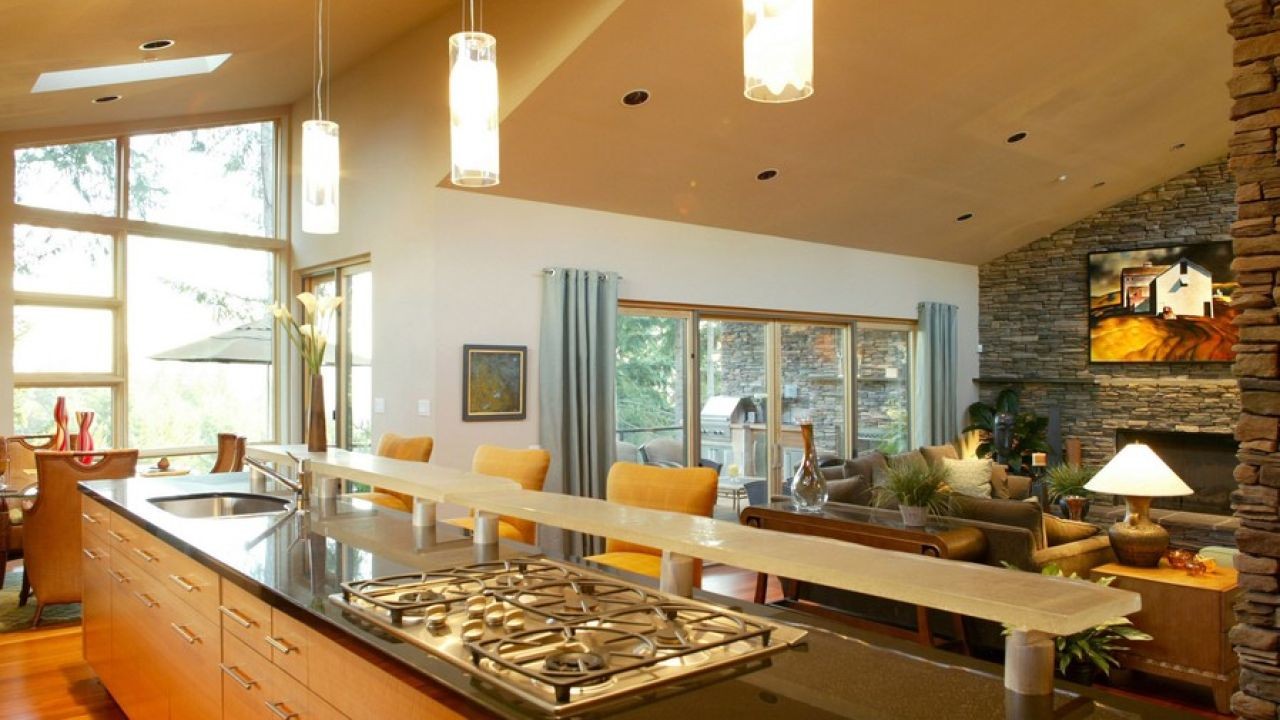
1. The Suburban Family Home (Sydney's North Shore): Here, the buyer profile is typically a dual-income family. Through my projects with Australian enterprises in the real estate data sector, the analysis shows a clear preference for a hybrid model. The winning formula is an open-plan kitchen, dining, and family room that flows to an outdoor entertaining area—a non-negotiable for the Australian lifestyle. However, this must be complemented by closed, dedicated rooms: a home office/study, a media room, and bedrooms separated from the living zone. A fully open-plan layout here is seen as dysfunctional, failing to meet the diversified needs of a modern family, and can depress offers by targeting a narrower buyer pool.
2. The Inner-City Apartment (Melbourne CBD): The calculus flips. For the professional couple or singleton, maximising the perception of space in a 60-square-metre apartment is paramount. Here, a clean, open-plan layout that integrates living, dining, and a kitchenette is the undisputed value-optimiser. Walls are the enemy of light and feel. A segmented layout in this asset class feels cramped, dated, and directly correlates with longer days on market and price discounts.
Reality Check for Australian Businesses and Developers
The development and renovation sector is rife with costly strategic errors based on outdated assumptions. The blanket application of open-plan design is one of the most pervasive.
- Myth: "Knocking down walls always adds value." Reality: Indiscriminate demolition can destroy functional zoning, compromise load-bearing structures, and violate building codes (BCA), turning a simple renovation into a liability. From consulting with local businesses across Australia, I've seen projects where $50,000 spent opening a space returned $20,000 in added value because it rendered the floor plan impractical for the suburb.
- Myth: "Open plan is modern; closed plan is outdated." Reality: Modern design is about intentionality. The highest-value new builds now feature "broken-plan" concepts—using partial walls, split levels, sliding doors, and differentiated ceiling heights to create fluidity and definition. This is the sophisticated evolution of the open plan.
- Myth: "More square metres of open space equals a higher valuation." Reality: Valuers and astute buyers assess the quality and functionality of space, not just its quantity. A well-designed floor plan with intelligent separation often appraises higher per square metre than a larger, poorly defined one.
The Strategic Verdict: A VC's Framework for Maximising ROI
Treat your property like a portfolio company. Your renovation or purchase capital is an investment round. Here is the due diligence framework:
1. Analyse the Buyer Persona (Your "Market")
Who is your eventual exit buyer? A young family, professionals, downsizers, or investors? Their behavioural patterns dictate the optimal layout. A family needs zones; a professional may prioritise seamless entertainment flow.
2. Conduct a Competitive Landscape Review (Comps)
Scrutinise recent sales in your precise suburb. What did the top 20% of performers by price have in common? Don't rely on city-wide trends. Hyper-localisation is key.
3. Prioritise Flexible Capital Expenditure
If renovating, invest in features that enable adaptability. Solid walls are permanent; high-quality sliding or cavity doors are strategic options. They allow the space to be open or closed based on the occupant's need and the market's demand at sale time. This is optionality, and in finance, optionality has value.
4. The Non-Negotiable: Light and Flow
Whether open or closed, the movement of light and people is paramount. A closed floor plan that feels dark and maze-like is a failing asset. An open plan that offers no privacy or acoustic control is equally flawed. The goal is intelligent circulation.
The Future of Floor Plans: The Rise of the Adaptive Dwelling
The next five years will solidify the trend toward hyper-adaptable homes. Based on my work with Australian SMEs in proptech, we will see wider adoption of smart home integrations that go beyond lighting to include movable walls, sound-dampening fields, and multi-purpose furniture. The premium will shift from the raw layout to the home's ability to reconfigure for work, leisure, and family life across the day and its lifecycle. Furthermore, as sustainability regulations tighten, designs that promote passive heating and cooling (which can be influenced by layout) will begin to impact valuation directly, moving from a "nice-to-have" to a compliance and cost-saving asset.
Final Takeaway & Call to Action
The open versus closed debate is a false binary. The winning strategy is purposeful design. The highest-value Australian homes are those where the floor plan is a tactical response to its location, target occupant, and the post-pandemic definition of "home" as both sanctuary and headquarters.
Your action point is this: Before you sign a renovation contract or purchase agreement, model your property as an investment. Define your exit horizon and buyer. Audit the floor plan not for what it is, but for what it enables and prohibits. In real estate, as in venture, the greatest returns flow to those who identify functional need ahead of the consensus and allocate capital with ruthless intentionality.
What’s your take? Have you seen a layout decision dramatically impact a sale price in your market? Share your insights and challenge this analysis in the comments—the best investment theses are stress-tested by debate.
People Also Ask
Does an open-plan layout increase resale value in every Australian suburb? No. Its value-add is highly geographic and demographic. It typically commands a premium in inner-city apartments and newer estates but can be neutral or negative in established family suburbs where defined rooms are still prized for privacy and noise control.
What is the biggest mistake homeowners make when renovating to add value? Overcapitalising based on personal taste without validating the design against recent, local comparable sales. A $150,000 gourmet open-plan renovation in a suburb where the price ceiling doesn't support it will yield a negative ROI.
How important is a home office for property value in Australia now? Critical. A dedicated, closed-off study or a convertible bedroom presented as a "potential study" has become a standard expectation for a significant portion of the buyer market, directly influencing saleability and price, especially in the $1M+ bracket.
Related Search Queries
- broken plan design Australia 2024
- does a closed floor plan decrease home value
- best layout for investment property Australia
- open plan vs separate rooms resale
- adding a study room ROI Australia
- post pandemic home design trends Australia
- how to zone an open plan living area
- Australian house design for remote work
- cost vs value of knocking down internal walls
- flexible floor plans for modern families
For the full context and strategies on Open Plan vs. Closed Floor Plans – Which One Increases Home Value More? – (And Why You Should Care in 2026), see our main guide: Telehealth Video Marketing Australia.