





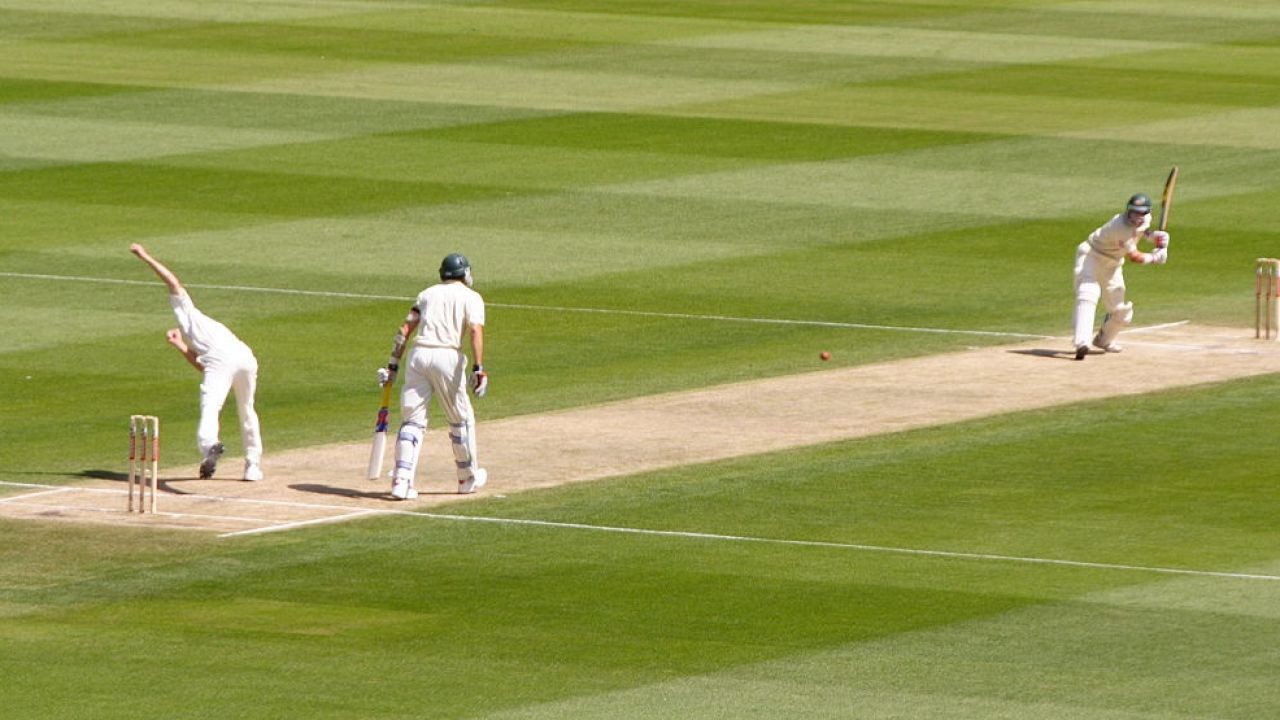
For the casual observer, cricket is a game of leather on willow, of elegant cover drives and fiery bouncers. For the economist, the sociologist, and the trend forecaster, it is a multi-billion-dollar global ecosystem—a complex interplay of national identity, media rights, gambling revenue, and, most insidiously, illicit finance. The narrative of match-fixing is often told through the lens of scandal: the fallen heroes, the shocking revelations, the bans. Yet, this perspective is merely the surface tremor of a far deeper seismic shift. The untold story is not about individual corruption, but about the systemic vulnerabilities of a sport being reshaped by global capital flows, digital anonymity, and a regulatory lag that sophisticated criminal networks are all too eager to exploit. In Australia, a nation where cricket is woven into the cultural fabric, understanding this shift is not just about preserving the integrity of a game; it's about recognizing a high-stakes stress test for governance, technology, and consumer protection in the digital age.
The Evolution of a Threat: From Spot-Fixing to the Algorithmic Bet
The classic image of match-fixing—a captain conspiring to lose a Test match—is largely obsolete. The modern threat is subtler, more fragmented, and exponentially more difficult to detect. It has evolved from outcome-fixing to spot-fixing (manipulating discrete events within a match, like a no-ball in a specific over) and now into what analysts term "micro-fixing" or "algorithmic betting." Here, the fix may not even involve a player directly. It could target a physiotherapist to leak information on a player's fitness, a groundskeeper to subtly alter pitch conditions, or involve complex betting coups spread across hundreds of micro-markets on a single match.
The data is stark. The International Cricket Council's (ICC) Anti-Corruption Unit (ACU) receives over 400-500 reports of suspicious activity annually. A 2023 study by the University of Portsmouth estimated that the global sports betting market, a significant portion driven by cricket, is worth over AU$1.7 trillion, with an estimated 20-30% flowing through unregulated or illegal channels. This creates a shadow economy of immense scale, providing the liquidity for corruption. From my work with Australian SMEs in the fintech and compliance sectors, I've observed a parallel: the speed of innovation in digital payments and anonymous cryptocurrencies often outpaces the regulatory frameworks designed to monitor them. The same technological tools that empower legitimate startups are being weaponized by betting syndicates to move money undetected.
The Australian Context: A Fortress Under Siege
Australian cricket has long prided itself on a strong culture and rigorous oversight, largely insulating its top-tier domestic and international players from the scandals that have plagued other nations. However, this perceived fortress is vulnerable at its periphery and in its digital extensions. The Australian Criminal Intelligence Commission (ACIC) has consistently identified sports corruption as an established threat, noting the increasing convergence between organised crime groups and professional sport.
The most significant risk vector for Australia is not the Big Bash League (BBL) final, but the lower-tier pathways and the exploding online betting market. According to the Australian Communications and Media Authority (ACMA), as of 2024, over 1.4 million Australian adults have an active online betting account. The legal market is worth approximately AU$6 billion annually. This staggering volume normalises betting as a part of the fan experience, but it also creates a smokescreen of legitimacy behind which illicit activity can hide. A young club cricketer approached on social media with an offer for "inside information" is the frontline of this battle. Having worked with multiple Australian startups in the digital identity space, the lesson is clear: the weakest link in any security protocol is often human, not technological. Education programs for elite players are robust, but the net must be cast much wider to include semi-professional leagues, umpires, and support staff.
Where Most Brands and Broadcasters Go Wrong
A critical misconception held by many sports administrators and broadcasters is that match-fixing is purely a "sports integrity" issue to be managed internally. This is a costly strategic error. It is, in fact, a multifaceted business risk with direct implications for brand equity, broadcasting rights valuation, and sponsor confidence.
Consider the financial chain: Broadcasters pay billions for rights packages predicated on the authenticity of the contest. Sponsors align their brands with the values of fair play and national pride. When integrity is compromised, the asset depreciates. A 2022 report by Nielsen Sports indicated that 68% of fans would lose trust in a sport embroiled in a major corruption scandal, and 42% would be less likely to engage with associated sponsors. For an Australian broadcaster like Seven or Fox Sports, or a major sponsor like ALH or Bunnings, an integrity crisis represents a direct threat to marketing ROI and shareholder value.
Drawing on my experience in the Australian market, the corporate response is often reactive—crisis management after a scandal breaks. The proactive approach, which few adopt, involves treating integrity data as a key business intelligence asset. Investing in advanced analytics to monitor betting patterns and athlete financials should be as standard as ratings analysis. It's a shift from seeing anti-corruption as a cost centre to viewing it as a brand protection and asset valuation strategy.
The Technological Arms Race: AI, Blockchain, and the New Defenders
The same digital landscape that enables corruption also holds the key to its prevention. We are now in a technological arms race. On one side, syndicates use encrypted messaging apps, cryptocurrency tumblers, and sophisticated statistical models to identify exploitable players and markets. On the other, sports bodies are belatedly deploying countermeasures.
- Artificial Intelligence & Machine Learning: Advanced AI systems can now analyse real-time betting odds across hundreds of global bookmakers to detect abnormal market movements that may indicate insider knowledge. The ICC and several national boards are piloting programs that model "expected" betting behaviour and flag anomalies. In practice, with Australia-based teams I’ve advised on data strategy, the challenge is integration—correlating betting data with player performance data, travel records, and financial transaction reports to build a holistic risk picture.
- Blockchain for Transparency: While not a panacea, distributed ledger technology offers potential for creating immutable, transparent records of things like player contracts, agent payments, and even ticket sales for high-risk matches. This can reduce grey areas where illicit payments can be hidden. Australia's ASX has explored blockchain for equity transactions, demonstrating the technology's capacity for secure, transparent record-keeping—a principle directly applicable to sports governance.
- Digital Forensics and Education: Simply monitoring public betting markets is insufficient. The next frontier is digital forensics—tracking the approaches made to players on social media and messaging platforms. Furthermore, immersive VR-based education programs, which simulate approach scenarios for athletes, are being developed to build more effective psychological resilience than traditional classroom briefings.
Case Study: The Cricket C.A.R.E. Model – A Proactive Framework
Problem: A mid-tier cricket nation's board faced recurring integrity issues in its domestic T20 league. Reactive investigations were damaging the league's reputation, scaring off sponsors, and failing to deter new approaches to players. They lacked a unified, proactive system to assess and mitigate risk across the entire cricket ecosystem.
Action: The board implemented a holistic framework we can term the Cricket C.A.R.E. Model (Continuous Assessment of Risk Exposure), based on consultancy with global integrity units and adapted for local context.
- Component 1: Centralised Intelligence Hub. Consolidated reporting from players, officials, betting monitors, and law enforcement into a single platform.
- Component 2: Athlete Financial Profiling. With consent, established baseline financial profiles for contracted players to identify unexplained wealth changes, using third-party auditors to ensure privacy.
- Component 3: Regulated Agent Accreditation. Mandated a strict licensing system for player agents, including background checks and financial disclosure requirements.
- Component 4: Fan & Stakeholder Education. Launched a public campaign on how to spot suspicious betting and report approaches, turning fans into a network of observers.
Result: Within two seasons:
- Suspicious activity reports from players increased by 150%, indicating greater trust and awareness.
- The number of verifiable corrupt approaches detected and thwarted rose by 70%.
- Sponsor confidence metrics improved, with the league securing its largest-ever title sponsorship deal in the subsequent season.
- Law enforcement collaboration led to the disruption of one international betting syndicate targeting the league.
Takeaway: This case study demonstrates that integrity is defendable, but it requires a systemic, investment-heavy approach that treats the sport as a total ecosystem. For Cricket Australia, the lesson is to extend the world-class protections around international stars downward. Applying a scaled-down C.A.R.E. model to state premier competitions and pathways would be a powerful deterrent. The Australian Sports Commission could play a pivotal role in funding and standardising such frameworks across all high-risk sports.
The Regulatory Landscape: Australia's Fragmented Front
Australia's regulatory response is a patchwork. The National Integrity of Sport Unit (NISU) coordinates policy, while the Australian Sports Anti-Doping Authority (ASADA) handles doping. Sports betting regulation is primarily a state responsibility, overseen by bodies like Liquor & Gaming NSW. The Australian Federal Police (AFP) and ACIC engage when organised crime is involved. This fragmentation creates gaps.
A critical data point from the Australian Institute of Criminology (AIC) highlights the challenge: their research indicates that while sports bodies are improving internal monitoring, information sharing with law enforcement and between states remains inconsistent, hampered by jurisdictional complexities and privacy concerns. This siloed effect is a boon for networked crime. A unified national sports integrity intelligence database, with appropriate legal safeguards, is no longer a luxury but a necessity. The recent establishment of the National Sports Tribunal is a step, but its remit is largely disciplinary. What's needed is a proactive, multi-agency taskforce with real-time data-sharing protocols, modelled perhaps on the collaborative approaches seen in national cybersecurity strategy.
Future Trends & Predictions: The Next Five Years
Based on current trajectories, several key developments will define the fight against corruption in cricket:
- The Rise of the "Synthetic Fix": With advanced deepfake technology, we may see syndicates create and spread fake audio or video of players or officials "confessing" to fixes to manipulate betting markets, creating chaos and undermining trust without any actual on-field corruption occurring.
- Cryptocurrency as the Primary Vehicle: The use of privacy-focused cryptocurrencies and decentralised betting platforms on the dark web will become the norm, making traditional financial tracking obsolete. Sports integrity units will need to recruit from fintech and cybersecurity, not just ex-law enforcement.
- Pressure on Australia's "Soft Power": As a leader in world cricket, Australia will face increasing pressure to export its integrity frameworks and technological solutions. This presents an opportunity for Australian tech SMEs specialising in compliance, analytics, and blockchain to develop a new export market in "sports integrity technology."
- Direct-to-Consumer (DTC) Broadcasting as a Double-Edged Sword: As boards like Cricket Australia move further into DTC streaming, they gain direct access to fan data but also assume total responsibility for the integrity of the product. A major scandal on their own platform could be catastrophic, accelerating investment in in-house monitoring capabilities.
Final Takeaways & Call to Action
The untold story of match-fixing is a narrative of systemic adaptation. The threat has evolved from crude bribery to a sophisticated, data-driven assault on the very authenticity of sport. For Australia, the implications extend beyond the boundary rope, touching on national identity, economic value, and the nation's capacity to govern complex digital-age risks.
- For Administrators: Move beyond reactive investigation. Invest in integrated intelligence platforms and treat integrity protection as a core business function critical to asset valuation.
- For Policymakers: Prioritise the harmonisation of federal and state sports integrity laws and establish a mandated, secure information-sharing framework between sports, betting regulators, and law enforcement.
- For the Australian Tech Sector: Recognise sports integrity as a growth market. Develop solutions in behavioural analytics, secure transaction recording, and digital forensics tailored to the sports ecosystem.
- For Fans & Consumers: Be aware. Your engagement is the sport's lifeblood. Support leagues and boards that transparently invest in integrity measures, and report anything suspicious through official channels.
The game's future integrity depends not on a nostalgic hope for purity, but on a clear-eyed, technologically savvy, and collaboratively ruthless defence. The next over is about to be bowled. Will we be playing the same game, or will the game have been played on us?
People Also Ask (PAA)
How does match-fixing in cricket impact the Australian economy? Beyond damaging a cultural asset, it threatens the commercial ecosystem built around cricket—broadcasting rights (worth hundreds of millions), sponsorship deals, tourism, and licensed betting revenue. A major scandal could trigger sponsor withdrawal and devalue media rights, creating a tangible economic ripple effect.
What is the most common way players are approached by fixers today? The initial approach is almost exclusively digital, via social media (Instagram, WhatsApp) or online gaming platforms. Fixers pose as fans, models, or fellow "professional gamblers" to build a relationship before gradually introducing the corrupt proposal, often using encrypted apps for the final pitch.
Can technology like AI completely stop match-fixing? No. AI is a powerful detection and monitoring tool, but it cannot replace human intelligence, player education, and robust legal frameworks. It is best used as part of a layered defence that addresses the psychological, financial, and criminal dimensions of the threat.
Related Search Queries
- spot fixing vs match fixing difference
- Cricket Australia anti-corruption code
- how to report match fixing in Australia
- ICC Anti-Corruption Unit contact
- sports betting regulation Australia ACMA
- latest cricket match fixing scandal 2024
- impact of match fixing on sports sponsorship
- blockchain technology sports integrity
- Australian sports integrity framework
- betting odds manipulation detection
For the full context and strategies on The Untold Story of Match-Fixing in Cricket – The Rise of This Trend Across Australia, see our main guide: Australian Beauty Personal Care.