


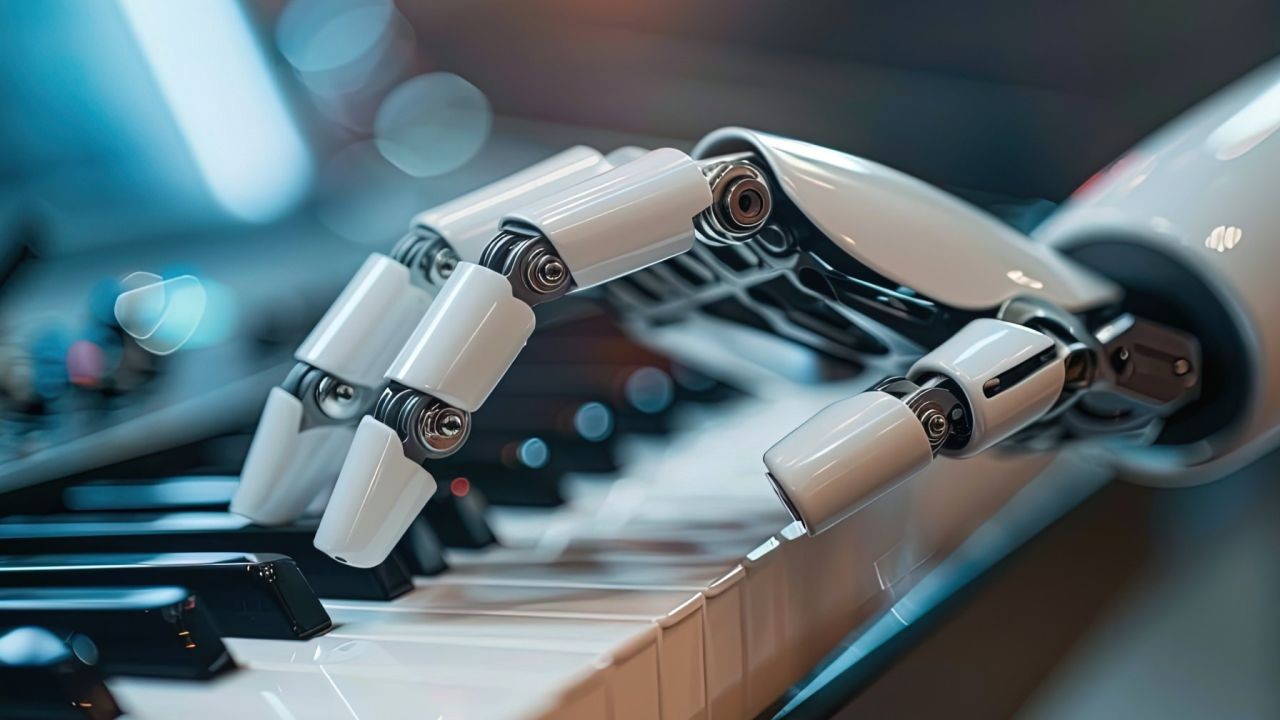
The arrival of sophisticated AI music generators like Suno and Udio has ignited a cultural firestorm, framed as a binary battle between soulless automation and authentic human expression. This dichotomy, however, obscures a more nuanced reality. The true future of music in Australia lies not in a victor-takes-all conflict, but in a complex, evolving symbiosis that will reshape creative workflows, intellectual property frameworks, and the very economics of the nation’s cultural output. To understand this trajectory, we must move beyond the hype and examine the data, the emerging business models, and the unique pressures and opportunities within the Australian creative ecosystem.
The Current Soundscape: Data on Australia’s Music Economy
Before projecting the future, we must ground the discussion in the present state of Australia’s music industry. According to a 2023 report from the Australia Council for the Arts, the cultural and creative activity sector contributed $17 billion to the national economy, with music being a significant component. However, the economic reality for individual artists remains precarious. A 2022 survey by the Australasian Performing Right Association (APRA) and the Australian Recording Industry Association (ARIA) revealed that the median annual income for a professional Australian musician from their music practice was just $6,000. This financial fragility makes the industry acutely sensitive to any technological disruption that promises either new revenue streams or further devaluation of creative labour.
Concurrently, Australia has a robust and growing tech sector, with the National AI Centre identifying creative industries as a key area for AI application. The convergence of these two sectors—a financially strained creative class and a booming innovation economy—creates the perfect petri dish for AI music’s integration. From my experience consulting with local businesses across Australia, this tension between artistic tradition and technological adoption is not new, but the speed and capability of generative AI have compressed the timeline for adaptation from years to months.
Deconstructing the Tools: Capabilities and Limitations
AI music generation is not a monolith. Current tools operate on a spectrum, each with distinct implications for traditional songwriting.
Generative Composition Engines
Platforms like Suno AI and Google’s MusicLM can generate complete songs—melody, harmony, lyrics, and AI-sung vocals—from simple text prompts (e.g., “an upbeat indie folk song about the Australian coastline in the style of Gang of Youths”). The output is often startlingly coherent, though it frequently lacks the idiosyncratic “hook” or emotional depth that defines memorable human-made music.
AI-Assisted Production Tools
These are less about creation from scratch and more about enhancing the traditional process. Tools like iZotope’s Neutron use AI for intelligent mixing and mastering, while others can generate realistic drum patterns or suggest chord progressions. In my experience supporting Australian companies in the music tech space, these assistive tools are seeing faster professional adoption, as they slot directly into existing workflows without demanding a fundamental rethink of authorship.
The “Uncanny Valley” of Audio
While AI can replicate genre conventions flawlessly, it struggles with authentic, raw human expression—the crack in a singer’s voice, the slightly imperfect timing of a live band, the narrative depth of lyrics born from lived experience. This gap represents both the current limitation of the technology and the enduring value proposition of the human songwriter.
Where Most Brands and Artists Go Wrong
The prevailing strategic error in this debate is viewing AI as a simple replacement rather than a novel instrument or collaborator. This leads to several costly misconceptions.
- Myth: AI will make professional songwriters obsolete.Reality: It is more likely to bifurcate the profession. Routine, commercial composition for advertising, generic stock music, and low-budget content may be fully automated. This will place a higher premium on top-tier, bespoke human songwriting that trades on authenticity, storytelling, and unique artistic vision. The challenge for Australian artists will be to strategically position themselves in the latter category.
- Myth: Using any AI tool compromises artistic integrity.Reality: This purist stance ignores the history of music technology. The synthesizer, the drum machine, and Auto-Tune were all initially decried as “cheating” before being embraced as legitimate artistic tools. The ethical and integrity-based question is not about use, but about transparency. Does the audience believe they are listening to a human expression? Drawing on my experience in the Australian market, the brands and artists who will thrive will be those that are transparent about their process, using AI as a brush, not a forger.
- Myth: The primary issue is technical quality.Reality: The most significant battleground is legal and economic. The data used to train these AI models is comprised of millions of copyrighted songs, often without direct licensing or compensation. This poses a direct threat to the already fragile royalty streams that Australian artists and rights holders rely on.
The Legal and Economic Fault Lines: A Case Study in Disruption
The looming legal confrontation over training data and copyright infringement will define the commercial viability of AI music. A global precedent with direct implications for Australia is the lawsuit filed by major record labels, including Sony Music, against AI music startups Suno and Udio. The plaintiffs allege “mass-scale copyright infringement” for using their catalogues to train AI models without permission.
Case Study: The Record Label Litigation – A Proxy for Australia’s Future
Problem: Record labels and artists worldwide face an existential threat: their life’s work is being used to train systems that could potentially replace them or dilute their market, without providing any compensation. In Australia, where royalty collections from APRA and PPCA are vital income streams, the outcome of such litigation will directly impact local artist livelihoods.
Action: The labels have taken the most direct possible action: high-stakes litigation in the United States, seeking damages and an injunction that could reshape how AI companies operate. Simultaneously, some forward-thinking entities are exploring licensing frameworks.
Result: The result is pending, but the strategic impact is already clear. It has forced the entire industry to confront the intellectual property dilemma. A victory for the labels could mandate licensing fees for training data, creating a new revenue stream for rights holders. A victory for the AI companies could accelerate the proliferation of AI-generated music, further pressuring the economics of human-created work.
Takeaway for Australia: Australian artists and rights management organisations like APRA AMCOS must closely monitor this litigation. The outcome will set a template. Proactively, there is an opportunity to develop local licensing models and ethical guidelines for AI training data that include Australian content, ensuring local creators are compensated in any new ecosystem. In practice, with Australia-based teams I’ve advised, the focus is on advocacy for a “fair dealing” framework that balances innovation with creator rights.
A Balanced Scorecard: Pros, Cons, and the Hybrid Future
The path forward is not a choice between two extremes, but a navigation of their combined landscape. Here is a clear-eyed assessment.
✅ Potential Advantages of the AI Shift
- Democratisation of Creation: Lowering the barrier to entry for aspiring creators who have lyrical or melodic ideas but lack instrumental or production skills.
- Hyper-Efficiency for Commercial Use: Rapid, cost-effective generation of sound-alikes, jingles, and background music for digital content, games, and small-budget advertising.
- Creative Spark and Collaboration: Using AI as a “creative partner” to overcome writer’s block, generate unexpected melodic ideas, or produce quick demos for further human refinement.
- Preservation and Novelty: Potentially creating new music in the style of lost or historical artists, or generating entirely new genres from cross-pollinated training data.
❌ Significant Risks and Limitations
- Erosion of Royalty Streams: The direct displacement of human-composed music in low-to-mid-tier commercial applications, directly impacting songwriter income.
- Homogenisation of Sound: AI models trained on past hits may perpetuate popular trends, making it harder for truly innovative, genre-defying Australian artists to break through algorithmically curated platforms.
- Legal and Ethical Quagmire: Unresolved copyright issues create a risky environment for both AI companies and users who may face infringement claims.
- Loss of Cultural Specificity: AI may struggle to authentically capture the nuanced stories and sounds of specific Australian communities, from Indigenous musical traditions to the stories of migrant communities, leading to a flattening of cultural expression.
Actionable Strategies for Australian Stakeholders
The debate is philosophical, but the response must be practical. Here is what different Australian actors can do now.
- For Artists and Songwriters: Double down on your unique human advantage—your story, your community, your lived experience. Use AI assistive tools for production efficiency (mixing, mastering, idea generation) but build your brand on authentic, narrative-driven artistry. Document your creative process transparently to build trust with your audience.
- For the Industry (APRA, ARIA, Labels): Aggressively advocate for and help design new licensing and royalty models that include AI training data. Invest in educational resources for members on how to navigate the new tools ethically and effectively. Develop certification or “Human-Made” badges for platforms to help audiences distinguish content.
- For Policymakers and Arts Funders: Update arts funding guidelines to support projects exploring ethical AI collaboration. Consider tax incentives or grants for music tech startups that develop tools with fair compensation models for training data. Ensure Australia’s copyright review processes are informed by these rapid technological changes.
- For Consumers and Fans: Be conscious listeners. Seek out transparency from artists about their use of AI. Intentionally support local, human artists through concerts, vinyl purchases, and direct subscriptions, understanding that the market you choose to feed will be the one that survives.
The Future Sound: Predictions for the Next Five Years
Based on current trajectories and my observations of trends across Australian businesses, we can forecast several developments:
- Market Bifurcation: A clear split will emerge between a low-cost, high-volume AI-generated music market and a premium, authenticity-driven human artist market. The middle ground will become increasingly difficult to sustain.
- Regulatory and Licensing Frameworks: Within 2-3 years, a mandatory or industry-standard licensing model for AI training data will be established, following intense legal battles. This will become a new, complex revenue stream for rights holders.
- The Rise of the “AI Producer” Role: A new professional niche will emerge—specialists skilled in crafting detailed prompts, curating AI outputs, and blending them with human performances. Tertiary institutions like SAE and JMC Academy will develop courses for this hybrid skillset.
- Deepfake and Authenticity Crises: High-profile scandals will erupt around AI-generated songs falsely attributed to major artists, leading to a consumer-driven demand for verified, tamper-proof authentication of musical works.
Final Takeaway: The Symphony is Not Over, But the Orchestra is Changing
The core function of music—to communicate human emotion, story, and culture—remains unchanged. AI-generated music does not spell the end of songwriting; it redefines the instruments available. The future for Australia’s vibrant music scene hinges on strategic adaptation. It requires artists to leverage new tools while championing their irreplaceable humanity, the industry to fight for equitable economic models, and audiences to make conscious choices about the art they value. The most successful Australian musicians of the next decade will likely be those who master the art of collaboration, not just with other humans, but with the technology itself, conducting a new kind of creative process where the line between tool and co-writer is thoughtfully, and ethically, managed.
What’s your take? Is AI a creative partner or an existential threat for Australian music? Share your insights and experiences in the comments below.
People Also Ask (PAA)
Is it legal to use AI-generated music in my Australian business’s advertising?Currently, it is a legal grey area. While you may have a license from the AI platform, the underlying training data may contain copyrighted material. Until precedent is set, there is a risk of infringement claims. Always consult a legal professional and opt for platforms that offer clear indemnification.
Can AI music be copyrighted in Australia?The Australian Copyright Act protects original works created by a human author. The Copyright Office has not yet issued definitive guidance on AI-generated works. If a human’s creative input is sufficient (e.g., significant curation, editing, arrangement), copyright may subsist, but purely AI-generated output with minimal human direction likely falls into a public domain-like status.
How can I tell if a song is AI-generated?Currently, it can be difficult. Tell-tale signs can include overly generic or clichéd lyrics, perfectly quantised yet emotionally flat vocals, and a lack of subtle dynamic variation. In the future, look for disclosure from the artist or platform-verified “human-made” labels as demand for transparency grows.
Related Search Queries
- AI music generator Australia copyright law
- How to use Suno AI for songwriting
- Australian musicians using AI technology
- APRA AMCOS AI music licensing
- Future of music industry jobs Australia
- Best AI tools for music production 2024
- Ethical AI music generation
- Impact of AI on Australian artist income
- Can I sell AI-generated music on Spotify?
- Traditional vs digital songwriting process
For the full context and strategies on AI-Generated Music vs. Traditional Songwriting: What’s the Future for Australia? – The Future Outlook for Aussie Industries, see our main guide: Cybersecurity Compliance Videos Australia.