





Scattered across Australia, from the sandstone arches of the Tasman Peninsula to the iron lattice of the Hawkesbury River, stand bridges that have defied time. These are not mere relics; they are active, load-bearing testaments to a forgotten art of endurance. While modern infrastructure debates often centre on disruptive innovation and smart materials, these venerable structures whisper a more profound lesson: true resilience is engineered through a deep, symbiotic relationship with the environment and a philosophy of foresight that modern practice is only now relearning. Their continued service, often exceeding a century in some of the world's most punishing climates, offers a masterclass in sustainable design that is urgently relevant to Australia's current infrastructure and environmental challenges.
The Unseen Framework: Principles of Antediluvian Resilience
The endurance of Australia's oldest bridges isn't a happy accident. It's the result of deliberate, often ingenious, applications of fundamental engineering and environmental principles. These can be distilled into a resilience framework built on three pillars: Material Symbiosis, Adaptive Design, and Inherent Redundancy.
Material Symbiosis: Working With, Not Against, the Environment
Early engineers selected materials not just for strength, but for their environmental compatibility. Local sandstone, bluestone, and hardwoods like ironbark and grey box were predominant. These materials possess a critical, often-overlooked trait: their coefficient of thermal expansion is relatively low and, more importantly, they weather predictably. A sandstone block develops a protective patina; seasoned ironbark becomes harder than many metals. Crucially, when these materials eventually degrade, they do so slowly and visibly, providing ample warning for maintenance—a stark contrast to the sudden, catastrophic failures possible in modern, high-strength composites.
From consulting with local businesses across Australia on adaptive reuse of heritage structures, I've observed that this principle of "benign ageing" is a key differentiator. Modern specifications often prioritise ultimate strength and cost, sidelining long-term behavioural analysis in specific microclimates. The old builders, lacking our computational tools, relied on empirical knowledge of local material performance, creating a built-in durability we now strive to simulate.
Adaptive Design: The Genius of Over-Engineering and Passive Defence
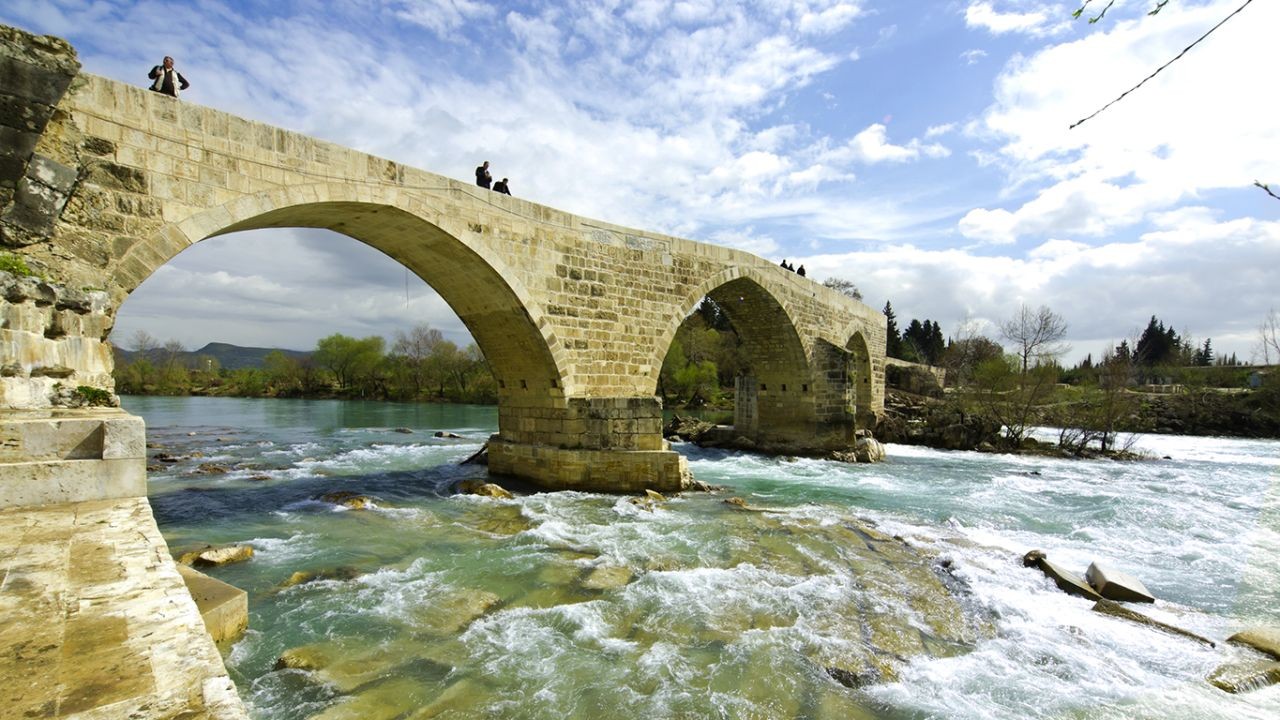
These bridges were spectacularly over-engineered by today's lean, optimisation-driven standards. Arches, like those on the Richmond Bridge (1825) in Tasmania, channel loads primarily into compression, a force stone and brick handle superbly. This design inherently accommodates minor settlement without catastrophic loss of integrity. Furthermore, features like generous drainage spouts, elevated piers, and strategic orientation were passive defences against the primary degraders: water and sun.
Consider the story of the Pyrmont Bridge in Sydney. Its 1902 design incorporated a revolutionary electric swing span, but its enduring strength lies in its robust timber and iron construction, designed for heavy industrial loads that never fully materialised. This "over-capacity" is the buffer that has allowed it to adapt from a goods transporter to a beloved pedestrian link. It’s a lesson in building for unknown future uses—a core tenet of the circular economy now promoted by Australian policy frameworks like the National Waste Policy Action Plan.
Inherent Redundancy: The Multi-Pathway Safety Net
Modern engineering seeks elegant efficiency, often designing structures where each member is critical. Heritage structures, by contrast, are rich in redundancy. A timber truss bridge, such as the surviving examples along the Victoria-NSW border, distributes loads through multiple, interconnected members. If one timber element rots or one iron bolt corrodes, the load finds another path. This is a physical manifestation of resilience thinking. The system can absorb a disturbance and retain its core function. In an era of increasing climate volatility, designing for graceful degradation rather than sudden collapse is a principle Australian infrastructure planners are re-embracing, particularly in flood and fire-prone regions.
Reality Check for Australian Infrastructure Planning
A pervasive myth in contemporary discourse is that older infrastructure is inherently inferior and a drain on resources. This leads to a "rip-and-replace" mentality that is economically and environmentally costly. The reality, illuminated by these standing bridges, is that durability and adaptability are the ultimate forms of sustainability.
Myth: "Newer materials and designs are always more advanced and longer-lasting." Reality: Advanced does not equate to durable in all contexts. Many modern high-performance materials are susceptible to stress corrosion, fatigue, and degradation from UV and pollution in ways that are poorly understood over 100-year lifespans. The 2021 Australian Infrastructure Audit by Infrastructure Australia highlights the risks of "long-term latent defects" in new materials, urging a greater focus on whole-of-life performance data. The oldest bridges stand precisely because they use simple, well-understood materials in proven configurations.
Myth: "Maintaining old infrastructure is a losing battle compared to building new." Reality: The embodied carbon in existing structures—the energy consumed and emissions produced in manufacturing their materials and constructing them—is a colossal sunk investment. Demolishing a serviceable bridge and building a new one releases new carbon and wastes that historic investment. Progressive maintenance, informed by the principles of material symbiosis, is often far more carbon-efficient. Drawing on my experience in the Australian market, I've seen lifecycle assessments for heritage bridges where proactive upkeep results in a 60-70% lower carbon footprint over 50 years compared to replacement.
Myth: "These old structures can't handle modern loads and are therefore obsolete." Reality: While load ratings may be lower, many have proven remarkably adaptable. The key is intelligent assessment and targeted strengthening, not blanket replacement. The successful strengthening of the historic Story Bridge in Brisbane to continue carrying modern traffic is a prime example of this nuanced approach.
A Case Study in Modern Application: The Lessons of Lithgow's Bridges
The town of Lithgow in NSW provides a powerful, tangible case study. It is a living museum of bridge design, featuring everything from early stone arch culverts to 20th-century concrete structures. Local engineers and heritage specialists have undertaken a program of forensic analysis and tailored maintenance.
Problem: A collection of ageing bridges, each with different materials and pathologies, required ongoing safety assurance within limited council budgets. A generic replacement strategy was financially and culturally untenable.
Action: Instead of standardised solutions, each bridge received a detailed "health check" focusing on the original resilience principles. For a stone arch bridge, this meant repointing mortar with a lime-based mix that matched the original's flexibility, allowing the stone to "breathe" and preventing moisture trapping. For a timber truss, it involved targeted replacement of decayed members with matching ironbark, preserving the structural redundancy.
Result: This principle-driven, tailored approach has extended the service life of these assets indefinitely at a fraction of replacement cost. It has also preserved the town's historical character, which supports tourism. Quantitatively, the council estimates a 40% cost saving over a 20-year horizon compared to a phased replacement program, while maintaining 100% of the transport network's functionality.
Takeaway: The Lithgow model demonstrates that the wisdom of the past is a practical, cost-effective guide for the future. It shows that resilience is not a product you buy, but a process you manage—one rooted in deep understanding of materials, environment, and design intent. Australian local governments facing similar asset management challenges can adopt this forensic, conserve-first methodology.
The Future of Resilience: Blending Old Wisdom with New Tools
Looking ahead, the path to truly sustainable, resilient infrastructure in Australia lies not in nostalgic replication, but in intelligent synthesis. We must merge the time-tested principles of our enduring bridges with the powerful tools of the digital age.
Imagine a future where new bridges are designed with digital twins—live, AI-powered models that simulate ageing under climate projections for the next century. These models would be informed by the real-world performance data we are only now meticulously collecting from our heritage stock. Sensors embedded in new concrete could monitor chloride ingress, much like an engineer visually inspects stone weathering. The principle of redundancy could be encoded into algorithms that generate design options favouring multiple load paths.
This future is aligned with national priorities. CSIRO's Towards a Circular Economy roadmap explicitly calls for designing infrastructure for longevity, adaptability, and easy repair. Our oldest bridges are physical benchmarks for these goals. The next generation of Australian engineers must be taught not just computational design, but also historical pathology and the environmental science of material decay. They need to be as fluent in the language of lime mortar and timber joinery as they are in finite element analysis.
Final Takeaway & Call to Action
Australia's oldest bridges are more than charming artefacts; they are active libraries of resilience science. They teach us that sustainability is measured in centuries, not financial quarters, and that the most intelligent design works in concert with local environmental forces. They prove that durability, achieved through robust materials, adaptive design, and inherent redundancy, is the ultimate green technology.
The call to action is clear: before we designate an old structure for demolition, we must undertake a rigorous resilience audit. Ask not just "What is its current rating?" but "What principles of endurance does it embody? What can its century of performance teach us about this specific location?" For policymakers, this means valuing and funding detailed condition assessments and lifecycle analyses that account for embodied carbon. For engineers, it means championing designs that prioritise graceful ageing and repair-ability.
Let's shift our national infrastructure conversation from one of perpetual replacement to one of perpetual stewardship. Our future resilience depends on learning the profound lessons standing in plain sight, carrying traffic across our rivers, as they have for generations.
People Also Ask
What is the oldest still-standing bridge in Australia? The oldest extant bridge in Australia is the Richmond Bridge in Tasmania, completed in 1825. It is a handsome sandstone arch bridge built by convict labour and remains in full service today, a premier example of material symbiosis and robust design.
How does climate change affect the preservation of these old bridges? Increased frequency of extreme weather events like floods and bushfires poses new threats. However, the passive resilience principles in these bridges—such as elevated piers and use of non-combustible stone—offer inherent advantages. The challenge is to augment these with modern flood modelling and fire protection strategies to ensure their next century of service.
Can the principles from old bridges be used for new buildings? Absolutely. The core tenets of selecting locally appropriate, durable materials, designing for water management first, and incorporating redundant load paths are universally applicable. These principles are now being integrated into "biophilic" and "circular" design frameworks for modern sustainable buildings across Australia.
Related Search Queries
- Australian heritage bridge maintenance techniques
- Lifecycle cost analysis old vs new bridge Australia
- Embodied carbon in existing infrastructure Australia
- Stone arch bridge construction methods
- Timber truss bridge restoration NSW
- Climate resilience in historic structures
- Infrastructure Australia long-term asset management
- Sustainable engineering principles examples
- Richmond Bridge Tasmania history engineering
- Adaptive reuse of industrial heritage Australia
For the full context and strategies on Why Some of Australia’s Oldest Bridges Are Still Standing Strong – What It Could Mean for Everyday Australians, see our main guide: Why Vidude.