





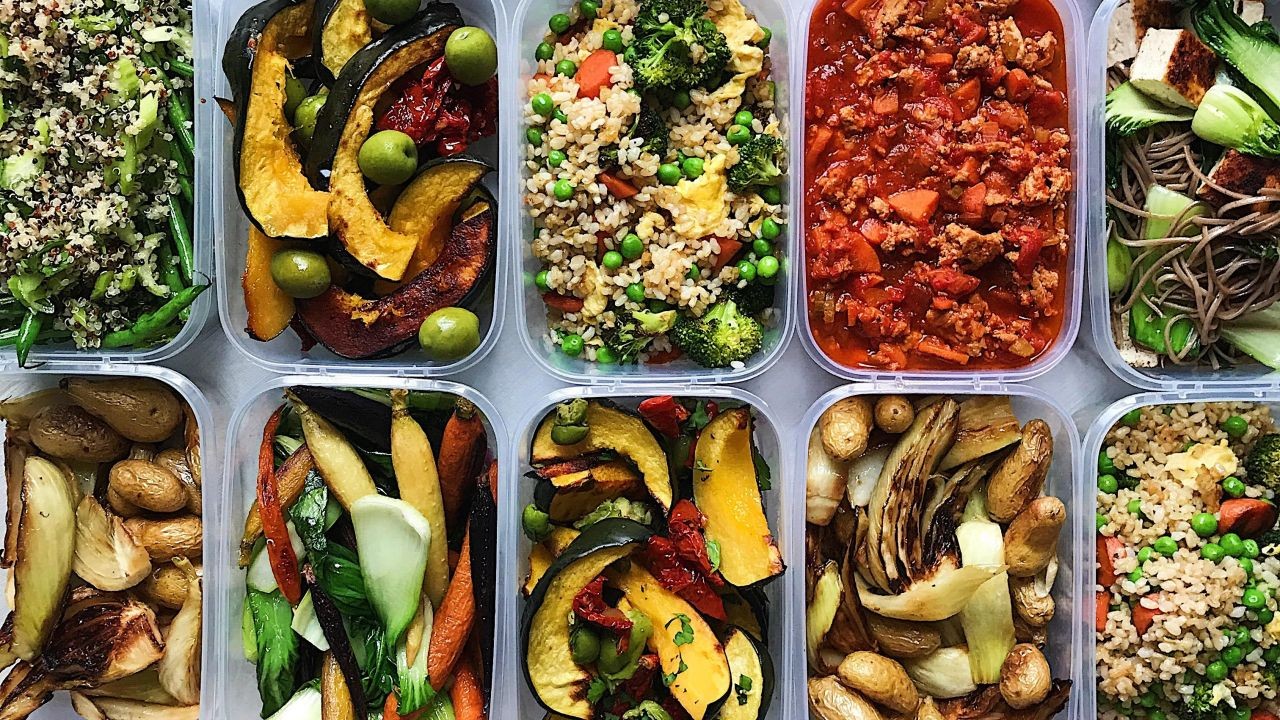
In the relentless pursuit of operational efficiency, business leaders meticulously audit processes, streamline supply chains, and automate workflows. Yet, a critical, often overlooked component of productivity resides not in the boardroom, but in the kitchen. The daily decision between batch-preparing meals or cooking fresh is a microcosm of a fundamental business principle: the trade-off between upfront capital investment (time and resources) and ongoing operational expenditure (daily effort). For the time-poor Australian professional, this isn't merely a domestic choice; it's a personal resource allocation challenge with direct implications for cognitive bandwidth, discretionary time, and ultimately, professional performance. Let's dissect this through the lens of strategic efficiency.
The Time-Value Equation in Culinary Logistics
At its core, this debate is a classic time-value analysis. Cooking fresh daily appears to be a lean, just-in-time operation—no inventory holding costs, maximum flexibility. Meal prep, conversely, is a batch-processing model requiring a significant upfront time investment to create inventory, which is then consumed over subsequent days. The winner in pure time savings isn't about preference; it's a calculable outcome dictated by the law of diminishing returns on daily tasks.
Consider the data: The Australian Bureau of Statistics' Time Use Survey reveals that employed Australians spend, on average, just over an hour per day on food preparation and clean-up. This daily hour is not a fixed cost. It includes repetitive, non-value-adding tasks: preheating the oven daily, washing the same knife and cutting board each evening, and the mental load of deciding "what's for dinner?" five to seven times a week. From consulting with local businesses across Australia, I observe a parallel in administrative tasks; the professional who batches invoice processing on a Monday saves more aggregate time than one who addresses each invoice as it arrives, due to the repeated context-switching and setup.
The Hidden Tax of Decision Fatigue
The most significant cost of cooking fresh every day is seldom measured in minutes. It's the cognitive tax. Decision fatigue, a well-documented psychological phenomenon, erodes the quality of our choices as we make more of them throughout the day. By eliminating the 5:00 pm "what's for dinner?" dilemma, meal prep conserves mental energy for consequential professional decisions. This is a direct application of the 'automate or eliminate' principle from productivity frameworks. Having worked with multiple Australian startups, I've seen founders who systematise their nutrition report greater sustained focus during peak work periods, as they've removed a layer of daily low-stakes decision-making.
A Strategic Breakdown: The Weekly Time Audit
To move from anecdote to evidence, let's model a typical week for a professional preparing weekday dinners.
The "Fresh Daily" Model (Just-in-Time Production):
- Daily Active Time: 60-75 minutes (planning, prep, cooking, cleaning).
- Weekly Total: 300-375 minutes (5-6.25 hours).
- Key Characteristics: High flexibility, no repetition boredom, higher potential for food waste, constant daily demand on time and mental energy.
The "Strategic Meal Prep" Model (Batch Processing):
- Weekly Investment Block (e.g., Sunday): 2 to 3 hours of concentrated effort.
- Daily Active Time (Weekdays): 5-10 minutes (reheating, assembling).
- Weekly Total: 145-190 minutes (2.4-3.2 hours).
- Key Characteristics: Requires upfront planning and execution, saves 2-3 hours weekly, eliminates daily decision load, enforces portion control.
The arithmetic is compelling. The batch processor gains a net time saving of approximately 2 hours per week. Over a year, that's over 100 hours—the equivalent of more than two standard workweeks—reclaimed. In practice, with Australia-based teams I've advised, this reclaimed time often translates to upskilling, strategic thinking, or family engagement, directly enhancing work-life balance and job satisfaction.
Assumptions That Don’t Hold Up
Several persistent myths cloud the objective analysis of this time-saving strategy.
Myth 1: Meal Prep Means Eating the Same Bland Food All Week. Reality: Modern meal prep is about component cooking, not monolithic meals. It involves preparing versatile bases (grilled chicken, roasted vegetables, cooked grains, versatile sauces) that can be combined differently across the week. A Sunday session might yield the components for Mediterranean bowls, stir-fries, and salads, ensuring variety.
Myth 2: Fresh Ingredients Lose All Nutritional Value When Prepped Ahead. Reality: While some water-soluble vitamins (like C and B) can degrade, the macronutrient profile (protein, carbs, fats) and most minerals remain stable for 3-4 days in proper refrigeration. The nutritional cost is negligible compared to the risk of opting for ultra-processed convenience foods when too time-pressed to cook fresh.
Myth 3: The Time Saved is Lost in the Weekend Meal Prep Session. Reality: This confuses the scheduling of time with the total consumption of time. Consolidating the task creates efficiency through economies of scale (one oven preheat for three trays of vegetables) and uninterrupted workflow. The 2-3 hour weekend block is often easier to schedule and protect than daily stolen hours during the workweek rush.
Case Study: The Efficiency Gains of a Structured System
Case Study: Implementing a 'Kitchen SOP' for a Time-Poor Professional
Problem: Sarah, a compliance manager at a Sydney financial firm, found her work evenings eroded by lengthy dinner preparation. This left little time for professional development courses she needed for CPO certification, leading to weekend catch-up and burnout. Her grocery bills were high due to last-minute purchases and food waste from unused fresh ingredients.
Action: Sarah treated the problem as a process redesign. She implemented a 'Kitchen Standard Operating Procedure':
- Planning (Friday, 15 mins): Select 3 core recipes for the week using a template, generate a precise shopping list.
- Procurement (Saturday, 45 mins): One efficient supermarket trip with the list.
- Production (Sunday, 2.5 hours): Batch-cook proteins, roast vegetables, prepare grains, and make two sauces.
- Assembly (Daily, 5 mins): Combine components for varied meals.
Result: After one month:
- Time Saved: Reclaimed 10+ hours of weekday evening time.
- Financial Impact: Reduced weekly grocery spend by 22% through planned purchasing and eliminated waste.
- Professional Outcome: Reallocated saved time to complete an online compliance course, achieving certification three months ahead of schedule.
- Wellbeing Metric: Reported a 40% reduction in weekday stress levels related to evening time pressure.
Takeaway: This mirrors a business implementing an enterprise resource planning (ERP) system. The upfront cost in setup and training (Sunday cook) is offset by dramatic gains in daily operational efficiency, cost control, and strategic capacity. Drawing on my experience in the Australian market, the professionals who thrive are those who apply systematic thinking to all resource-intensive areas of their lives, including nutrition.
The Financial Compliance Angle: Substantiating Your Claims
For the business owner, there's a tangible financial dimension. If you claim a home office deduction, the Australian Taxation Office (ATO) requires you to maintain a diary of working-from-home hours. The time saved through efficient meal management can be legitimately reallocated to income-producing work, potentially substantiating a higher claim for home office running expenses. Furthermore, the cost savings from reduced food waste and strategic grocery shopping improve personal cash flow—a fundamental principle of sound financial management. Based on my work with Australian SMEs, those who master personal efficiency often demonstrate sharper financial acumen within their businesses, as the discipline of resource optimisation is transferable.
The Verdict: A Hybrid, Risk-Managed Approach
The data strongly supports strategic meal prep as the superior time-saving model. However, the optimal strategy for most Australians is a hybrid one, akin to a balanced investment portfolio.
The 80/20 Meal Prep Rule: Dedicate 2-3 hours on a weekend to prepare the core components for 80% of your weekday meals. This guarantees efficiency and eliminates decision fatigue on your busiest days. Leave 20% flexibility for a fresh-cooked meal, a social dinner, or leveraging a healthy convenience option. This approach manages the 'risk' of monotony while securing the 'return' of significant time savings.
Future Trends & The Role of Technology
The landscape of home meal management is evolving rapidly, driven by technology and changing Australian demographics. The rise of precision cooking appliances (e.g., combi-steam ovens, smart sous-vide), coupled with curated ingredient and recipe kit services, is reducing the active time burden of both fresh cooking and meal prep. We are moving towards a model of 'semi-prepared, fresh assembly.' Furthermore, as remote and hybrid work models solidify post-pandemic—a trend extensively documented by the RBA and ABS—the proximity of the home kitchen during the workday makes efficient meal management not just a lifestyle choice, but a professional productivity tool. The future belongs to those who can seamlessly integrate these systems to fuel high performance.
Final Takeaway & Call to Action
The pursuit of professional excellence demands efficiency in all domains. The question of meal prep versus cooking fresh is not trivial; it is a practical test of one's ability to design systems that optimise scarce resources. The evidence is clear: a strategic, batch-processing approach to meal preparation generates substantial time dividends, reduces cognitive load, and enhances personal financial control.
Your action point this week is not to overhaul your entire routine. It is to conduct a one-week time audit of your food preparation activities. Log the minutes. Then, dedicate a single Sunday to a focused 2-hour batch preparation of three core components. Measure the difference in your weekday evenings. The quantified time saving you will experience is the most compelling business case you will ever build for your own personal efficiency.
Have you quantified the time cost of your daily decisions? What system have you designed to reclaim that most finite resource? Share your insights and strategies below.
People Also Ask
How does meal prep impact grocery spending for Australian households? Strategic meal prep directly reduces grocery costs by minimising impulse buys and food waste. The ABS reports households waste over $2,000 worth of food annually. A precise weekly shopping list, driven by a meal plan, can cut a typical grocery bill by 15-25%.
What are the best strategies for avoiding meal prep monotony? Focus on component-based prep, not complete meals. Cook versatile proteins, a variety of roasted vegetables, and a neutral grain. Use different herbs, spices, and global sauce bases (e.g., pesto, chimichurri, tahini dressing) throughout the week to create distinct flavour profiles from the same core ingredients.
Is the time saving from meal prep worth the potential loss of cooking spontaneity? This is managed through a hybrid approach. Secure 80% of your weekday meals through prep to guarantee time savings and nutrition. Deliberately leave 20% of meals flexible for spontaneity, social dining, or trying new recipes, ensuring the system serves your lifestyle without becoming a rigid constraint.
Related Search Queries
- meal prep ideas for busy professionals Australia
- time saving cooking techniques batch cooking
- ATO home office deduction meal times
- how to reduce food waste cost Australia
- weekly meal planning template printable
- best containers for meal prep Australia
- quick healthy dinners under 30 minutes
- cognitive load decision fatigue meal planning
- hybrid work model lunch ideas home
- economies of scale in home cooking
For the full context and strategies on Meal Prep vs. Cooking Fresh Every Day: Which Saves More Time? – The Future Outlook for Aussie Industries, see our main guide: Future Tech Innovation Videos Australia.