





For decades, the Australian dream of homeownership has been synonymous with a gruelling, unpredictable, and often heartbreaking journey. It’s a narrative etched into our national psyche: the endless search for a suitable block, the nail-biting auction, the labyrinth of council approvals, and the months—or years—of living on a dusty construction site. But what if there was a smarter, faster, and more sustainable path to creating your ideal home? A quiet revolution is underway, and it’s arriving not on the back of a truckload of bricks, but in meticulously engineered modules. The next seismic shift in home renovation and construction isn't a new paint colour or benchtop material; it's the fundamental rethinking of how a house is built. The future is modular, and for Australia's housing landscape, it couldn't come at a more critical time.
The Perfect Storm: Why Australia is Ripe for a Modular Revolution
Several converging economic, social, and environmental pressures are creating an unprecedented opportunity for modular construction. First, let's address the elephant in the room: the housing crisis. The Australian Bureau of Statistics (ABS) reports a staggering deficit, with dwelling approvals consistently failing to meet the underlying demand fueled by population growth. This isn't just a big-city problem; regional centres are feeling the pinch just as acutely. Traditional construction simply cannot scale quickly or efficiently enough to close this gap. Concurrently, skilled labour shortages, exacerbated by the pandemic's border closures, have driven building costs through the roof. The Reserve Bank of Australia's (RBA) data on input costs for home building shows persistent inflation in materials and labour, making bespoke, on-site builds increasingly prohibitive for the average Australian.
From consulting with local businesses across Australia, I've seen firsthand how these macro pressures trickle down. A boutique developer in Byron Bay recently told me their project timeline blew out by 14 months due to tradie availability and weather delays, eroding their profit margin entirely. This volatility is the antithesis of what modular promises: predictability. By shifting up to 80% of the construction process into a controlled factory environment, projects are insulated from rain, wind, and scheduling conflicts. The impact on timelines is profound; what traditionally takes 12 months can be condensed to 4-6. For homeowners, this means less disruption and faster occupancy. For investors and developers, it translates to a faster return on investment and reduced holding costs—a compelling financial metric in any market.
Beyond the Factory: How Modern Modular Works (A Deep Dive)
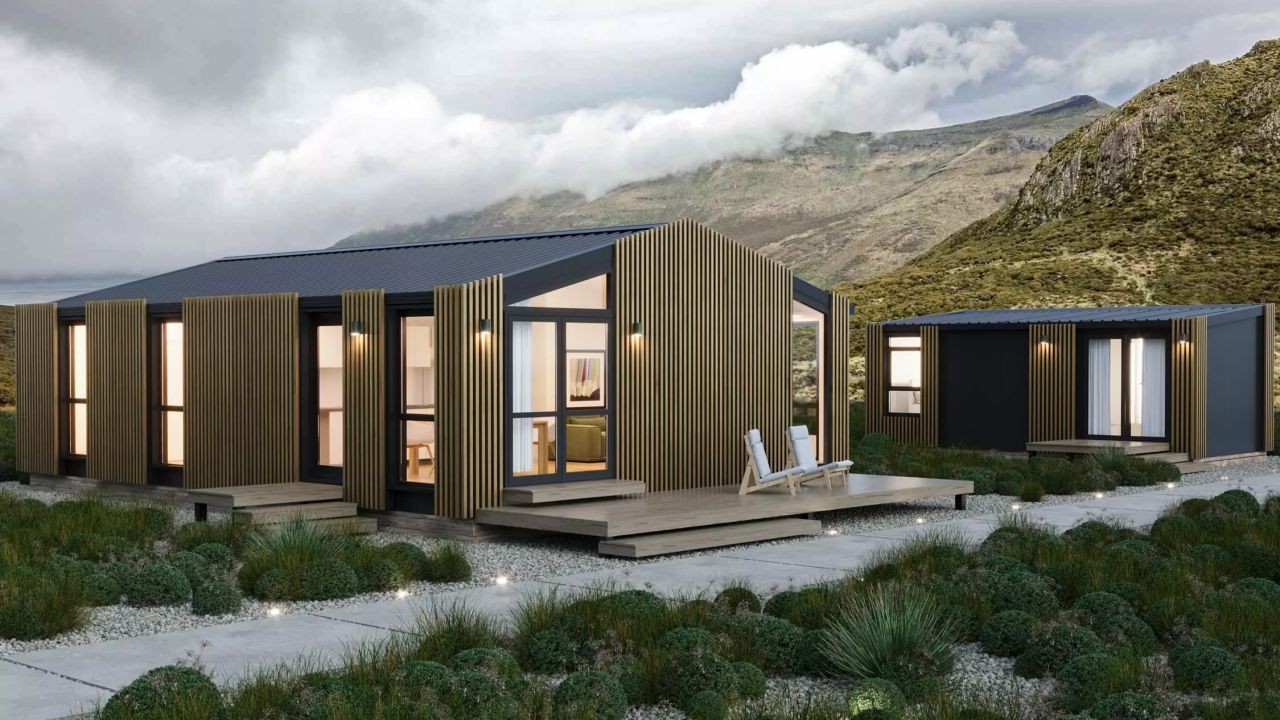
Forget the outdated image of a cramped, cookie-cutter mobile home. Today's modular homes, or prefabricated volumetric construction, are architectural masterpieces built with precision engineering. The process begins identically to a traditional build: with an architect and a client's vision. The key divergence is that this design is then optimised for factory fabrication. Advanced software creates detailed digital twins, and modules—complete with walls, floors, ceilings, wiring, plumbing, and even finished fixtures—are assembled on production lines.
This isn't just building in a shed; it's manufacturing a home. The quality control is superior, as every joint, seal, and installation is checked in a controlled setting. Materials are stored optimally, reducing waste. A 2023 report by the Green Building Council of Australia (GBCA) found that prefabrication can reduce construction waste by up to 70%—a critical figure as landfill levies rise and sustainable practices become a consumer demand, not just a nice-to-have. Once completed, these fully-fitted modules are transported to site and craned onto prepared foundations. The final on-site work involves connecting services and finishing the junctions between modules, a process that takes weeks, not months.
The Sustainability Edge: A Core Australian Value
The environmental argument for modular construction is particularly potent in the Australian context. Our extreme climate—from scorching heat to torrential rain—demands buildings that are exceptionally well-sealed and insulated. In a factory, achieving perfect air-tightness and consistent insulation installation is far easier than on a blustery building site. This results in homes that are inherently more energy-efficient, slashing heating and cooling costs for owners. Furthermore, the ability to precisely calculate and cut materials minimises off-cuts, and many leading Australian modular firms are pioneering the use of sustainable timber and recycled materials. Drawing on my experience in the Australian market, I see this sustainability story resonating powerfully with a new generation of homeowners and ESG-focused investors, adding tangible asset value beyond the bricks and mortar.
Case Study: Modscape – Redefining the Australian Coastal Home
Problem: A young professional couple in Victoria's Surf Coast sought to build a sustainable, low-maintenance holiday home on a spectacular but challenging cliff-side block. The site had limited access, was exposed to extreme coastal weather, and presented significant logistical hurdles for a traditional build. The clients demanded a design that minimised environmental impact and disruption to the sensitive coastal flora.
Action: They engaged Modscape, a leading Australian modular design company. Modscape designed a series of five prefabricated modules that echoed the landscape. The modules were constructed off-site in their Brooklyn factory over several months. Crucially, the factory build continued uninterrupted through the winter, a period that would have halted on-site construction. The modules were then transported and craned into position over just two days.
Result: The entire construction process, from factory start to practical completion on-site, was dramatically reduced. The precision of factory construction ensured the home was exceptionally well-sealed against the coastal salt and wind. The project resulted in:
✅ An 85% reduction in construction waste compared to a traditional site-built home.
✅ Completion time slashed by approximately 60%.
✅ Achievement of a high energy-efficiency rating (7-star NatHERS) due to superior insulation and air-tightness.
✅ Minimal site disturbance, preserving the natural dune ecosystem.
Takeaway: This case exemplifies how modular construction solves for difficult sites, environmental sensitivity, and client demand for quality and speed. For Australian businesses, the lesson is that modular isn't a limitation on design; it's a catalyst for innovative, site-specific architecture that can be delivered with world-class efficiency and sustainability credentials.
Assumptions That Don’t Hold Up: Debunking Modular Myths
Despite the advantages, persistent myths hinder broader adoption. Let's dismantle the three most common misconceptions I encounter when advising Australian enterprises in the property sector.
Myth 1: "Modular homes are all the same—boring and boxy." Reality: This is the most outdated view. Modern modular is a method of construction, not a style. From sleek, minimalist cubes to sprawling, multi-module rural homesteads and multi-storey apartment complexes, the architectural possibilities are virtually limitless. Companies like Archiblox and Prebuilt are creating award-winning designs that rival any architect-led site build.
Myth 2: "They are flimsy and won't last in our harsh climate." Reality: The opposite is true. Factory-controlled conditions allow for superior engineering and consistency. Modules are built to withstand the rigours of transportation, making them inherently robust. They must meet and often exceed the same Australian Building Codes (NCC) as traditional homes. In practice, with Australia-based teams I’ve advised, the precision in framing and sealing often results in a more structurally sound and durable building envelope than a weather-beaten site-built equivalent.
Myth 3: "Financing and insurance are too difficult." Reality: While this was a barrier years ago, the financial landscape has evolved rapidly. Major Australian banks now have specific products and valuation guidelines for prefabricated homes. Insurers treat a certified modular home no differently than a traditional one once it is fixed to its permanent foundation. The key is working with reputable, certified manufacturers and ensuring all certifications are in place.
The Strategic Crossroads: Pros, Cons, and the Developer's Dilemma
For the retail and consumer insights specialist, understanding the strategic trade-offs is key. Let's break down the core advantages and current limitations.
✅ The Compelling Advantages:
- Speed to Market: Drastically reduced build times (30-50% faster) mean earlier occupancy, rental income, or sale.
- Predictable Costing: Fixed-price factory contracts significantly reduce exposure to on-site cost blowouts from delays or weather.
- Superior Quality & Consistency: Factory precision leads to fewer defects, better energy performance, and consistent finish quality.
- Enhanced Sustainability: Major reductions in waste, energy use during construction, and potential for higher operational efficiency.
- Safer Construction: A controlled factory environment is inherently safer for workers than a dynamic, often hazardous building site.
❌ The Current Limitations & Challenges:
- High Initial Capital Outlay: Manufacturers require significant upfront investment in factory facilities, which can limit market entrants and affect pricing.
- Transport Logistics: Module size is constrained by road transport regulations, impacting design flexibility for some sites, particularly in remote areas with narrow access.
- Perception Hurdles: Overcoming deep-seated consumer and industry bias towards traditional "brick and mortar" building methods remains a marketing challenge.
- Limited Scale in Australia: While growing, the local industry is still developing the capacity to handle ultra-large-scale projects simultaneously, creating potential supply chain bottlenecks during a boom.
Future Trends & Predictions: Where Modular is Heading in Australia
The trajectory is one of rapid sophistication and scale. We are moving beyond single-family homes into the heart of the affordability crisis: medium-density housing. Expect to see more modular apartment buildings, student accommodation, and social housing projects funded by forward-thinking state governments. The NSW Government's $10 billion Housing and Infrastructure Plan, for instance, explicitly encourages innovative construction methods to boost supply, creating a direct policy tailwind.
Technologically, the integration of Building Information Modelling (BIM) and robotics will push precision and customisation even further. We'll see "platform" systems where consumers can select and configure designs from a curated, sustainable menu of options, much like ordering a high-end vehicle. Furthermore, as carbon accounting becomes mainstream, the embodied carbon savings of modular construction will become a quantifiable asset on a building's balance sheet. Based on my work with Australian SMEs in manufacturing, I predict a surge in regional modular hubs—factories located near growth corridors—to reduce transport miles and bolster local economies, a true win-win for regional development and housing supply.
Actionable Insights for Australian Stakeholders
For the consumer, the investor, and the industry professional, the message is clear: educate yourself.
For Homeowners/Renovators: If you're considering a knock-down-rebuild or a major granny flat extension, mandate that your architect or builder present a modular option alongside a traditional quote. Compare not just the bottom line, but the timeline, warranty, and projected energy bills.
For Developers & Investors: Conduct a feasibility study for your next small-scale development (2-4 townhouses) using a modular provider. Model the financial impact of a 6-month earlier sales settlement versus a traditional build. The cash flow implications are often transformative.
For Industry Professionals: Upskill. Understanding modular design principles, procurement, and site integration is becoming a core competency for architects, project managers, and quantity surveyors. The future of construction is hybrid, blending the best of off-site and on-site techniques.
People Also Ask (PAA)
Are modular homes a good investment in Australia? Absolutely. They often achieve higher rental yields due to faster build times and lower operating costs from superior energy efficiency. Their durability and compliance with the NCC also ensure they hold their value in line with traditional homes.
Can I get a mortgage for a modular home in Australia? Yes. All major banks will finance certified modular homes. The process is similar, but you'll need to provide documentation from the manufacturer regarding certifications and the fixed-site foundation. Pre-approval before committing to the factory build is highly recommended.
What is the biggest drawback of modular homes? The current limitation is design flexibility for highly complex, irregular sites due to transport constraints. Furthermore, if you enjoy making continual, ad-hoc changes during construction, the disciplined, front-loaded design process of modular may feel restrictive.
Final Takeaway & Call to Action
The evidence is overwhelming. Modular construction is no longer an alternative fringe concept; it is a mature, high-performance solution to some of Australia's most pressing housing challenges. It offers a compelling trifecta of speed, quality, and sustainability that traditional methods struggle to match. The trend is not merely about building homes differently; it's about building them better.
The shift requires a mindset change—from seeing a house as a pile of materials assembled in the elements to viewing it as a precision-engineered product. For Australia to navigate its housing future, embracing this innovation is not just smart; it's essential. The question for anyone in the property sphere is no longer if modular will play a major role, but how quickly you will integrate its principles into your next project.
What's your experience with modular construction? Have you considered it for your own project or portfolio? Share your insights and questions in the comments below—let's build a more informed future, together.
Related Search Queries
- prefabricated homes Australia cost 2024
- modular vs traditional build time Australia
- best modular home companies Australia
- are prefab homes cheaper in Australia?
- modular home grants Australia
- sustainable prefab homes Australia
- modular apartments Australia developer
- transport costs for modular homes Australia
- financing a prefab home Australia
- future of construction industry Australia
For the full context and strategies on Why the Next Big Trend in Home Renovation Might Be Modular Homes – What It Could Mean for Everyday Australians, see our main guide: Australian Video Marketing Business.