





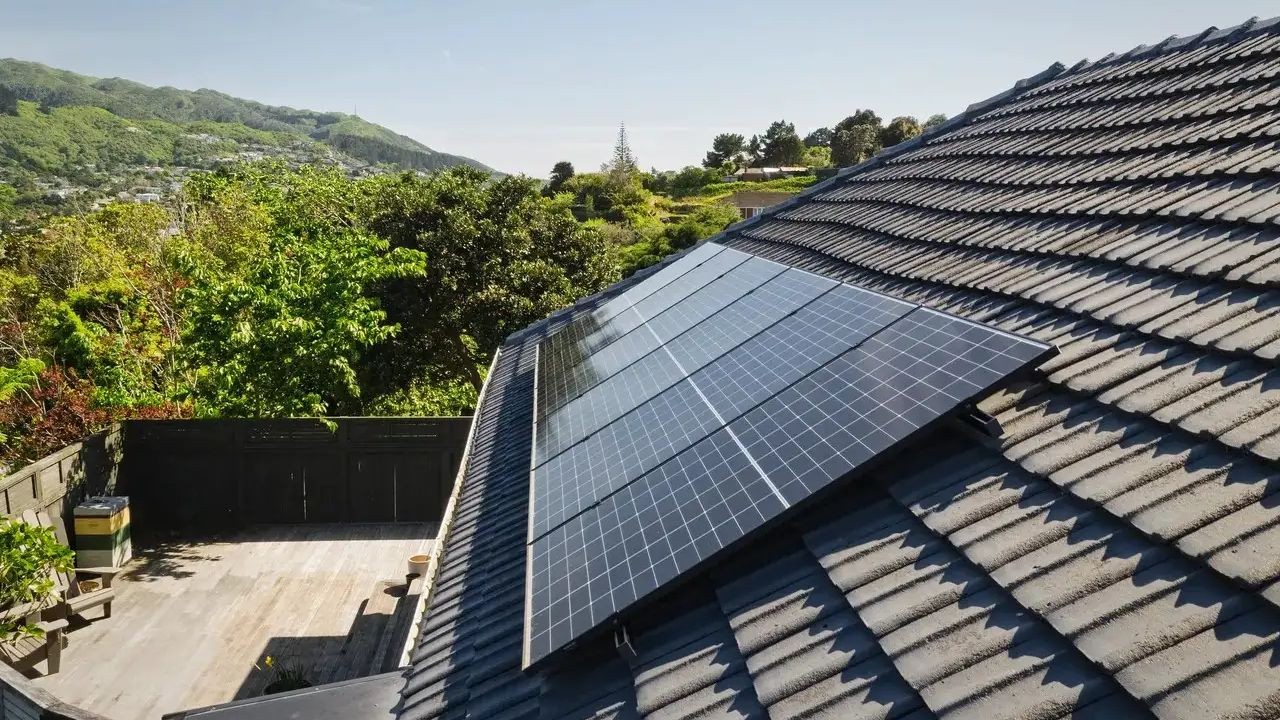
Australia stands as a global leader in household solar uptake, with over one in three homes boasting rooftop panels—a figure that dwarfs most other nations. This remarkable adoption, driven by abundant sunshine and favourable incentives, is a cornerstone of the country's renewable energy transition. However, a significant and growing shadow looms over this success story: the impending tidal wave of end-of-life photovoltaic (PV) modules. Current industry estimates suggest that by 2030, Australia will be discarding over 100,000 tonnes of solar panel waste annually. The stark reality is that, without a radical shift in systems and mindset, the vast majority of these panels are destined for landfill, creating a serious environmental and economic liability that undermines the very sustainability goals they were meant to advance.
The Scale of the Challenge: A Data-Driven Reality Check
The first step in addressing any crisis is quantifying it. Australia's solar panel installation boom began in earnest in the late 2000s, spurred by federal rebates and state-based feed-in tariffs. PV panels have a typical operational lifespan of 25-30 years. Simple math indicates that the first major wave of decommissioning is already beginning and will accelerate dramatically through the 2030s. A 2023 report commissioned by the Department of Climate Change, Energy, the Environment and Water (DCCEEW) projected that Australia's cumulative PV waste will reach 1 million tonnes by 2035. To put that in perspective, that's equivalent to filling the Melbourne Cricket Ground approximately 1.5 times.
Financially, the missed opportunity is staggering. A solar panel is not merely glass and silicon; it contains valuable, recoverable materials like silver, copper, aluminium, and high-purity silicon. From my work with Australian SMEs in the circular economy, I've seen firsthand that treating these panels as waste represents a catastrophic leakage of value. The DCCEEW report estimates the recoverable materials from this looming waste stream could be worth over $1 billion by 2035. Instead of capturing this value through a sophisticated recycling industry, we are currently on a path to bury it, incurring landfill costs and losing critical materials that are energy-intensive and geopolitically sensitive to mine anew.
Where Most Brands and Consumers Go Wrong
The pathway to landfill is paved with a series of interconnected failures in market design, consumer awareness, and regulatory foresight.
- The False Economy of Cheap Replacement: For a homeowner or business, when an inverter fails or a few panels underperform, the economic calculus often favours a full new system. With technology improving and prices falling, the labour cost of selectively repairing or replacing a few panels can approach that of a new, more efficient installation. The old panels, often still functional, become inconvenient waste.
- Logistical and Cost Barriers to Recycling: Unlike a bottle or a can, a solar panel is bulky, fragile, and requires specialised handling. There are few convenient drop-off points, and recycling is rarely free. For installers, the cost of responsibly recycling a panel can be $10-$20 per unit, a direct hit to their margin that many are unwilling to absorb, especially when landfill fees are lower. In practice, with Australia-based teams I’ve advised, the absence of a clear, cost-neutral takeback scheme is the single biggest operational hurdle.
- Designing for Obsolescence, Not Recovery: Most panels on Australian roofs today were manufactured with efficiency and durability in mind, but not recyclability. They are laminated composites—layers of glass, polymer, and cells fused together with strong adhesives. Mechanically shredding them yields a low-value "glass cullet" mixed with other materials, making high-value recovery of silicon and silver technically difficult and economically unviable at scale.
The Mechanics of the Market Failure
This isn't a problem of malicious intent, but of systemic market failure. The solar industry's success was built on a linear economic model: manufacture, sell, install. The end-of-life responsibility was an externality, not a factored cost. Drawing on my experience in the Australian market, I observe that regulatory frameworks have consistently lagged behind the physical reality of product deployment.
Australia currently lacks a consistent, nationwide, industry-funded product stewardship scheme for solar panels. While the federal government has implemented a voluntary scheme, participation has been limited. This contrasts with successful regulated schemes for other products like televisions and batteries. Without a mandatory scheme that internalises the end-of-life cost into the upfront price of the panel—creating a financial pool for recycling—the economic incentives will always favour the cheapest disposal route: landfill.
Furthermore, the Australian Competition & Consumer Commission (ACCC) has rightly focused on consumer protections regarding panel performance and installer conduct, but the product's end-of-life phase remains a regulatory grey area. This creates an uneven playing field where responsible actors who factor in recycling costs are undercut by those who do not.
Case Study: Reclaim PV Recycling – A Pioneer Under Pressure
Problem: Reclaim PV, established in 2014, was Australia's first dedicated solar panel recycling facility. It developed a proprietary process to delaminate panels and recover high-purity materials, aiming to achieve a 90%+ recovery rate. However, the company faced a fundamental market challenge: a lack of consistent, high-volume feedstock due to the absence of a mandatory collection scheme. Installers and waste companies had no legal obligation to send panels to a specialist recycler, and the cost of Reclaim's service (necessary to fund its advanced technology) was often higher than landfill or crude crushing.
Action: The company pursued partnerships with major retailers and installers and invested in technology to improve efficiency. It advocated strongly for government intervention to level the playing field and ensure panels flowed to proper recyclers.
Result: Despite its technical innovation, Reclaim PV entered administration in 2023. Its collapse sent shockwaves through the industry, highlighting that advanced recycling technology alone cannot succeed without a supportive regulatory and economic framework that mandates collection and ensures recyclers receive material. The company's intellectual property was later acquired, and operations have restarted on a smaller scale, but the case remains a cautionary tale.
Takeaway: The Reclaim PV story underscores that technological solutions are only one piece of the puzzle. A viable recycling industry requires guaranteed feedstock and funding, which in the Australian context can only be reliably delivered through robust, mandatory product stewardship regulation. Without it, even the most well-intentioned ventures face an unsustainable business model.
Pros and Cons of the Current Approaches
✅ The Argument for Accelerating a Mandatory Stewardship Scheme
- Internalises Environmental Cost: Embeds recycling costs at point of sale, following the polluter-pays principle and creating a circular economy fund.
- Levels the Competitive Field: Ensures all importers and manufacturers contribute equally, preventing cost-cutting through irresponsible disposal.
- Stimulates Local Industry: Creates a guaranteed material stream, enabling investment in advanced Australian recycling infrastructure and green jobs.
- Resource Security: Recovers critical minerals, reducing reliance on volatile international supply chains for new materials.
❌ The Argument for Maintaining a Voluntary or Market-Led Approach
- Avoids Increased Consumer Costs: Prevents adding any upfront cost to solar systems, which could marginally slow adoption.
- Reduces Regulatory Burden: Allows industry flexibility to develop commercial solutions without government prescription.
- Technology Neutrality: Argues that rapid innovation in panel design (e.g., easier-to-recycle models) may solve the problem before regulation is needed.
- Enforcement Challenges: Highlights the difficulty of regulating a diffuse market with many small importers and a long product lifespan.
The Middle Ground: A phased, co-regulatory approach is emerging as the most viable path. This would set mandatory outcomes and targets for collection and recycling rates (as seen in the European Union's WEEE Directive) but allow industry to collaboratively design and manage the operational scheme. This balances government oversight with industry expertise.
Actionable Insights for Australian Stakeholders
Waiting for a perfect national policy is not an option. Based on my work with Australian enterprises across the energy and finance sectors, here are immediate steps different actors can take:
- For Businesses & Asset Owners: When procuring a new solar system, explicitly request the installer's end-of-life management plan. Factor responsible future decommissioning costs into your total ROI calculation. Choose manufacturers that are investing in recyclable panel design and have established take-back programs.
- For Fintechs & Investors: Develop financial products that recognise circular value. This could include green loans with preferential rates for systems using recyclable panels, or investment funds focused on the domestic recycling infrastructure build-out. Data platforms that track panel performance and residual value can also create new asset-class transparency.
- For Policymakers: Accelerate the transition from a voluntary to a mandatory product stewardship scheme. Use procurement power by requiring solar assets on government buildings to be from manufacturers participating in certified recycling schemes. Support R&D into advanced material recovery technologies.
Future Trends & The Road to a Circular Solar Economy
The future of solar in Australia must be circular by design. Several key trends will shape this transition:
Firstly, design innovation is critical. Manufacturers like Meyer Burger and others are developing panels with easily separable layers using thermoplastic polymers instead of permanent adhesives. These "design for disassembly" models will dramatically reduce recycling costs and increase material purity.
Secondly, secondary markets and refurbishment will emerge. Panels that underperform for grid-connected use may still have 10-15 years of life for off-grid applications, battery storage buffer, or in developing nations. A robust testing and certification regime for second-hand panels will be required to facilitate this.
Finally, digital tracking will become ubiquitous. From my consulting with local businesses across Australia, I see blockchain and IoT-based solutions being piloted to create a digital product passport for each panel. This would track its composition, performance history, and ultimately guide its optimal end-of-life path—repair, refurbish, or recycle—ensuring maximum value extraction.
Final Takeaway & Call to Action
Australia's solar waste crisis is a predictable problem with actionable solutions. It represents a critical test of our commitment to a genuine circular economy. The technology to recycle panels effectively exists; what is missing is the economic and regulatory architecture to make it the default, not the exception. Continuing on the current path is an environmental and economic failure of foresight.
The call to action is clear: industry, government, and consumers must collectively demand and build a system where every solar panel is tracked, valued, and recovered. For fintech specialists and investors, this represents a significant opportunity to fund the infrastructure and data systems that will turn a linear waste stream into a circular resource flow. The question is no longer if we will deal with this wave of panels, but how—as a costly problem, or as a valuable new resource stream. The market signals we send today will determine that outcome.
What's your take? Is a mandatory stewardship scheme the only viable solution, or can market innovation solve this challenge? Share your insights and engage with industry groups like the Clean Energy Council to shape the policy debate.
People Also Ask
Can you throw solar panels in the bin in Australia? Technically, it depends on local council regulations, but it is generally discouraged and becoming increasingly regulated. They are considered electronic waste (e-waste) and contain small amounts of hazardous materials. Responsible disposal through a dedicated recycler is the only environmentally sound option.
What is the future of solar panel recycling in Australia? The future points towards a mandatory, industry-funded product stewardship scheme that makes recycling cost-neutral for consumers. This will drive investment in advanced local recycling facilities capable of high-value material recovery, moving beyond simple crushing to a truly circular model.
Who is responsible for recycling solar panels in Australia? Currently, the responsibility is diffuse and falls largely on the end-user (homeowner/business) or the last handler (installer/waste company). There is no clear legal obligation for manufacturers or importers to take them back, which is the core of the market failure that proposed stewardship schemes aim to fix.
Related Search Queries
- solar panel recycling cost Australia
- product stewardship scheme solar panels
- Reclaim PV recycling Australia
- end of life solar panels landfill
- circular economy solar Australia
- solar panel waste forecast 2030
- how to dispose of broken solar panels
- solar panel recycler near me
- ACCC solar panel recycling
- design for disassembly solar panels
For the full context and strategies on Why Most Australian Solar Panels End Up in Landfill – How It’s Quietly Powering Australia’s Future, see our main guide: Australian Beauty Personal Care.