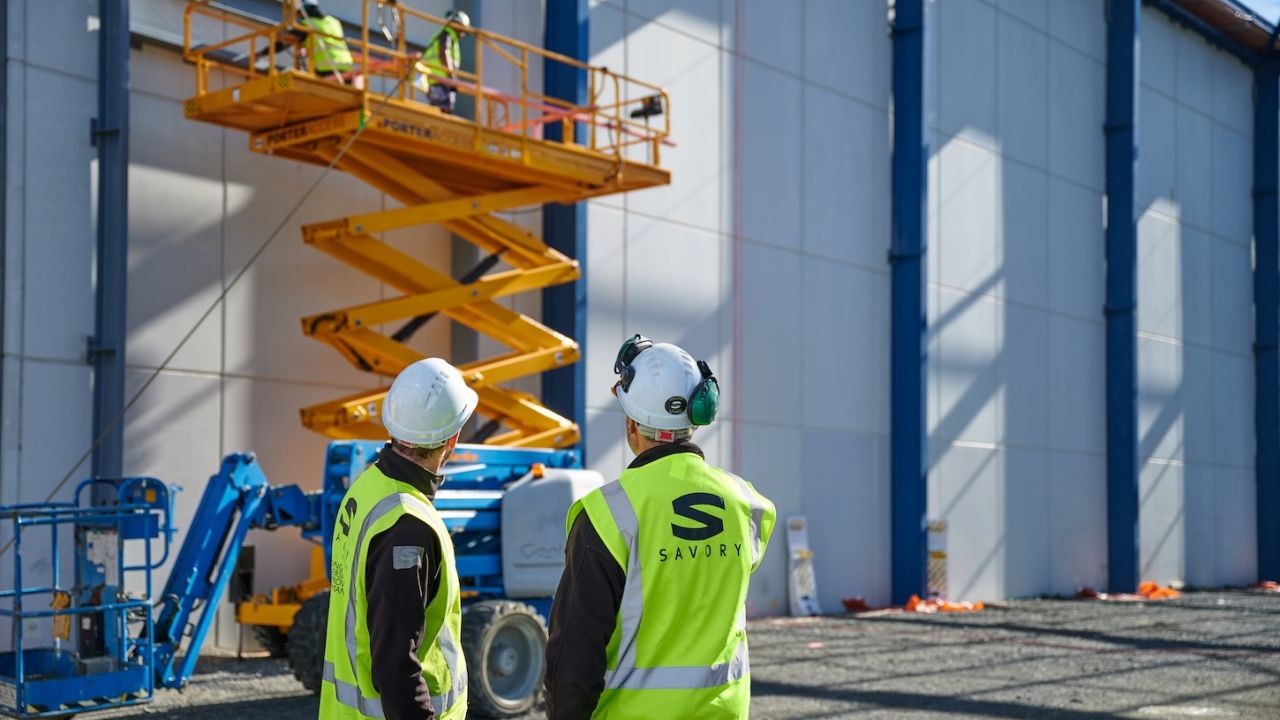






For the sophisticated investor, the traditional buy-and-hold residential property strategy in New Zealand is reaching a point of diminishing returns. With median house prices still hovering near historic highs relative to income, and gross rental yields in major centres often struggling to break 3%, the path to superior returns requires a more active, creative approach. One such strategy—buying land and building a house—has moved from a niche, owner-occupier pursuit to a compelling, albeit complex, investment vehicle. This is not a weekend project; it is a high-stakes exercise in capital allocation, risk management, and market timing that can unlock significant equity gains, tax advantages through new build depreciation, and portfolio diversification. However, the landscape is fraught with regulatory pitfalls, supply chain volatility, and financing nuances that can turn a projected 20% margin into a devastating loss. Drawing on my experience supporting Kiwi companies in the construction and development sector, I’ve seen both spectacular successes and costly failures. This analysis will dissect the process through an investor’s lens, stripping away the romanticism to reveal the cold, hard financial mechanics.
Future Forecast & Trends: The Evolving Calculus of NZ Development
The economics of building for investment are not static; they are shaped by powerful macroeconomic and policy forces. A savvy investor must look beyond current council consents and timber prices to anticipate the shifts that will define profitability over the next 3-5 years.
The Dual Forces of Policy and Inflation
Two dominant trends are reshaping the feasibility matrix. First, the enduring policy push for density. The Medium Density Residential Standards (MDRS), despite recent amendments allowing council opt-outs, have permanently altered the development potential of vast swathes of urban land. For the investor, this isn't just about building a taller fence; it's about fundamentally reassessing the highest and best use of a parcel. A standalone 600m² section in a zone now permitting three three-story dwellings has a different valuation model entirely. From consulting with local businesses in New Zealand navigating these rules, the key insight is that land value is now disproportionately driven by its zoned potential, not its current use.
Second, we face the sticky reality of construction cost inflation. While the breakneck pace of price increases has slowed, costs have plateaued at a permanently higher level. Stats NZ data shows the cost of building a new house increased by 31% between 2020 and 2023. The critical forecast for investors is that while material costs may see minor deflation, labour costs—driven by skilled worker shortages—will continue their structural rise. This fundamentally changes the margin profile, making efficiency in design and project management non-negotiable.
Next Steps for the Kiwi Property Investor:
- Re-run Your Feasibility Models: Any feasibility study older than 12 months is obsolete. Update all inputs with current construction quotes, interest rates, and updated zoning rules from your local council’s unitary plan.
- Shift Focus to "Design-to-Budget": Engage a designer or architect with a proven track record in cost-effective, compliant designs for your target zone. Avoid bespoke architectural statements; prioritize efficient, replicable layouts that maximise yield.
- Monitor Supply Chain Indicators: Subscribe to industry updates from Building Ministers or Certified Builders Association. Lead times for key items (windows, electrical components) are a leading indicator of future cost and schedule risk.
How It Works (Deep Dive): The Investor's Blueprint from Due Diligence to Divestment
This is where theory meets the tarmac. The process is a sequential chain of dependencies, where a failure at any link can compromise the entire return. We will move beyond generic advice into the granular, often overlooked details that separate professional developers from amateur speculators.
Phase 1: The Land Acquisition – It's All About the Entitlement
Buying land is not about finding a pretty view. It is a forensic exercise in assessing "entitlement"—the legal right to develop. The purchase price should be a function of the post-development value, minus all costs and your required profit margin. A critical mistake is paying a premium for land based on a hopeful interpretation of the rules.
- Due Diligence Beyond the LIM: The LIM report is a starting point. You must engage a planning consultant or scrutinise the district plan yourself to understand zoning, overlay rules (heritage, landscape, flooding), and development contribution schedules. A single overlooked infrastructure charge can add $50,000 to your costs.
- The Infrastructure Litmus Test: Services are everything. Is there municipal sewerage at the boundary, or will you need a costly septic system? What is the capacity of the local transformer? I’ve seen projects stalled for months awaiting power upgrades. A pre-purchase dialogue with the local water authority and lines company is worth its weight in gold.
- Financing the Dirt: Banks treat vacant land loans with extreme caution. Expect a minimum 50% deposit, higher interest rates, and a short loan term (often 2-3 years). The investor’s play is to have the equity to cover the land purchase outright or to use a dedicated development financing facility from the outset.
Phase 2: Design & Consent – The Invisible Engine of Value
Design is not an aesthetic choice; it is a financial instrument. Every square metre, junction, and material specification has a cost and a return implication.
- Engineered for Efficiency, Not Awards: Work with designers who understand buildability. Simple roof lines, standardised room dimensions, and minimised external corners reduce labour and waste. In my experience supporting NZ startups in proptech, the most successful use BIM (Building Information Modelling) software from the start to identify clashes and optimise material take-offs before a single nail is hammered.
- Master the Consent Chessboard: Understand the difference between a discretionary and a restricted discretionary activity. The former is a gamble with time and outcome; the latter, if rules are met, is more certain. Pre-application meetings with planners, while costing a fee, can de-risk the entire consent process by providing clarity on officer expectations.
Case Study: The Auckland Infill Project – Margin Through Precision
Problem: An investor acquired two adjacent sections in a central Auckland suburb zoned for terrace housing. The initial concept designs from a generic draughtsperson were aesthetically pleasing but resulted in complex structures with high waste factors, pushing the build cost per unit to an unfeasible $650,000 against a market value of $1.1M.
Action: The investor engaged a specialist medium-density design firm. They utilised passive solar design principles to meet the Homestar 6 requirement (adding marketability) and reconfigured the layouts to use common wall structures and prefabricated wall panels. They also negotiated a fixed-price design-and-construct tender with a builder based on these optimised plans.
Result:
- Build cost per unit reduced by 18% to $533,000.
- Consent was granted as a restricted discretionary activity, shaving 8 weeks off the projected timeline.
- The finished units, with their Homestar certification, sold at a 5% premium over comparable stock, realising an average sale price of $1.155M.
Takeaway: Front-loading investment in expert, outcome-oriented design is not a cost; it is the primary lever for protecting and enhancing development margin. The $30,000 extra spent on design saved over $230,000 in construction and created an additional $55,000 in sales premium.
Phase 3: Construction & Project Management – Where Money Evaporates or Multiplies
This is the execution phase. Your role as an investor is not to swing a hammer but to be an ruthless project manager and financial controller.
- The Contract is Your Shield: Never proceed on a handshake or a simple quote. Use a NZS 3910 or a Master Builders fixed-price contract. Crucially, ensure it includes detailed schedules of quantities, a clear variations process, and liquidated damages for late completion. Having worked with multiple NZ startups that stumbled here, the variation clause is your best defence against "scope creep."
- Cash Flow is King: Development finance is drawn in stages (typically upon completion of foundation, frame, lock-up, etc.). Your job is to verify each stage is 100% complete before authorising payment. Hold a retention (usually 5%) until final sign-off to ensure any defects are remedied.
- Sell or Hold? The Tax Equation: This is a critical strategic decision. Selling upon completion incurs income tax if you are deemed to be in the business of development. Holding as a rental provides cash flow and long-term capital gain, but more importantly, for a new build, it allows you to claim depreciation on both the building (at 1.5-2% diminishing value) and the chattels. Based on my work with NZ SMEs in property, for a high-income earner, this depreciation shield can be more valuable in the first 5-10 years than the immediate cash from a sale.
Comparative Analysis: Building vs. Buying Existing – A Numbers-Driven Showdown
Let's move beyond anecdotes and model the financial reality. Assume a $1.5 million total investment capacity in a major centre.
Scenario A: The "Buy Existing" Investor
- Action: Purchases a $1.45M existing house with a $725k mortgage (50% LVR).
- Costs: $1.45M purchase + ~$35k (legal, due diligence, agent fee if sold later).
- Income: Rent of $850/week ($44,200 p.a.).
- Outgoings: Interest (7% on $725k = $50,750), rates $3k, insurance $2k, maintenance $5k. Total ~$60,750.
- Cash Flow: Negative $16,550 p.a. before tax.
- Tax & Depreciation: No building depreciation claimable. Potentially small chattel depreciation.
- Equity Play: Reliant solely on market-wide capital appreciation.
Scenario B: The "Build New" Investor
- Action: Buys land for $650k, builds a house for $800k (total $1.45M). Uses same $725k debt facility.
- Costs: $1.45M (land & build) + ~$80k (consents, design, project management, financing costs). Higher upfront transaction costs.
- Income: Rent for a new, premium property: $1,000/week ($52,000 p.a.).
- Outgoings: Interest (7% on $725k = $50,750), rates $3k, insurance $1.5k (new build discount), maintenance $1k. Total ~$56,250.
- Cash Flow: Negative $4,250 p.a. before tax.
- Tax & Depreciation: Can claim depreciation on the $800k building (say, 1.5% DV = $12,000 first year) and on chattels (appliances, flooring: ~$50k at 20-40% DV). This $20k+ non-cash expense creates a taxable loss, potentially generating a tax refund that can offset the cash flow shortfall.
- Equity Play: "Forced" equity creation through the development profit margin (if built under market value) plus market appreciation.
The Verdict: While the build scenario has higher complexity and upfront cost, it generates superior cash flow (or lower loss), a powerful tax advantage, and creates immediate equity. The existing purchase is simpler but is a pure, leveraged bet on the market with an ongoing cash drain.
The Hidden Risks & Costly Mistakes: An Investor's Due Diligence Checklist
Failure here is rarely about bad luck; it's about unmanaged risk. Here are the critical pitfalls.
- Mistake 1: Underestimating the True End-to-End Cost. Amateurs budget for land and build. Professionals budget for land, build, professional fees, council contributions, financing costs, landscaping, contingency (10-15%), and holding costs during construction. A Reserve Bank of NZ report on development financing highlights that cost overruns are the primary cause of developer distress.
- Mistake 2: Selecting a Builder on Price Alone. The cheapest tender is often the most expensive choice. Rigorous reference checking, verifying their financial stability, and ensuring they have trade credit with suppliers are essential. A builder going under mid-project is an investor's nightmare.
- Mistake 3: Ignoring the Sales & Market Cycle. You must model the project timeline against interest rate and property price forecasts. Starting a 12-month build at the peak of a cycle to sell into a downturn is a recipe for loss. Have a clear, flexible exit strategy: sell, hold, or refinance.
Controversial Take: The "Build-to-Hold" Strategy is Overhyped for the Average Investor
The prevailing wisdom in many circles is that building new to hold for the long-term depreciation benefits is a no-brainer. I argue this is a dangerous oversimplification. The depreciation benefits are real, but they are a timing difference, not permanent savings—they reduce your tax book value, leading to higher tax upon eventual sale (recapture depreciation). The strategy only makes supreme financial sense if you are a top-tier taxpayer (33% or 39% rate) who can consistently use the tax refunds to service debt, and you have a holding period long enough to justify the immense upfront effort and risk. For many, the smarter play might be to build with the explicit intent to sell, crystallise the development profit, recycle the capital, and let someone else deal with the tenant management. The cult of "buy and hold forever" ignores the opportunity cost of tied-up capital in a single, illiquid asset.
Final Takeaways & Strategic Call to Action
- Data is Your Compass: Your investment decision must be driven by a dynamic, fully-costed financial model, not a gut feeling about a section.
- Assemble Your A-Team First: Line up your lawyer (specialist in property development), your accountant, a savvy designer, and a proven project manager before you bid on land.
- Treat it as a Business, Not a Project: This is a time-bound venture with a clear ROI target. Implement business-grade systems for accounting, communication, and reporting.
- The NZ Edge: Leverage local knowledge. Engage consultants who have specific experience with your territorial authority. Use materials and designs suited to our climate and supply chain.
The opportunity to build in New Zealand is significant, but the margin for error is slim. This is not a passive investment; it is an active, hands-on business venture that demands expertise, diligence, and resilience. For those willing to master the process, it remains one of the most potent ways to build genuine, manufactured wealth in the New Zealand property market.
Ready to stress-test your development feasibility? The next step isn't browsing Trade Me Property. It's building your detailed financial model and having it reviewed by an advisor who has navigated multiple cycles. The difference between a 15% and a 5% return is entirely in the planning.
People Also Ask (PAA)
What is the biggest financial risk when building a house as an investment in NZ? The single largest risk is unmanaged cost overruns during construction, often due to inadequate contingency planning, unforeseen ground conditions, or poor fixed-price contracts. This can erode your equity, push loan-to-value ratios beyond bank covenants, and turn a profitable project into a loss.
How does the NZ tax treatment differ between building-to-sell and building-to-hold? Building with the intention to sell likely places you in the "property development" business, making profits taxable as income. Building to hold is a capital investment; rental income is taxed, but you can claim depreciation deductions, and eventual gains may be tax-free if the "intention" test is met—a complex area requiring expert advice.
Can overseas investors buy land and build in New Zealand? Generally, no. The Overseas Investment Act requires consent for most purchases of "sensitive land," which includes residential land. There are limited exceptions (e.g., for building new homes for sale to increase housing supply), but the process is stringent. Most development of this nature is undertaken by NZ residents or citizens.
Related Search Queries
- NZ development feasibility software
- Fixed price building contract NZ 2024
- Medium Density Residential Standards latest updates
- Construction cost per square metre NZ 2024
- Best banks for development finance NZ
- Depreciation rates on new build NZ property
- How to calculate development margin NZ
- Terrace house development profit case study Auckland
- NZ building consent process timeline
- Project manager for residential development cost NZ
For the full context and strategies on How to Buy Land and Build a House in NZ – A Bulletproof Strategy for NZ, see our main guide: Vidude Creating Opportunities Kiwi Digital Talent.