





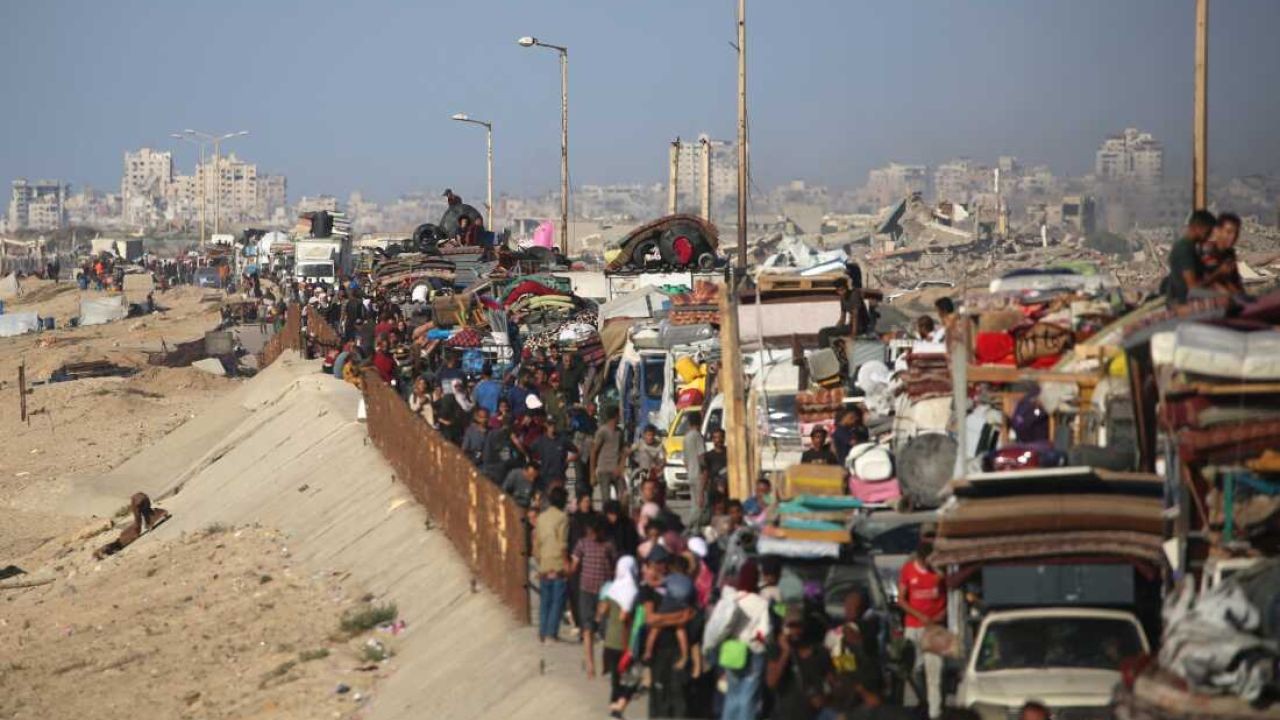
The recent political rhetoric reaffirming unwavering international alliances, while geopolitically significant, serves as a stark reminder to the global business community: external shocks are not abstract concepts. They are tangible, disruptive forces that ripple through supply chains, commodity markets, and consumer sentiment with brutal efficiency. For Australian agribusiness, a sector deeply integrated into global trade flows and acutely sensitive to both climatic and political volatility, these events are not distant headlines. They are risk management scenarios that demand immediate, structured analysis. The executive who dismisses them as irrelevant to a farm gate in regional Victoria is an executive courting preventable disruption.
Geopolitical Volatility as an Agribusiness Risk Multiplier: A Strategic Framework
Agribusiness consultants must move beyond viewing geopolitics through a purely humanitarian or political lens. The professional lens is one of systemic risk. A conflict impacting a key maritime chokepoint, for instance, immediately recalibrates the logistics cost matrix for Australian exports. Similarly, shifts in global diplomatic stances can alter trade policy environments overnight. Our analysis must be structured. Consider this three-tiered risk assessment framework for Australian agribusiness assets:
- Primary (Direct) Impact: Disruption to shipping lanes critical for Australian exports (e.g., the Red Sea crisis impacting Suez Canal transit, which according to the Australian Bureau of Statistics, handles over 40% of our containerized agricultural exports to Europe). Increased freight insurance premiums and extended lead times directly compress margins.
- Secondary (Market) Impact: Global commodity price volatility triggered by uncertainty. Grain, oilseed, and fertiliser markets are hypersensitive to conflict in key producing or transiting regions. This creates both hedging challenges and opportunistic windows for sellers with secure supply.
- Tertiary (Regulatory & Sentiment) Impact: The potential for consumer-led boycotts, activist shareholder pressure, or evolving ESG compliance mandates related to trade partners. This is where brand reputation and supply chain provenance become critical balance sheet items.
The Australian Context: A Trade-Dependent Sector in a Fragile System
Australia's agricultural export earnings reached a record $78 billion in 2022-23. This success is underpinned by a just-in-time global logistics system that is now demonstrably fragile. The Reserve Bank of Australia's (RBA) November 2023 Financial Stability Review explicitly highlighted "geopolitical tensions" as a material risk to the Australian economy, noting the vulnerability of open trading nations to supply chain disruptions. For agribusiness, this is not theoretical. The 2021 container shipping crisis saw freight costs for Australian agricultural exports increase by over 300% in some cases, eroding profitability despite high commodity prices. A new geopolitical shock could replicate this overnight.
Furthermore, Australia's trade relationships necessitate a nuanced understanding. While not a direct party to conflicts, Australian firms can be indirectly exposed through complex international partnerships and financing arrangements. The Australian Prudential Regulation Authority (APRA) has intensified its focus on operational resilience, urging financial entities—and by extension, their major agribusiness clients—to stress-test for "multiple, concurrent shocks." This is the new normal.
Comparative Analysis: Reactive Crisis Management vs. Proactive Strategic Resilience
Let's contrast two philosophical approaches to this environment, evaluating the pros and cons of each.
The Reactive Stance: "Wait and See"
This approach assumes market forces will correct disruptions and that historical trade patterns are resilient. Leadership focuses on immediate operational firefighting.
✅ Perceived Pros:
- Lower Initial CAPEX: Avoids investment in redundant supply chains or diversified market development.
- Simplicity: Maintains existing, familiar logistics and buyer relationships.
- Potential for Short-Term Gain: Can benefit from sudden price spikes if holding inventory.
❌ Critical Cons:
- Extreme Margin Compression: When disruption hits, you are a price-taker on soaring logistics costs.
- Contract Default Risk: Inability to fulfill supply agreements can trigger penalties and loss of key clients.
- Reputational Damage: Seen as an unreliable supplier in a crisis, damaging long-term buyer relationships.
- Missed Strategic Opportunities: Cedes emerging market share to competitors with more resilient setups.
The Proactive Stance: "Resilience by Design"
This strategy embeds geopolitical and logistical risk mitigation into core business planning, treating resilience as a competitive advantage.
✅ Tangible Pros:
- Premium Supplier Status: The ability to guarantee supply in a crisis allows for contract premiuming.
- Enhanced Valuation: Businesses with demonstrable supply chain diversification and risk management are viewed as lower-risk assets.
- Market Diversification: Reduces over-reliance on any single trade corridor or buyer bloc.
- Strategic Foresight: Positions the business to pivot quickly, capturing market share during competitors' disruptions.
❌ Practical Cons:
- Higher Operational Complexity: Managing multiple logistics partners and market regulations requires sophisticated systems.
- Upfront Investment Required: Costs associated with dual-sourcing, strategic inventory buffers, and market development.
- Potential for Lower Short-Term ROI: The "insurance premium" of resilience may pressure margins in calm periods.
Case Study: Global Logistics Firm's Pivot & The Australian Parallel
Case Study: A.P. Møller – Mærsk – Navigating the Red Sea Crisis
Problem: In late 2023, Houthi attacks on commercial shipping in the Red Sea forced a critical decision for the world's second-largest container line. The direct Suez Canal route from Asia to Europe, handling 30% of global container trade, became a high-risk zone. For Maersk, continuing transit meant unacceptable insurance costs, crew safety risks, and potential catastrophic asset loss.
Action: Maersk did not hesitate. It enacted a pre-defined contingency plan, rerouting its entire fleet around the Cape of Good Hope. This decision added 10-14 days to transit times and increased fuel consumption by approximately 30% per voyage. The company implemented dynamic surcharges (Peak Season Surcharges, Emergency Contingency Surcharges) to offset costs and communicated transparently, albeit bluntly, with clients about the new reality.
Result: While costs soared industry-wide, Maersk's decisive action protected its assets and crew. Financially, the surge in freight rates and surcharges led to an EBITDA increase in its Ocean division, despite higher costs, demonstrating the pricing power of secured capacity. Critically, it reinforced its brand as a reliable, if expensive, operator in a crisis.
Takeaway for Australian Agribusiness: The lesson is not in shipping management, but in decisive contingency execution. Australian exporters reliant on the Suez route were immediately impacted. Those with diversified options—such as pre-negotiated air freight capacity for high-value perishables (e.g., Wagyu beef, cherries), or established alternative markets in Asia not requiring the transit—fared significantly better. The case study underscores the non-negotiable need for every Australian agribusiness exporter to have a validated, actionable "Plan B" for its key logistics corridors.
Common Myths, Costly Mistakes, and a Contrarian Industry Insight
Let's dismantle dangerous complacency.
Debunking Three Dangerous Myths
- Myth: "Global conflicts don't affect us; we just sell to Asia."Reality: The global shipping network is a deeply interconnected web. A blockage in the Suez or Panama Canal, or congestion in major transshipment hubs like Singapore, creates global vessel shortages and rate inflation that affect all routes, including direct Australia-Asia lanes.
- Myth: "Our long-term contracts protect us from price volatility."Reality: Most standard freight contracts include Force Majeure clauses and Bunker Adjustment Factors (BAFs) that pass on fuel cost surges. Your "fixed" rate is rarely completely fixed. Furthermore, contracts cannot force a carrier to sail through a war zone.
- Myth: "Building resilience is too expensive for our margins."Reality: This is a catastrophic accounting error. It views resilience as a cost rather than an investment in continuity. The cost of a single failed shipment season—lost sales, contract penalties, reputational harm—can dwarf years of strategic resilience investment.
Biggest Mistakes to Avoid
- Single-Point Failure in Your Supply Chain: Relying on one port, one carrier, one buyer, or one trade route. Solution: Actively develop and test alternatives. Use tools like the ACCC's container stevedoring monitoring reports to assess port performance and concentration risk.
- Treating Logistics as a Pure Cost Centre: Handing shipping to procurement to squeeze rates annually without strategic partnership. Solution: Engage logistics providers in strategic discussions about risk. A slightly higher rate with a carrier who has proven contingency plans and allocates you guaranteed capacity is a superior value proposition.
- Ignoring the "S" in ESG: Overlooking the social and consumer sentiment aspect of trading with regions in conflict. Solution: Conduct thorough due diligence not just on your direct buyer, but on their ownership structures and end-markets. Be prepared to communicate your ethical sourcing stance transparently.
Contrarian Industry Insight: The Coming Premium on "Boring" Provenance
While the market chases "value-add" and "storytelling," the most significant premium in the coming decade may be for a simpler attribute: verifiable, geopolitically neutral provenance. In a world where consumers and B2B buyers are increasingly wary of opaque supply chains entangled in conflict or ethical controversies, the ability of an Australian agribusiness to provide immutable, blockchain-verified proof of origin, ethical labor practices, and carbon-neutral logistics will become a primary determinant of market access and price. This isn't just marketing; it's risk mitigation for your buyer. Investing in this traceability infrastructure now is building a moat against future volatility.
Future Trends & Strategic Recommendations for Australian Agribusiness
The trajectory is clear. Geopolitical fragmentation and logistical volatility will increase, not decrease. The "global village" is reorganizing into networked, sometimes competing, blocs. Your strategy must adapt.
- Near-Shoring & Friend-Shoring Will Accelerate: Look beyond traditional markets. The Australia-India Economic Cooperation and Trade Agreement (ECTA) and the CPTPP are not just trade deals; they are resilience tools. Develop products and relationships within these "trusted partner" networks.
- Data is Your Most Valuable Crop: Implement IoT sensors across your supply chain—from paddock to port. Real-time data on location, condition, and estimated time of arrival is no longer a luxury; it is essential for dynamic risk management and customer assurance.
- Scenario Planning is Non-Negotiable: Conduct quarterly "war games" with your leadership team. Scenario: "The Strait of Hormuz is blocked. How do we get our product to market? What contracts are at risk? What communications do we send to clients?" The plan you develop in calm weather is the one you execute in the storm.
Final Takeaway & Call to Action
For the Australian agribusiness executive, geopolitical statements are not political commentary; they are early-warning indicators. The time for passive observation is over. Resilience must be engineered into the business model with the same rigor as yield optimization or cost control.
Your immediate action plan: First, commission a full supply chain vulnerability audit, mapping every critical node and single point of failure. Second, mandate that your commercial team develop and present a formal market diversification strategy within 90 days. Third, initiate conversations with your logistics providers about their specific contingency plans for the world's key maritime chokepoints. The goal is not to predict the next crisis, but to build an enterprise so robust that its impact is merely a footnote in your annual report.
The question is not if the next disruption will come, but when. Will your business be a casualty or a case study in resilience?
People Also Ask (PAA)
How do geopolitical risks directly impact Australian farm profitability?They impact it through sharply higher input costs (especially fertiliser and fuel), increased shipping expenses and delays that can spoil perishables, and sudden market access barriers, all compressing the farm-gate-to-consumer margin.
What is the most cost-effective first step to build supply chain resilience?Diversify your logistics partners and explicitly contract for contingency capacity. Having a secondary freight forwarder or carrier with agreed-upon terms is more cost-effective than paying spot market panic rates during a crisis.
Are Australian government agencies providing guidance on this risk?Yes. Austrade offers market insights and risk briefings, while the Department of Agriculture, Fisheries and Forestry monitors biosecurity and trade barriers. However, building operational resilience remains the firm's responsibility.
Related Search Queries
- Australian agricultural export shipping costs 2024
- Impact of Red Sea crisis on Australia trade
- Agribusiness supply chain risk management Australia
- ESG compliance for Australian farmers
- Australia-India ECTA benefits for agriculture
- Geopolitical risk insurance Australia
- Building resilient supply chains in agribusiness
- APRA operational resilience guidance agribusiness
For the full context and strategies on Rubio reiterates unwavering US support for Israel as dozens killed in Gaza City offensive – The Real Reason It’s Exploding in Australia, see our main guide: Factory Production Line Videos Australia.