




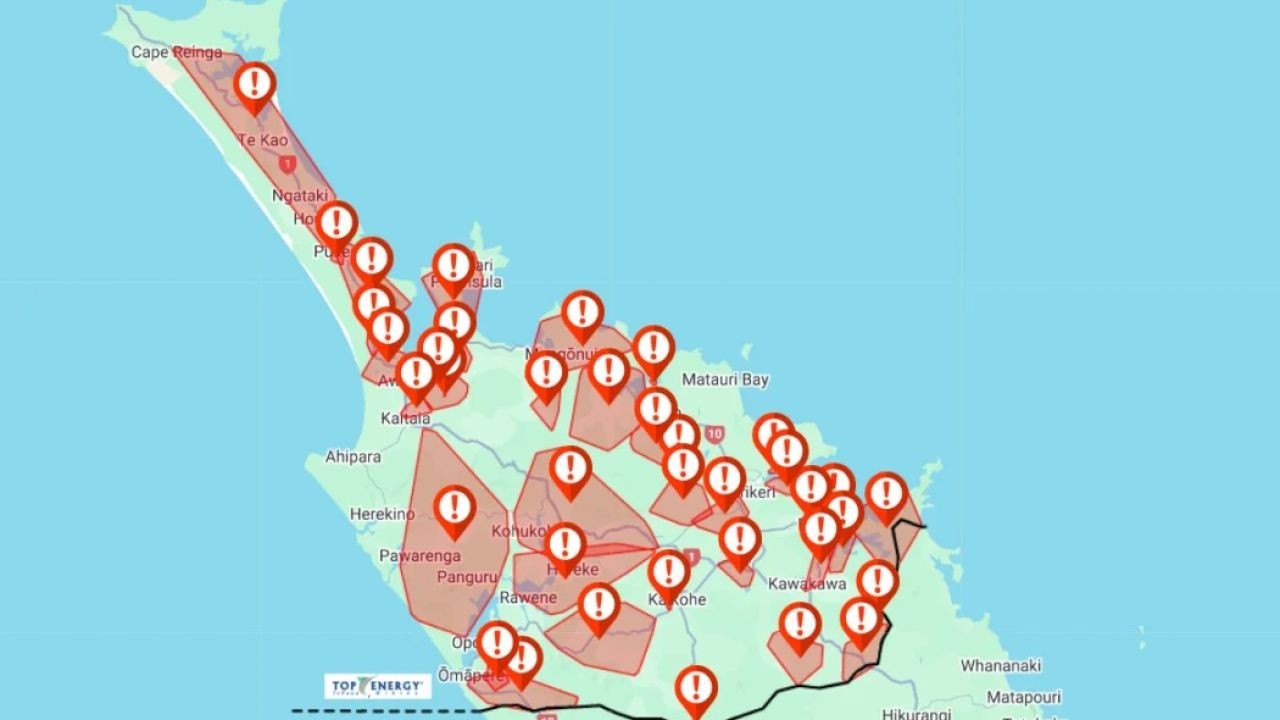
The deluge that inundated Auckland was not merely a weather event; it was a stark, multi-billion-dollar stress test for New Zealand’s economic resilience. As emergency services responded to 175 callouts and dozens faced the ruin of their homes, a parallel crisis unfolded in boardrooms, insurance headquarters, and government ministries. The immediate human cost is visceral and tragic, but for the economic strategist, Cyclone Tam is a critical case study in systemic vulnerability. It exposes the profound disconnect between our historical perception of New Zealand as a benign, "clean and green" haven and the brutal economic calculus of climate change adaptation. This event is not an anomaly; it is a preview. The question is no longer if another will strike, but whether our infrastructure, financial systems, and policy frameworks are robust enough to withstand the escalating financial shockwaves.
The Illusion of Insurability: A Market on the Brink
Let us begin with the most immediate economic conduit of disaster: the insurance industry. The narrative that insurance will seamlessly absorb climate shocks is a dangerous fallacy. Each major flood event, like those seen in Auckland, Westport, and Hawke's Bay, tightens the vice on the New Zealand insurance model. The Reserve Bank of New Zealand’s Financial Stability Report has repeatedly flagged climate change as a "material risk" to the insurance sector, noting the increasing frequency and severity of weather-related claims. The industry’s response is not passive coverage but active risk management—through soaring premiums, higher excesses, and, critically, the withdrawal of cover from high-risk areas.
This creates a vicious economic feedback loop. As insurance becomes prohibitively expensive or unavailable, property values in flood-prone zones plummet. Mortgage lenders, mandated to prudent lending, may refuse finance on uninsurable properties, effectively freezing the market. The result is a generation of "stranded assets"—homes that are physically standing but economically worthless. This isn't speculative; it's already happening in pockets of Aotearoa. The government’s proposed "Managed Retreat" framework acknowledges this inevitability, but the multi-billion-dollar question of who pays—homeowner, insurer, council, or taxpayer—remains a political and economic quagmire. The 2023 Auckland Anniversary floods alone resulted in over $2 billion in insured losses, a figure that strains the reinsurance market and signals higher costs for all policyholders nationwide.
Case Study: The Economics of "Managed Retreat" – Lessons from Grantham, UK
While New Zealand grapples with this concept, a powerful precedent exists in Grantham, England. Following catastrophic flooding in 2007, the community and authorities faced a familiar dilemma: spend heavily on traditional flood defenses for a town built on a floodplain, or undertake a radical, economically strategic reset.
Problem: Grantham, a town of 35,000, suffered devastating floods with damages exceeding £50 million. Repeated investment in higher levees and barriers was proving to be a fiscally unsustainable "arms race" against increasingly volatile weather. Properties were chronically uninsurable, and the local economy was stifled by perpetual risk.
Action: Instead of doubling down on defense, the Environment Agency and local council implemented a coordinated "managed realignment." Their action had two core economic prongs:
- Strategic Demolition & Green Space Creation: They purchased and demolished the most vulnerable properties, relocating residents to higher ground. The land was converted into a permanent flood storage area—a park that could safely absorb floodwaters.
- Pre-emptive Zoning & Development Shift: Strict new planning laws prohibited any future building in the high-risk zone, while incentivising sustainable development in safer areas of the town.
Result: The economic outcomes were transformative:
- ✅ Reduced Long-Term Liability: The one-off cost of purchase and demolition was significantly less than the recurring, ever-increasing cost of disaster response, recovery, and higher defense infrastructure.
- ✅ Restored Insurability: By removing the highest-risk properties from the pool, insurance became available and affordable for the remaining town, unlocking mortgage finance and economic activity.
- ✅ Enhanced Asset Value: The new green space increased amenity value for surrounding areas, and new development in safe zones was not blighted by flood risk.
Takeaway: Grantham’s lesson for New Zealand is profound: perpetual defense is often more expensive than strategic retreat. The New Zealand government’s Climate Adaptation Act must move beyond theory to enable this kind of painful but economically rational decision-making. For councils like Auckland’s, it means having the mandate and funding to buy out the most vulnerable properties—a bitter pill that prevents far greater communal financial ruin down the line. The alternative is an ad-hoc, post-disaster bailout that socialises the losses of private asset owners, a model that is neither equitable nor fiscally sustainable.
Infrastructure Deficit: The Multiplier Effect of Failure
Beyond the front door, the floodwaters exposed a deeper economic artery: our critically under-invested infrastructure. The failure of stormwater systems during "intense" rainfall is a direct function of decades of underfunding and planning for historical climate patterns, not future extremes. The economic impact here is a multiplier. It’s not just damaged roads; it’s supply chain paralysis. It’s not just a flooded substation; it’s business interruption for hundreds of SMEs losing power and data. It’s not just closed schools; it’s lost productivity as parents become caregivers.
Stats NZ’s Indicators for Te Tai Ōhanga – The Treasury consistently highlights the infrastructure deficit as a handbrake on New Zealand’s productivity. Each climate event amplifies this deficit. The cost of reactive, emergency repairs dwarfs the cost of proactive, climate-resilient investment. For instance, building a road with a more robust culvert system costs marginally more upfront but saves exponentially in avoided closures, freight delays, and repair bills over its lifecycle. The New Zealand Infrastructure Commission, Te Waihanga, has estimated the country needs to spend over $200 billion on infrastructure in the next 30 years. A significant portion of this must now be "climate-proofing" spend—an investment in economic stability, not just concrete and pipes.
The Strategic Imperative: A Three-Pillar Framework for Resilience
Moving from diagnosis to prescription requires a shift from ad-hoc response to embedded economic strategy. We must treat climate resilience not as a cost centre but as a core competitive advantage. Here is a step-by-step framework for businesses and policymakers.
Pillar 1: Price the Risk Accurately
Markets cannot allocate resources efficiently if risk is mispriced. This requires:
- Mandatory Climate Risk Disclosure: The External Reporting Board’s (XRB) climate standards are a start, forcing large financial institutions to disclose exposure. This must trickle down to impact property valuations and lending criteria.
- Geo-Specific Insurance Modeling: Councils and insurers must collaborate on hyper-local flood maps and risk models, moving from broad-stroke "flood zones" to precise, data-driven pricing that reflects true vulnerability.
Pillar 2: Invest in Adaptive, Not Just Protective, Infrastructure
Stop building for the past. Every infrastructure business case must include a climate stress-test:
- Green-Grey Hybrids: Pair engineered solutions (grey infrastructure) with natural ones (green). For example, complementing a stormwater pipe with a wetland park that provides storage, recreation, and biodiversity—a multi-functional asset with a higher ROI.
- Prioritise Network Resilience: Harden critical nodes (e.g., electrical substations, data centres, transport hubs) and create redundancies to prevent single points of failure from cascading through the economy.
Pillar 3: Formalise the Managed Retreat Mechanism
This is the most politically challenging but economically vital step.
- Establish a National Climate Adaptation Fund: Funded by a levy on all property insurance premiums or through reallocated ETS revenue, this fund would finance the planned buy-out of the most vulnerable properties, following a transparent, pre-agreed risk matrix.
- Legislate for Zoning Certainty: Once a "retreat zone" is scientifically identified, change the district plan to prohibit future building and provide clarity for decades, ending the uncertainty that blights communities and stifles investment.
Debunking the Myths: The Comforting Lies We Tell Ourselves
Our inaction is often bolstered by pervasive economic myths. Let’s dismantle three of the most dangerous.
Myth 1: "Insurance and the ETS will handle it." Reality: Insurance is a risk-transfer mechanism, not a risk-reduction strategy. It responds to, but does not prevent, loss. The Emissions Trading Scheme (ETS) is designed to mitigate future climate change by reducing emissions, but it does nothing to adapt to the impacts already locked in from past emissions. They are different tools for different problems. Relying on insurance alone is like treating a gangrenous wound with only painkillers.
Myth 2: "We can engineer our way out of any problem." Reality: The economic law of diminishing returns applies starkly to flood defenses. The first metre of levee is cost-effective; the fifth metre, required for a hypothetical "1-in-500-year" storm, is astronomically expensive and may still fail. The Grantham case study proves that at a certain point of risk and cost, strategic withdrawal is the superior economic investment.
Myth 3: "Climate adaptation is too expensive for a small country like NZ." Reality: The opposite is true. As a small, trade-dependent island nation with a high concentration of assets in coastal and floodplain areas, New Zealand is disproportionately exposed. Not adapting is what is unaffordable. The cost of repeated, catastrophic recovery—measured in GDP loss, skyrocketing debt, and social disruption—will cripple future generations. Proactive adaptation is an investment in national solvency.
The Controversial Take: It’s Time to End the Subsidy for Coastal & Floodplain Living
Here is the uncomfortable economic truth: through inadequate risk pricing, disaster relief payments, and publicly funded infrastructure repairs, we are collectively subsidising high-risk property ownership. This distorts the market, encourages malinvestment, and places an unfair burden on taxpayers in low-risk areas to bail out those who chose (or inherited) high-risk locations. The proposed "Managed Retreat" policy must be explicit: future government support for climate-related loss will be conditional and limited. The signal must be clear—if you choose to build or buy in a known high-risk area without appropriate private mitigation (e.g., raised foundations), you are assuming a significant, unsubsidised financial risk. This is not heartless; it is the foundational principle of a functioning market and a sustainable fiscal policy. It redirects investment away from vulnerable locations and towards safer ground, strengthening the entire economy’s resilience.
The Future of Climate Economics in Aotearoa
The trajectory is clear. Within the next decade, we will see:
- Climate-Responsive Rating Valuations: QV and other services will integrate flood and sea-level rise models directly into their valuation algorithms, causing dramatic re-rating of property portfolios.
- Bifurcated Local Economies: Towns and cities that invest decisively in resilience will see premiums in investment and population growth. Those that dither will face capital flight and economic decline.
- Emergence of "Resilience Bonds": Innovative financial instruments that reward councils and regions for achieving verified risk-reduction outcomes, attracting private capital to fund adaptation.
The 2023 report from the Ministry for the Environment, Adapting to Climate Change in Aotearoa, is unequivocal: delay equals greater cost. The economic strategy is no longer about avoiding loss, but about managing it with foresight and discipline.
Final Takeaways & Call to Action
Cyclone Tam was a costly lesson. The final accounting is not just in sodden carpets and damaged cars, but in the billions of dollars of latent risk it revealed on our national balance sheet.
- ✅ Fact: Climate change is a material, balance-sheet risk, not an environmental sidebar. The RBNZ and Treasury treat it as such; all business leaders must follow.
- 🔥 Strategy: Advocate for and invest in adaptive, multi-functional infrastructure. The ROI is measured in avoided disruption, not just construction cost.
- ❌ Mistake to Avoid: Assuming historical climate data is a reliable guide for future investment or planning. It is now a recipe for obsolescence.
- 💡 Pro Tip: Conduct a climate vulnerability stress-test on your business or personal assets. What is your plan for a 48-hour power outage, a severed supply route, or the uninsurability of your key property?
The call to action is for strategic courage. Business leaders must pressure councils and central government for decisive, science-led adaptation policy. Investors must reweight portfolios away from stranded asset risks. Homebuyers must demand full transparency on climate risk. This is not merely disaster recovery; it is the fundamental re-engineering of New Zealand’s economic foundations for an unstable century. The next storm is coming. Will we be strategically poorer, or wisely richer for the lessons of this one?
People Also Ask
How will climate adaptation costs impact New Zealand's public debt? Significantly. Proactive investment, while costly, is far less damaging to the long-term fiscal position than repeated, unbudgeted disaster recovery bailouts. The Treasury already models climate change as a key fiscal risk, and responsible adaptation spending is essential to managing that liability.
What is the biggest economic misconception about managed retreat? That it represents economic defeat. In reality, as the Grantham case shows, it is a strategic redeployment of capital from defenseless, high-liability assets to productive, safe areas, ultimately strengthening the overall economic resilience and value of a community.
Can New Zealand afford to be a leader in climate adaptation? Given our extreme exposure, we cannot afford not to be. Developing expertise in climate-resilient infrastructure, risk finance, and adaptation policy could become a valuable export sector, selling knowledge and technology to other vulnerable nations.
Related Search Queries
- New Zealand climate adaptation fund cost
- Insurance withdrawal New Zealand flood zones
- Economic impact Auckland flooding 2024
- Managed retreat policy NZ explained
- Climate risk disclosure NZ listed companies
- Cost of sea level rise for NZ economy
- Resilient infrastructure investment ROI
- New Zealand stranded assets property
- Local government climate liability
- Business continuity planning for flooding NZ
For the full context and strategies on Cyclone Tam live updates: Dozens of Aucklanders’ homes flood in ‘intense’ thunderstorms, 175 emergency callouts – The Key to Unlocking Success in NZ, see our main guide: How Video Marketing Builds Trust Kiwi Home Buyers.