




For healthcare consultants, the landscape of service delivery is inextricably linked to the demographic and spatial distribution of the population. A nation's urbanization pattern is not merely a geographic statistic; it is a powerful determinant of public health outcomes, healthcare accessibility, and the economic viability of service models. While New Zealand shares the broad trend of urban concentration with other developed nations, a closer examination reveals a unique and, in some respects, precarious trajectory. This analysis will dissect New Zealand's urbanization through a comparative lens, focusing on the consequential implications for healthcare strategy, infrastructure investment, and equitable service delivery.
The Distinctive Kiwi Urban Footprint: A Comparative Baseline
New Zealand's urbanization story is one of extreme concentration within a low-density framework. According to Stats NZ, approximately 86.5% of the population lives in urban areas, a figure that aligns with countries like Australia (86%) and the United States (83%). However, this superficial similarity masks critical structural differences. Unlike the polycentric networks of Germany or the distributed metro areas of the United States, New Zealand's urban population is overwhelmingly funneled into a handful of primary centers. Auckland alone houses over one-third of the national population, a degree of primacy unmatched in most OECD nations. This creates a "hub-and-spoke" dynamic where a single, congested super-city acts as the dominant node for advanced healthcare services, while provincial and rural networks face distinct sustainability challenges.
Contrast this with a nation like Canada, which, despite vast geography, has multiple major urban centers (Toronto, Vancouver, Montreal, Calgary) that decentralize specialized economic and healthcare functions. New Zealand's model creates a high-risk concentration of specialized clinical talent and infrastructure. For a healthcare consultant, this signals systemic vulnerability: workforce pressures in Auckland ripple out nationally, and the business case for advanced tertiary services outside the main centers becomes exponentially harder to justify.
A Data-Driven Insight: The Suburbanization of Health Demand
A critical, often overlooked trend within New Zealand's urbanization is the specific pattern of growth within its major cities. Analysis of Stats NZ subnational population projections reveals that the fastest-growing territorial authorities are not the city centers but the outer rings of major urban areas, such as Selwyn (Christchurch) and Queenstown-Lakes. This represents a suburban and peri-urban expansion, not densification. For healthcare delivery, this is a pivotal insight. It means demand is dispersing within regions, stretching existing primary care networks and increasing travel times to centralized hospital facilities. A healthcare system planned for a compact city model is ill-equipped for this spreading demand, leading to access inequities even within officially "urban" populations.
Pros & Cons: The Urbanization Dichotomy for Healthcare Systems
Evaluating New Zealand's urbanization requires a balanced assessment of its advantages and inherent risks from a healthcare consultancy perspective.
✅ Potential Advantages (Pros)
- Economies of Scale & Specialization: High concentration in main centers can justify investment in expensive, cutting-edge medical technology (e.g., PET-CT scanners, robotic surgery) and support super-specialist clinical roles that would be unviable in a more dispersed population.
- Integrated Care Pathways: Dense urban environments theoretically facilitate better coordination between primary, secondary, and tertiary providers, enabling more seamless patient journeys and shared care plans.
- Workforce Development & Innovation Hubs: Major cities attract and retain clinical talent, foster research partnerships with universities (e.g., the University of Auckland's medical school), and become test-beds for innovative care models and digital health solutions.
❌ Significant Risks & Drawbacks (Cons)
- Extreme Access Inequities: The concentration of services exacerbates the urban-rural health divide. Patients in regions like Northland or the West Coast face prohibitive travel costs and time for specialist appointments, leading to later-stage diagnoses and poorer outcomes.
- Infrastructure & Congestion Pressures: Urban centralization overloads flagship hospital facilities (e.g., Auckland City Hospital), leading to emergency department ramping, extended wait times, and capital funding battles that divert resources from preventative and community care.
- Systemic Vulnerability: Over-reliance on one or two major hubs creates a single point of failure. A major seismic event in Wellington or a significant infrastructure failure in Auckland could cripple a disproportionate share of the nation's advanced healthcare capacity.
- Homogenization of Service Design: System planning tends to default to the urban model, failing to adequately fund or design alternative, fit-for-purpose service delivery mechanisms (e.g., robust telehealth, mobile clinics, enhanced rural generalist roles) for non-urban populations.
Case Study: Northland DHB's Virtual Health Initiative – Bridging the Urban Divide
Problem: Northland District Health Board (now part of Te Whatu Ora Te Tai Tokerau) served a large, geographically dispersed population with high levels of socioeconomic deprivation and poor health indicators. Access to specialist services required lengthy and costly travel to Auckland, a significant barrier to care. The traditional "patient travels to the service" model was failing a substantial portion of the population.
Action: The DHB implemented a comprehensive virtual health strategy, not as an add-on, but as a core service delivery channel. This included:
- Establishing dedicated telehealth suites in rural clinics and marae-based health centers.
- Upskilling local primary care teams to conduct specialist consultations via video with support from urban-based specialists.
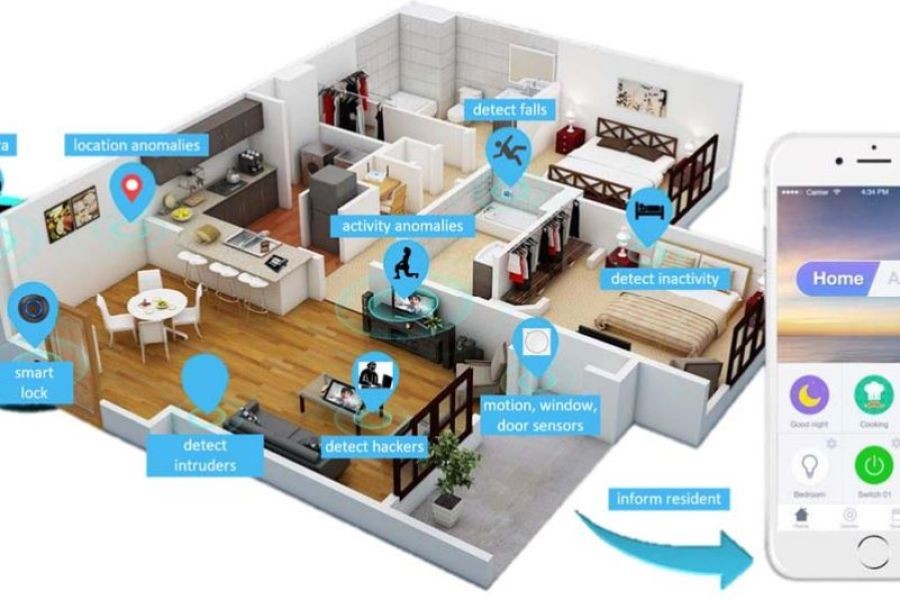
- Investing in remote patient monitoring for chronic conditions like COPD and heart failure.
Result: The initiative demonstrated measurable impact:
- ✅ Reduced Patient Travel: A 2021 evaluation showed thousands of patient travel hours and kilometers saved annually, directly reducing cost burdens on families and the health system.
- ✅ Improved Access & Timeliness: Wait times for specialist advice were drastically reduced for rural patients, leading to earlier intervention.
- ✅ Enhanced Local Capability: The model built sustainable capacity within rural primary care, moving beyond a transactional referral system to a true partnership model of care.
Takeaway: Northland's case is a powerful blueprint for mitigating the downsides of centralized urbanization. It proves that with strategic investment and a partnership ethos, technology can reconfigure care pathways without physically decentralizing specialists. For healthcare consultants, the lesson is that addressing New Zealand's unique geographic challenges requires moving beyond simply building more urban infrastructure and towards digitally-enabled, place-based care ecosystems.
The Great Debate: Centralization for Excellence vs. Distribution for Equity
This tension defines healthcare planning in New Zealand and other geographically challenged nations. The debate is not academic; it dictates billion-dollar investment decisions.
✅ The Centralization Advocate's View: Proponents argue that in a small country with finite resources, concentrating high-acuity, low-volume services is the only way to maintain quality and safety. Complex surgeries, advanced oncology, and major trauma care require teams that see high case volumes to maintain proficiency. Fragmenting these services across multiple smaller centers, they contend, would dilute expertise, increase per-unit costs, and compromise patient outcomes. The economic and clinical logic is compelling, favoring continued strengthening of tertiary hubs in Auckland, Wellington, and Christchurch.
❌ The Distribution Critic's View: Critics argue that the current model sacrifices the health of provincial and rural populations on the altar of clinical "excellence" in cities. They point to stark health outcome disparities—higher rates of amenable mortality, chronic disease, and poorer maternal health in non-urban areas—as direct consequences of access barriers. The model, they say, is economically inefficient in the long term, as delayed care leads to more complex, expensive interventions. It also fails the principles of Te Tiriti o Waitangi, disproportionately negatively affecting Māori communities who are more likely to live in underserved regions.
⚖️ The Pragmatic Middle Ground: The solution lies in a hybrid "hub-and-spoke-and-network" model. This involves:
- Strong, Specialized Hubs: Maintain centralized centers of supreme excellence for the most complex care.
- Enhanced Spoke Centers: Strategically strengthen select regional hospitals (e.g., Waikato, Dunedin) to provide a broader range of secondary and some tertiary services, acting as relievers for the main hubs.
- Integrated Rural Networks: Radically invest in virtual health, rural generalist pathways, and community-based care to keep as much service delivery as possible local, supported seamlessly by the spokes and hubs.
This requires a national telehealth framework, standardized credentialing for remote consultations, and funding models that incentivize keeping patients well in their communities rather than rewarding hospital admissions.
Common Myths and Costly Misconceptions
Strategic missteps often arise from unchallenged assumptions. Healthcare consultants must guide clients away from these prevalent myths:
Myth 1: "Urbanization automatically leads to better health outcomes due to proximity to services." Reality: While proximity exists on average, significant intra-urban inequities persist. A 2022 University of Otago study highlighted "healthcare deserts" within major NZ cities, where deprivation, transportation barriers, and primary care shortages create access issues as severe as in rural areas. Urbanization without equitable service planning creates exclusionary pockets of poor health.
Myth 2: "Building a new regional hospital will solve access problems for a dispersed population." Reality: This is a capital-intensive solution that often addresses the symptom, not the cause. A new facility still requires a sustainable workforce and may only shift travel burdens for many. The 2022 announcement of a new hospital for Dunedin is a case in point; while necessary for infrastructure renewal, its success hinges on parallel investments in virtual care and workforce to serve the wider Otago-Southland region, not just the city itself.
Myth 3: "Telehealth is just a pandemic stopgap, not a core strategy for addressing geographic disparity." Reality: This mindset forfeits a transformative tool. As the Northland case shows, telehealth, when integrated into core service planning and funded appropriately, is a permanent, high-value component of a modern health system. It is the essential connective tissue for a hub-and-spoke model.
Future Trends & Predictions: The Next Decade of Urban Health
The interplay of technology, demographics, and climate will redefine the urbanization-healthcare nexus.
- The Rise of the "Health-Tech Hub": Auckland's concentration of talent will accelerate its development as a Southern Hemisphere health-tech innovation hub. We predict a 50% increase in NZ-based digital health startups by 2030, focused on remote diagnostics, AI-assisted triage, and chronic disease management platforms tailored to NZ's specific access challenges.
- Climate Migration as a Health System Stressor: Climate change will act as an urbanization accelerator. Coastal and vulnerable rural communities, often with older and more health-needs populations, may face gradual migration pressure towards regional centers. This unplanned urban drift will strain the receiving centers' primary care and community support services, a risk factor that must be incorporated into long-term regional health plans.
- Data Sovereignty and Place-Based Planning: The future lies in hyper-local health intelligence. Using integrated data from Stats NZ, health records, and social agencies, Te Whatu Ora will move towards precise, suburb-by-suburb (and even *rohe*-by-*rohe*) resource allocation. This will shift the focus from building monolithic institutions to funding tailored, community-led wellness initiatives that address the specific social determinants of health in each locale.
Final Takeaways & Strategic Call to Action
For the healthcare consultant operating in the New Zealand context, understanding urbanization is not optional—it is fundamental. The key insights are clear:
- 🔍 NZ's urban concentration is uniquely acute, creating both scale advantages and profound systemic risks that require active management, not passive acceptance.
- ⚖️ The centralization vs. distribution debate is false. The winning strategy is a digitally-integrated hybrid model that leverages scale where essential and distributes care where possible.
- 💡 Technology is the great equalizer, but only if it is funded as core infrastructure and designed with equity, not just efficiency, in mind.
- 📊 Future-proofing requires planning for climate-driven demographic shifts and investing in data capabilities for place-based, preventative health investment.
The call to action is for consultants to guide health boards, private providers, and policymakers towards this integrated vision. Challenge capital plans that merely replicate 20th-century hospital models in a 21st-century demographic reality. Advocate for funding formulas that reward keeping populations healthy in place. Design service models that treat virtual and physical care as a single, continuous pathway.
Your next step? Conduct an immediate "geographic risk and opportunity assessment" for your client or organization. Map your service footprint against the precise population growth projections from Stats NZ. Identify the single biggest access barrier created by our urban shape, and design a pilot to address it not with bricks and mortar, but with technology, partnership, and community insight. The sustainability of New Zealand's health system depends on this strategic pivot.
People Also Ask (PAA)
How does New Zealand's urbanization specifically impact Māori health outcomes? While a higher proportion of Māori live in urban areas, they are often concentrated in more deprived neighborhoods with poorer access to quality primary care. Furthermore, urban migration can disconnect individuals from *whānau* and cultural support, which are key determinants of Māori wellbeing, exacerbating health inequities within the urban landscape itself.
What is the single biggest policy lever to improve healthcare access in rural NZ? Implementing a sustainable, nationally-scaled funding and credentialing model for comprehensive virtual health consultations. This would move telehealth from a patchwork of pilot programs to a core, reimbursed service channel, enabling rural providers to seamlessly access specialist support and keep care local.
Are other developed nations facing similar challenges, and what can NZ learn? Yes, nations like Canada and Australia face similar rural-urban divides. NZ can learn from Canada's investment in rural generalist medicine training pathways and Australia's Royal Flying Doctor Service model, but must adapt these to its own unique scale, Treaty obligations, and existing digital infrastructure.
Related Search Queries
- New Zealand urban rural health divide statistics 2024
- Impact of Auckland population growth on hospital wait times
- Telehealth success stories in New Zealand healthcare
- District Health Board (DHB) regional service planning
- Māori health outcomes in urban centers NZ
- New Zealand healthcare infrastructure investment strategy
- Comparing NZ and Australian rural health access
- Virtual mental health services in rural New Zealand
- Stats NZ population projections health planning
- Climate change and health system resilience NZ
For the full context and strategies on How New Zealand’s Urbanization Compares to Other Developed Nations – Breaking Down What Matters Most, see our main guide: New Zealand Video Platform.