





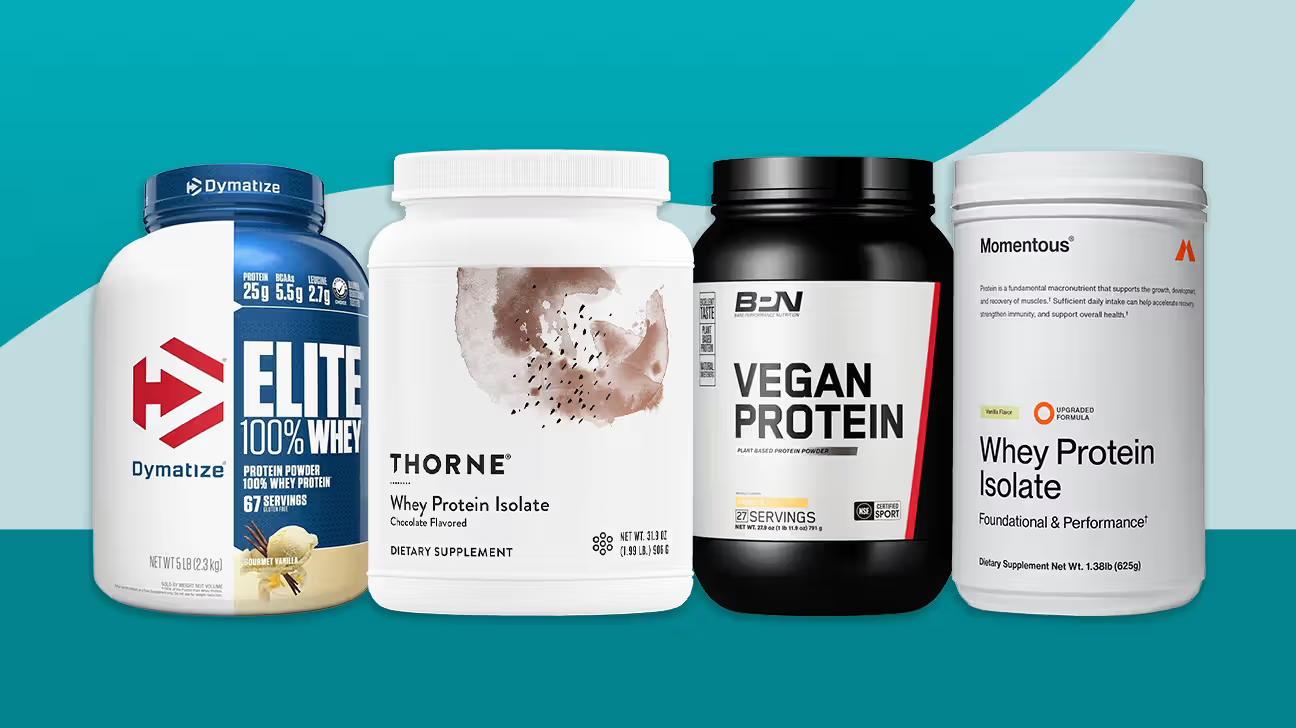
In the high-stakes world of resource allocation, where every capital decision is scrutinised for its long-term yield and strategic necessity, a curious parallel emerges in the personal expenditure of the industry's professionals. The Australian protein supplement market, valued at over $500 million and growing steadily, represents a significant outflow of discretionary income. For the analytical mind of a mining and resources strategist, this trend demands a dispassionate, cost-benefit analysis. Is this a high-grade investment in human capital and operational readiness, or a speculative bubble built on marketing over substance? The answer, as with any complex deposit, requires careful assay.
The Core Proposition: Analysing the Input for Output
At its most fundamental level, protein supplementation is an input strategy, akin to ensuring a mining fleet uses the highest-grade fuel for optimal engine performance. The biological demand for protein, particularly for individuals engaged in physically demanding roles or structured resistance training, is well-established. The Australian Bureau of Statistics' National Health Survey data reveals that while average intake may be sufficient for a sedentary population, distribution is uneven. For the FIFO worker or the site manager maintaining a rigorous fitness regime, whole-food protein targets can be logistically challenging to meet consistently.
This is where the supplement proposition finds its initial footing: concentrated utility. A whey protein isolate offers a rapid, efficient, and portable source of high-biological-value protein, often with superior leucine content—a key trigger for muscle protein synthesis—compared to many whole food sources. In the context of a remote site with limited culinary variety or a time-pressed professional, this utility has tangible, albeit difficult-to-quantify, value in supporting recovery, maintaining lean mass, and potentially reducing injury risk. The question is not one of absolute efficacy, but of marginal utility and cost-effectiveness.
The Regulatory Landscape: A Minefield of Claims
Here, the strategist's caution must heighten. The Australian supplement industry operates under the rapeutic Goods Administration (TGA) framework, but it exists in a grey area between listed medicines and general foods. While the TGA mandates Good Manufacturing Practice (GMP) for listed products, the onus of proof for many marketing claims is not as rigorous as for pharmaceuticals. The Australian Competition and Consumer Commission (ACCC) has previously intervened in cases of misleading claims regarding sports performance and muscle gain, but the market remains saturated with hyperbolic marketing.
This regulatory environment creates a market asymmetry of information. Consumers, including our industry professionals, are often purchasing based on brand narrative, influencer endorsement, or complex "proprietary blends" with dosages hidden behind a veil of secrecy. From a due diligence perspective, this is a red flag. Investing in a supplement with an undisclosed assay of active ingredients is as prudent as acquiring a mineral tenement without a geophysical survey.
Comparative Analysis: Whole Food vs. Supplement Supply Chains
A true strategic evaluation requires a full lifecycle cost analysis. Let us compare the two primary supply chains for protein.
The Whole Food Supply Chain: Sourcing protein from chicken, beef, eggs, dairy, and legumes involves agricultural production, processing, refrigeration, transportation, and preparation. This chain has significant embedded costs: energy, water, logistics, and time. For the end-user, it also requires culinary infrastructure and time—a scarce commodity on a mining roster. The "cost per gram of protein" can be favourable, but the total cost of ownership, when factoring in preparation waste and spoilage risk, is often underestimated.
The Supplement Supply Chain: This is a manufacturing and distribution play. Raw materials (whey, casein, plant proteins) are by-products of other industries (e.g., cheese manufacturing), which are then processed, flavoured, packaged, and marketed. The value-add is immense. The end product is shelf-stable, portable, and requires zero preparation. Its cost per gram of protein is typically higher, but its utility factor and consistency are its key strategic advantages.
The verdict here is situational. For the head office-based professional with kitchen access, whole foods may represent a more economical, nutrient-dense baseline. For the FIFO worker facing a two-week swing with variable mess hall offerings, a high-quality supplement acts as critical logistical insurance—a just-in-time inventory solution for human biology.
Case Study: BHP's Focus on Health & Performance – An Indirect Endorsement
While not a direct case study on supplement provision, the evolving approach of major miners like BHP toward holistic worker health offers a powerful insight. BHP has increasingly integrated health and performance metrics into its operational safety and productivity frameworks. This includes initiatives around sleep hygiene, nutrition education, and on-site fitness facilities.
Problem: Beyond acute safety, companies face chronic issues: musculoskeletal injuries, fatigue-related incidents, and overall workforce resilience. These translate into direct costs through lost-time injuries, insurance premiums, and suboptimal performance.
Action: BHP and others have moved beyond reactive healthcare to proactive health investment. This paradigm shift views the worker not as a cost centre but as a high-value asset whose maintenance is crucial for operational continuity. Part of this education involves rational nutrition strategies to fuel demanding work and aid recovery.
Result: While proprietary, the business case is clear. A 2021 report by the Mining Industry Reference Group for Safe Work Australia highlighted that effective health and wellbeing programs can yield a return on investment of up to AUD $5 for every $1 spent through reduced absenteeism and presenteeism. In this context, providing clear, evidence-based guidance on protein intake—including the judicious use of supplements where dietary gaps exist—becomes a minor cost line item with potential for major systemic yield.
Takeaway: The leading edge of the resources sector is applying asset management principles to human capital. Protein supplementation, when stripped of its consumer marketing gloss, is simply a precision tool in that maintenance toolkit. Its value is not inherent, but derived from its correct application within a broader, science-based health strategy.
The Pros and Cons: A Strategist's Weigh-Up
✅ The Strategic Advantages (The "Pros")
- Logistical Superiority: Unmatched convenience and shelf-stability for remote or time-poor professionals, ensuring consistent protein intake regardless of external circumstances.
- Rapid Absorption & Timing Utility: Specific formulations (like whey hydrolysate) can provide a fast-acting protein source post-training or night shift, a timing benefit difficult to achieve with whole foods.
- Precision and Purity: High-quality isolates offer protein with minimal fat, carbohydrate, or lactose, allowing for precise macronutrient targeting without excess calories.
- Supply Chain Resilience: Acts as a dietary hedge against variable quality or availability of whole food protein sources in non-urban work locations.
❌ The Material Risks & Drawbacks (The "Cons")
- Cost Inefficiency: On a pure gram-for-gram protein basis, supplements are almost always more expensive than whole food staples like chicken breast, eggs, or lentils.
- Regulatory & Quality Uncertainty: The market contains products with inaccurate labelling, undeclared stimulants, or heavy metal contamination. Due diligence on brand and third-party testing (e.g., Informed-Sport, NSF) is non-negotiable.
- Opportunity Cost of Nutrients: Supplements provide protein, but lack the synergistic matrix of vitamins, minerals, and phytonutrients found in whole food sources. Over-reliance can lead to micronutrient shortfalls.
- Market Saturation & Misinformation: The consumer is targeted by aggressive marketing of diminishing returns (e.g., extreme "nitric oxide" or "testosterone" boosters), leading to wasted capital on ineffective products.
Common Myths and Costly Mistakes
Navigating this market requires debunking pervasive myths that lead to poor capital allocation in personal health.
Myth 1: "More Protein Equals More Muscle." Reality: Protein intake follows a dose-response curve with a clear plateau. Research indicates an upper practical limit of ~0.4g/kg per meal for muscle protein synthesis. Consuming 60g in one sitting is not 50% more effective than 40g; the excess is largely oxidised for energy. This is a classic case of diminishing returns.
Myth 2: "Plant Protein is Inferior." Reality: While plant proteins often have a lower leucine content and may be incomplete, strategic combination (e.g., rice and pea protein) or simply consuming a greater total volume can achieve the same anabolic effect. For the environmentally conscious strategist, the lower water and carbon footprint of plant proteins, as highlighted in CSIRO reports on sustainable food systems, adds a compelling ESG dimension to the decision.
Myth 3: "You Must Take a Supplement to Be Fit." Reality: This is the core marketing fallacy. Supplements are, by definition, supplemental. A diet built on whole foods is the foundational asset. The supplement is a tactical derivative—useful for filling gaps, not for replacing the core holding.
Costly Mistake: Prioritising Brand Marketing over Third-Party Certification. Purchasing based on flashy labels or athlete endorsements without verifying independent testing is a high-risk allocation. The solution is to treat certification from groups like Informed-Sport (which tests for WADA-banned substances) as a non-negotiable feasibility study before any investment.
The Future of Personal Performance Nutrition
The trajectory points towards greater personalisation and integration with corporate health strategy. We are moving beyond the one-size-fits-all protein powder. Emerging trends include:
- Precision Nutrition: Leveraging biomarkers and genetic testing to tailor protein type and timing to individual metabolic responses, moving from bulk commodity to bespoke solution.
- Corporate Integration: Forward-thinking resource companies may move from generic wellness programs to offering vetted, high-quality supplement options as part of on-site health kiosks or benefits packages, recognising their role in fatigue management and injury prevention.
- Sustainability-Driven Formulations: As Australia's economy pushes towards net-zero, the carbon footprint of nutrition will be scrutinised. This will accelerate the development and adoption of advanced plant-based and fermented (e.g., mycoprotein) options with complete amino acid profiles.
Final Takeaway & Strategic Call to Action
Are protein supplements in Australia a waste of money? The answer is a conditional no—they are a waste of money if misapplied. For the mining and resources strategist, the framework for decision-making is clear:
- Conduct a Needs Analysis: Audit your typical diet against your physical demands. Use a tracking app for one week. Identify the genuine gap.
- Prioritise Whole Food Foundation: Allocate the majority of your nutritional capital to building a robust, whole-food-based diet. This is your long-life, Tier-1 asset.
- Employ Supplements Tactically: Use a high-quality, third-party-tested protein powder only as a logistical tool to fill identified gaps (e.g., post-night-shift recovery, remote site constraints).
- Ignore the Noise: Disregard marketing for "mass gainers," testosterone boosters, or proprietary blends. Allocate capital only to products with transparent labelling and independent certification.
In the end, this is a lesson in disciplined investment. The protein supplement market, like any other, contains both high-grade ore and worthless overburden. The savvy professional doesn't shun the sector outright; they become a discerning buyer, applying the same rigorous due diligence to their personal performance portfolio as they would to a potential mine site. The goal is not to chase speculative hype, but to secure a reliable, cost-effective yield.
People Also Ask
What is the most cost-effective source of protein in Australia? Based on current retail pricing, whole foods like chicken breast, eggs, canned tuna, lentils, and Greek yoghurt typically offer a lower cost per gram of protein than supplements. However, this calculation must factor in preparation time, spoilage, and portability for a complete assessment.
How can I verify a protein supplement is safe and accurately labelled in Australia? Look for certifications from independent third-party testing organisations like Informed-Sport or NSF Certified for Sport. These verify the absence of banned substances and confirm label accuracy, providing a crucial quality assurance layer beyond the TGA's basic listing requirements.
Could Australian companies benefit from providing protein supplements to FIFO workers? As part of a holistic, evidence-based health and performance program, providing access to high-quality supplements could offer a positive ROI. The potential reduction in fatigue-related errors, improved recovery, and enhanced resilience may outweigh the direct cost, aligning with the industry's shift towards proactive human asset management.
Related Search Queries
- protein powder Australia cost per serve 2024
- FIFO worker nutrition guide Australia
- TGA vs Informed-Sport supplement certification
- best high-protein foods for miners Australia
- corporate health programs Australian mining industry
- plant based protein vs whey for muscle building
- how to read supplement labels Australia ACCC
- protein intake for manual labour calculations
- sustainable protein sources Australia CSIRO
- BHP health and wellbeing program case study
For the full context and strategies on Are Protein Supplements in Australia a Waste of Money? – Why It’s a Game-Changer for Australia, see our main guide: Australian Creator Earnings.