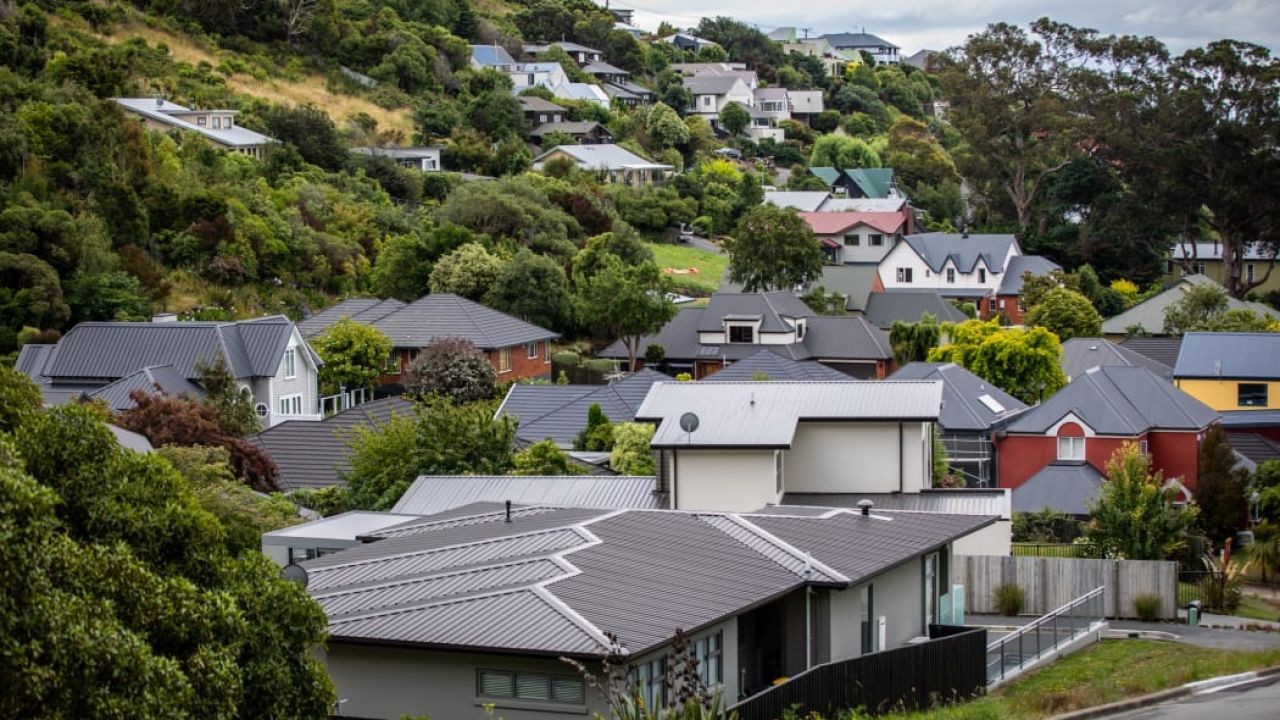






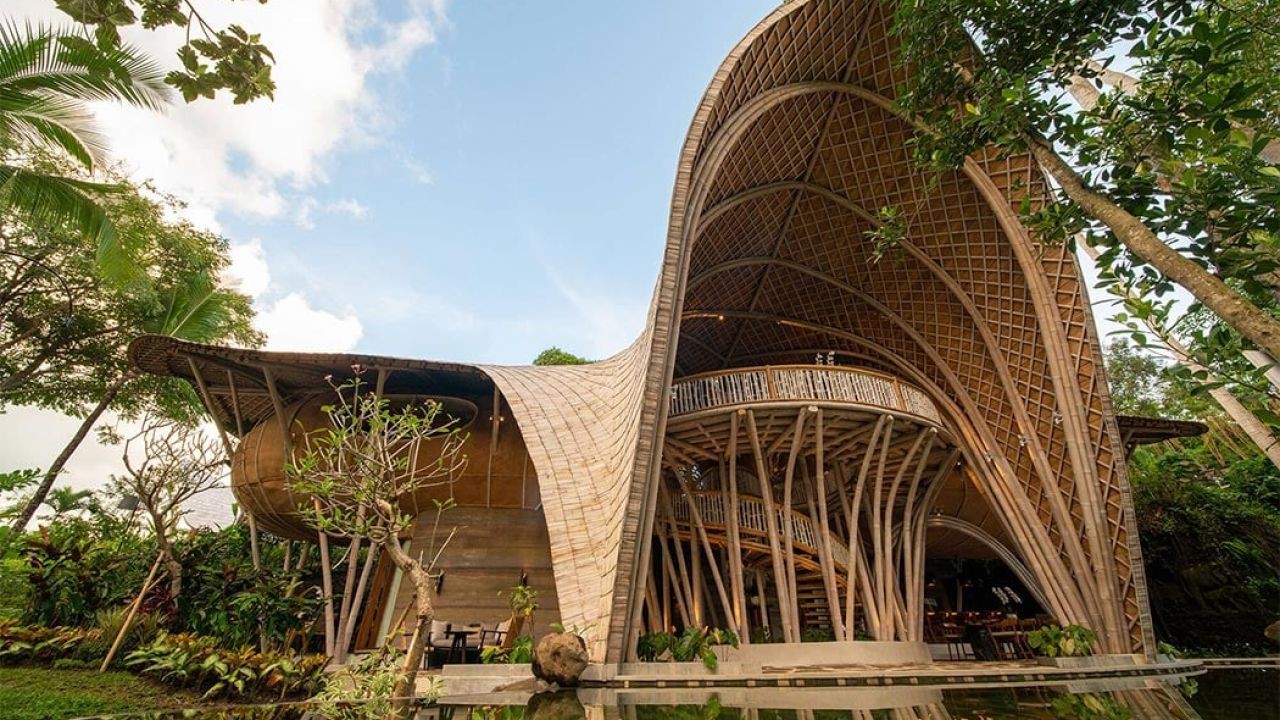
Imagine a cityscape where buildings are not just structures, but living, breathing ecosystems. Where your office harvests more rainwater than it uses, your home generates surplus clean energy for the grid, and the materials that surround you are not only beautiful but have a passport, tracing a journey of renewal rather than extraction. This isn't a utopian fantasy; it's the tangible, data-backed future of sustainable architecture in New Zealand, and it's arriving faster than many realise. Driven by a potent mix of consumer demand, regulatory shifts, and genuine Kiwi ingenuity, our built environment is on the cusp of a transformation that will redefine value, beauty, and responsibility. For marketing specialists, this isn't just an architectural trend—it's a fundamental reshaping of the value proposition for commercial and residential property, creating unprecedented narratives for brand differentiation and customer engagement.
The Core Drivers: Why Sustainable Architecture is Now Non-Negotiable
The shift is being catalysed by powerful, converging forces. First, the regulatory landscape is tightening with purpose. The New Zealand Government's Building for Climate Change programme is a game-changer, explicitly targeting the 20% of the country's carbon emissions that come from the building and construction sector. This isn't vague future-gazing; it's a structured roadmap. From my consulting with local businesses in New Zealand, the most forward-thinking developers and construction firms are already stress-testing their projects against the forthcoming whole-of-life embodied carbon caps, understanding that tomorrow's compliance costs are today's strategic design challenges.
Second, the economic equation has flipped. Data from MBIE and the Green Building Council shows that while sustainable builds may have a modestly higher upfront capital cost (typically 2-8%), they deliver dramatically lower operational costs and significantly higher asset value over time. A study by the New Zealand Green Building Council (NZGBC) found that Green Star-rated buildings have been shown to have a 12% higher value than non-rated equivalents. The market is voting with its wallet.
Finally, there's the powerful pull of consumer and tenant demand. Drawing on my experience in the NZ market, I've seen a marked increase in RFPs from corporates seeking office spaces with top-tier Green Star or NABERSNZ ratings, not just for ESG reporting, but for talent attraction and retention. Employees, especially younger demographics, want to work for and in places that reflect their values.
Key Actions for Kiwi Marketing Leaders Today
- Audit Your Asset Narratives: Immediately assess the sustainability credentials of your commercial or development portfolios. Is it Green Star certified? What's its NABERSNZ energy rating? This data is your new premium marketing copy.
- Educate Your Sales Teams: Move beyond square metreage and views. Equip teams to articulate the long-term cost savings (opex), health benefits (indoor air quality), and resilience features of sustainable properties.
- Partner Authentically: Align with architects and builders who are leading in this space, such as those pioneering the use of locally sourced, low-carbon timber or prefabricated passive house modules. Their expertise becomes your campaign's authority.
Future Forecast: The Five Pillars of NZ's Sustainable Built Environment
So, what will this future actually look like on the ground? We can forecast its shape across five interconnected pillars.
1. The Rise of the "Energy Positive" Building
The future is not just net-zero energy; it's energy positive. Buildings will transform from passive consumers to active power generators. This will be achieved through building-integrated photovoltaics (BIPV)—where solar cells are embedded directly into roofing, cladding, and even windows—coupled with next-generation battery storage. In practice, with NZ-based teams I’ve advised, we're already modelling the ROI on these systems for large-scale retail and industrial sites, where the combination of ample roof space and high energy use creates a compelling business case. The marketing implication is profound: a factory or supermarket that can advertise "Powered by Our Roof" embodies operational independence and environmental stewardship in one powerful message.
2. Circular Economy & The Materials Revolution
The most significant hidden trend is the move towards a circular construction economy. We will shift from "cradle-to-grave" to "cradle-to-cradle" material flows. This means designing for disassembly: using reversible connections like bolts instead of glue, and creating material passports that detail every component's origin and future reuse potential. Based on my work with NZ SMEs in the manufacturing sector, I see huge opportunity for local businesses producing cross-laminated timber (CLT) from sustainably managed pine plantations, or companies like Mackenzie & Willis who are innovating with recycled materials for interiors. Marketing will need to tell the rich story behind materials—the regenerated native timber, the recycled aggregate concrete, the wool insulation—connecting the end-user to a positive ecological narrative.
3. Biophilic Design as a Wellbeing Imperative
Sustainability is moving beyond energy metrics to encompass human health. Biophilic design—the intentional incorporation of nature into built spaces—will become standard. This includes interior living walls, abundant natural light and ventilation, internal water features, and the use of natural materials and textures. The data is compelling: studies consistently show biophilic design reduces stress, improves cognitive function, and boosts productivity. For marketers of office or residential space, this allows a pivot from selling "space" to selling "wellbeing and performance." A developer can now market an apartment not just by its floor plan, but by its air quality index and its connection to native greenery.
4. Water Resilience and Regenerative Systems
Given New Zealand's increasing experiences with both drought and extreme rainfall, water-sensitive urban design (WSUD) will be critical. Future buildings will feature integrated systems for rainwater capture, greywater recycling, and stormwater management through green roofs and permeable surfaces. These features transform a building from a water consumer to part of the local water cycle. Having worked with multiple NZ startups in the agri-tech space, I see the technology for smart water monitoring and management becoming rapidly more affordable and scalable for commercial buildings, providing another layer of data-driven efficiency to market.
5. Smart, Adaptive, and Data-Driven Buildings
Finally, the sustainable building of the future will be deeply intelligent. A network of IoT sensors will continuously monitor temperature, occupancy, air quality, and energy flows, using AI to optimise systems in real-time. This goes far beyond simple thermostat programming. Imagine lighting and HVAC that adapts room-by-room based on actual use, or predictive maintenance that fixes issues before they cause energy waste. For facility managers and owners, this creates a powerful story of relentless optimisation and cost control.
The Great Debate: Deep Green vs. Light Green Sustainability
As this future unfolds, a fundamental philosophical and practical debate is intensifying within the industry. Understanding this tension is crucial for marketers positioning their projects.
✅ The "Deep Green" (Radical) Perspective
Advocates argue that incremental efficiency gains are insufficient to meet our climate commitments. They champion:
- Radical Material Simplicity: Using almost exclusively locally sourced, natural, and biodegradable materials (e.g., rammed earth, straw bale, untreated timber).
- Ultra-Low Energy Demand: Pursuing the rigorous Passive House standard, which reduces heating and cooling energy needs by up to 90% through supreme insulation and airtightness.
- Off-Grid Independence: Designing buildings to be fully autonomous from municipal water and energy grids.
Critique: Detractors argue this approach can be prohibitively expensive, difficult to scale for urban densification, and sometimes at odds with other goals like seismic resilience in the New Zealand context. The aesthetic can also be niche, potentially limiting market appeal.
❌ The "Light Green" (Techno-Optimist) Perspective
This school of thought believes in "sustainability through innovation." Its tenets include:
- High-Tech Solutions: Leveraging advanced materials, sophisticated building management systems, and renewable energy tech to offset a less radical building fabric.
- Urban Density & Efficiency: Arguing that a high-rise apartment with a high Green Star rating, served by efficient public transport, has a lower per-capita footprint than a sprawling off-grid rural home.
- Market-Led Transition: Believing consumer demand for green features will drive innovation and lower costs faster than radical regulation.
Critique: Critics call this "greenwashing 2.0," warning of the "embodied carbon" trap—where the carbon cost of manufacturing high-tech components and complex systems outweighs operational savings. It also maintains dependence on complex global supply chains.
⚖️ The Emerging Middle Ground: Contextual & Performance-Based Sustainability
The most pragmatic and likely dominant path forward is a hybrid model. This approach asks: "What is the most sustainable solution for this specific site, community, and need?" It might combine Passive House principles for the building envelope with a high-tech solar and battery system. It prioritises low-carbon materials where possible but doesn't dogmatically refuse a high-embodied-carbon component if it is essential for seismic safety and has a 100-year lifespan. The New Zealand Building Code's increasing focus on whole-of-life carbon assessment supports this middle ground, as it evaluates the total impact, encouraging smart trade-offs. For marketers, this nuanced, authentic, and context-driven story is often more credible and relatable than a purist stance.
Case Study: The Christchurch Justice & Emergency Services Precinct – A Blueprint for the Future
Problem: Following the Canterbury earthquakes, the New Zealand Government faced the challenge of rebuilding critical infrastructure to be not only seismically resilient but also a benchmark for sustainability, operational efficiency, and civic pride. The project needed to demonstrate value for money while embodying the future of public building.
Action: The design and construction team, led by the Ministry of Justice and Department of Corrections, embedded sustainability at its core. The precinct targeted and achieved a 5 Green Star Design and As-Built rating. Key actions included:
- Implementing a tri-generation plant (producing electricity, heating, and cooling from natural gas) for high-efficiency energy supply.
- Incorporating extensive rainwater harvesting for toilet flushing and irrigation.
- Using high-performance glazing and sun-shading to maximise natural light while minimising heat gain.
- Prioritising durable, low-maintenance, and locally sourced materials where possible.
Result: The precinct stands as one of the largest and most sustainable public buildings in the country. Reported outcomes include a 30% reduction in energy consumption compared to a standard building of its size, and 60% of water demand met by harvested rainwater. It provides a healthier, day-lit environment for staff and visitors while showcasing resilience.
Takeaway for Marketers: This project proves that large-scale, complex, and budget-conscious public projects can achieve top-tier sustainability. The narrative here isn't just "green building"; it's "future-proof, resilient, and cost-smart infrastructure." Any business marketing a commercial development can leverage this precedent to demonstrate that sustainability is now a mainstream, achievable, and fiscally responsible standard.
Common Myths & Costly Mistakes to Avoid
Misconceptions can stall progress. Let's dismantle three pervasive myths.
Myth 1: "Sustainable building is too expensive for the New Zealand market." Reality: This focuses solely on Capital Expenditure (CAPEX). The true metric is Total Cost of Ownership (TCO). As highlighted, while initial costs can be 2-8% higher, operational savings in energy, water, and maintenance often deliver a positive ROI within a few years. Furthermore, tools like the MBIE's Building for Climate Change financial toolkits are being developed to help quantify this for New Zealand conditions. The mistake is budgeting in silos rather than across the asset's lifecycle.
Myth 2: "A 'green' rating (like Green Star) is the end goal." Reality: A rating is a snapshot in time at design or completion. The bigger mistake is "designing for the plaque" and then failing to operate the building as intended. Many buildings suffer from a "performance gap." The real goal is actual, measured performance over decades. Tools like NABERSNZ, which rates operational energy efficiency, are crucial for closing this loop. Marketing must shift from promising a rating to guaranteeing ongoing performance.
Myth 3: "Sustainable architecture is just about technology and materials." Reality: The most sustainable building is often one that is adaptively reused. The embodied carbon in an existing structure is a sunk cost; demolishing it creates massive waste and new carbon emissions. The mistake is overlooking retrofit and refurbishment. From observing trends across Kiwi businesses, the most savvy developers are now marketing the "character meets performance" story of heritage buildings retrofitted to modern sustainable standards.
The Marketing Specialist's Playbook: Framing the Future
For marketing professionals, this architectural shift is a treasure trove of new narratives. Your role is to translate technical achievement into human desire and commercial logic.
- Sell Outcomes, Not Features: Don't lead with "we used CLT." Lead with "your workspace will be bathed in the warmth of natural, carbon-storing timber, proven to reduce stress and boost creativity."
- Leverage Data as a Storyteller: Use real-time building dashboards publicly (in lobbies) or in tenant reports. Show the kilograms of CO2 avoided, the litres of water harvested. This is transparent, credible, and engaging proof.
- Embrace the "Health & Wellbeing" Premium: With biophilic design and superior air quality, you are no longer selling square metres—you're selling productivity, reduced sick days, and enhanced quality of life. Partner with wellbeing consultancies to quantify this value.
- Target the Conscious Capital: A growing pool of investment capital is earmarked for ESG-compliant assets. Market your sustainable development directly to these funds, highlighting its alignment with their mandates and lower risk profile.
Final Takeaway & Call to Action
The future of sustainable architecture in New Zealand is not a single style or technology. It is a fundamental paradigm shift towards buildings that are regenerative, resilient, and human-centric. They will be power stations, water harvesters, carbon sinks, and ecosystems for wellbeing. This future is being written now in policy documents, architectural studios, and construction sites across the motu.
For marketing specialists, your challenge and opportunity are clear: you must become fluent in this new language of value. The ability to authentically articulate the story of a building's positive impact will be the key differentiator in a crowded market. Start by auditing your current assets and partnerships. Educate your teams. Seek out the innovators. The sustainable future isn't just coming—it's the most compelling story you'll ever get to tell.
Ready to build your narrative? Begin by exploring the New Zealand Green Building Council's resources and case studies. Then, challenge your next project brief: "How does this development leave the site, the community, and the climate better than we found it?" The answer will be your most powerful marketing strategy yet.
People Also Ask (PAA)
How will the NZ Building Code changes affect house prices? The changes targeting carbon reduction may initially add a small premium to build costs (estimated 1-3%), but will significantly lower lifetime running costs. For buyers, this means higher upfront cost but greater affordability over time, likely increasing the value of sustainable homes relative to inefficient ones.
What is the most sustainable building material in New Zealand? Locally sourced, plantation-grown timber (like radiata pine engineered into CLT or GLT) is a frontrunner. It's renewable, stores carbon, and supports local industry. However, "most sustainable" depends on context; sometimes, reusing existing materials or locally sourced stone is optimal.
Can older NZ homes be made truly sustainable? Absolutely. While a full "passive house" retrofit is complex, significant gains come from insulation, double-glazing, efficient heating, solar panels, and water-saving devices. The government's Warmer Kiwi Homes programme is a key initiative helping make this achievable.
Related Search Queries
- Green Star certification cost NZ
- Passive House builders New Zealand
- NABERSNZ rating explained
- Cost of solar panels for commercial building NZ
- Circular economy construction companies NZ
- Biophilic design office Auckland
- MBIE Building for Climate Change latest update
- Cross laminated timber suppliers New Zealand
- Water harvesting systems for homes NZ
- Smart building technology Auckland
For the full context and strategies on What Will the Future of Sustainable Architecture in New Zealand Look Like? – The Untold Truth Kiwis Need to Hear, see our main guide: Influencer Food Blogger Videos New Zealand.